When did Russia really begin its aggression against Ukraine?
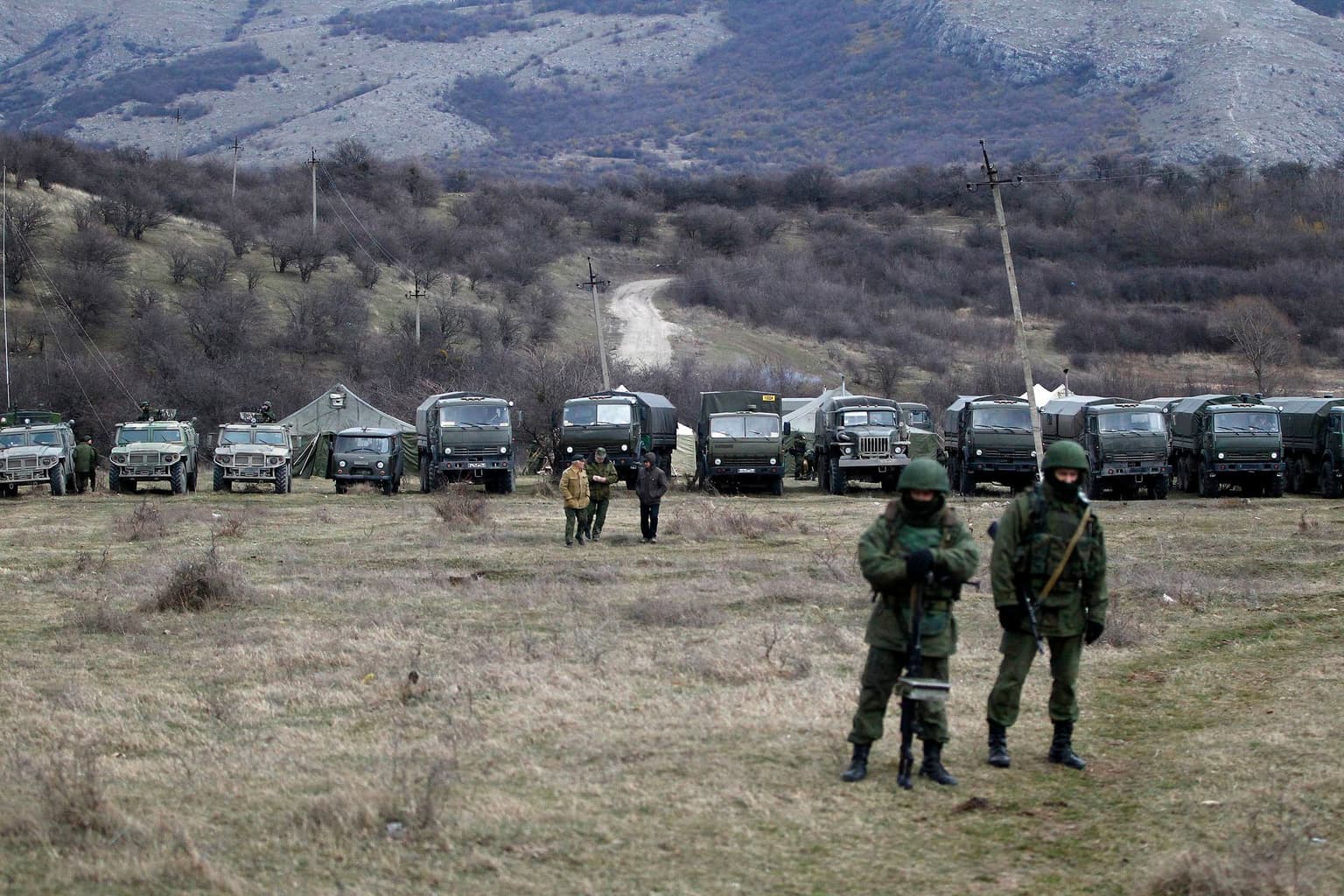
Members of the Russian armed forces stand guard around the Ukrainian military base in the village of Perevalne, 20 km south of Simferopol, Ukraine's Autonomous Republic of Crimea, on March 2, 2014. (Bulent Doruk/Anadolu Agency/Getty Images)
 on Google
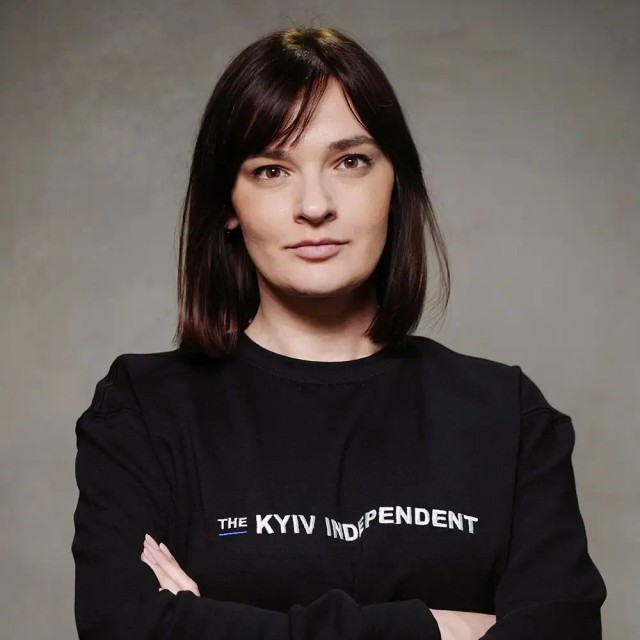
Yevheniia Motorevska
Head of war crimes investigation unit
That's the question most of you probably answered instinctively: in 2014, when Vladimir Putin, exploiting political instability and the change of power in Ukraine following the EuroMaidan Revolution, annexed the Crimean Peninsula.
But what if I told you that Russia began attempting to seize Ukrainian Crimea back in the 1990s?
Back when "friendship and cooperation" between two "brotherly nations" was officially proclaimed — a phrase Russian propaganda still clings to today. Back when Russian leaders were busy building relationships with the "civilized," meaning Western, world.
One example: in 1993, Russia's parliament voted to recognize Sevastopol — one of the key cities of the Ukrainian peninsula — as a Russian city and declared its intention to finance it from Russia's federal budget.
What helped Ukraine at the time was infighting within Russia's own authorities. Parliamentary Speaker Ruslan Khasbulatov was locked in a power struggle with President Boris Yeltsin. The parliament was eventually dissolved, its speaker arrested, and the attempt by Russian politicians to seize Sevastopol through a political coup failed.
Another example followed just a year later.
In 1994, in direct violation of Ukraine's Constitution, the position of president of the Autonomous Republic of Crimea was introduced. Yuri Meshkov, a local politician openly backed by Russia and criminal organizations, won the elections. Once in office, Meshkov declared his desire to integrate with Russia, switched Crimea to Moscow time, promised dual citizenship to local residents, and formed a government that was half-staffed by Russian specialists.
To prevent Crimea's de facto annexation at the time, Ukrainian security services were forced to carry out a special operation on the peninsula. Shortly afterward, Ukraine's parliament abolished the office of Crimean president altogether. Meshkov became both the first and last president of Crimea.
However, the division of the Black Sea Fleet — one of the Soviet Union's five fleets — ultimately had the greatest impact on everything that followed in Crimea, a process that lasted nearly six years.

The fleet's ships were stationed across several former Soviet republics, with the majority based in Ukraine, and their headquarters located in Sevastopol. At the time, the fleet had strategic significance: the Black Sea region sits at the intersection of European, Russian, and Middle Eastern interests.
After the collapse of the Soviet Union, most military assets were divided according to a simple principle: whatever was located on the territory of a specific republic came under that republic’s control. This principle, however, stopped at the Black Sea Fleet.
Russia categorically refused to agree to the transfer of the fleet under the Ukrainian flag, despite the fact that it was physically located on Ukrainian territory.
During one visit to meet fleet commanders, Russian President Boris Yeltsin famously declared: "The Black Sea Fleet was, is, and will always be Russian." What followed were six years of struggle between Russia and Ukraine over the fleet.
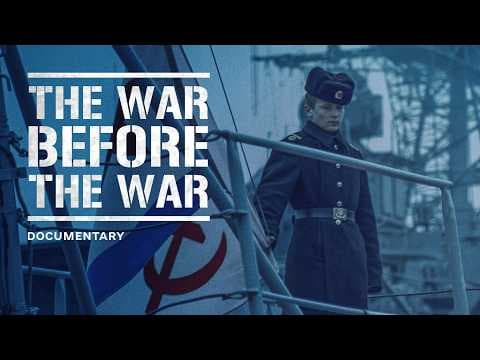
Together with my team, I spent around a year working on a historical investigation into how Russia prepared for the seizure of Crimea starting in the 1990s. We analyzed video and photo archives, studied contemporary media coverage, read memoirs by senior officials on both the Ukrainian and Russian sides, and spoke with those who participated in those events in Crimea.
What struck me most was the consistency and calculation with which Russia fought for control of the Black Sea Fleet — from threats to use the fleet against Ukrainian units to harassment and persecution of sailors and commanders who chose to swear allegiance to Ukraine.
You can learn more about this in the first episode of our documentary project Crimea: War Before the War.
In the end, political pressure and gas-debt blackmail forced Ukraine into an unfavorable and unfair agreement on the fleet's division. Russia received most of the ships and formally entrenched its military presence in Crimea. Ukraine, as one of our interlocutors put it, was left with scrap metal.
Ironically, after 2022, while defending itself against Russia's full-scale invasion, Ukraine destroyed a significant portion of the Black Sea Fleet's combat-capable vessels in Crimea. But that is another story.
For me, the events of the 1990s are a stark lesson in the cost of concessions to Russia. Ukraine failed to defend the fleet and, under pressure, accepted Moscow's terms. The Russian flag officially flew over the Black Sea Fleet base in Ukrainian Sevastopol.
In 2014, that same fleet played a key role in the annexation of Crimea. And in 2022, from occupied Crimea, Russia launched its offensive against Ukraine's southern regions.
That is the price.
Editor’s note: The opinions expressed in the op-ed section are those of the authors and do not purport to reflect the views of the Kyiv Independent.