Russia's latest outbreak — and the instinct to conceal It
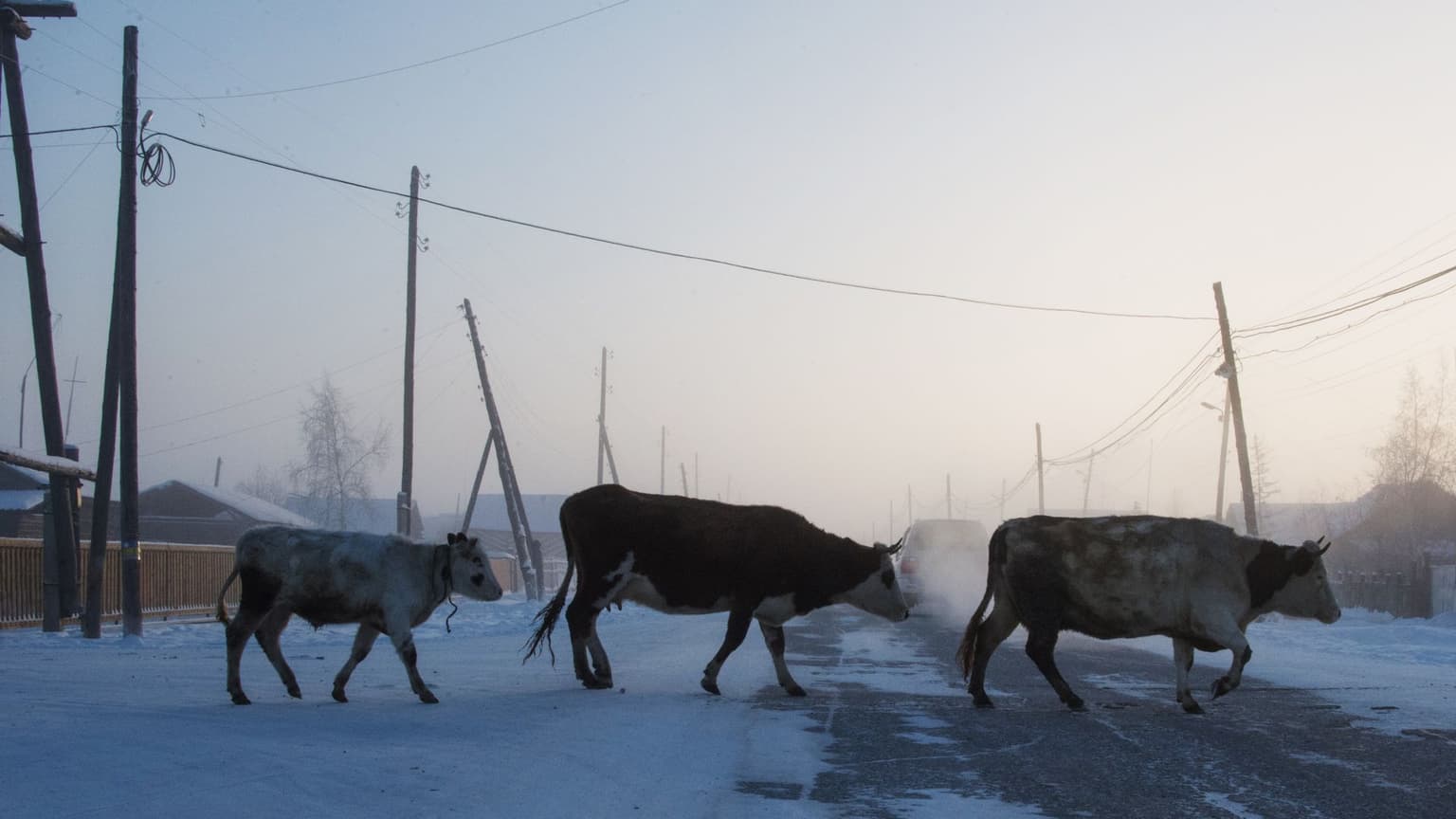
Cows cross a road at sunset in the settlement of Oy, Sakha Republic, Russia, on Nov. 27, 2018. (Mladen Antonov / AFP via Getty Images)
 on Google
Russian authorities say a cattle epidemic that swept parts of Siberia since February is now under control and caused by a relatively minor bacterial infection, pasteurellosis.
But veterinarians and independent journalists question that account, pointing to containment measures — mass animal slaughter, village lockdowns, and secrecy — that more closely resemble a response to foot-and-mouth disease (FMD), a far more serious and economically damaging outbreak.
The discrepancy has fueled resistance among farmers, confusion in affected regions, and renewed scrutiny of how Russian officials handle crises — often prioritizing control of information as much as the problem itself.
Overarching secrecy
The first cases of the current officially reported pasteurellosis outbreak can be traced back to mid-February. At the time, farmers in Novosibirsk Oblast began reporting fevers and other symptoms among cattle.
At the start, the situation seemed under control, according to Olesya Shmagun, a journalist who reported extensively on the issue for exiled Russian outlet Novaya Gazeta Europe.
"Large producers usually pay for vet services, so most of them knew early on that this was more serious than pasteurellosis: these large farms voluntarily agreed to have their cattle slaughtered," Shmagun said.
Issues began, however, when, based on vet reports, local authorities issued an order to slaughter all bovines in the affected regions. This included small holders, who were mostly left in the dark by authorities:
"Officials did not explain to people why their cattle needed to be killed," said a Russian journalist, who extensively reported on the outbreak for 7x7, an exiled Russian outlet that covers regional issues.
"In a way, this is also similar to the situation Russia had during the Covid pandemic, when authorities either refused to say there was a problem, or claimed that they had solved it, even if they hadn't."
"Often people were forced to give up their only cow, and in many cases this cow was their sole source of income," the Russian journalist, who requested to remain anonymous to speak freely, told the Kyiv Independent.

As a result of the secrecy, efforts by authorities to contain the outbreak met fierce resistance from small farmers — affected villagers organized protests, attempted to stop vet services from confiscating cattle, or tried to hide their animals from authorities.
"This, of course, only made things worse: if we are dealing with FMD, then the disease can survive in hidden cattle," Shmagun said.
As such, Russian authorities reacted to the outbreak following classic patterns of problem denial inherited from the Soviet Union, the journalist from 7x7 said.
"In a way, this is also similar to the situation Russia had during the Covid pandemic, when authorities either refused to say there was a problem, or claimed that they had solved it, even if they hadn't."
Rural protests
According to the journalist, the mass village protests showed just how dire the economic situation is in many of them.
"There were many factors for these protests, but the main one is poverty," the 7x7 journalist argued. "In the small villages affected by the outbreak, there is usually no work, and keeping livestock is often people's only source of income, or people have a badly paid job, but keep afloat thanks to farming or selling milk from their cow."
While protests were numerous and often led to arrests of participants, this probably doesn't suggest deeper anti-government sentiment in the region, Shmagun argued in turn.
The secretive approach that Russian authorities adopted in this outbreak, as expected, also led to conspiracy theories flourishing in the Siberian countryside.

These included slightly more rational ones, such as a plot by major producers to uproot minor farmers, as well as wilder concepts — a secret leak from a biological weapon facility in Novosibirsk Oblast, a Western conspiracy against Russia, or both.
According to Leyla Latypova, special correspondent at the Moscow Times, these theories are symptomatic of the deep mistrust that a large part of Russian society feels towards the government.
"Russian authorities often fail to see the extent of this," Latypova said.
A deliberate cover up
At first glance, the efforts of Russian authorities to control the outbreak seemed chaotic and difficult to understand. While FMD is a serious disease in cattle, it is generally not considered a risk to humans, and outbreaks regularly occur worldwide.
However, Russia's reaction makes more sense in the context of the Kremlin's efforts to boost the country's agricultural exports.
A major step in this direction was the decision in 2025 to include Russia on the list of countries considered free from FMD, which is run by the World Organization for Animal Health (WOAH).
Inclusion on the WOAH list helped boost meat exports, especially to China and Saudi Arabia.
If Russia loses the FMD-free status, this would normally translate into an export drop, as the disease carries a high fatality rate for cattle and creates serious risks for local livestock.
"Kazakhstan issued a (partial) ban on importing meat from Russia, but China and Middle Eastern countries haven't done this yet," Shmagun explained. "In general, it's still too early to understand if this outbreak is over or only starting. If things get worse, this would normally greatly affect Russia's exports in the near future."
read also
 Olena Goncharova
 Martin Fornusek