Ukraine says it's preparing for elections, referendum. Is it realistic?
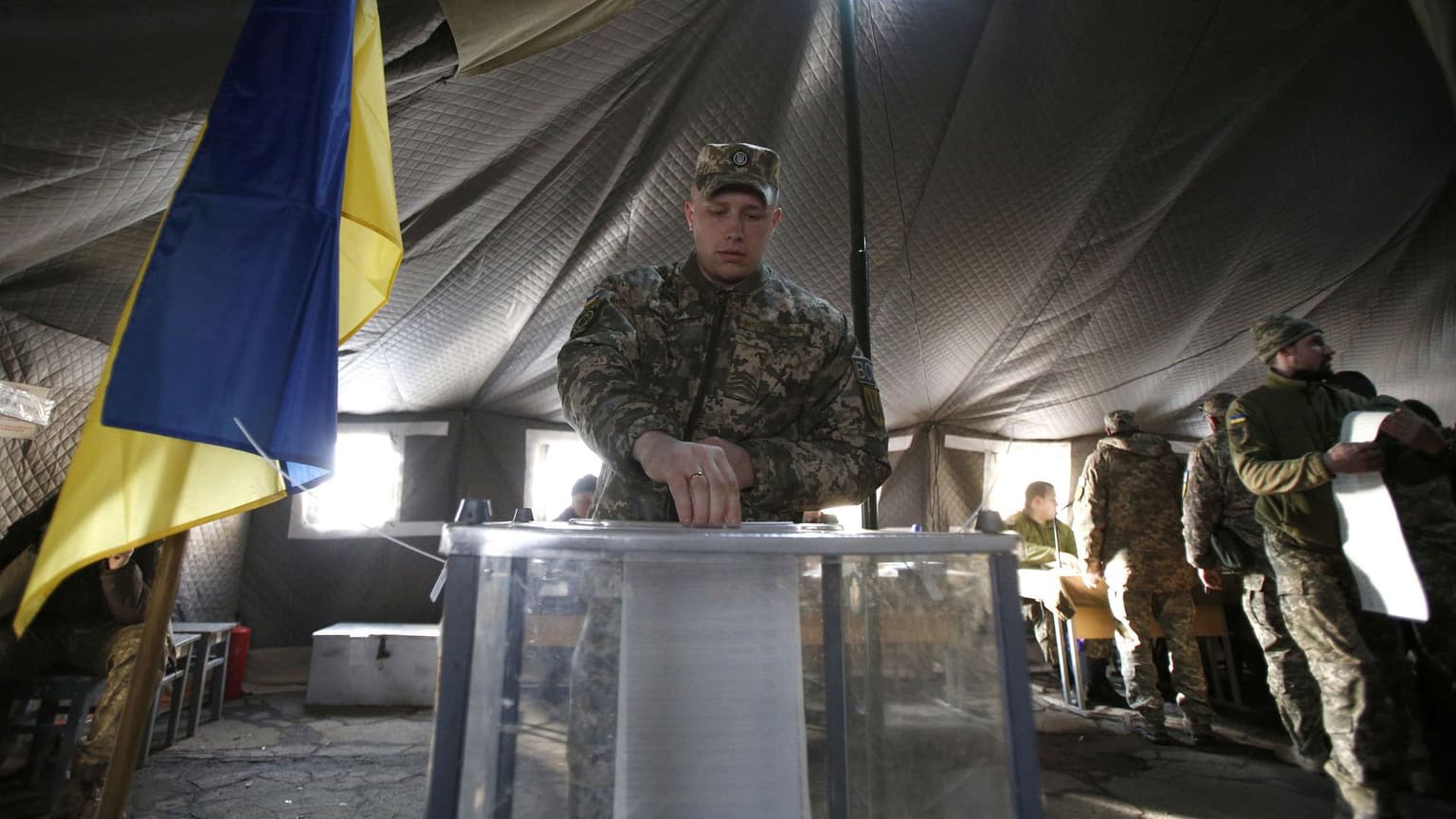
Ukrainian servicemen cast their ballots at a polling station near the frontline close to Avdiivka, Donetsk Oblast, Ukraine, on March 31, 2019. (Anatolii Stepanov / AFP via Getty Images)
 on Google
In recent weeks, President Volodymyr Zelensky began actively promoting the idea of holding a referendum and potentially presidential elections immediately after a ceasefire is reached.
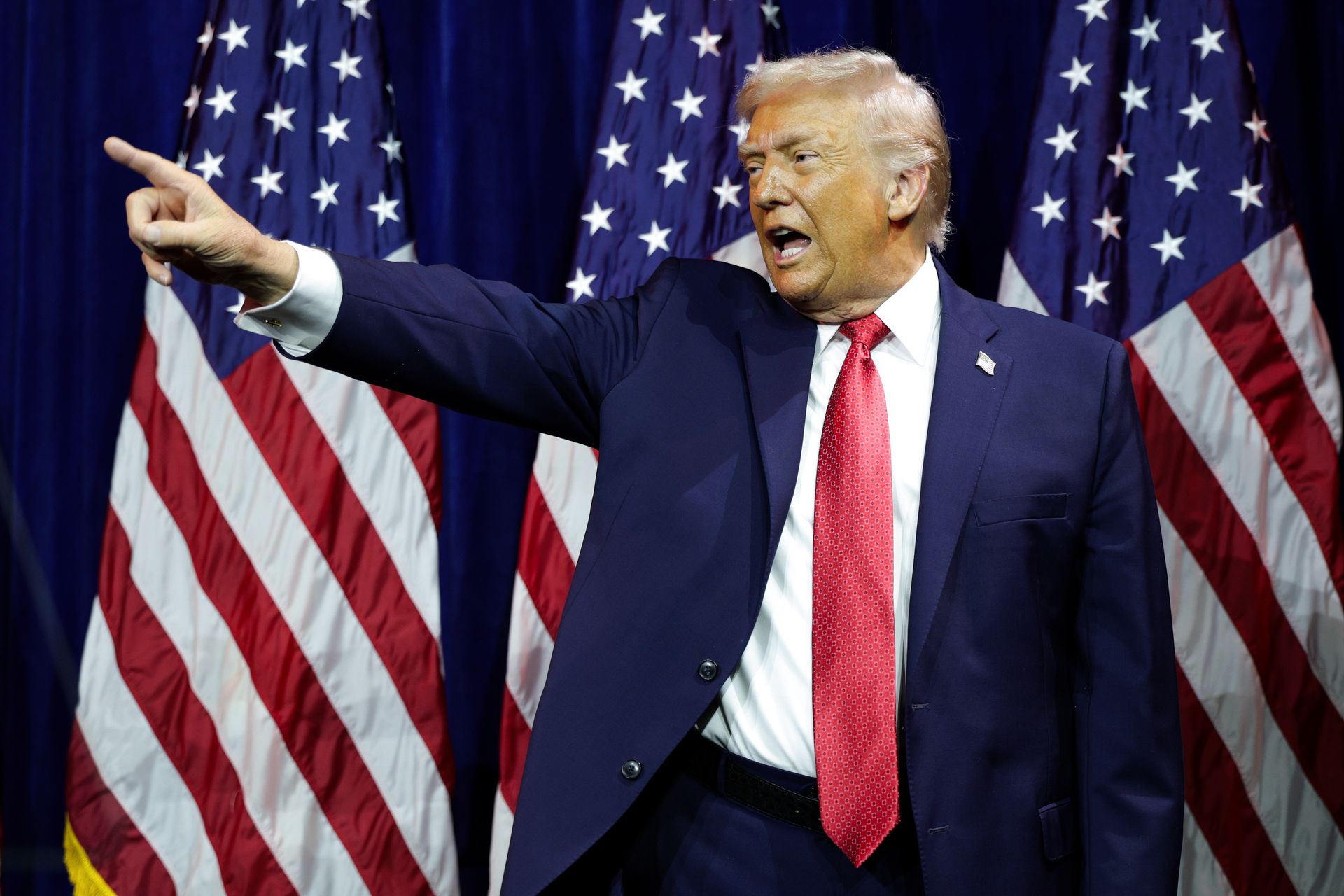
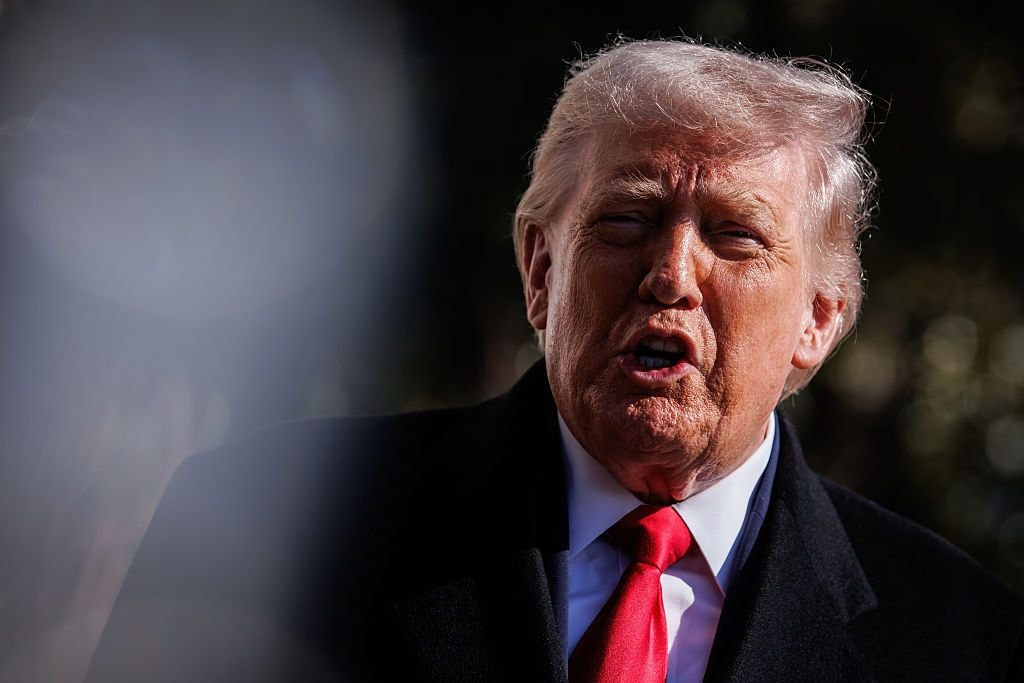
The goal of these preparations is to convince U.S. President Donald Trump that Ukraine is serious about a potential peace deal.
However, there are many obstacles to holding an election and a referendum before the official end of the war.
First and foremost, Russia has shown no indication of agreeing to any ceasefire.
But if a ceasefire does take place, and if an election is organized in a hasty manner, it is unlikely to be fair, competitive, and democratic, while a referendum on a deal infringing on territorial integrity would be unconstitutional.
"That’s why this is a very dangerous matter, and the key issue is how much trust the citizens of Ukraine will place in the results of such elections," Yaroslav Yurchyshyn, a lawmaker from the opposition Holos party, told the Kyiv Independent.
"What’s important now is to hold elections that result in a government with a high level of legitimacy, because this government will most likely be the one negotiating agreements between Ukraine and Russia."
A potential peace deal
In November, Trump's team proposed a 28-point peace plan that was effectively tantamount to Ukraine's surrender. The plan envisaged a Ukrainian withdrawal from the Donbas, limits on the Ukrainian army, and a pause on Ukraine's aspirations to join NATO.
The plan was later amended to reflect Ukraine's position.
However, no agreement on the crucial issue — withdrawal of Ukrainian troops from eastern Ukraine — has been reached.
Zelensky said in December that the peace plan would envisage holding a presidential election in Ukraine and that the plan would be subject either to ratification by parliament or approval in a referendum.

For that, a number of laws, including the one on martial law, must be amended.
David Arakhamia, head of Zelensky's faction in parliament, said on Jan. 3 that an election and a referendum could be held on the same day. He added that they could be held within 90 days after a ceasefire comes into effect.
On Jan. 7, Zelensky said that, if Kyiv and Washington reached an agreement on peace, security guarantees, and a prosperity package for Ukraine in January, legislative changes could be adopted in February.
Martial law and elections
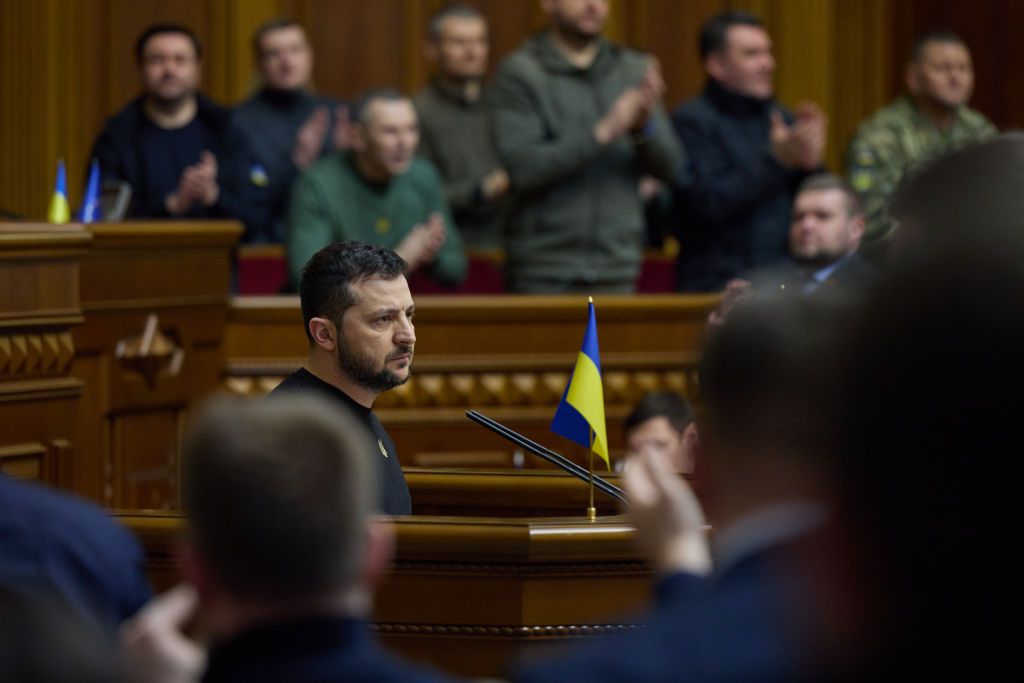
Ukraine's martial law, imposed at the beginning of Russia's full-scale invasion in 2022, explicitly bans presidential, parliamentary, and local elections.
Meanwhile, the Ukrainian Constitution stipulates that the authority of the country's parliament must be extended until the end of martial law. However, the Constitution does not contain similar provisions on presidential or local elections.
The only way to hold a presidential election is to either cancel martial law or change the martial law legislation.
Holding an election after the cancellation of martial law is seen as the more likely scenario, experts say.
If elections were held under martial law, they would not be considered democratic since martial law by definition imposes restrictions on civil liberties, Olha Aivazovska, head of Ukrainian watchdog Opora, told the Kyiv Independent.

Would it benefit Zelensky?
Critics say Zelensky wants to use a potential referendum to ensure his re-election.
"If a referendum is held at the same time as presidential elections, then for many people he will appear as the guarantor of this peace agreement," Ukrainian political analyst Volodymyr Fesenko told the Kyiv Independent.
"If someone else is elected, who knows whether the agreement will even be implemented, even if it was approved by referendum.”
However, if the population perceives a peace deal as Ukraine's surrender, Zelensky could use a different strategy and oppose the deal during a potential election, according to Fesenko.
Others, however, believe that Zelensky does not actually intend to hold any elections or referendums, and his recent statements are intended to appease Trump while negotiations are taking place.
"I understand the president’s position, because he cannot openly refuse," Oleksandr Merezhko, head of parliament's foreign affairs committee and a lawmaker from Zelensky's party, told the Kyiv Independent. "And here one has to deal with (Trump) very delicately, because we depend on the U.S., and we cannot afford to spoil relations with Trump."
Obstacles mount
Regardless of Zelensky's motivation, Russia's refusal to accept a deal makes either a referendum or an election unlikely.
"(Elections and a referendum) largely depend on whether the Russians will agree to a ceasefire before this referendum," Fesenko said. "As far as we know, there is no such agreement. If there is no such agreement, then the likelihood of holding the referendum, and accordingly the elections, seems extremely unlikely."
"It could tear the country apart."
Another problem is that it will be hard to gather votes in parliament for either ratifying a controversial peace deal or passing a law on holding an election and a referendum.
"Right now, even on fairly routine bills without any major vested interests, they’re barely generating 160–170 votes," Yurchyshyn said. "Where will they get the rest? That’s a big question."
To pass a law, the parliament requires 226 votes; for constitutional amendments, 300 supporters are needed.
If a potential peace deal is seen as controversial, lawmakers might be afraid of being accused of treason if they back it, Yurchyshyn added.
Support for an election and a referendum in Zelensky's own party appears to be weak.

"A referendum could be held, maybe someone might even theoretically vote 'yes,' but to amend the Constitution, to violate territorial integrity — that’s impossible," Merezhko said. "So there’s no point in even holding a referendum on this question."
He argued that a peace deal could be ratified by parliament, but it would make no sense to hold a referendum on it.
"So right now, I see no point in holding a referendum — from the perspective of logic, from a legal standpoint, it simply doesn’t make sense," he added. "As for elections, again, it’s very dangerous. It could tear the country apart."
Mykyta Poturayev, a lawmaker from Zelensky's Servant of the People party, agreed, saying that "a referendum would significantly complicate the domestic political situation."
"It could jeopardize socio-political stability because obviously, on the issues of territory and others, society is very divided," he said. "And under such conditions, putting such sensitive questions to a referendum is potentially very risky."
A competitive and fair election?
There are also concerns that a wartime election organized in a hasty manner would not be either fair or democratic.
Another problem is restrictions on the freedom of speech imposed by martial law and the opposition’s lack of access to the media.
Experts and analysts say that elections and a referendum would only be possible if there is a sustainable ceasefire for a lengthy period. Aivazovska said that preparing the electoral infrastructure would take about nine months.
Supporters of holding an election in wartime have also proposed electronic voting to ensure safe elections. Since millions of Ukrainians have left the country following the beginning of the full-scale invasion in 2022, online voting could also be an easy way for them to vote.
Zelensky said on Dec. 18 that he supported online voting for Ukrainians living abroad in a future presidential election.

But experts say that online voting would be unacceptable even if it is combined with regular voting. They argue that it could be used to rig elections, and because the transparency and fairness of voting could be questioned as a result.
Aivazovska argued that "electronic voting is not secure, and the secrecy of the vote is not guaranteed."
Another risk is that Russia could try to disrupt and manipulate the election, according to Aivazovska and Yurchyshyn.
An unconstitutional referendum?
Apart from these threats, there are also legal obstacles.
The Ukrainian Constitution bans constitutional changes that aim to "liquidate (the country's) independence or infringe on Ukraine's territorial integrity."
This clause appears to rule out de jure recognition of any Ukrainian territories as Russian.
However, it may also be interpreted as banning less radical changes — such as a Ukrainian withdrawal from the Donbas or "de facto recognition" of Ukrainian territories as Russian.
Fesenko and Aivazovska said that, before any potential referendum, such clauses would have to be first considered by the Constitutional Court.
The court might have a hard time deliberating on the issue because it could potentially lack a quorum. Out of the 18 Constitutional Court vacancies, only 12 are filled.
There is even a bigger problem — under Ukrainian law, the turnout in a referendum must be at least 50% to make its results valid. Aivazovska said that it would be impossible to ensure this because many of the internally displaced people and refugees who live abroad will not be able to vote.
And the main issue remains unsolved.
"I return to the fundamental point: no elections, referendums, or public surveys — anything that could be seen as a process of electoral power change — can be conducted before a publicly declared end to the war, before the end of martial law," Yurchyshyn said.
read also
 Oleksiy Sorokin
 Martin Fornusek
 Martin Fornusek