Trump's latest move hands Putin 'jackpot' as US eases Russian oil sanctions
 on Google

The United States issued a temporary license on March 12 allowing countries to purchase Russian oil currently stranded at sea in an effort to stabilize global energy prices, the U.S. Treasury Department announced.
The decision marks a major shift in Washington's sanctions enforcement strategy.
Washington had previously framed potential sanctions relief as leverage to push Russia toward concessions in negotiations to end its full-scale war against Ukraine.
Now, however, the geopolitical shock caused by the war with the Iran appears to be reshaping U.S. priorities.
Global oil and gas prices surged after the U.S. and Israel launched strikes on Iranian targets on Feb. 28. Tehran responded by closing the Strait of Hormuz — a maritime chokepoint through which roughly one-fifth of the world's oil supply flows.
At the same time, concerns in Washington have intensified over Moscow's role in the regional crisis. U.S. officials have alleged that Russia provided Iran with intelligence on the locations of American military assets in the region, including warships and aircraft.
Russian officials were quick to welcome the decision.
"Russian energy is indispensable to easing the world's largest energy crisis," Kirill Dmitriev, Moscow's envoy for economic cooperation, wrote on X.
Experts say such optimism reflects the likelihood that Moscow could gain financially.
"Lifting sanctions would be a jackpot for Russia," Oleksandr Talavera, professor of financial economics at the University of Birmingham, told the Kyiv Independent.
What the waiver allows
U.S. Treasury Secretary Scott Bessent described the measure as "narrowly tailored and short-term," saying it applies only to oil already in transit.
According to Bloomberg, roughly 30 vessels in Asian waters are currently carrying Russian crude and refined products that could become eligible for purchase.
About 145 million barrels of Russian oil are currently floating at sea and can now be purchased without U.S. sanctions, according to data from Kpler.
Ben Hilgenstock, sanctions expert with KSE Institute, told the Kyiv Independent the move represents a simple but modest way to address strong global demand.
"It's low-hanging fruit. You have a bunch of countries that are desperate for alternative supplies, including India, and you have a large amount of oil floating around on tankers," he said. "So it's pretty straightforward to inject that oil back into the market."

The move builds on an earlier waiver allowing India to buy Russian oil already loaded on tankers at sea to offset supply disruptions linked to the Middle East crisis.
That step followed months of U.S. pressure on New Delhi to reduce imports of Russian crude. Last year, the Trump administration imposed a 25% "reciprocal" tariff on Indian goods and an additional 25% penalty tied specifically to purchases of Russian oil.
The White House later lifted the additional penalty on Feb. 7 after India pledged to halt direct and indirect imports of Russian crude.
The Kyiv Independent has learned that broader sanctions relief options began to be discussed shortly after the waiver to India was approved.
The latest license, issued by the Office of Foreign Assets Control, took effect immediately and is scheduled to remain in force until April 11.
read also
 Karol Luczka
 Luca Léry Moffat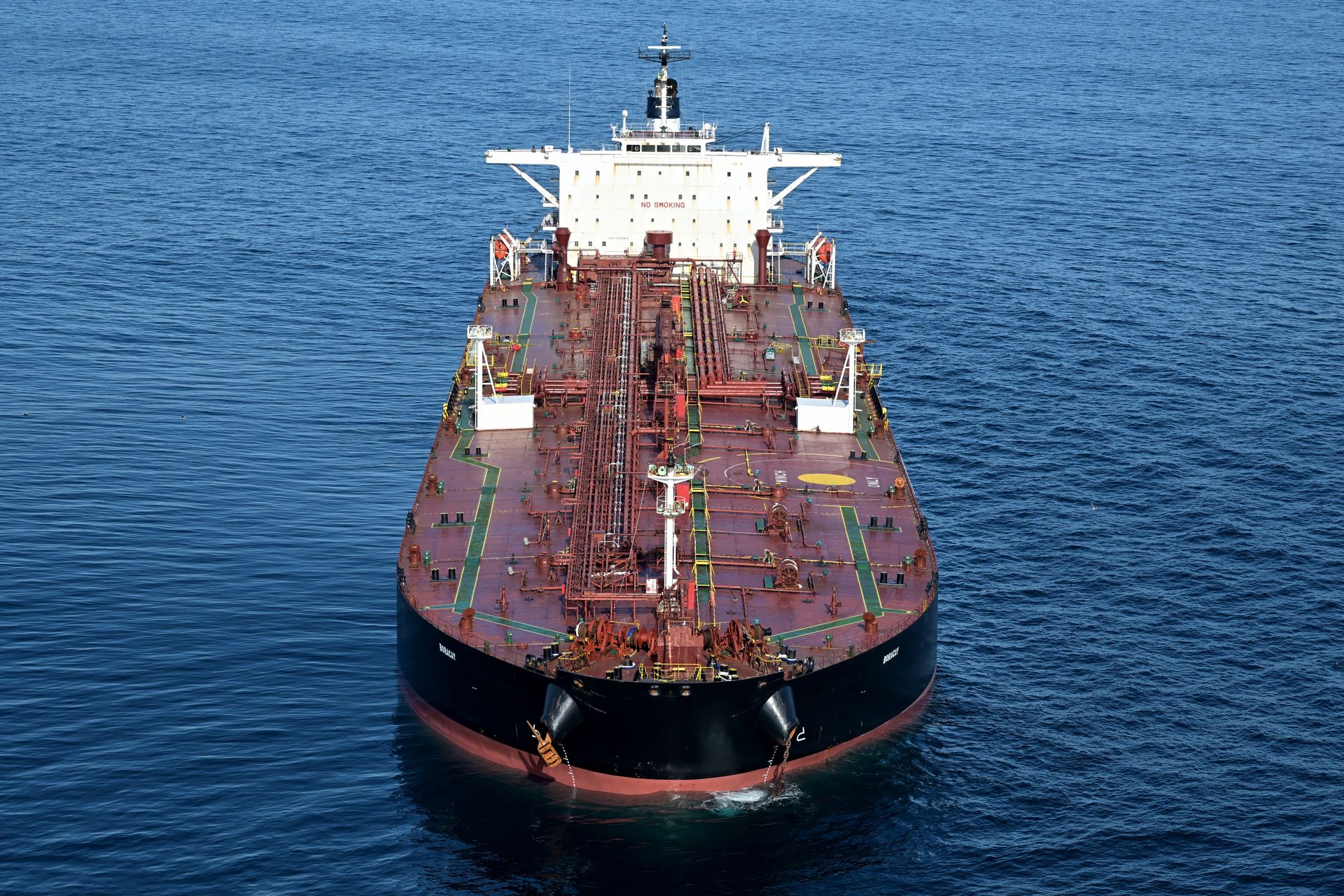
Debate over Russia's gains
U.S. officials insist the measure will not strengthen Russia's war finances.
Bessent said the authorization "will not provide significant financial benefit to the Russian government," arguing that Moscow collects most of its energy revenue through taxes imposed at the point of extraction rather than export.
U.S. Energy Secretary Chris Wright echoed that assessment earlier on March 8, saying Washington had made a pragmatic decision.
"I don't think there's any change in the pressure there," Wright said.
Economists and sanctions analysts offer a more cautious view.
Talavera noted that Russia's oil tax revenues had fallen to a five-year low by January 2026, forcing the government to prepare spending cuts of roughly 10%.
Allowing Moscow to sell crude without steep discounts could help restore access to major buyers precisely as global prices climb due to the war in Iran, he said.
"This windfall would give Vladimir Putin both fiscal revenues and additional funding for the war in Ukraine," Talavera told the Kyiv Independent.
The Center for Research on Energy and Clean Air (CREA) found that Russian oil revenues have soared in two weeks of fighting between the U.S., Israel, and Iran, providing Moscow with an additional six billion euros ($6.9 billion) in revenue.
Sanctions campaigner Alexander Kirk of the Urgewald NGO warned that the waiver risks providing Moscow with a financial lifeline.
"Allowing more Russian oil onto the market now only helps refill the Kremlin's war chest, undermining U.S. foreign policy," he told the Kyiv Independent.
Political backlash at home, abroad
Kyiv's reaction was predictable.
President Volodymyr Zelensky warned that this single easing of U.S. oil sanctions could provide Russia with approximately $10 billion to fund the war.
"That certainly doesn't help the peace process," Zelensky added.
A Ukrainian diplomatic source also told the Kyiv Independent that they believe the measure is unlikely to stabilize the markets.
"But it will help Russia fight longer — and this is despite the fact that it is Russia that is supporting the Iranian regime," the source said.
The Kremlin, by contrast, framed the waiver as a necessary step.
"Such measures will... help stabilize the market," Kremlin spokesperson Dmitry Peskov said. "Without volumes of Russian oil, market stabilization is impossible."
In Washington, Senate Democrats have demanded explanations.
Democratic Senators Elizabeth Warren and Jeanne Shaheen, along with Senate Democratic Leader Chuck Schumer, released a statement calling for Bessent to testify before March 31 about the sanctions relief.
"Russia is reportedly providing Iran intelligence to target and kill U.S. servicemembers, and the Trump administration's response has been to loosen pressure and help facilitate a windfall of $150 million each day for its war machine," the statement reads.
"Secretary Bessent needs to testify because Congress and the American people deserve immediate answers."
European governments have so far issued limited public reactions, but warned that the move poses a threat to European security.
"The unilateral decision by the US to lift sanctions on Russian oil exports is very concerning," European Council President Antonio Costa said.
German Chancellor Friedrich Merz also criticized the decision on March 13.
"We believe that is wrong," he said.