The deal Russia keeps talking about
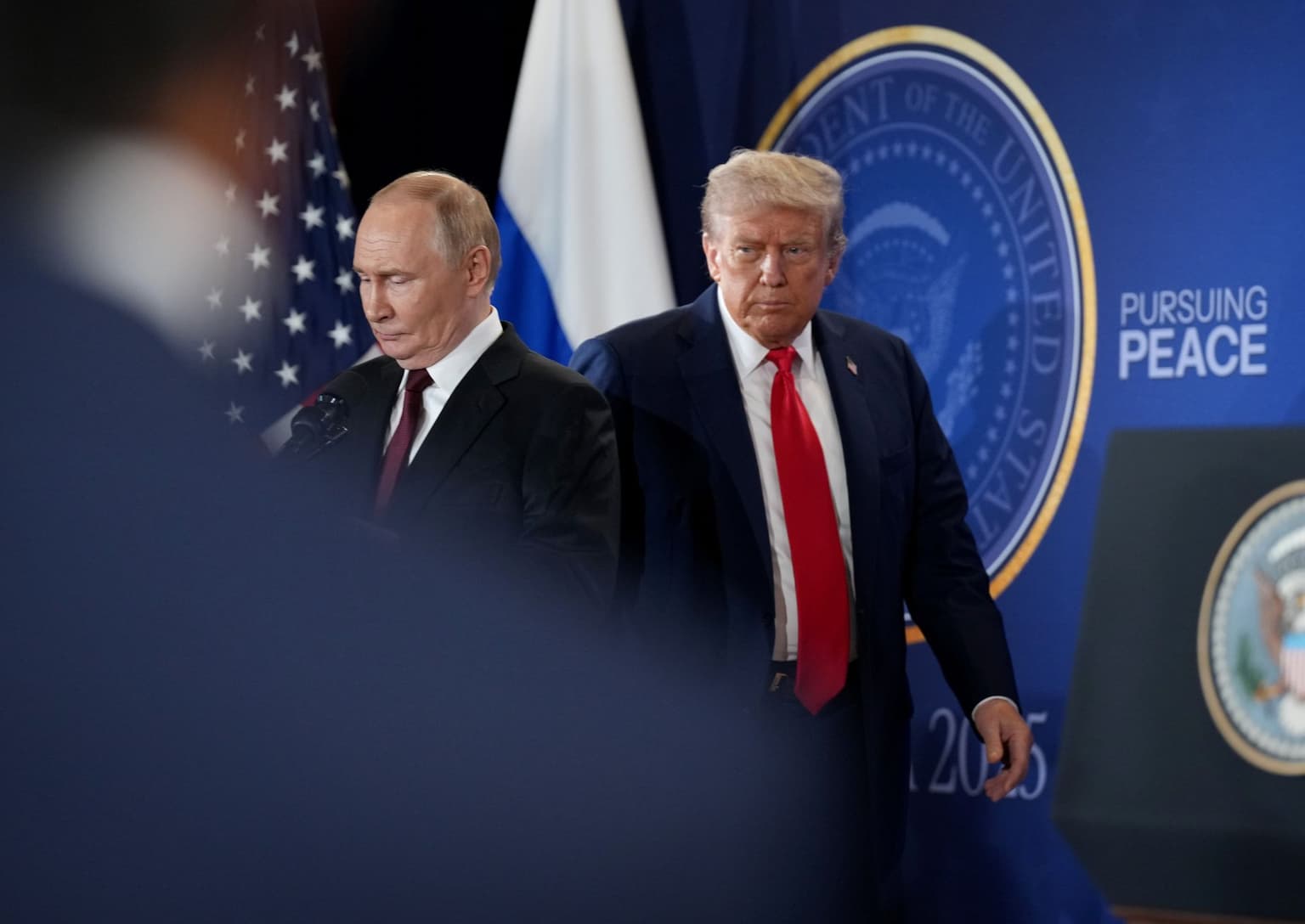
U.S. President Donald Trump (R) and Russian President Vladimir Putin on Aug. 15, 2025, in Anchorage, Alaska. (Andrew Harnik/Getty Images)
 on Google
Following the August summit between Russian President Vladimir Putin and U.S. President Donald Trump in Alaska, Moscow has repeatedly referred to the "Anchorage agreements," invoking the meeting as a supposed foundation for ending the war in Ukraine.
Now, as U.S.-mediated peace talks between Moscow and Kyiv stall amid Washington's focus on the war in Iran, Russian officials have again revived the narrative.
"There is currently a pause (in the negotiations)," Russian Foreign Minister Sergey Lavrov said in late March. "But we are aware of the contacts that have taken place between the Americans and the Ukrainians."
"We see that the U.S. side is striving to do everything possible to secure Kyiv's agreement to the understandings reached by the presidents of Russia and the United States in Alaska. We consider this approach to be the only correct one."
The references raise a central question: what exactly did the U.S. promise Moscow and is their an actual agreement in place?
Agreements or proposals?
Putin and Trump met in Anchorage on Aug. 15, 2025. Their one-on-one talks lasted nearly three hours, fueling speculation about possible breakthroughs.
Yet immediately after the meeting, Trump sought to temper expectations, telling reporters that "there's no deal until there's a deal."
Despite that, Moscow has continued to frame the meeting as a turning point.
"The territorial question, which is part of the 'Anchorage Formula,' carries particular significance for Russia," Kremlin spokesperson Dmitry Peskov said.
The phrasing offered a glimpse into how Moscow interprets the summit.
One of Moscow's core demands in the ongoing peace talks is for Ukraine to withdraw from the country's eastern territories Russian forces failed to seize militarily.
Russia has repeatedly insisted that Kyiv must pull it's troops out of Donbas — partially occupied since 2014 — as a key condition for any settlement. The demand would require Ukraine to relinquish areas it still controls, including strategic defensive positions.
Kyiv has rejected ceding land and instead proposed freezing the war along the current front line. Ukraine still holds roughly one-quarter of Donetsk Oblast, including a fortified defensive belt, as well as limited footholds in Luhansk Oblast.
One person familiar with the Alaska discussions confirmed to the Kyiv Independent that Moscow asked Washington to pressure Ukraine to withdraw from Donbas, which includes both Luhansk and Donetsk oblasts.

Another element of the discussions involved potential U.S. recognition of Russia's occupation of Crimea, according to the same source.
Russia illegally annexed Crimea in 2014 following a sham referendum conducted under military occupation and without international observers.
Any move by Washington to recognize Crimea as Russian territory would contradict long-standing U.S. policy and international law.
Still, the source said these ideas were discussed in Alaska — proposals Moscow continues to reference as "understandings."
Russian Deputy Foreign Minister Mikhail Galuzin reinforced that interpretation on April 1, saying the U.S. is working to persuade Ukraine to accept compromises.
"They are focusing on what matters most — the root causes of the conflict and the need to address them, as well as the situation on the ground," he said.
"And now the task is for the Americans to secure the Ukrainian side's agreement to these proposals... The American side is currently working on this with Kyiv."

However, one U.S. official told the Kyiv Independent that no agreement was reached with Putin during the meeting, framing the Russian narratives as misleading.
The official also rejected claims that Washington is trying to push Ukraine toward any alleged "understandings," saying the administration's position remains that territorial issues should be decided between Kyiv and Moscow.
At the same time, a Ukrainian official previously told the Kyiv Independent that Washington does not actively object to Russian territorial claims, highlighting the ambiguity surrounding the negotiations.
The official fears that the U.S. could eventually pressure Kyiv to accept Moscow's terms, particularly regarding Donbas.
One person familiar with the matter, who spoke on condition of anonymity, added that Russia and the U.S. "reached a conceptual agreement in Alaska on how to end things," adding that "the Russians are basing their conclusions on this."

What Moscow plans to achieve?
Beyond the substance of the discussions, Moscow's rhetoric may serve a strategic communication purpose.
Oleksandr Merezhko, head of Ukraine's parliamentary foreign affairs committee, described the narrative as "a classic example of Russian propaganda."
He said the notion of a "spirit of Anchorage" echoes Soviet-era diplomatic language designed to suggest momentum without detailing actual commitments.
According to Merezhko, the term is deliberately vague and used precisely because no written agreement exists.
A U.S. official confirmed that no formal deal was reached during the meeting.
Russia is therefore attempting to extract maximum political and propaganda value from the summit, using it as a signal, Merezhko said.

"They are not saying that the U.S. agreed to pressure Ukraine to withdraw its troops from Donbas — if they said that directly, it would be denied," he said.
Instead, Moscow relies on ambiguous wording and indirect references that imply progress while avoiding claims that could be challenged.
Peace talks pause
The renewed references to "Anchorage agreements" come as the timeline for the next round of peace talks remains uncertain.
The latest trilateral meeting involving Ukraine, Russia, and the United States took place on Feb. 16. A follow-up session planned for late February — later moved to early March — was postponed shortly before Washington launched strikes on Iran.
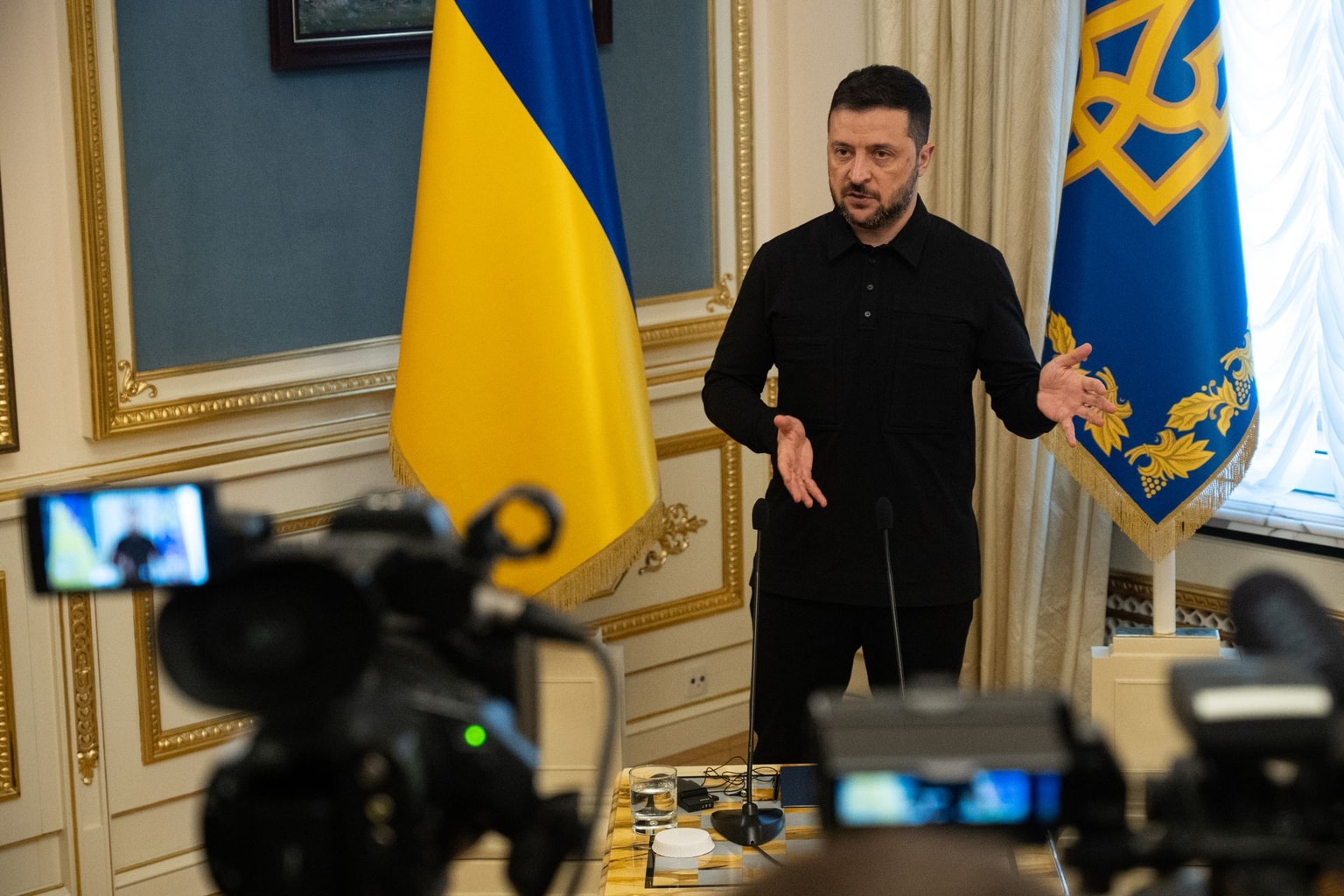
Despite the pause, President Volodymyr Zelensky said, responding to a question from the Kyiv Independent, that the negotiations had not collapsed.
"I don't think we've reached an impasse. We need to organize a trilateral meeting and continue down the diplomatic track."
Yet, even as Kyiv stresses diplomacy, Merezhko said from Moscow's perspective the situation remains deadlocked because Putin has not abandoned his goals.
He said ending the war while allowing Ukraine to remain a sovereign state would undermine the Kremlin's long-term goals.
"He can only stop when he achieves his goal — the destruction of Ukraine as an independent state. Anything else does not satisfy him," Merezhko said.
"Only when the Western world, starting with the United States, presents him with a dilemma — that if he doesn't stop the war, he'll lose power — he will stop."