To confront Iran, US must also confront Russia
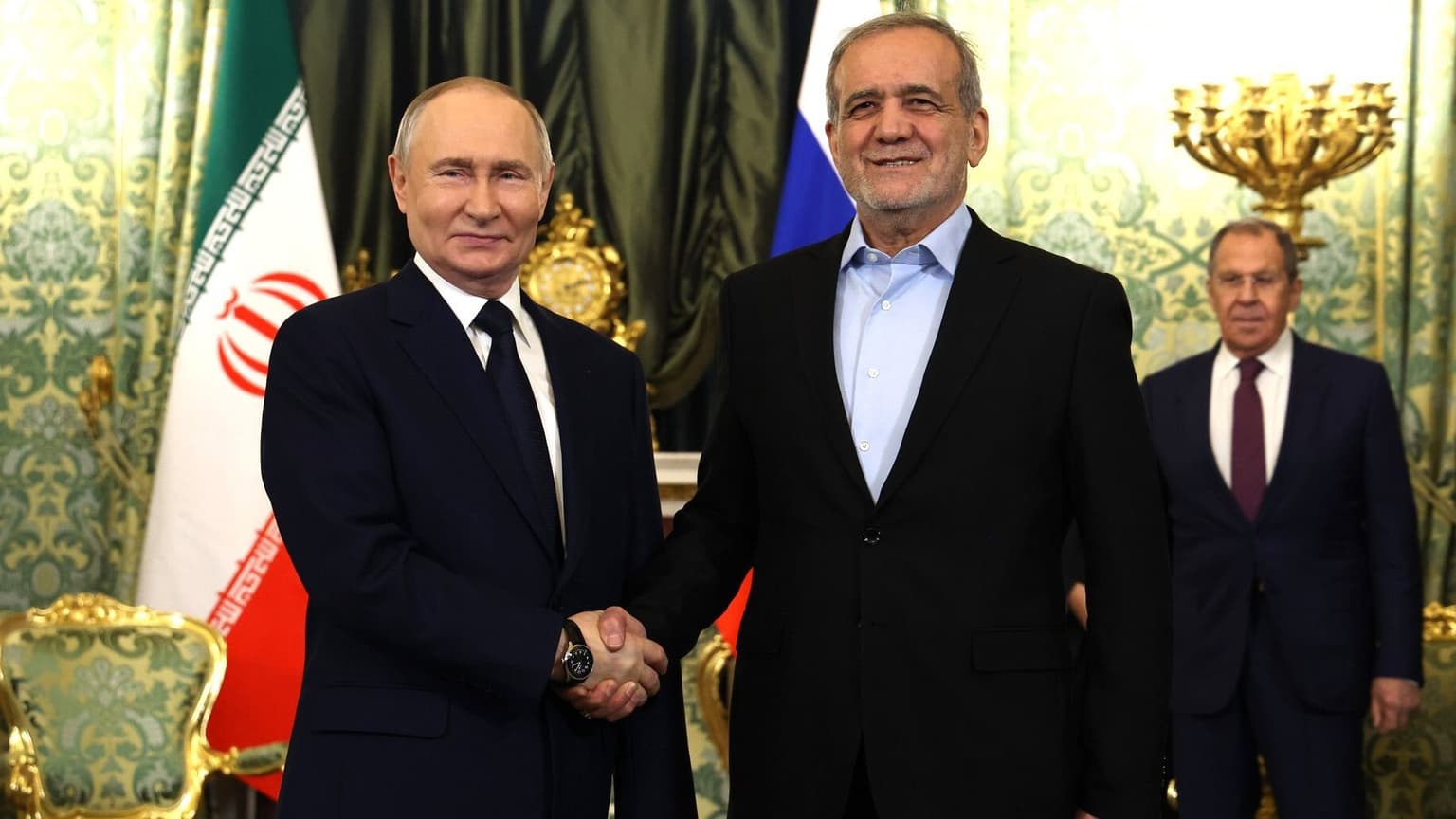
Russian President Vladimir Putin (L) meets with Iranian President Masoud Pezeshkian (R) on Jan. 17, 2025. (Kremlin Press Office / Handout / Anadolu via Getty Images)
 on Google
Oleksandr Merezhko
Chairman of the Foreign Affairs and Interparliamentary Ties Committee of the Verkhovna Rada of Ukraine
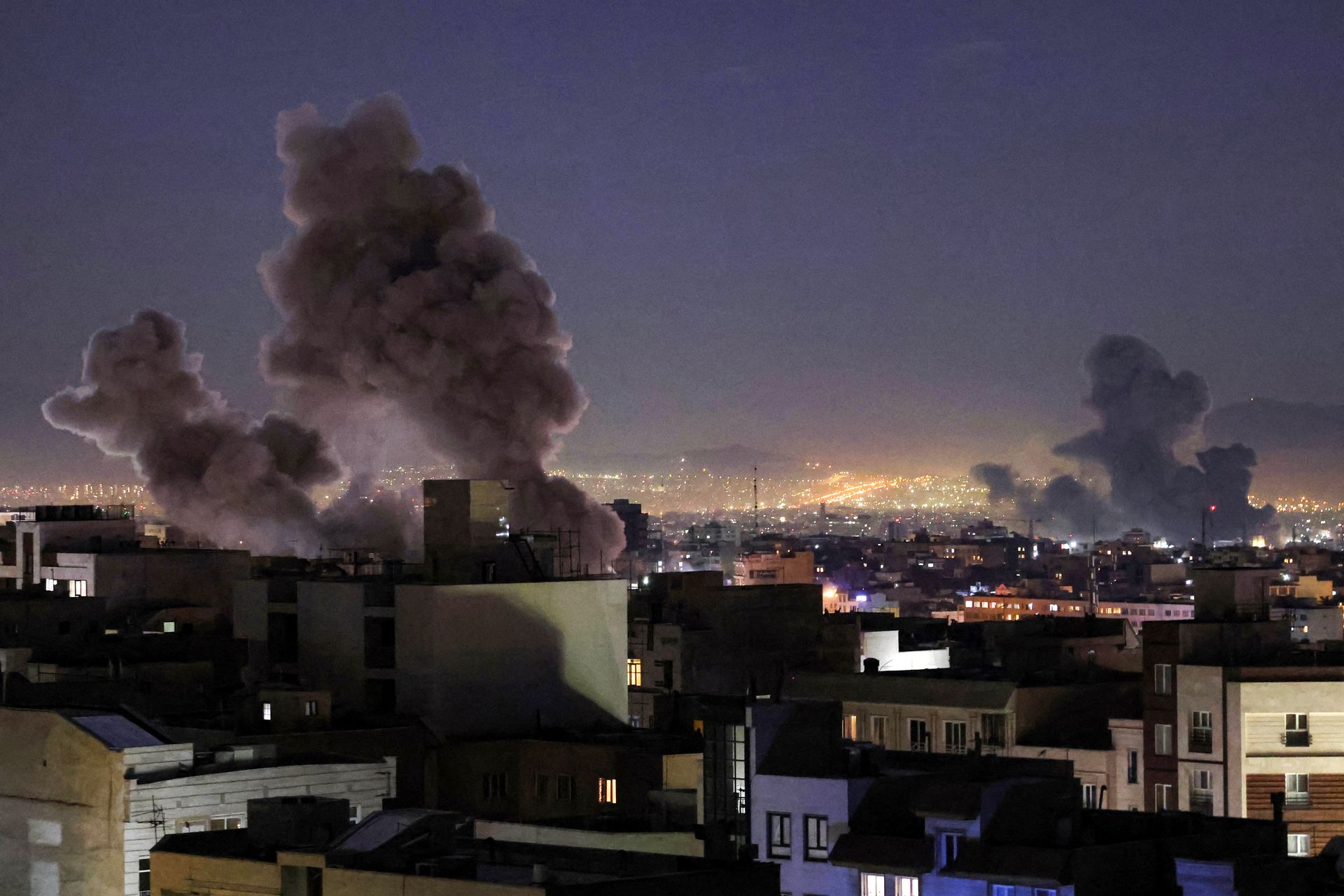
No regime invokes international law more fervently than when it sees its power being challenged. The moment American and Israeli forces struck Iranian targets, officials in Moscow and Tehran rushed to rediscover the UN Charter, denouncing the operation as unlawful.
Their sudden reverence for the "rule-book" is politically convenient — but it also forces a serious question: on what legal grounds can the use of force against Iran be justified?
One of U.S. President Donald Trump's principal arguments for the use of force against Iran has been the need to dismantle Iran's nuclear program.
From the standpoint of international law, this is a rather fragile justification. The UN Charter permits only two exceptions to the general prohibition on the use or threat of force in international relations: a relevant UN Security Council resolution authorizing the use of force, or the inherent right of individual or collective self-defense (Article 51 of the UN Charter).
At least at first glance, neither exception appears to apply. Against this backdrop, Trump could have advanced a far more compelling case — one linked to Ukraine.

First, the political argument. It is crucial to recognize that Iran, together with Russia, forms part of a broader coalition of authoritarian regimes — an axis of sorts — waging hybrid warfare against the Western world led by the United States.
The shared objective of Tehran and Moscow is to dismantle the rules-based international order and undermine the community of democratic states. Russia and Iran are now so deeply intertwined that any meaningful U.S. effort to confront Iran is inseparable from confronting its closest ally, Russia.
From the perspective of international law, Iran is complicit in at least two of Russia's international crimes: the crime of aggression and the crime of genocide against the Ukrainian people.
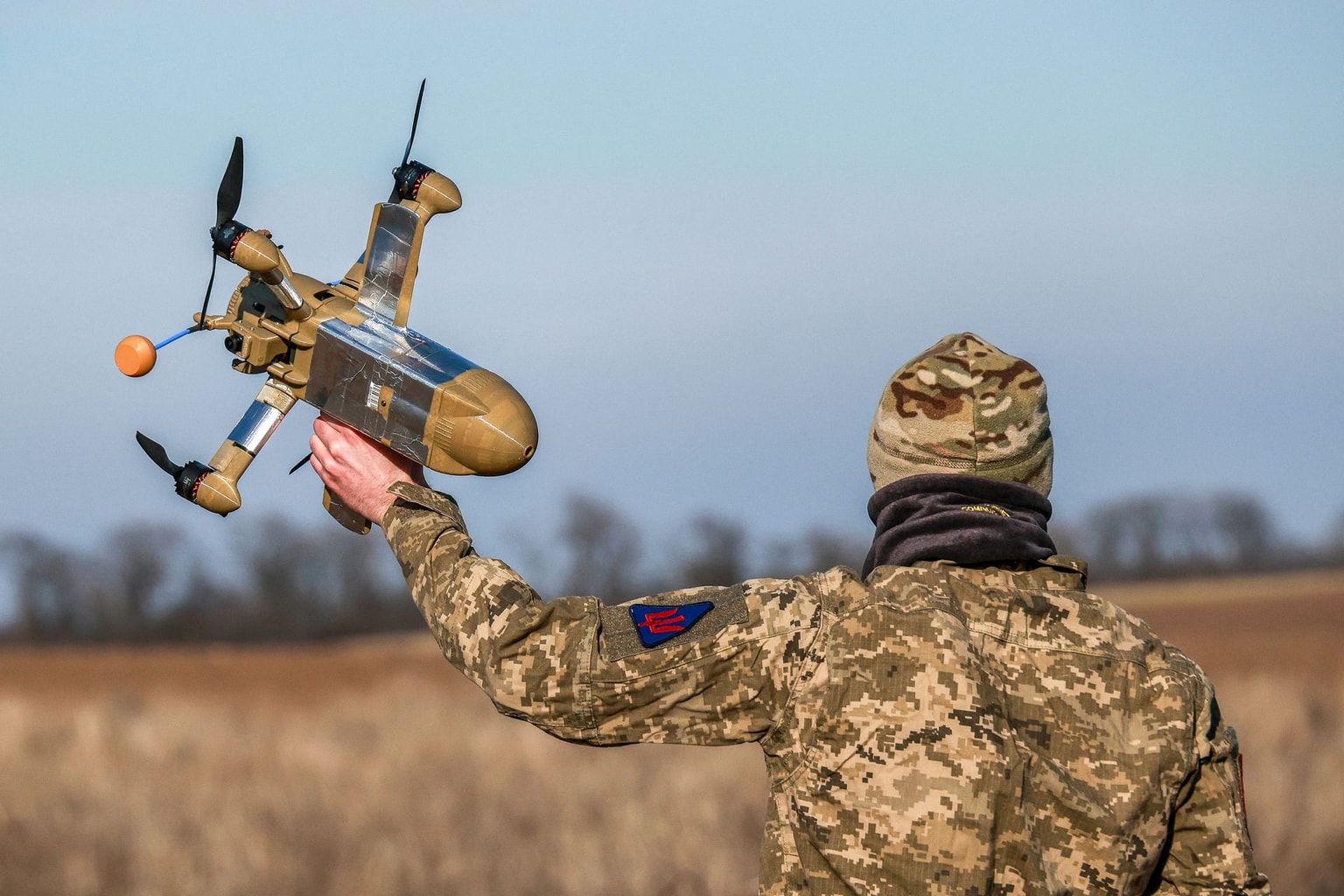
Iran has provided Russia with massive military assistance — more than 50,000 drones, dozens if not hundreds of ballistic missiles, artillery shells, and other materiel. Iranian specialists and technology have also helped Moscow expand domestic weapons production used against Ukraine.
Crucially, Iran supplies lethal weaponry in full awareness that Russia deploys it against Ukraine's civilian population and to destroy critical civilian infrastructure, conduct that forms part of the genocidal campaign Russia is waging against the Ukrainian nation.


For years now, Moscow and Tehran have tested and refined this joint war-making capacity in Ukraine, perfecting their tools of urban terror that are now launched across the Middle East and threaten American allies.
Iran appears to use the Russian tactics, deploying hundreds of Shahed drones against United States bases and facilities, as well as critical infrastructure. This pattern is a consequence of shared learning among Moscow and its strategic partners, which was largely unchallenged over the past several years.
In both instances — aggression and genocide — Iran is implicated in violations of erga omnes obligations, or, in other words, duties owed to the international community as a whole.
Russia and its accomplice Iran are not merely violating international law vis-a-vis Ukraine; they are breaching obligations owed to all states, including the United States. This provides Washington with a legal basis to oppose Iran as a co-perpetrator of Russia's crimes.
Moreover, both the Iranian and Russian regimes exhibit features of what can only be described as terrorist governance intertwined with nuclear coercion. If Russia engages in nuclear blackmail, its partner Iran seeks to acquire nuclear weapons of its own.
Ultimately, the legitimacy of U.S. action against Iran can rest only on a consistent and principled strategy — one that confronts both pillars of this authoritarian axis, both accomplices in international crimes: Russia and Iran alike.
Should the Trump administration fail to sustain pressure on Moscow, it risks forfeiting that legitimacy. It would allow the Kremlin to prosecute its war under the guise of negotiation, while critics question the consistency — and credibility — of American power.
Editor's note: The opinions expressed in the op-ed section are those of the authors and do not purport to reflect the views of the Kyiv Independent.
read also
 Oleg Sukhov
 Tim Zadorozhnyy
 Tim Zadorozhnyy