'They lied, of course' — Zelensky accuses Iran of deception in expanding Russia drone campaign
 on Google
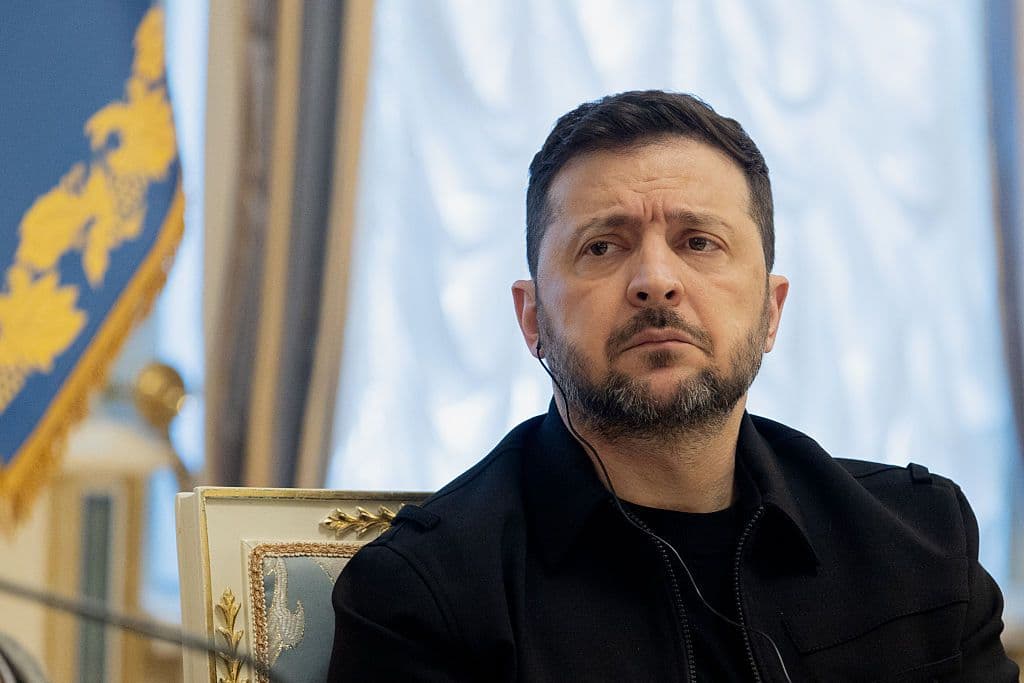
President Volodymyr Zelensky said Iran misled Ukraine about its military support for Russia, downplaying early shipments of armed drones that were later used extensively in attacks on Ukrainian cities and infrastructure.
"They lied, of course," Zelensky said in an interview with The Jerusalem Post, recalling early contacts between Kyiv and Tehran. Iranian officials, he said, insisted they had supplied only a limited number of Shahed drones to Russia — "1,200 or 1,300, and that's all."
"But it was not true," he added.
Ukraine had warned Iran not to transfer the weapons, Zelensky said, telling Tehran the drones would be used against civilians. "We asked them not to give weapons," he said. "Otherwise… they will kill our civilians."
Instead, he described what followed as a rapid expansion of cooperation between Moscow and Tehran, with consequences now reaching beyond Ukraine.
"We had a terrible experience with these drones," Zelensky said in the interview, describing waves of attacks that at times reached hundreds per day.
"We had 350 or 500 Iranian drones… each day and night."
According to Zelensky, the partnership evolved beyond simple arms transfers. Iran provided licenses and technical assistance that helped Russia scale domestic drone production, he said, while Russian forces later contributed to improving the systems.
"They gave licenses on production," he said. "And they created and helped them build two factories."
The result, he argued, is a feedback loop in which battlefield use in Ukraine accelerated the development of the drones now appearing in other regions.
"Ukraine was kind of an experiment place for these drones," Zelensky said. "You can't even compare" early versions with those in use today.

He said Ukrainian officials have found evidence suggesting Russian modifications in drones recovered outside Ukraine, pointing to what he described as a two-way military exchange. "I'm sure," he said when asked whether Russia was now helping Iran improve the systems.
Zelensky portrayed the drones as weapons refined through repeated strikes on civilian targets rather than conventional battlefield use.
"You can't get to a new version without using thousands of them," he said. "And they were used mostly not on the battlefield."
"Mostly, they use 99 percent of Shahed… to make practice on civilians," he added.
The Ukrainian leader framed the issue as a warning to other regions now facing similar threats, including the Middle East. The tactics, he said, are designed to overwhelm air defenses and damage critical infrastructure.
"They want to destroy energy, oil, gas, and any kind of power generation," he said.
Zelensky also linked the expansion of drone warfare to what he described as insufficient international pressure on Russia. Continued revenue from energy exports, he argued, has enabled Moscow to fund weapons production and deepen cooperation with Iran.
In Zelensky's account, Iran's initial denials about the scale of its drone transfers marked the beginning of a broader military alignment whose effects are now spreading.
"This is big knowledge from the battlefield," he said. "All these will have impact on other regions."
Zelensky became one of the first world leaders to publicly support U.S. and Israeli strikes against Iran.
Zelensky told the New York Times in an interview published on March 9 that Ukraine has deployed interceptor drones and a team of specialists to help protect U.S. military bases in Jordan, after receiving a request from the U.S. on March 5.
Kyiv has later dispatched an additional three teams of military experts. "This week, all three (teams) will be in three different countries... Qatar, the United Arab Emirates (UAE), and Saudi Arabia," Zelensky said in a briefing with journalists on March 10.

On March 14, Iranian politician Ebrahim Azizi called Ukrainian territory "a legitimate target for Iran" in a social media post.
Azizi threatened Ukraine for providing air defense support to countries in the Middle East, repelling Iranian drone attacks. Ukraine, which has years of experience fending off Iranian-made Shahed drones, offered to assist allies after the U.S.-Israeli attacks on Iran sparked a new wave of violence in the region.
By providing this support, "Ukraine has effectively become involved in the war and, under Article 51 of the United Nations Charter, has turned its entire territory into a legitimate target for Iran," Azizi wrote.
Ukraine's Foreign Ministry called the threat "absurd" in a statement from spokesperson Heorhii Tykhyi to the media.
"The Iranian regime has been supporting the murder of Ukrainians for years, by directly sharing drones and technology for Russian aggression against Ukraine," Tykhyi said.