'Article 5' without NATO — Why security guarantees may fail to protect Ukraine

(L-R) Germany's Chancellor Friedrich Merz, British Prime Minister Keir Starmer, President Volodymyr Zelensky, and French President Emmanuel Macron sit down ahead of a meeting inside 10 Downing Street in central London on Dec. 8, 2025. (Adrian Dennis / POOL / AFP via Getty Images)
 on Google
As Ukraine abandons hope of joining NATO anytime soon, it seeks the next best alternative: security guarantees based on the alliance's Article 5.
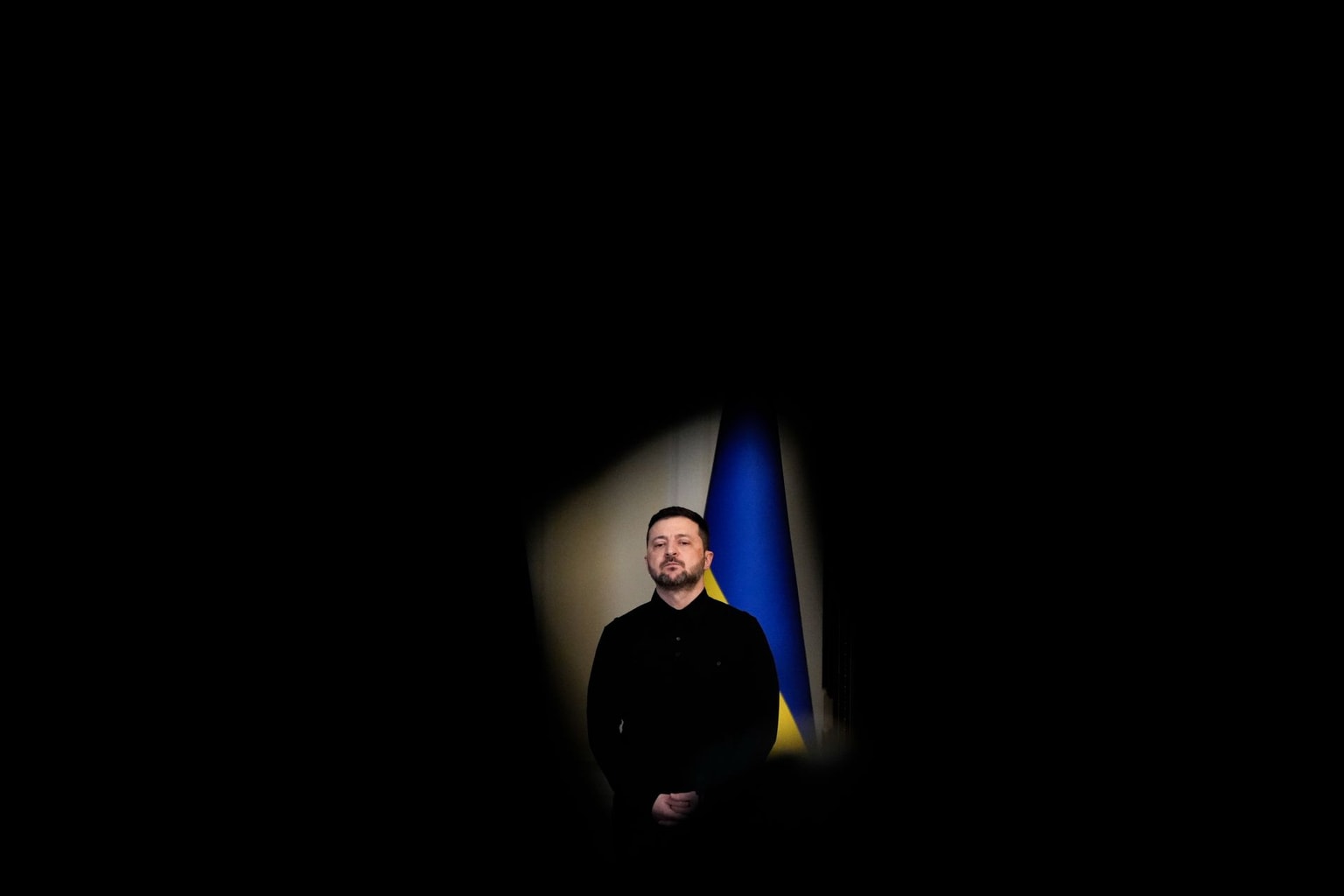
President Volodymyr Zelensky and other officials have been clear: any peace deal not backed up by real force invites future Russian aggression — much like the infamous Budapest Memorandum.
Following recent meetings in Berlin between Ukraine, U.S. and European officials, Washington appears open to providing the so-called "Article 5-like" security guarantees.
What "Article 5-like" security guarantees would look like in practice has not been decided, with European and Ukrainian officials privately acknowledging that they themselves have not fully resolved this issue.
However, Western and Ukrainian observers say that unless the West commits combat-ready troops on the ground, the guarantees will not deter Russia.
Moscow has ruled out accepting a peace offer in which NATO troops would be stationed in Ukraine.
As Ukrainian lawmaker Oleksandr Merezhko puts it, the Kremlin will only accept such a deal that does not prevent it from, eventually, "destroying or subjugating Ukraine."

What is the US actually offering?
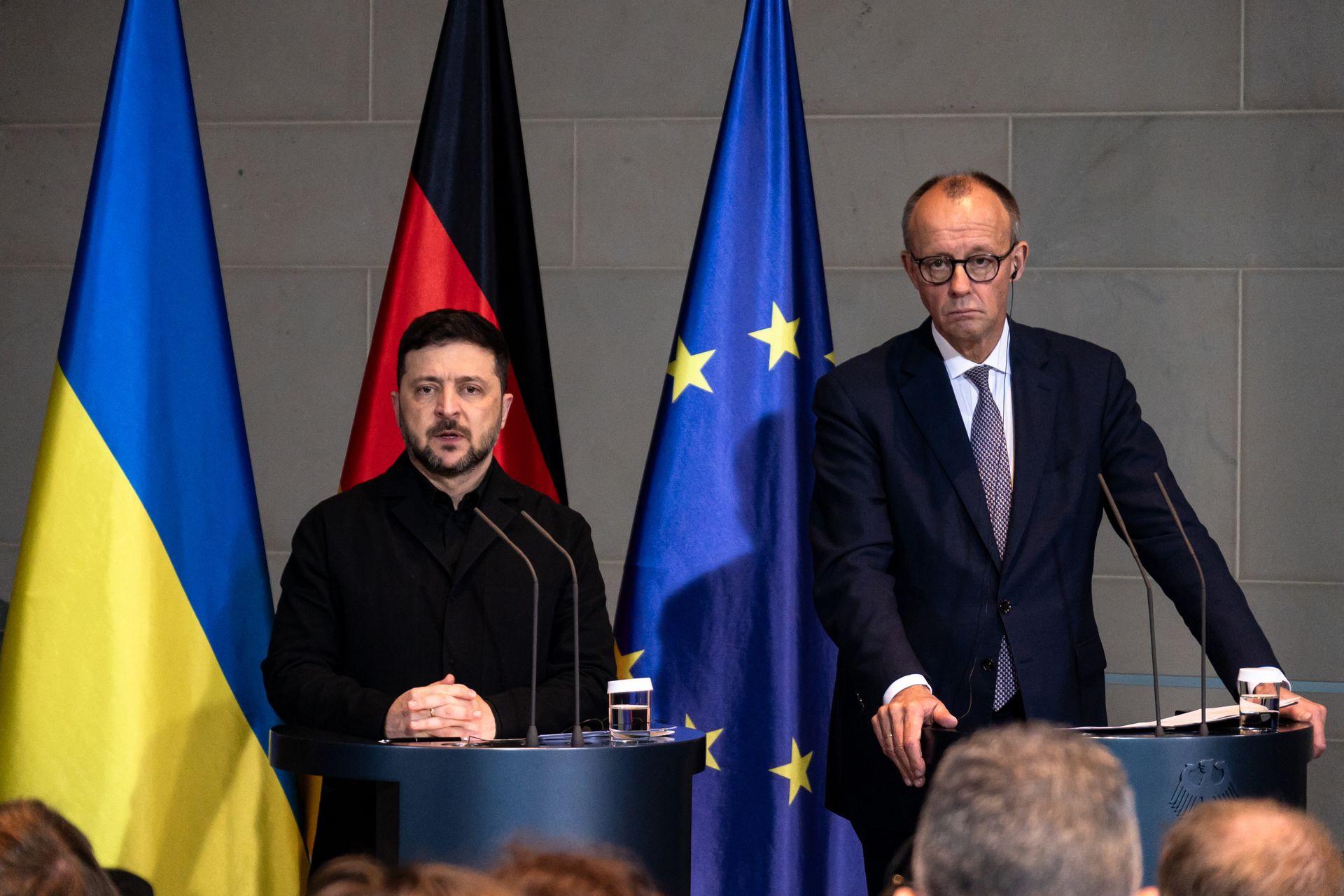
Speaking to journalists after the Berlin talks, Zelensky said Trump's team appears "ready" to provide Kyiv with the coveted NATO-like security guarantees, certified by the U.S. Congress.
While details remain scarce, a six-point joint statement by European leaders offers some clarity on what these guarantees may provide.
A European-led, U.S.-backed force would be deployed in Ukraine's rear to help rebuild Ukraine's military and secure the seas and skies. The U.S. would also assist with ceasefire monitoring.
The Coalition of the Willing has long sought a U.S. "backstop" for its Ukraine-bound "reassurance force," for example, in the form of intelligence or aerial support.
All this would be anchored in a "legally binding commitment" by partners to "restore peace and security" in the event of a future attack, through measures including "armed force, intelligence and logistical assistance, economic and diplomatic actions."
"It is highly unlikely that Russia would agree to such a deal unless there were some indication… that the U.S. would never carry out the terms of any security guarantee that it offered."
The formulation seems to grant parties broad discretion in selecting the tools they wish to use.
This does indeed closely echo NATO's Article 5, which says that assistance to an ally "may or may not involve the use of armed force."
Merezhko says that Article 5 works as an effective deterrent only because it is a "part of an institution," backed by the full might of NATO.
The only way such a guarantee could work for Ukraine, he adds, is if it frames any attack against Ukraine as an attack against the United States — mirroring another key part of Article 5.

"Because otherwise, they might be trying to bamboozle us again into non-legal empty assurances like under the Budapest Memorandum," Merezhko warns.
For the first time, Washington has signaled its readiness to respond with military means if Russia renews its aggression, Polish Prime Minister Donald Tusk said.
However, the scale and shape of this promised involvement remains unclear, and the U.S. has been adamant — even before Trump's return to office — that it will not deploy its troops in Ukraine.
The European-led Coalition of the Willing is at least ready to put boots on the ground. German Chancellor Friedrich Merz even suggested peacekeepers could monitor a proposed "demilitarized zone" and possibly "act against corresponding Russian incursions and attacks."
But, "we're not there yet," the chancellor added in a comment emblematic of ambiguous debates on the reassurance force's actual goals.
Mathieu Boulegue, an expert on Eurasian security, called comparisons to Article 5 a "misnomer," noting that the alliance has been unclear about the meaning of the guarantees in terms of military involvement.
"It really is about how credible we are in terms of escalation control and escalation dynamics against the Kremlin," Boulegue told the Kyiv Independent. "And right now, that credibility is very low to non-existent."
Can Trump be trusted?
Zelensky's focus on Congressional approval of U.S. guarantees carries a clear implication — if Russia attacks again, it is not clear whether Trump would honor his pledge.
According to U.S. foreign policy expert Dan Hamilton, Congress could reinforce the guarantees by taking inspiration from the Taiwan Relations Act, which commits more concrete defense support than NATO's Article 5.
The document also "specifically provides for a role for the Congress as well as the president," he adds.
However, Jenny Mathers, senior lecturer in international politics at Aberystwyth University, warns that "nothing is stopping Trump from breaking his promises, or indeed ignoring legislation passed by Congress if he chooses."
The expert argues that Trump has already demonstrated his disregard for the legislature in domestic politics, as he "routinely oversteps his constitutional authority."

Furthermore, it is not only Ukraine that has trust issues with Trump. After the first year of his presidency, even NATO's Article 5 does not seem so ironclad.
In March, the U.S. president declared he would not defend those NATO members who do not spend enough on defense.
Doubts about his commitment were further fueled by his new National Security Strategy and reporting that the U.S. threatened to leave NATO's defense coordination mechanisms after 2027.
NATO's principle of collective defense is also being increasingly tested by Russian aerial incursions, cyberattacks, and other hybrid operations, with the West often criticized for a lackluster response.
What is Russia's position?
Whatever Trump's team puts on the paper, there is still one elephant in the room — Russia.
Peace cannot be achieved quickly without Moscow agreeing to the conditions, and the Kremlin has made a ban on Ukraine joining NATO the "cornerstone" of its demands. It has also resolutely opposed the post-war presence of NATO troops in the country.
Nevertheless, Russian Deputy Foreign Minister Sergey Ryabkov has been upbeat about the peace process, saying recently that the two sides are "on the verge" of reaching a deal.
Experts foresee two scenarios. First, Russia will view the Article 5–like guarantees as genuine and thus reject the deal, sending the negotiations back to square one.
No less menacing is the second option: Russia accepts the deal, which means it does not believe the U.S. will honor its guarantees.

"It is highly unlikely that Russia would agree to such a deal unless there were some indication… that the U.S. would never carry out the terms of any security guarantee that it offered," Mathers told the Kyiv Independent.
But because what the West offers to Ukraine is so weak and ambiguous, the Kremlin is "comfortable" and "happy to push for continued discussions around security guarantees," Boulegue notes.
While Western hesitancy may provide Russia with time to advance on the battlefield, for Ukraine, the offered security guarantees may also be part of a longer game.
According to Boulegue, the guarantees could be seen as the "first step" toward steadily increasing efforts to protect and safeguard Ukraine in the long term.
"You can't go from zero to let's bring 100,000 troops from NATO to kill Russians," the expert summarizes.
Note from the author:
Hi, this is Martin Fornusek.
I hope you enjoyed this article. In our team, we believe fact-based and truthful reporting should be available to all — that's why we don't use a paywall.
If you'd like to help us provide you with more in-depth coverage of Ukraine's struggle against Russian aggression and other topics, please consider joining the Kyiv Independent community.