Russia's strong currency puzzles economists, signals economic woes
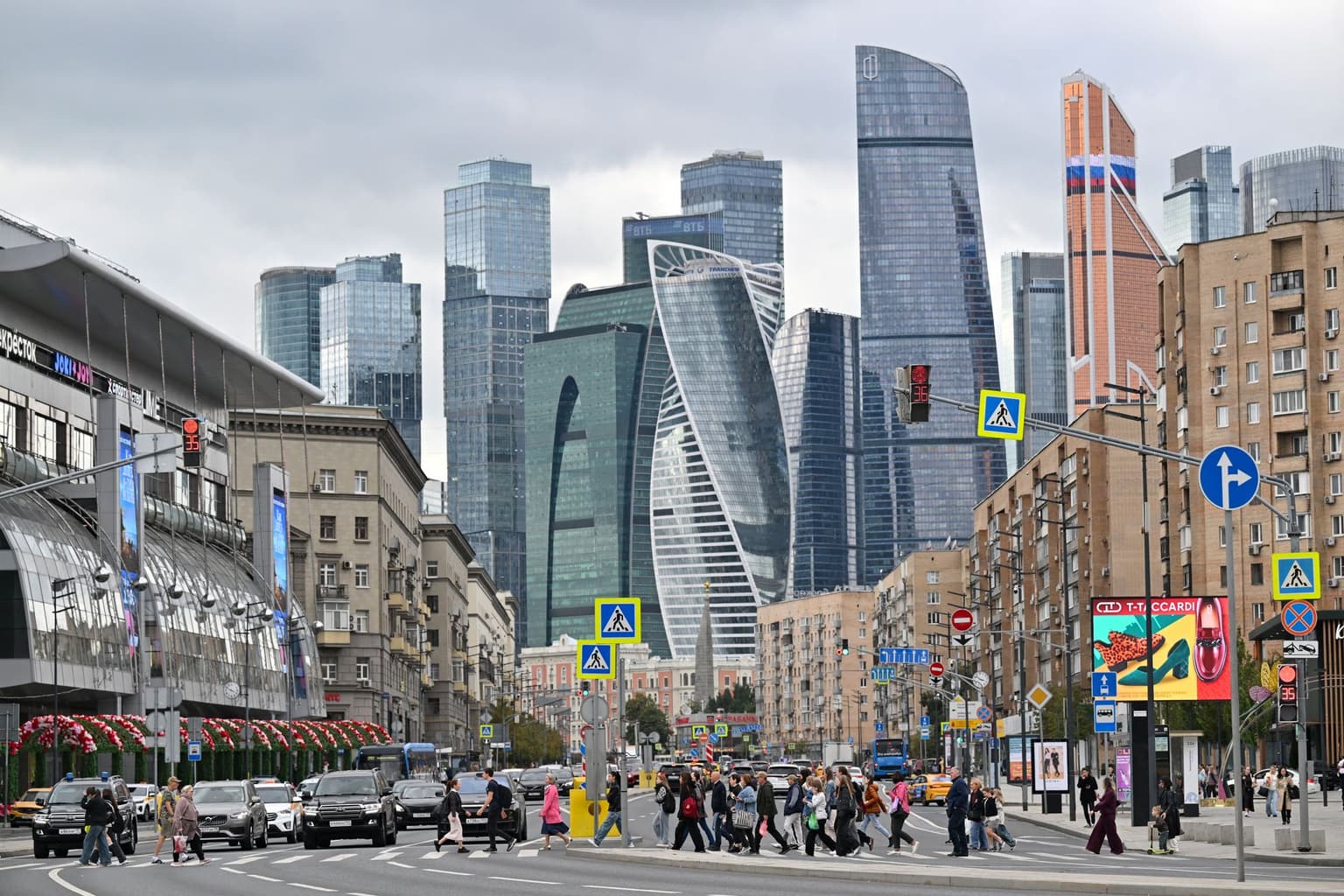
People cross a street in front of skyscrapers at the Moscow International Business Center in Moscow, Russia, on Sept. 3, 2025. (Olesya Kurpyayeva / AFP / Getty Images)
 on Google
Since early December, the Russian ruble has continued to strengthen against global currencies: on Dec. 7, it reached a value of only 76 rubles for one U.S. dollar, a figure unseen since May 2023.
It soon dropped to 79 rubles per U.S. dollar, an exchange rate close to one seen on the eve of Russia's full-scale war.
Ruble's strength came despite increasing sanction pressure by the Trump administration, which began targeting Russian oil giants Lukoil and Rosneft in October.
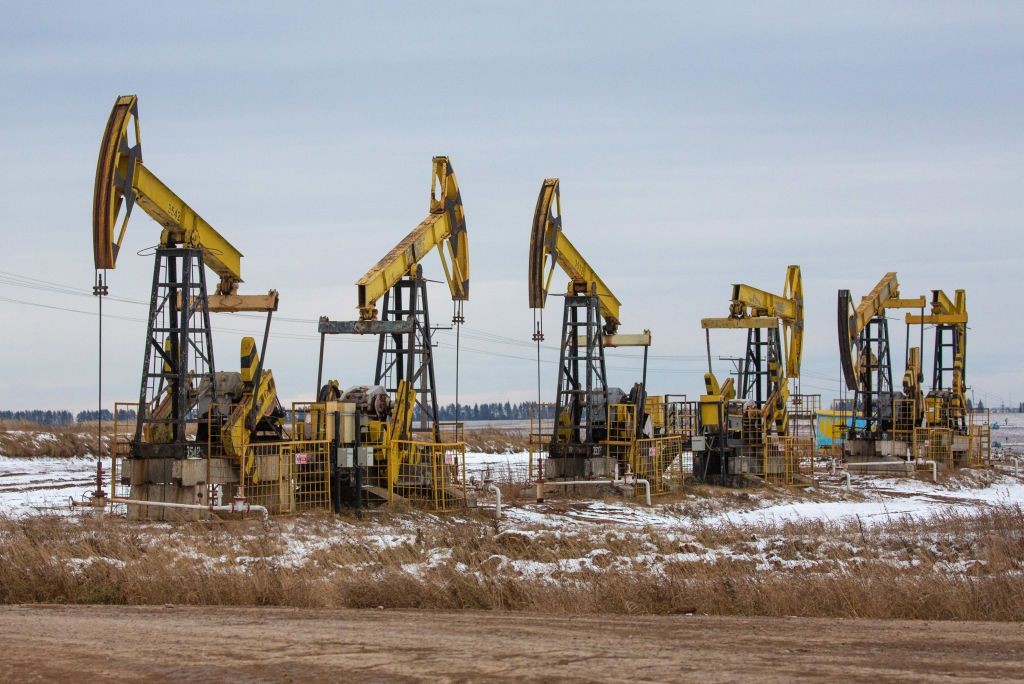
The measures, which fully came into effect on Nov. 21, have already led to Russian oil and gas revenues falling by one-third year-on-year, as of November 2025, according to calculations by the Reuters agency.
The Russian currency's strength will hurt the Russian economy more, according to economists and sector experts who spoke to the Kyiv Independent.
What a strong ruble means for the Russian economy
The history of the Russian ruble is one of recurring and hectic fluctuations.
Up until 2014 and Russia's initial invasion of Ukraine, it traded at approximately 20-30 rubles per dollar, before soaring to levels closer to 60 starting from 2014. In the next eight years before the start of the full-scale invasion, Russia's currency continued to gradually lose value, before observing an unseen, drastic drop in March 2022, immediately after the start of the all-out war.
Somewhat surprisingly, the ruble largely returned to its previous values in the following months.
These dynamics were somewhat "counterintuitive," according to an independent Russian economist who spoke to the Kyiv Independent on condition of anonymity.
"Many of the sanctions adopted had reverse effects on the ruble than those expected. Following the start of the full-scale invasion, restrictive measures meant that it became difficult to import goods into Russia: this lowered the demand for foreign currency and, as a result, the ruble strengthened."

While Russian authorities were able to stabilize their currency, Russia's stronger ruble created at least as many problems as it solved. On one hand, a stronger ruble is good domestically: consumers are, theoretically, able to buy imported goods at lower prices, while a strong and stable currency helps lower inflation.
From the perspective of the Russian budget, however, weakening Russia's currency helps the state receive more income from exports: in practice, a barrel of oil sold at a fixed price in dollars means more or less taxes paid in Russia's national currency, depending on the ruble's exchange rate. A strong national currency can also hamper growth, especially for markets such as the Russian one, which heavily relies on oil and gas exports.


Why is the ruble strengthening
As with previous fluctuations of the ruble, the currency's ongoing strength has puzzled Russian economists and analysts.
"According to classic macroeconomic principles, the ruble should be weaker than it currently is," said Konstantin Sonin, an exiled Russian economist and professor at the University of Chicago, in conversation with the Kyiv Independent.
The most basic explanation for the anomaly is Russia's constantly high interest rates, which depend on the key rate determined by the Russian Central Bank.
"Instead of weakening the ruble by causing lower revenues in foreign currency from selling oil, they might have strengthened (the currency)."
In an attempt to stop the ruble from collapsing following Russia's full-scale invasion of Ukraine, Russia's Central Bank immediately proceeded to hike the key rate, from 9.5% on Feb. 24, 2022, to 20% just four days later. This drastic step helped save the ruble from freefall.
"Russia's high key rate makes investments in the ruble more attractive than in foreign currencies (due to higher profitability)," said Denis Kasyanchuk, a journalist for The Bell, an exiled Russian media outlet focused on business and economics.
"This increases the demand for rubles, which drives up their value. But one year ago, the key rate was higher than it is today, so this cannot be the only reason why the ruble strengthened (over the same period)."
Another explanation could be foreign trade, according to Kasyanchuk, as Russia's imports in 2025 fell in comparison to those in 2024. However, this decrease was modest, and it also cannot be the main reason for the ruble's rise in value, the business journalist argued.

"Slightly paradoxically, the main factors could be the recent sanctions imposed on Russia, especially those that targeted Lukoil and Rosneft," said the Russian economist who spoke to the Kyiv Independent.
"Instead of weakening the ruble by causing lower revenues in foreign currency from selling oil, they might have strengthened (the currency): this is because sanctioned Russian companies started repatriating the foreign currency they hold abroad to Russia, as due to sanctions it became impossible to keep this currency on foreign accounts."
The strengthening of the Russian ruble would have been a logical result of this currency influx.
"It is obvious, though, that this situation will not last forever," the Russian economist argued.
'Non-standard' situation
While it is hard to pinpoint the exact reasons behind the strengthening of the Russian ruble, experts agree that Russia's current situation does not help its economy in any way.
"It is easy to start overthinking about why Russian authorities hike key rates or make other macroeconomic decisions, and end up with this or that exchange rate of the ruble," Sonin said. "But the reality is actually quite basic, as all their choices are really just subordinated to weapons production and Russia's ability to wage war. Other sectors of the economy are expected to adapt to whatever those needs require."
As a result, different sectors of the Russian economy work in vastly different conditions, with companies linked to the military operating on preferential terms. The management of this situation is "definitely not efficient," even if it is still far from "chaotic," Sonin argued.
"In parallel, the rest of the economy is not growing, and Russia's middle class lost a sizable share of its income," the Russia-based economist explained in turn. "Due to the state of the non-military share of the economy, there are not many resources left for further growth, even for the military sector. So, the prospects for the Russian economy are quite bleak in general."
However, according to Sonin, this does not necessarily mean that Russia will run into a dead end soon. "Depressed consumption definitely diminishes Russia's ability to wage war, but diminished consumption and no tools to wage war are two very different things," he argued.
"In any case, the recent strengthening of the ruble is not a success," said the Russian economist who spoke to the Kyiv Independent.
"Even if this is a positive situation for anyone with savings in rubles, it does not mean that the Russian economy is working," he said.