Slavoj Zizek: Welcome to the age of corridors
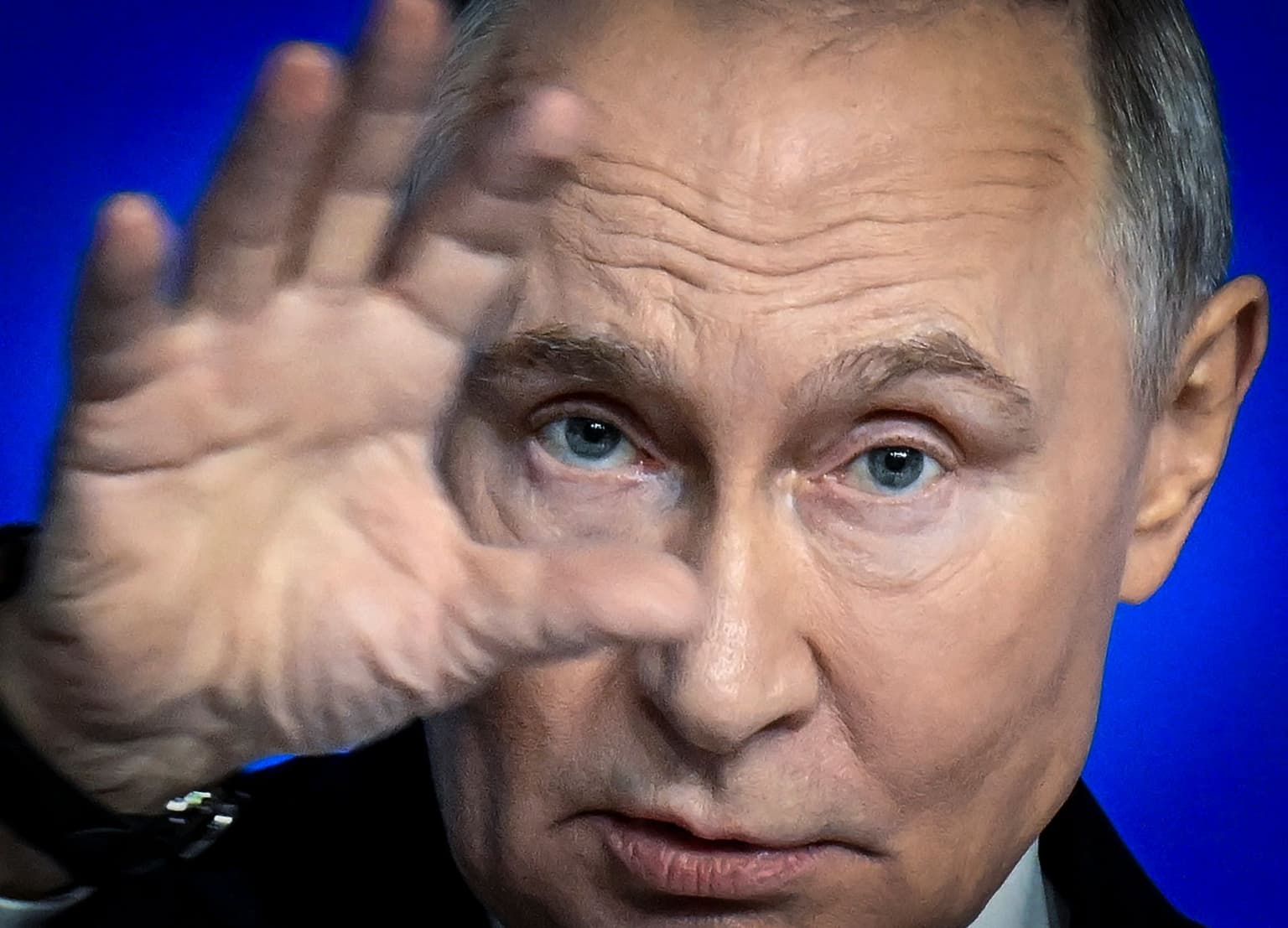
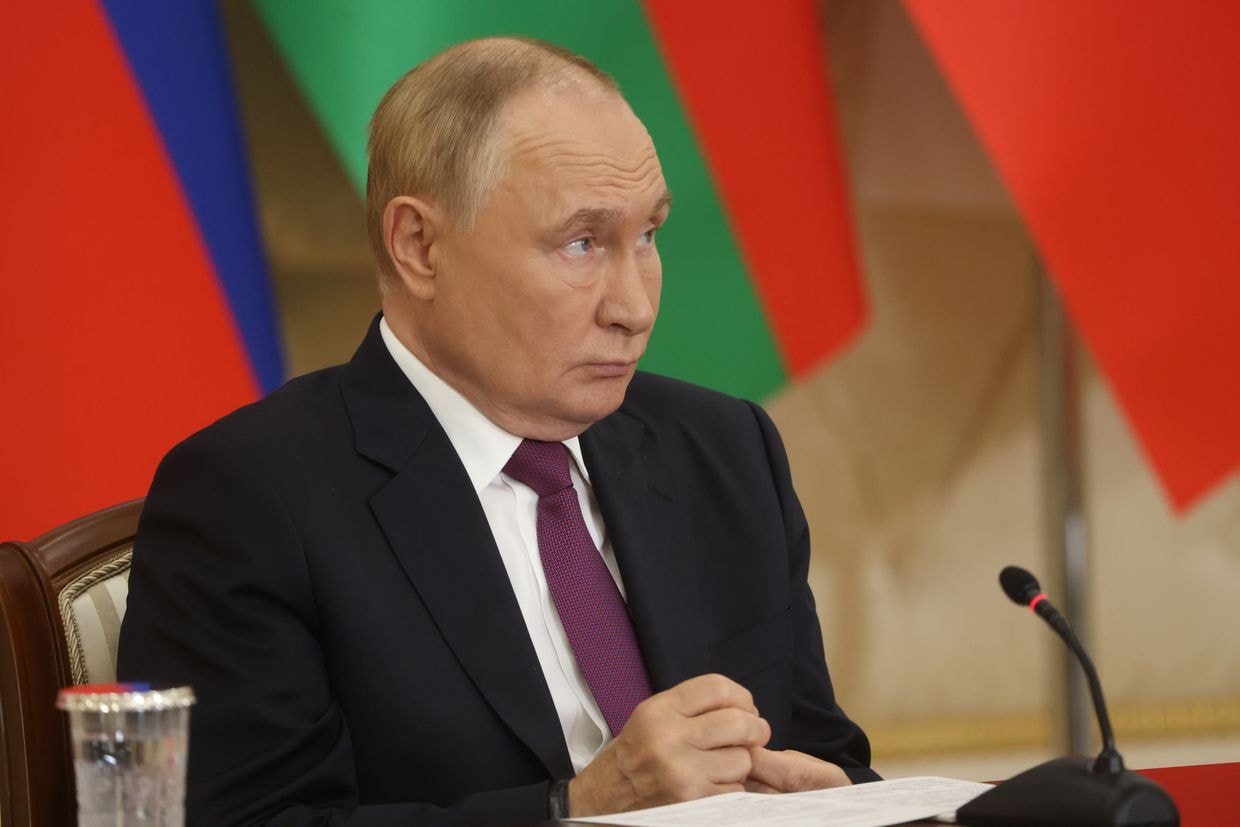
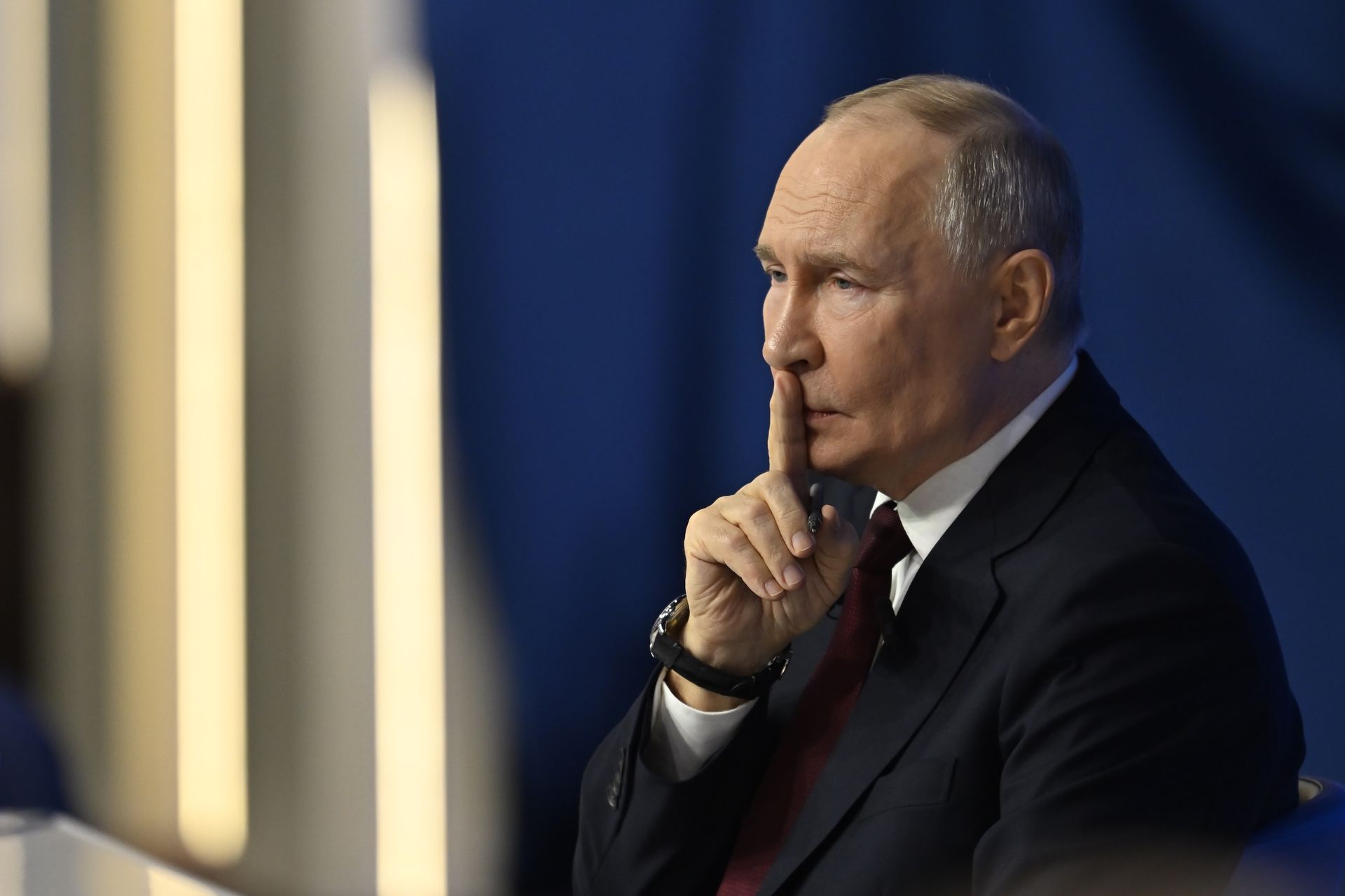
Russia's President Vladimir Putin gestures as he speaks during his annual end-of-year press conference, in Moscow, on Dec. 19, 2025. (Alexander Nemenov / AFP via Getty Images)
 on Google
Slavoj Žižek
Philosophy professor
When criminals are apprehended, their first statement is usually: "But I did nothing wrong, I am an honest man!"
The latest example of such a procedure — which, of course, stands for ideology at its purest — occurred in mid-December 2025 when Russia announced that it is "opening the Odesa corridor."
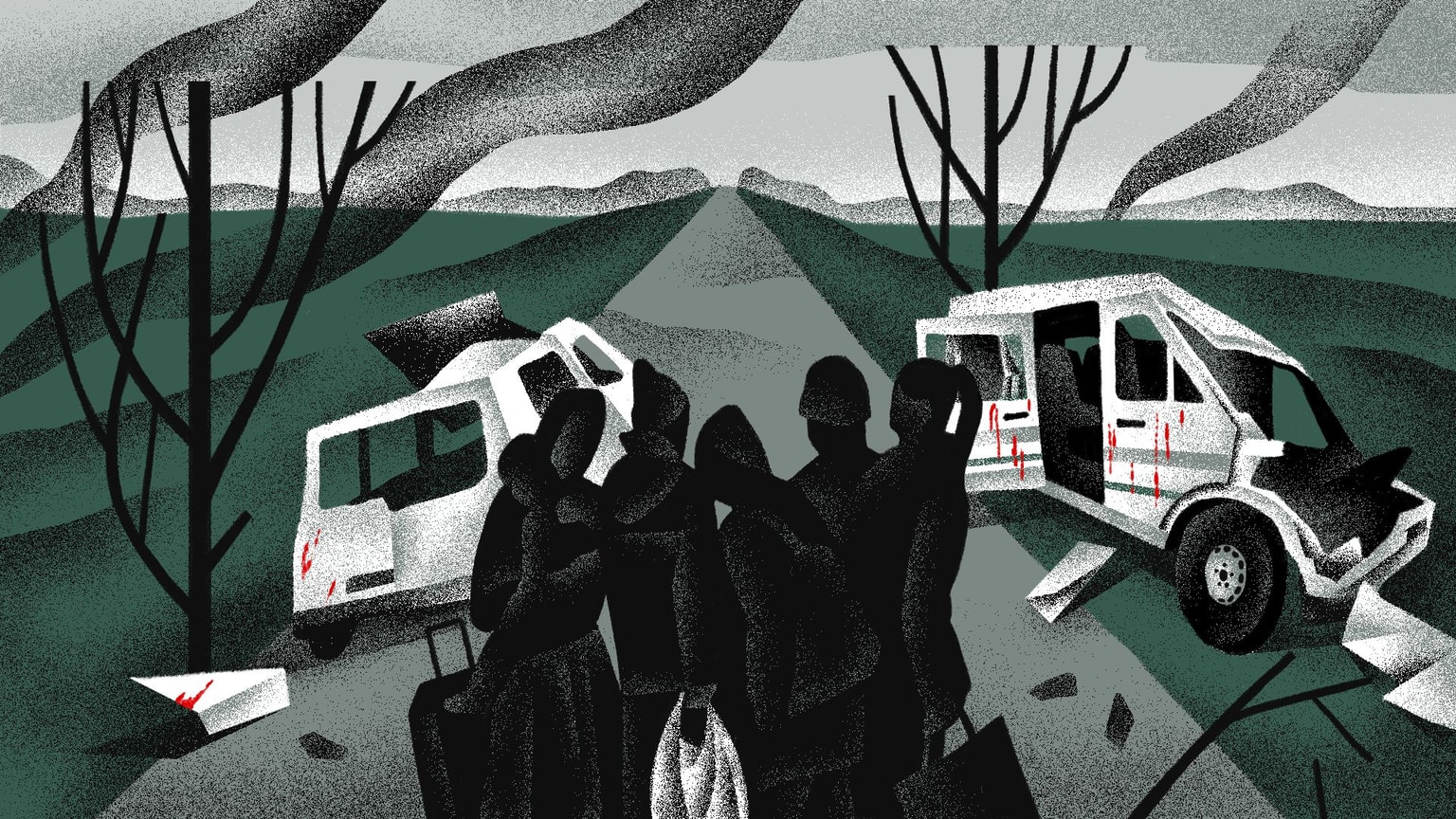
In this momentous announcement, largely ignored by our big media, "opening" stands for its exact opposite: Odesa is Ukraine's main port through which most of its export (grain, sunflowers, etc.) gets out, and to "open" a corridor to Odesa means that all ships leaving Odesa and going there will have to pass through this corridor tightly controlled by Russia and enabling it to reject the passage or to seize them.
Since this corridor will pass through international waters, its imposition amounts to a pure exercise of power, violating international laws.
Russia is not alone here. Isn't Trump doing the same with Venezuela, controlling access to it? (Maybe Putin even copied Trump.)
Will China do the same with Taiwan, opening a corridor to its ports? And is Israel not doing the same with Gaza, controlling access to it and seizing ships that approach it in international waters?
When a big power attacks a small country, the terms used are humanitarian help, opening up the space for human rights… as Russia does in Ukraine. That's why I support the idea that Benjamin Netanyahu and Donald Trump deserve a Nobel Peace Prize — I would just add Vladimir Putin to this list.
But what really depressed me is how some big Western "Leftists" (Yanis Varoufakis, Richard Wolff, John Mearsheimer…) reacted to the announcement of the opening of the Odesa corridor: they celebrated it as an adequate response to the Western imperialist control over transport infrastructure. (Do they include the constant bombardment of the city and its port that makes Odesa unlivable?)
Their idea is that Russia won without firing a single shot: it focused not on the battlefield but on what effectively upholds the states in their battle for world domination.
Western imperialist powers did not just produce more, and in a more efficient way, they also control the complex infrastructure of transport links, which allows them to exclude from this infrastructure the economies they consider a threat to their domination.
"Open market" is meaningless without the equal participation of all states in it. We were so used to this Western domination that we accepted it as the normal open space of commerce, although it was based on a set of obstacles and exclusions, from tariffs to direct military interventions.
Russia thus didn't simply break a neutral international transport network; it just did explicitly what the West was doing implicitly all along and thus rendering palpable the lie of the neutrality of the transport infrastructure.
As a Leftist, I am totally opposed to this reading.

First, it is a military intervention that potentially closes the world market to Ukraine, the greatest exporter of grain to Global South countries. This will not only hit Ukraine hard — making it even more dependent on Western financial support — but will also make food imports more expensive for Global South countries.
Instead of opening the markets, it will make the choice of where to buy products dependent on the brutal power of political feuds.
Yes, there are many things false in the West-dominated transport infrastructure, but Russia's act makes things even worse — it reminds us of the Stalinist critique of bourgeois "formal freedoms" which the Communists in power ruthlessly abolished, replacing them with the "actual freedom" of state terror.
As for the "anti-imperialist" nature of Russia's act, we should never forget that during World War II, fascists in Germany and in Japan also widely used the anti-imperialist rhetoric, presenting themselves as the liberators of the nations they occupied from the British-French-American imperialism.
The "Leftists" justify their understanding of Russia's opening of the Odesa corridor with another "Marxist" argument.
They remind us of the standard Marxist thesis that wars are never just a matter of military power, politics, and ideology. While the anti-Russian West focuses only on these aspects (Russia's desire to reestablish its lost imperial domain), it neglects what Russia understood clearly: wars are really decided by their economic base, by the economic strength and the social power grounded in this strength.
This is how, without firing a shot, Russia undermined a key moment of European economic strength, laying bare Europe's vulnerability and impotence.
No wonder, then, that the same "Leftists" also show great understanding for the second act of Russia: for how Russia reacted to the threat that Europe will grab the Russian money it keeps in Brussels and give it to Ukraine.
On the one hand, these "Marxists" point out that, if Europe were to seize this money and give it to Ukraine, it would ruin the basic stability of the international financial system. When a sovereign state deposits its reserves in a neutral financial institution in another country, it retains the unconditional right to freely dispose of this money and get it back when it wants.
Once you break this basic rule, the trust that sustains the international system begins to disintegrate; the consequence would be that the U.S. dollar and the euro will gradually lose their status of global currencies.
Although the EU did not seize the Russian reserves in Brussels, the very threat that it will do it prompted the reaction of Russia at multiple levels: Russia announced that it will begin to seize the property of the Western bank and companies still operating there; it will demand from buyers of its national resources (oil, above all) to pay for them in rubles or renminbi — not just Russia and China but also Saudi Arabia, Emirates and India expressed readiness to follow this de-dollarization.

This last measure will hit the Western European economy heavily: it will render its production costs much higher and thereby less competitive.
A financial space will thus emerge outside the control and regulation of Western "imperialist" financial institutions. The "Leftist" critics celebrate these Russian acts as an adequate heavy blow to the global imperialist financial infrastructure. When Europe nonetheless refused to directly seize the Russian financial reserves in Brussels, these same "Leftist" critics again dismissed this refusal as proof that the EU is afraid to act in a consistent way, and that it prefers to oscillate between helping Ukraine and its own egoistic interest of not disturbing the world order too much.
So, in a truly suicidal mood, the EU decided to get into debt itself in order to help Ukraine to survive — yet another suicidal move which will further cripple the European economy.
There is a strong moment of truth in this reproach. However, I think, a less critical interpretation of what Europe did is possible — I tend to agree with the comment according to which "what is really significant is that a bloc of 27 unruly sovereign states managed to come up with the money to ensure Ukraine wouldn't collapse. Just as Putin's words ensure the war will continue, so do the EU's deeds. The EU's decision is also important because it shows Europe's willingness to act independently on the war, even if it means putting distance between itself and the U.S."
I take this comment more literally than it was probably meant: yes, European money hopefully ensures that Ukraine wouldn't collapse, because Europe is fully aware that without this money, Russia will take all of Ukraine. Not just Putin's words, his deeds also ensure the war will go on, so it is a matter of survival for Ukraine to continue to fight. Losing the war means ceasing to exist as a nation.
This is why the implicit but unmissable joy in the "Leftists" jumping on Europe's dead body, as well as their repetitive praising of how Russia gave a lesson to Western imperialism, clearly falsifies their neutrality.
To cut a long story short, in the global conflict that is gradually approaching its point of no return, they are obviously on the side of Russia and China.
The united Europe is still an economic power, so it should do something it has been avoiding for years, something both Russia and the U.S. try to prevent at any cost: to proclaim independence of the united Europe.
Is it too late, as the "Leftist" critics try to convince us again and again? Is Europe already dead, a rotting corpse?
The very insistence of these critics that now (and there were many of these "nows") Europe finally committed suicide demonstrates that it is not too late — for such a decision, it is never too late.
The new power blocks that are emerging around the world are just versions of new Fascism with no ideological foundation — just think about the axis of Russia-Iran-Venezuela. Europe should be here an exception: the only place of fidelity to the emancipatory Enlightenment. Will the proclamation of European independence happen? No, in all probability — but its lack will be felt all around the world. If it will not happen, it is not because of the external pressures — Europe is ultimately afraid of itself.
Editor’s note: The opinions expressed in the op-ed section are those of the authors and do not purport to reflect the views of the Kyiv Independent.