Seven EU leaders voice support for loan to Ukraine backed by Russian assets
 on Google
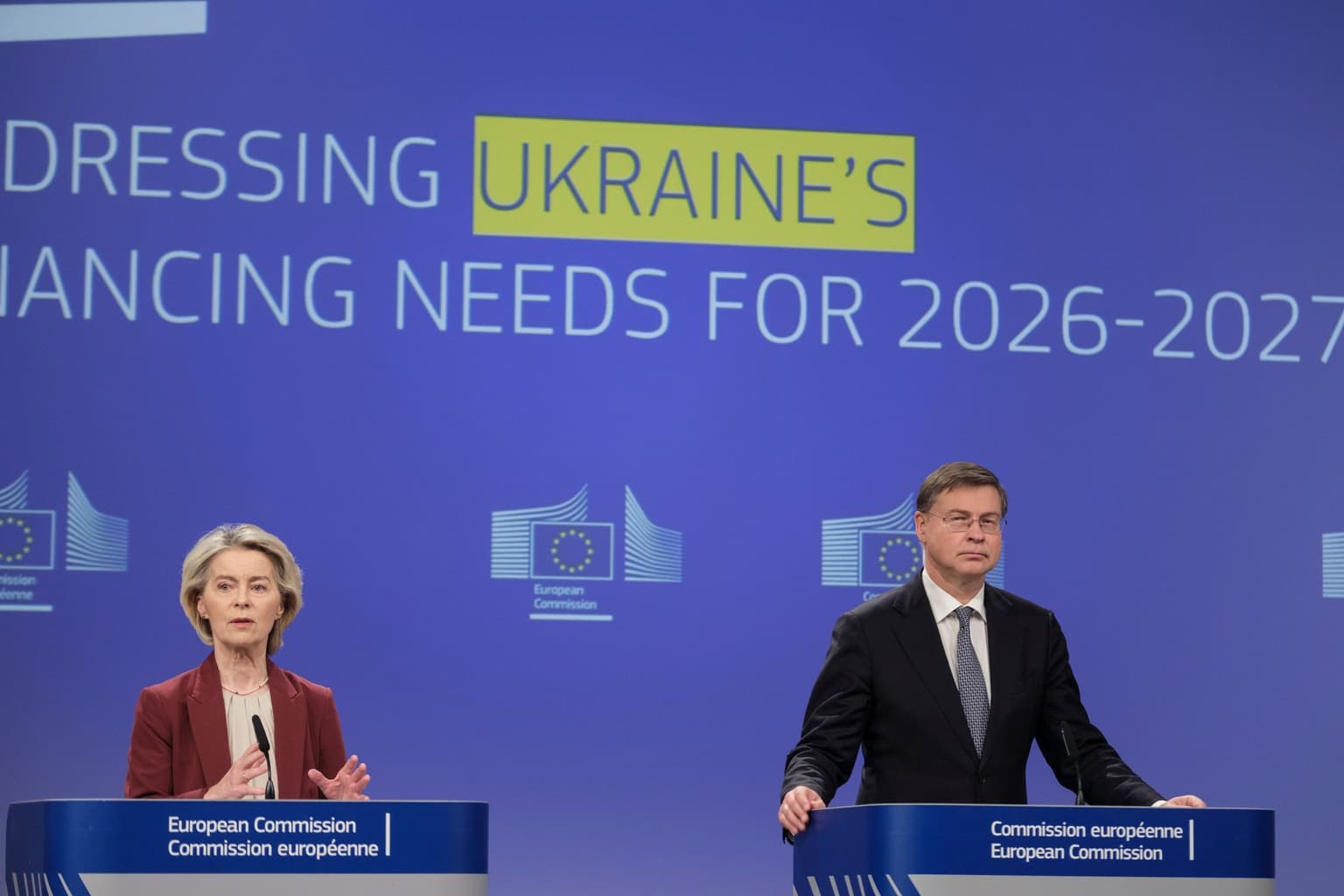
Seven European leaders have backed a proposal that could unlock up to 210 billion euros ($245 billion) for Ukraine, in a letter to the leadership of the European Union published by Interfax.
The leaders of Estonia, Finland, Ireland, Latvia, Lithuania, Poland and Sweden said that they "strongly support" the so-called reparations loan and that "time is of the essence" to reach a decision, as a key summit approaches in ten days.
Seventy European politicians and officials called on EU leaders to make a decision on the reparations loan "without delay," in a different letter shared with the Kyiv Independent on Dec. 8.
Ursula von der Leyen formally proposed the reparations loan on Dec. 3, which could lend up to 210 billion euros ($245 billion) to Ukraine backed by Russian Central Bank reserves frozen by sanctions.
Ukraine will run out of cash by mid-2026 without additional foreign support, and needs 135 billion euros ($160 billion) in combined military and financial assistance over the next two years.
In the letter, the seven leaders called the reparations loan "the most financially feasible and politically realistic solution," and said that the plan also "addresses the fundamental principle of Ukraine's right to compensation for damages caused by the aggression."
Zelensky's top legal advisor, Iryna Mudra, told the Kyiv Independent on Dec. 4 that the reparations loan is the "quickest path to ensure a just and lasting peace in Ukraine," and affirmed that "the reparations loan is a perfectly legal, economically sound, and politically necessary instrument."
European leaders will gather in Brussels on Dec. 18–19 to debate the proposal.
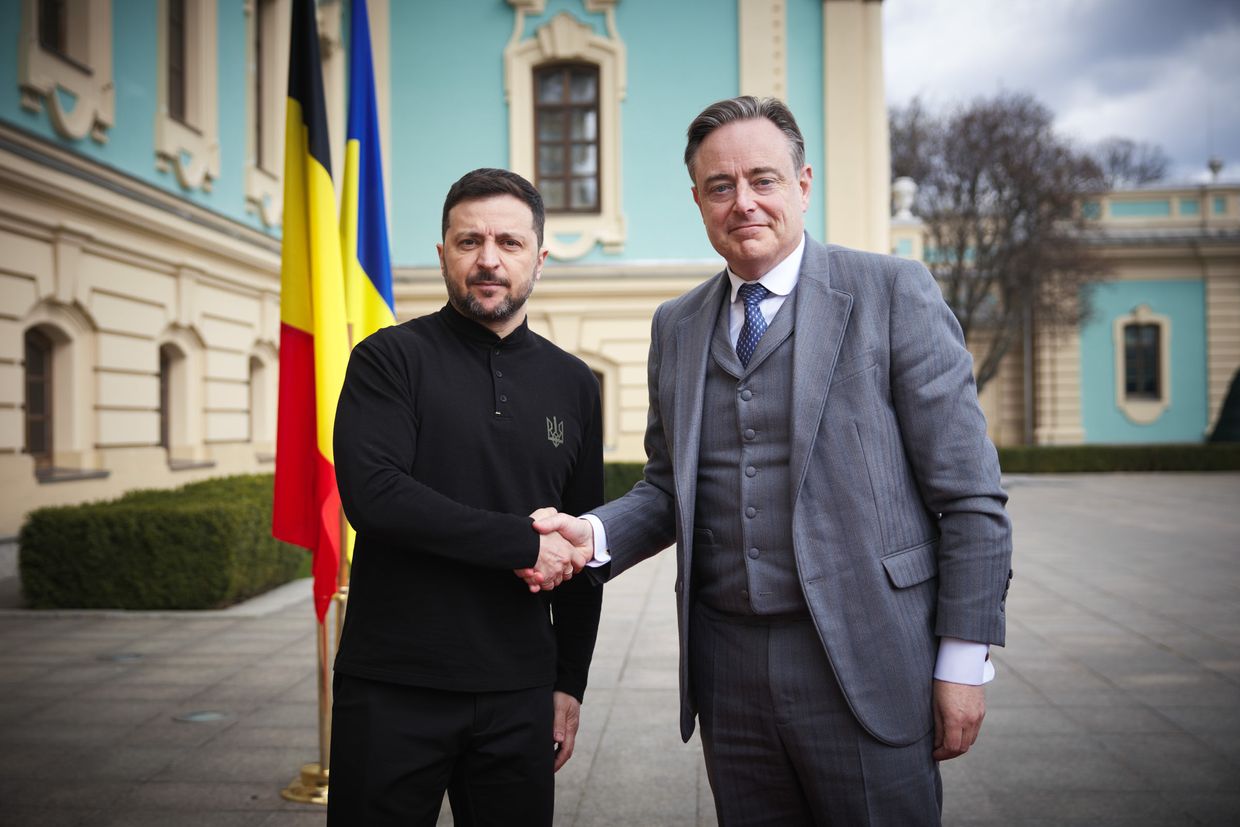
But Belgium, which holds the vast majority of the frozen assets, has expressed staunch opposition to the plan. Additionally, Hungary vetoed the alternative option for supporting Ukraine on Dec. 5, which would have raised joint European debt.
Belgian Prime Minister Bart De Wever worries that the country will be on the hook for a third of its gross domestic product should the deal go sour, and wants other European countries to sign up to share the risk.
European countries would have to individually commit to paying billions of euros to guarantee the reparations loan, in proportion with their gross national income, according to the proposal.
While von der Leyen's proposal suggests that all countries holding immobilized assets should participate in the scheme, the Financial Times reported on Dec. 8 that France had shielded the identity of French banks holding assets.
EUobserver also reported on Dec. 8 that a French banker named Olivier Huby who works inside Euroclear, the Belgian bank holding most of the frozen assets, tried to organize a meeting between the company's CEO and Russian intelligence services, and threatened the CEO when she refused.
Approximately $300 billion in Russian central bank reserves were immobilized after Russia invaded Ukraine in February 2022. Roughly two-thirds are held in Belgium at Euroclear.