Russia's push to ban Telegram will hinder its economy, war effort
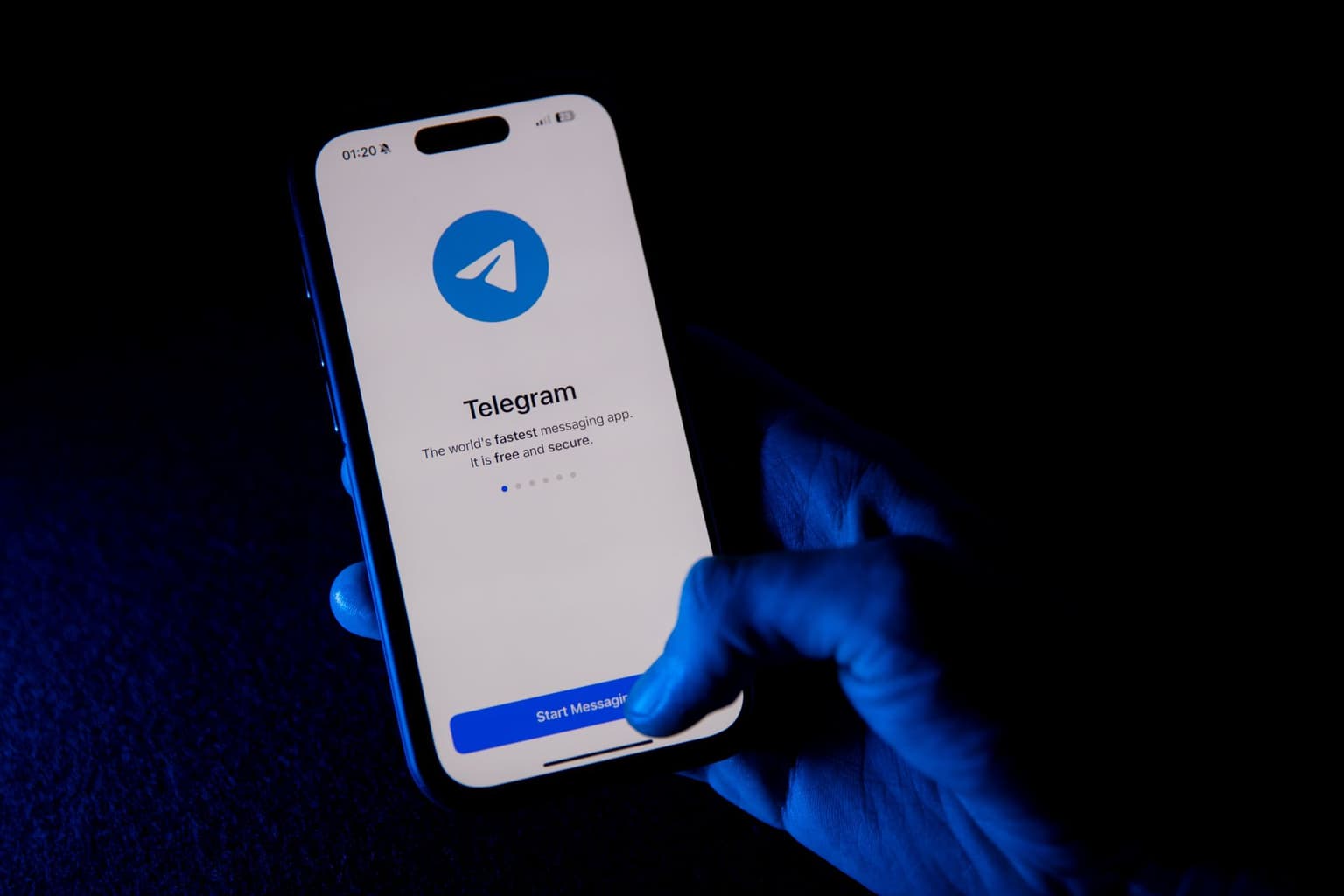
A mobile phone displays the Telegram app login page. (Smail Aslanda / Anadolu / Getty Images)
 on Google
“Why do you block the internet?” reads one of the comments under the latest post on Roskomnadzor’s official VKontakte social media page — a bland Women’s Day greeting from the very censorship agency leading Russia’s harshest crackdown on online communication in years.
Russian authorities have set April as the target for finally blocking Telegram, one of the last popular international messenger apps still accessible in the country, and force users toward the Kremlin’s glitchy “national messenger” Max.
Russia's Federal Anti-Monopoly Service (FAS), recently declared Telegram ads illegal, signaling the state's readiness to force users off the app, while Russian lawmaker Andrey Svintsov, deputy head of the parliament’s information policy committee, announced a quest for a total block, including through VPN.
The shutting down of Telegram — used by roughly 100 million people across Russia — is poised to deal a significant blow to the country’s economy while also complicating its ongoing war of conquest against Ukraine.
For millions of Russians, losing access to Telegram would immediately disrupt how they run businesses, handle daily life, and stay connected in an already fragmented digital landscape.
It could also directly affect Russia’s capacity to sustain its military campaign in Ukraine.
read also
 Oleg Sukhov
 Kateryna Denisova
Russians ‘don’t trust Max’
As opposed to past instances when Russia attempted to block Telegram, Russia’s internet censor Roskomnadzor has improved its technical capacities and can now effectively restrict access to the app.
Latest figures showed approximately one billion users worldwide, 10% of which would be in Russia. For this vast group, no obvious alternatives exist: while WhatsApp also used to be popular in Russia, over the past year the country’s authorities have blocked the app in full.
As for Facebook messenger and Instagram, like WhatsApp these are legally designated as “extremist” and are also blocked.
As such, the only alternative for now seems to be the state-run messaging app Max.
“Max is not showing particularly impressive results, there is significant rejection even among security services, the military, pro-war military bloggers, and audiences loyal to Vladimir Putin,” said Sarkis Darbinyan, the founder of Roskomsvoboda, a Russian group in exile which opposes digital censorship in the country.
“It looks like Russians are not liking the aggressive push for a state-controlled messenger that very few people actually trust.”

Recent reporting for instance revealed that photos sent in private messages on the state-controlled app can be accessible in the public domain, further casting doubts as to whether Russians will voluntarily migrate towards the new app.
According to Darbinyan, VPN usership in Russia is now closer to 50%, and could rise further to 75% if a full ban on Telegram is implemented. This is also because many of the essential features of Telegram, such as the ability for channels to monetize revenue, have no alternatives in Russia.
As mobile internet blackouts deepen, some Russian tech enthusiasts are stitching together their own radio‑based networks. Many of them rely on Meshtastic, a free, open‑source system that turns low‑power radio devices into a mesh network: short messages hop from one node to another without needing cellular data or the conventional internet. In Russian online communities, users describe how packets travel across several relay nodes to reach nearby streets, effectively recreating a low‑bandwidth, walkie‑talkie‑style layer of communication.
This experimental layer of decentralized communication has so far depended heavily on Telegram as a coordinating hub for node operators, software guides, and hardware recommendations.
The Russian independent outlet The New Tab reported in February that these experimental mesh networks have grown rapidly in recent months, drawing tens of thousands of search queries every month and bringing together a tightly knit community of node operators who share maps, hardware lists, and setup instructions.
With the Kremlin pushing to shutter Telegram and steer people toward the state‑controlled Max messenger, that coordinating hub itself now hangs in the balance — potentially forcing the community to fall back even more on offline, radio‑only modes or to migrate into other, more fragmented channels.
For many, these makeshift networks are no longer a hobby but a practical response to rolling shutdowns, suggesting that parts of Russia’s digital infrastructure are already sliding back toward a less connected, more fragmented, and more state‑resistant mode of existence.
Financial casualty
For millions of small and medium enterprises, Telegram is not just a messenger — it is a storefront. Businesses use the platform for automated booking bots, customer support, and seamless payment processing via integrated APIs.
As Alexandra Prokopenko, a research fellow at the Carnegie Berlin Center and expert on Russian economic policy, explained, the private sector is facing an existential crisis.
“Businesses — particularly service-oriented ones that rely on customer communication — have been actively using Telegram, but now that’s all coming to an end,” Prokopenko says.
“We need to find new solutions but the government wants to bring communication under its control. Russian business is being squeezed more and more tightly in the vise of a regulatory maze. And, unfortunately, I don’t see any positive ways out of this."

One of the main economic consequences of blocking Telegram is a significant rise in user authentication costs: sending one‑time verification codes via SMS is considerably more expensive for companies than delivering the same codes through Telegram. For services with tens or hundreds of thousands of users, switching from SMS‑based verification to messaging‑channel gateways can reduce annual authentication expenses by tens or even hundreds of millions of rubles, which directly affects the cost structure and profitability of digital products and services.
Another distinctive feature of Telegram for business and individual investors is its integration of U.S. stock trading directly within the messenger. Users of Telegram Wallet can access tokenized versions of shares in more than 50 American companies, including Tesla, Microsoft, and Apple, as well as shares in four exchange‑traded funds. This effectively gives Russian investors a way to participate in trading U.S. equities (although these are not direct NASDAQ or NYSE shares but tokenized equivalents backed by partner infrastructure).
According to multiple analysts, while many users are now trying to advertise their new channels on Max, there is deep skepticism toward the new platform.
Shutting off its military
The relationship between Telegram and the Russian government is murky. At times, authorities attempted to block the messenger, at others Telegram was accused of working with the FSB to suppress opposition movements in Russia.
Since the start of Russia’s full-scale invasion of Ukraine, Telegram became popular with the Russian military, turning into an essential tool of communication.
A plethora of military bloggers gained popularity by promoting their country’s aggressive war from the front line. Their activities are now increasingly under question.
“These war bloggers entered into informal arrangements with military units: on their Telegram channels, they raised money and supplied Russian troops with equipment that the Defense Ministry could not provide — in return ‘war correspondents’ received exclusive (front line) content that could be used to grow their audiences,” said Dmitry Kuznets, who reports on the Russian military for Russian exiled outlet Meduza.
As the state prepares for war against Telegram to make way for the state-controlled Max app, it remains unclear whether this privately run communications ecosystem will survive.
Communication with occupied territories
Telegram continues to also be widely popular in Ukraine. The app has been used to maintain channels of communication with Ukrainians who live under Russian occupation.
For millions of people, Telegram remains the easiest, if not necessarily the safest way to keep in touch with relatives and friends in territories under Russian control.
“For now, we are not seeing serious issues in communicating (with these regions) on Telegram,” explained Valentyna Troyan, who follows the situation in Ukraine’s occupied Luhansk Oblast for the Institute of Mass Information, a Ukrainian media support group.

“Before, it was also possible to speak to people under occupation over WhatsApp, but Russian authorities have since blocked this (app).”
According to Troyan, while VPNs might help maintain communications open with occupied territories, these are not always an option, either due to their price, or the difficulties that some, especially elderly users have in running them.
As a result, a variety of little-known instant messaging apps have popped up on the market. Due to their low popularity, Russian authorities have not yet engaged in efforts to block them. While these apps are unlikely to eventually become universal messaging services, they can be a lifeline in some situations.
“Many of these apps have obvious connections to Russia, and they are not really safe,” Troyan explained. “But at least they allow for some kind of communication with people in occupied territories.”
read also
Karol Luczka Karol Luczka
 Karol Luczka