Russia hits Lviv with rare Oreshnik missile, SBU says
 on Google
Editor's note: This is a developing story and will be updated regularly.
Russia fired its new Oreshnik intermediate-range ballistic missile at the western Ukrainian city of Lviv overnight on Jan. 9, the Russian Defense Ministry said, calling the attack "retaliation" for an attempted Ukrainian drone strike on one of President Vladimir Putin's residences, a claim Kyiv has denied.
Ukraine's Security Service (SBU) displayed what it said were fragments of the ballistic missile it had used in the strike and that preliminary analysis indicated the components belonged to the Oreshnik missile system, according to a post on the agency's Telegram channel. The SBU said it is investigating Russia’s use of the weapon against civilian infrastructure as a war crime under Article 438 of Ukraine’s Criminal Code.
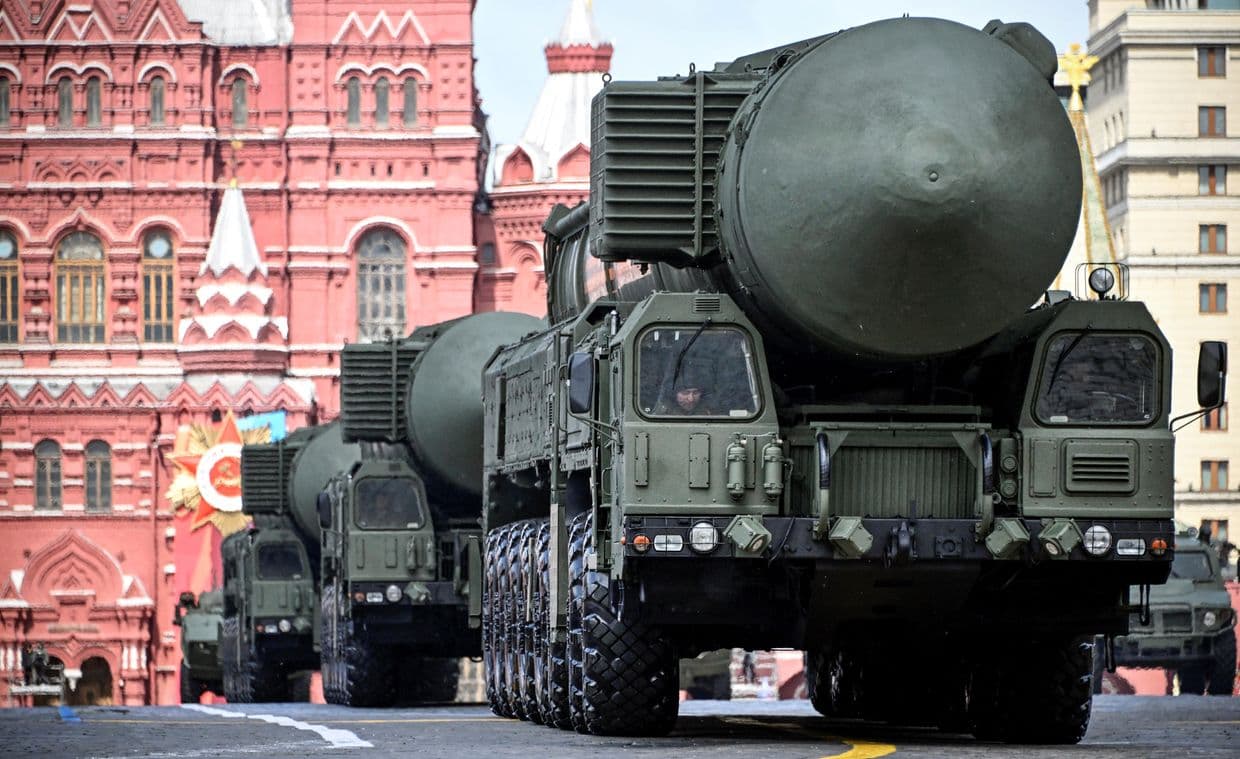
The Oreshnik is a Russian intermediate-range ballistic missile touted as a new, hard-to-intercept system designed to carry nuclear weapons. The missile used in the attack on Lviv, about 60 kilometers (37 miles) from the Polish border, was not equipped with nuclear warheads.
At around midnight in Lviv, Kyiv Independent reporters on the ground reported hearing a quick sequence of about four to five explosions. The air raid alert was on, but there was no warning of an incoming drone or missile in the region.
Ukraine’s Air Force did not name the weapon as Oreshnik but reported that Russia launched one "medium-range ballistic missile" from the Kapustin Yar test site in Russia’s Astrakhan region as part of the attack.
In response to the strike, Ukraine's Deputy Foreign Minister Andriy Sybiha announced that Ukraine would initiate an emergency meeting of the United Nations Security Council, as well as a session of the Ukraine–NATO Council. Additional consultations are also planned within the European Union, the Council of Europe, and the OSCE.
"Such a strike close to EU and NATO border is a grave threat to the security on the European continent and a test for the transatlantic community," Sybiha said on X.
Sybiha also said that Moscow has no real grounds for the attack, instead resorting to fabricated pretexts to justify its aggression.
"Putin uses an IRBM near EU and NATO border in response to his own hallucinations — this is truly a global threat. And it demands global responses," he said, adding that Ukraine is urging the international community to adopt tougher measures — in particular, to target Russia's oil revenues, disrupt its shadow tanker fleet, and ensure the global freezing of Russian assets.
Russia’s Defense Ministry claimed the Oreshnik strike targeted energy infrastructure and drone production facilities. Ukraine's Deputy Energy Minister Mykola Kolisnyk said gas distribution pipelines were damaged in Lviv.
On Dec. 29, President Volodymyr Zelensky dismissed Russia's claims that Ukrainian drones attempted to attack a state residence used by Putin as "another lie," warning that Moscow was using the allegation to justify potential strikes, likely targeting Kyiv.
The U.S. Central Intelligence Agency later assessed that Ukraine did not target a residence used by Putin, according to U.S. officials cited by CNN.

This is the second time Russia has used Oreshnik in a strike against Ukraine, after Russia first used the Oreshnik against Dnipro on Nov. 21, 2024.
Fabian Hoffmann, a defense expert and doctoral research fellow at the University of Oslo, told the Kyiv Independent in November 2024 that he would be surprised if Oreshnik has more than 10% new parts, suggesting it likely draws heavily on the RS-26 Rubezh, a nuclear-capable intermediate-range ballistic missile first produced in 2011.
The RS-26 has a known range of 5,800 kilometers (3,604 miles) and can carry a MIRV payload — multiple independent reentry vehicles.
Russia also launched a series of drones, ballistic missiles, and cruise missiles at Kyiv and other Ukrainian cities throughout the night on Jan. 8-9 amid freezing winter temperatures. At least four civilians have been killed and 25 others injured in the mass attack.