Regarding the torture of Ukrainians
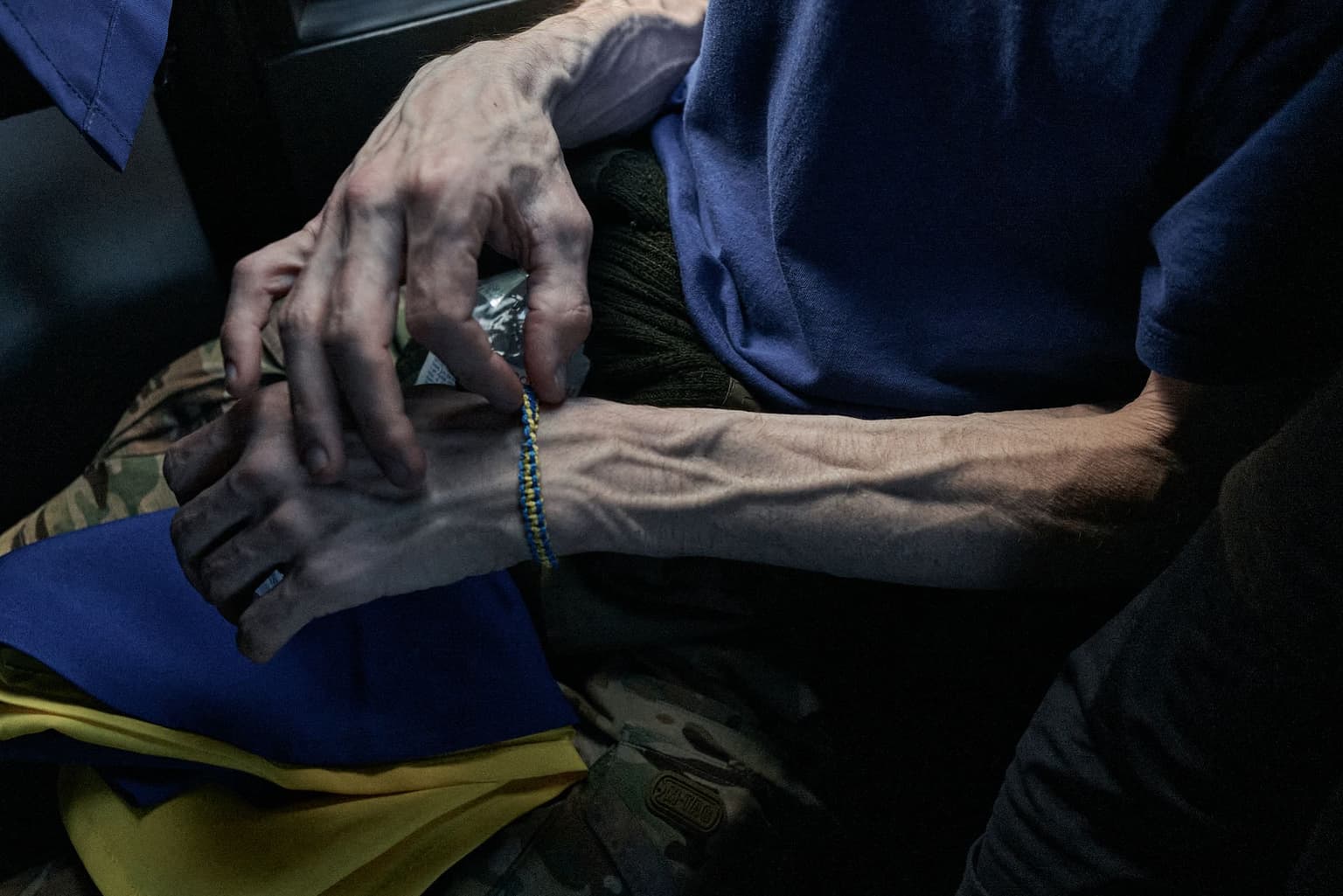
Forty nine civilian and military Ukrainians returned to Ukraine from captivity, reported Ombudsman Lubinets on Sept. 13, 2024 in Chernihiv Oblast, Ukraine. (Vlada Liberova/Libkos/Getty Images)
 on Google
Danylo Mokryk
Reporter with the War Crimes Investigations Unit of the Kyiv Independent
Torturing prisoners is not merely a war crime that Russians perpetrate, it's part of Russian culture. Susan Sontag's 20-year-old essays may help us understand it.
In the Kyiv Independent's latest investigative documentary "Torture Culture," we examine the sufferings that Russians systematically inflict on their Ukrainian prisoners — all the beatings, electrocutions, mutilations, sexual abuse, psychological violence — not only as a war crime but also a cultural phenomenon, something that Russians do decade after decade, whenever and wherever the opportunity presents itself.
From Western Ukraine in 1939-1941 to the Gulag system, from Chechnya to today's occupied territories, torture resurfaces again and again.
As it usually happens, some parts of our work on the documentary did not make it into the final cut. For example, during the interview with the Chechen human rights defender Akhmed Gisaev (who himself survived Russian detention and extensive torture in 2003) we discussed how the intent to instil fear in civilians with torture (and with spreading information about it among the population) in the occupied territory alludes to the Russian popular "matrimonial" proverb, "If she fears you it means she respects you."
An important point in the documentary is that the perpetrators of torture most often seemed to thoroughly enjoy the process.
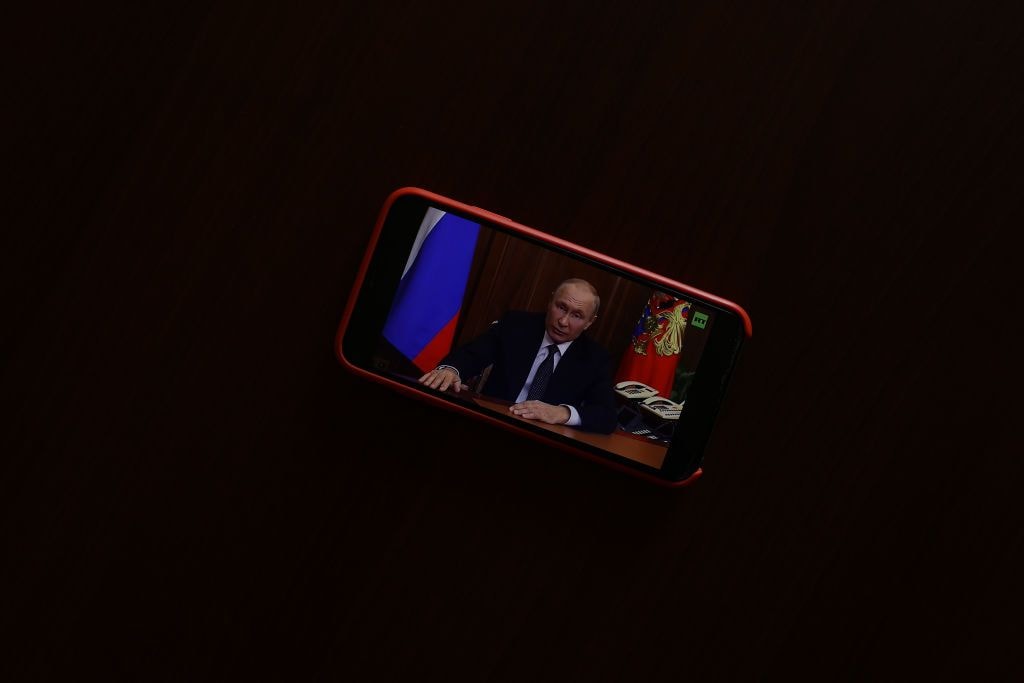
Several survivors talked about it in their interviews. But there's also a seemingly small detail that we left out from the film — and which, upon reflection, is quite telling: according to all of our interviewees, Russian torturers liked to record the beatings, electrocutions, waterboardings, and other abuses and humiliations on their smartphones.
That brings to mind the last major essay by Susan Sontag, "Regarding the Torture of Others," published in 2004. In it, she comments on photos from the Iraqi Abu Ghraib prison, where American soldiers had been torturing local prisoners. "The meaning of these pictures is not just that these acts were performed, but that their perpetrators apparently had no sense that there was anything wrong in what the pictures show," she writes. "Even more appalling, since the pictures were meant to be circulated and seen by many people: it was all fun."
The same analysis may be applied to the Russian practice of consistently recording the process of torturing Ukrainians 20 years later.
And there's more in Susan Sontag's essay that may be helpful in trying to understand the different reasons and twisted logic behind Russian torture. For instance, she remarks that very often the detainees in Abu Ghraib were arrested for reasons no more specific than simply being in the wrong place at the wrong time, the only justification for holding them being "interrogation."
"Interrogation about what? About anything. Whatever the detainee might know. If interrogation is the point of detaining prisoners indefinitely, then physical coercion, humiliation and torture become inevitable," Sontag writes.

It seems that thousands of Ukrainian civilian prisoners who fell into Russian hands find themselves in exactly the same situation. In most cases, they’re not even charged with any crime. Instead, they are subjected to days, weeks, or even months of continuous interrogation — and, it often seems, to torture for its own sake.
Sontag is also very critical of George W. Bush's administration and its geopolitical direction — and she connects this direction to torture. "The torture of prisoners is not an aberration. It is a direct consequence of the with-us-or-against-us doctrines of world struggle," she writes. "This endless 'global war on terrorism'... inevitably leads to the demonizing and dehumanizing of anyone declared by the Bush administration to be a possible terrorist."
Once again, this logic can be applied to Russian torture practices against Ukrainians — and not only Ukrainians.
Demonizing and dehumanizing Ukrainians is part of Russian state propaganda. Labeling Ukrainian patriots as "nazis" and "fascists" serves just that purpose (we've covered that in one of our previous investigative documentaries, "Destroy in Whole or in Part").
Given the crucial part that the victory against Nazism plays in the modern Russian mentality, there's hardly a more efficient way to dehumanize a group of people than calling them that.
That's precisely why, historically, almost all Kremlin's invasions and military operations after World War II were conducted against "fascists" and "nazis" — at least, according to the Kremlin’s own propaganda.
To fight "fascists," the USSR sent tanks to Budapest in 1956 and Prague in 1968. Soviet leader Mikhail Gorbachev's attempts to crush Latvian and Estonian aspirations to independence in 1991 were also ostensibly aimed against "fascism."
Russian invasions of Moldova in 1991 and of Georgia in 1992-1993 were also accompanied by the same rhetoric, and so on. (I covered that topic in my 2022 investigation for Bihus.Info, which is also available in English).
Accusing its victim of being a "fascist" or a "nazi" can very well be considered a part of Russian political culture. And in the same way that, for Susan Sontag, the American "war on terror" led to torture in Abu Ghraib, the Russian "war on fascism" leads to torture in today's Ukraine.
Obviously, torturing the arch-enemy, the "fascist," the "nazi," is something Russians not only practice, but also very much enjoy.
Once again, it's cultural.
Editor’s note: The opinions expressed in the op-ed section are those of the authors and do not purport to reflect the views of the Kyiv Independent.
read also
 Asami Terajima
 Abbey Fenbert
 Martin Fornusek