Orban: 'No reason to negotiate (EU) membership of Ukraine now'
 on Google

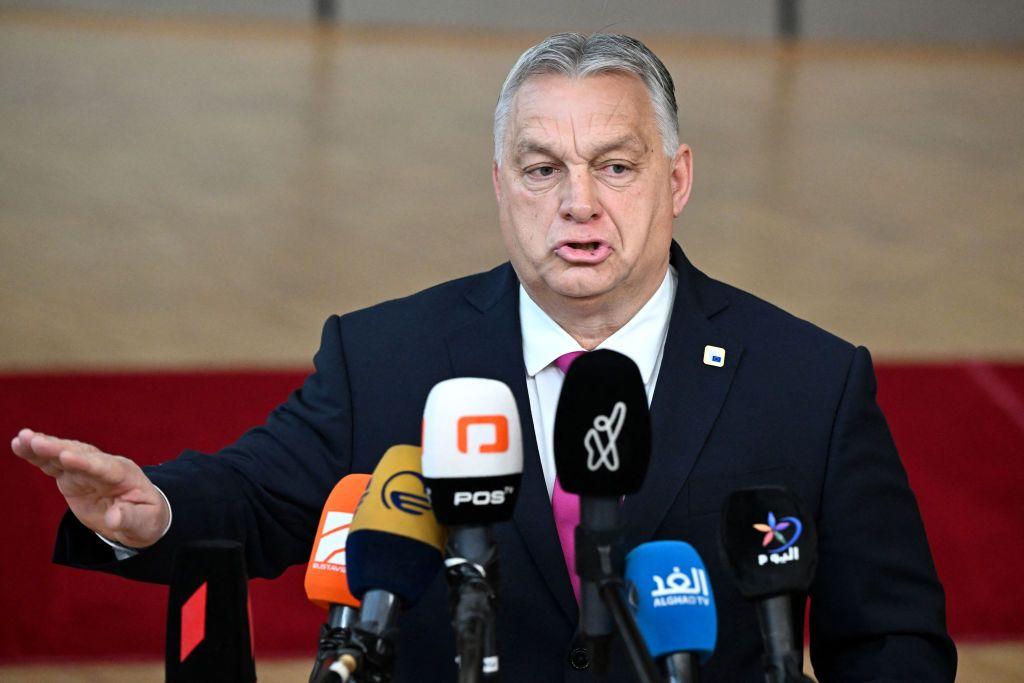
Hungarian Prime Minister Viktor Orban said there is "no reason to negotiate the (EU) membership of Ukraine now" at the EU summit on Dec. 14, where member states will vote to officially begin negotiations on Ukraine's accession to the bloc.
Ukraine has not fulfilled three of the seven conditional reforms obligated by the EU, Orban said, so any decisions would have to wait until the conditions are completed.
The European Commission recommended that Ukraine begin official talks on EU accession in early November, but it requires a unanimous vote from all EU members to move forward to negotiations. Hungary has repeatedly signaled it would not support such a step.
The EU is also set to decide on a 50 billion euro ($54 billion) funding package for Ukraine at the summit. In comments to reporters, Orban said that "short term...money for Ukraine is already in the budget. If you would like to have longer term and bigger money, you have to make it outside of the budget."
The comments were reported as a sign that Hungary plans to block Ukraine's accession talks, but may be open to supporting the funding. In the past, Hungary has publicly threatened to block aid for Ukraine or sanctions against Russia, but eventually reversed its position after extracting concessions.
Orban's Fidesz government is broadly seen as the most pro-Russian in the EU.
European Council President Charles Michel, European Commission President Ursula von der Leyen, and French President Emmanuel Macron were set to meet with Orban ahead of the summit in what appeared to be a last-ditch attempt to persuade Orban to change course.
Ukraine is both eagerly and nervously awaiting the results of the summit.
"I count on EU leaders recognizing Ukraine’s efforts and taking this historic step," said President Volodymyr Zelensky on Dec. 14.
Foreign Minister Dmytro Kuleba said on Dec. 11 that a failure to approve the beginning of official negotiations on Ukraine's accession to the EU would have "devastating consequences" for the country.