Leaders sign treaty establishing body to decide Ukraine war reparations
 on Google
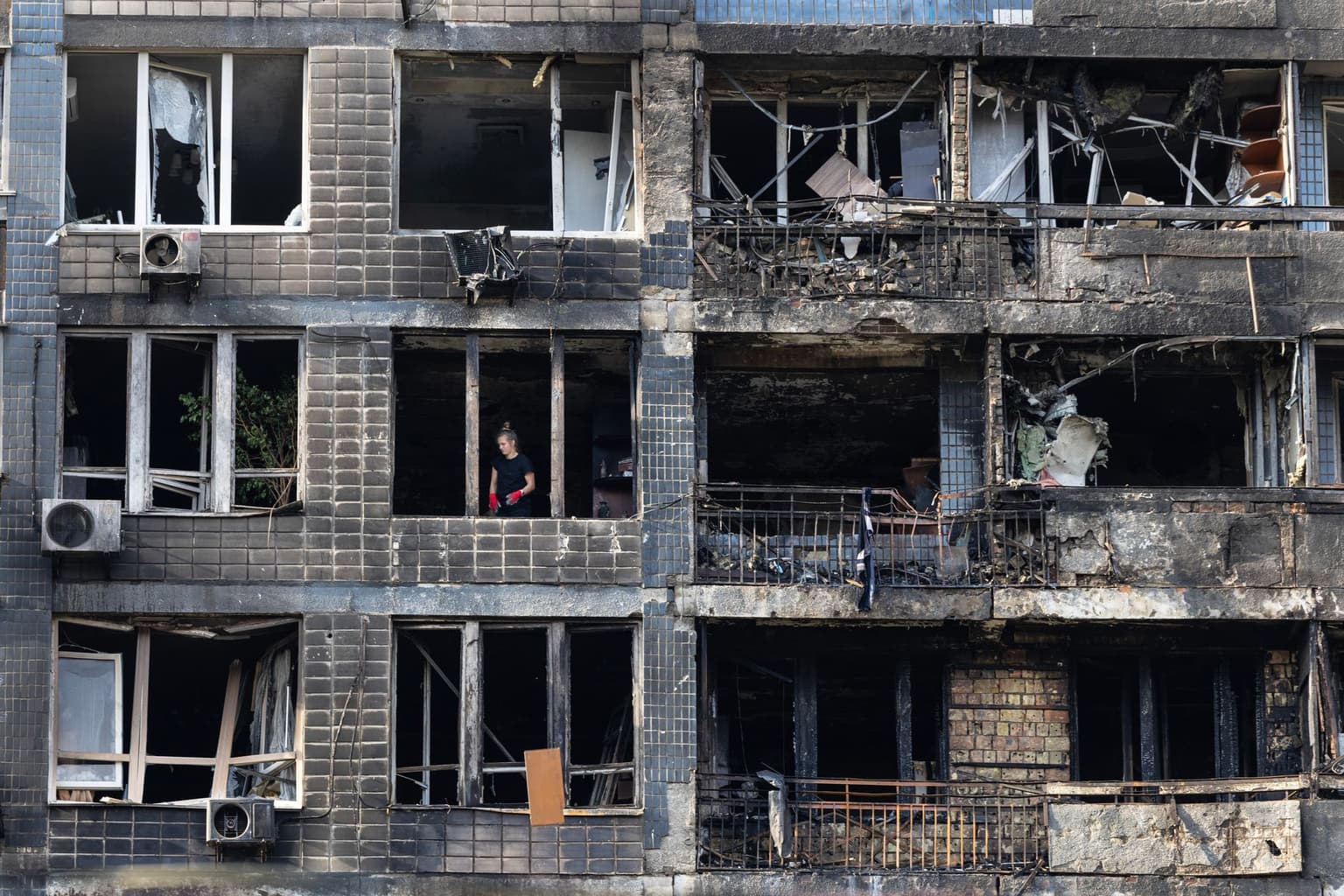
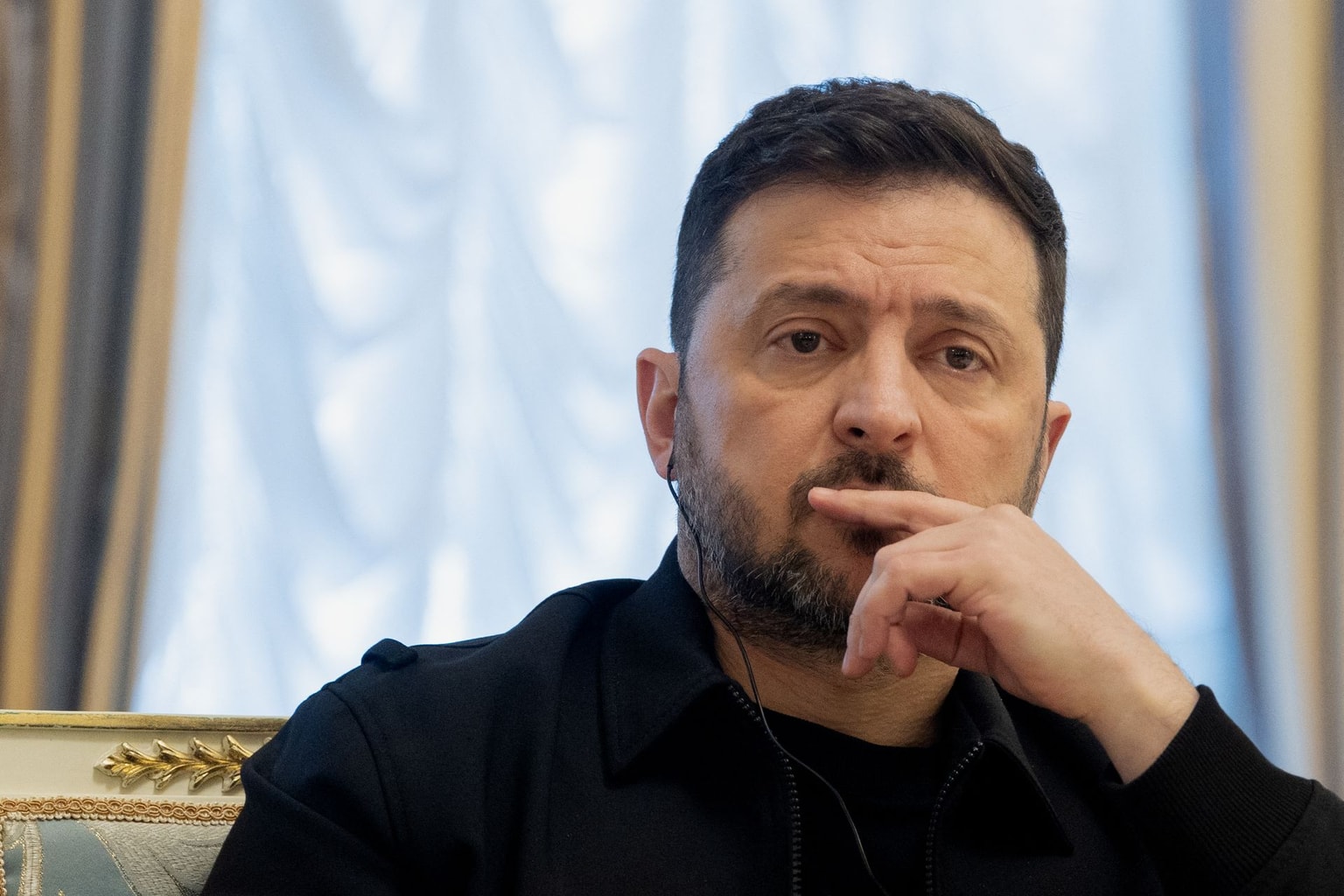
President Volodymyr Zelensky, together with 35 leaders, signed off Tuesday, Dec. 16 on the creation of an international body that would decide on compensation claims tied to Russia's invasion of Ukraine, but left unanswered the question of how the organization will be funded.
During a meeting in The Hague, leaders from the European Union, Canada, Mexico, and Japan gave the formal go-ahead to establish the International Claims Commission, which aims to reimburse Ukrainians for financial damage caused by Russia.
"We expect that every mechanism for compensation (...) will start working and receive strong, strong and sufficient international support," Zelensky said ahead of the signing ceremony in The Hague.
Claims for damages
The International Claims Commission will "review, assess and decide upon claims" and "determine the amount of compensation," according to the Council of Europe, a 46-member human rights organization established in the wake of World War II, which is backing the organization.
The commission follows on from the Register of Damage, established in 2023 by the Council of Europe. The register, located in The Hague, has already received over 86,000 compensation submissions from individuals, companies, and Ukrainian state bodies.
"This is a unique, independent tool," Alain Berset, secretary general of the council, said, ahead of the signing.
A panel of independent experts in damage assessment and international law will examine claims submitted to the register and issue recommendations for the amount of compensation to be paid.
Despite its formal establishment, the claims commission does not yet have funding to pay compensation.
Both Ukraine and the Council of Europe aim to make Russia provide the financing. "The aggressor must pay," Zelensky told the Dutch parliament during an address ahead of the claims commission meeting.
The Council of Europe points to a 2022 United Nations General Assembly resolution that calls for Moscow to be "held to account for any violations of international law in or against Ukraine" including "making reparation for injury, including any damage, caused by such acts."
Under the organization's bylaws, Moscow could join the claims commission if it agrees to foot the bill for the reparations and the institution's operations.
As that seems unlikely, backers of the commission have looked elsewhere, including to frozen Russian assets, to find the money.


Russian central bank reserves
On Dec. 12, the European Union agreed to indefinitely freeze Russian central bank reserves. Previously, the continued immobilization of the assets had to be agreed upon by all 27 member states every six months — leaving the freeze vulnerable to a veto by Hungary or Slovakia, who had repeatedly threatened to vote against renewing the sanctions.
The move means that roughly 210 billion euros ($245 billion) in Russian assets will now remain blocked in the EU until a majority of countries vote to lift the freeze.
But that money is earmarked for a so-called reparations loan, which would lend 90 billion euros ($105 billion) to Ukraine over the next two years, backed by the frozen assets.
The Russian invasion has caused untold damage to Ukraine. The World Bank estimated the total cost of reconstruction and recovery of Ukraine to be $524 billion.
"After four years of war, more than 200,000 buildings in Ukraine have been destroyed or damaged. And some 2.5 million homes, houses and flats are no longer fit to live in," EU foreign policy chief Kaja Kallas said in a press conference after the signing.
The Register of Damage has been accepting claims in 14 categories, and that will soon expand to 43, including death of a family member, physical injuries and destruction of property.
Year for ratification
The commission will not be finalized until at least 25 states have ratified the treaty through their national parliaments. "We are expecting that over the next year," Mykola Yurlov, deputy director of the International Cooperation and Representation Department in the Justice Ministry, told the Kyiv Independent.
Thirty-five countries have agreed Tuesday to back the commission, but deliberations involved 56 countries, according to Yurlov, and Ukraine is confident that many of those will join as well. Forty-four countries have joined the Register of Damages.
Yurlov was impressed at the speed of the process so far. "We only began negotiations two months ago," he said. "Usually treaties move much more slowly."
Although there is no plan for funding claims, the commission does have a plan for financing its operating budget. The Council of Europe estimates the body will cost about 3.5 million euros to run and the European Union has already kicked in nearly one-third.
"I'm proud to announce 1 million euros from the EU to support the establishment of the Claims Commission," Kallas told reporters. The remaining budget will be funded by contributions from member countries.
The signing ceremony takes place as cease-fire talks are underway. On Monday, a delegation led by Zelensky held two rounds of discussions with U.S. envoys Steve Witkoff and Jared Kushner on a plan for ending the war.
Ukraine is adamant that compensation for damage will not go away in a peace agreement. "We have been very consistent in our message that justice is not negotiable," Yurlov said.