'I’m only afraid of Belarus becoming part of Russia' — released opposition activist Kalesnikava calls on Europe to re-engage with Lukashenko
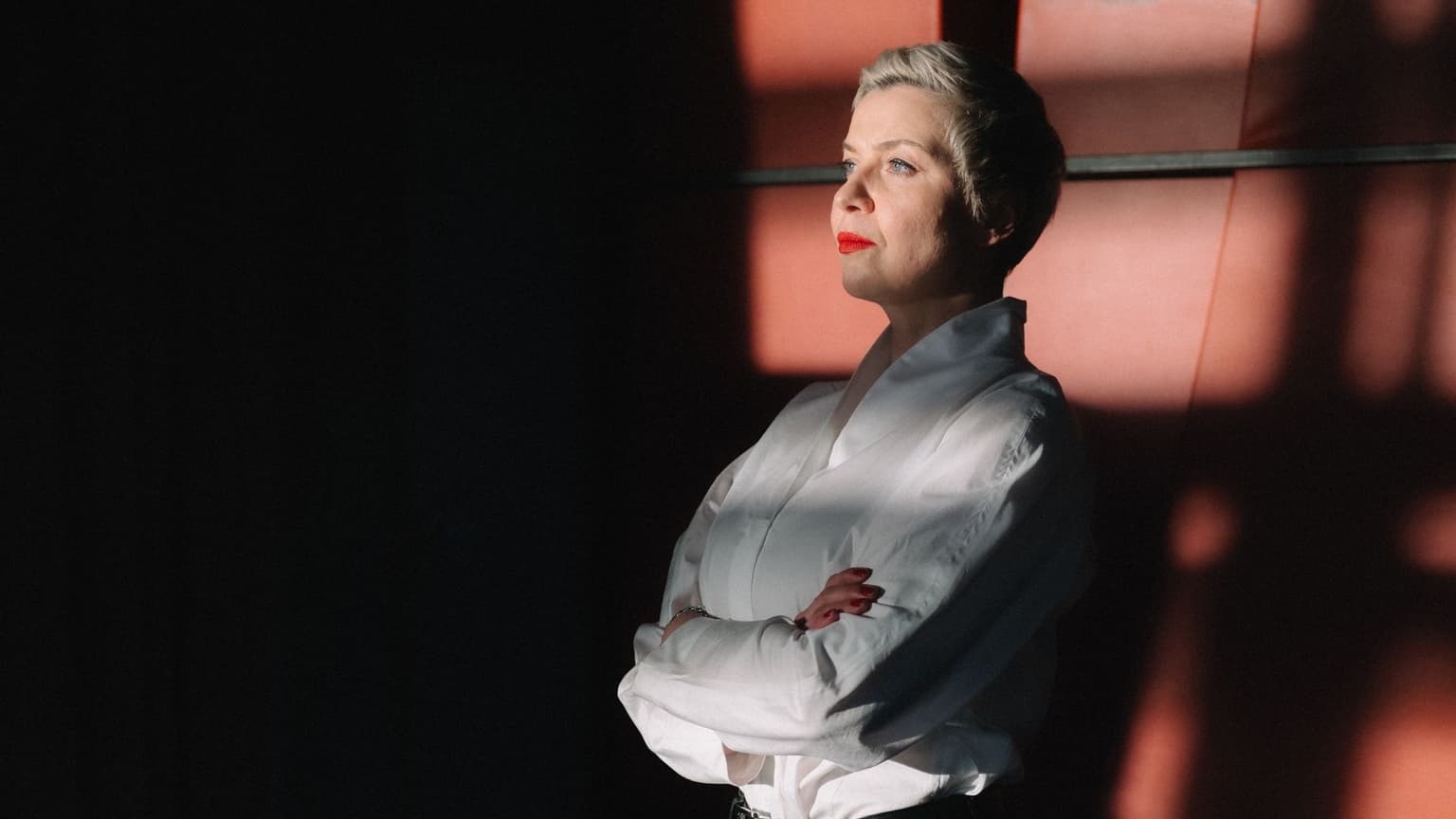
A leader of the anti-government 2020 protests in Belarus, Maria Kalesnikava, in Berlin, Germany, on March 2, 2026. (Pasha Kritchko / The Kyiv Independent)
 on Google
A leader of the anti-government 2020 protests in Belarus, Maria Kalesnikava, reemerged from prison with a message that has polarized many: Europe must reengage with Belarus’s dictator, Alexander Lukashenko. Human lives, Europe’s security, and Belarus’ future are at stake, Kalesnikava argues.
After suppressing nationwide protests in 2020, and turning to Russia’s Vladimir Putin for support while doing so, Lukashenko became an international pariah — one whose isolation only deepened as Belarus became a staging ground for Russia’s invasion of Ukraine in 2022.
Yet the idea that re-engagement would better serve Western and Belarusian people’s interests than isolation has been gaining ground. The United States has already tested it: three visits by U.S. delegations yielded the release of 189 prisoners, sanctions relief for Belarus’s national airline Belavia, and a relaxation of U.S. restrictions on Belarusian potash exports.
But should Europe, which has also imposed strict sanctions on Belarus, follow suit? Kalesnikava’s release has given those supporting this idea a voice almost as recognizable globally as that of Belarusian opposition leader Sviatlana Tsikhanouskaya. Allies in the 2020 presidential campaign, Tsikhanouskaya and Kalesnikava now tour the same countries and attend the same events — such as the recent Munich Security Conference — promoting their respective, and differing, views on reengagement with Lukashenko.
The Kyiv Independent sat down with Kalesnikava to hear her views on what European rapprochement with Lukashenko might achieve, what happens if it fails, and where the red lines must be drawn.

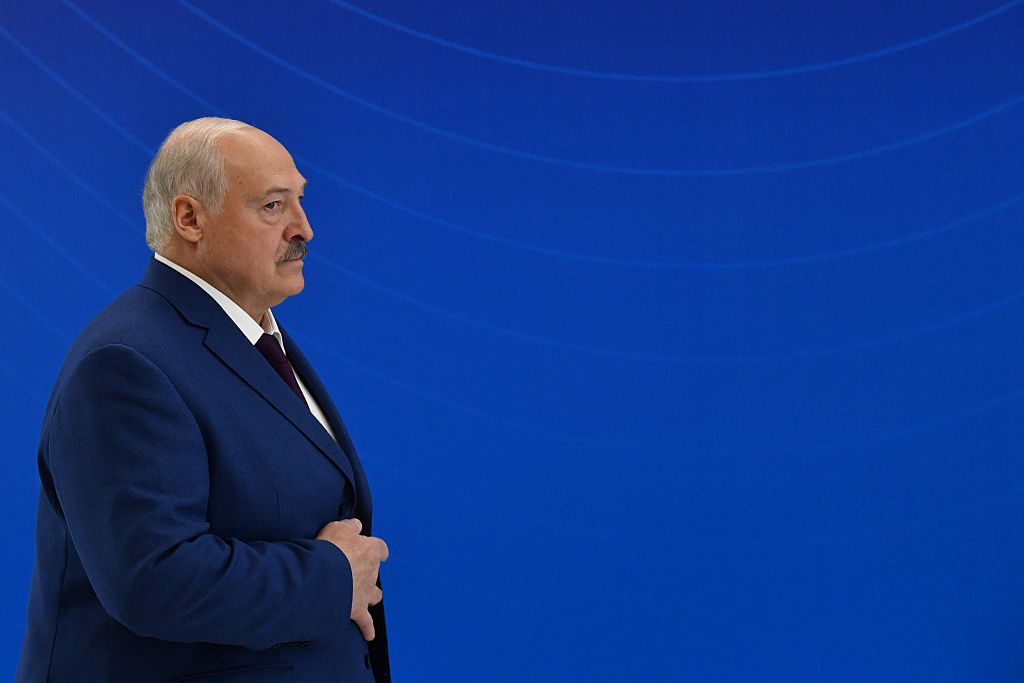
What does Lukashenko want?
Maria Kalesnikava resists framing her proposals as a call for “dialogue.” Instead, she underscores several times that Europe must open communication channels — not to befriend Lukashenko, but to prevent the situation from deteriorating.
“The launch of these diplomatic initiatives does not imply agreement with Lukashenko’s policies or politics, nor does it imply friendship or support — absolutely not,” Kalesnikava says.
“There’s a very clear communicative purpose here; it is to understand how we can free people, stop repression, and lift the country’s isolation. We need to understand what Lukashenko wants. We just need to ask him, at least.”
When she was released, Kalesnikava still had five more years of her sentence to serve. She is reluctant to speak about her treatment in custody, saying yet another account of prison conditions wouldn’t help, but could rather harm the remaining prisoners. But her own treatment in prison, and the experiences of mental and physical pressure she and other women suffered in jail, now motivate her call for engagement with Lukashenko, she says.

“I'm thinking of women who have spent five years in prison, of those having health issues,” Kalesnikava explained to the Kyiv Independent.
“I’m thinking of 70-somethings who have 10 more years to serve — this is beyond good and evil for me. My priority now is to talk about these people and do everything possible to draw attention to this issue and, of course, to secure the prisoners’ release.”
Pointing to her own release as a result of successful diplomatic engagement, Kalesnikava also lists some even minor symbolic gestures that have managed to move Lukashenko to act, including a gift of cufflinks engraved with an image of the White House, a personally signed letter and U.S. President Donald Trump’s posts on his social medium Truth Social. Notably, on Aug. 15, 2025, Trump posted about a phone call he had held with Lukashenko just before his summit with Putin in Alaska. In that post, Trump referred to dictator Lukashenko as the “highly respected President of Belarus” and described their conversation as a “wonderful talk.”
"Lukashenko is the only person who makes decisions about the lives of Belarusians in Belarus."
“In prison, we were shown (Trump’s post) on TV every day for two or three weeks. In (Lukashenko’s) own eyes it is strong support for him, but as a result, people were released.”
Trump’s special envoy to Belarus, John Coale, said he aims to secure the release of all those arrested for protesting against the rigged 2020 presidential elections. Yet, U.S. reengagement so far has also been accompanied by continued repression. After a year of negotiations and the release of over 300 people — who were either deported or pardoned and allowed to stay in the country — the total count of political prisoners is still over 1,100.
Leveraging sanctions to ease repression while at the same time opening up Europe to Belarusians is where the European Union ought to start reengagement, Kalesnikava believes.
“No matter how much we don't want to admit it and no matter how much we hate it, Lukashenko is the only person who makes decisions about the lives of Belarusians in Belarus,” she says. “It’s up to him how long the repression will continue and how many people will fall victim to it. It’s also up to him to decide how the repression can be stopped. And the European Union has the leverage and mechanisms it needs to at least start talking with him about this issue.”

As a plan for this engagement, Kalesnikava refers to the Roadmap for Limited De-escalation, a paper drafted by Belarusian political analysts and researchers. The roadmap suggests that an EU de-escalation of tensions with Belarus — if insured by a sanctions snapback mechanism — would help alleviate the humanitarian crisis in Belarus, reduce the regime’s threats, and lower Minsk’s dependence on Moscow.
"I can't tell you how to do that — I just see that this is the direction in which we need to develop,” Kalesnikava says.
“How this comes about will be the result of agreements.”
Not responsible
Belarus’s continued involvement in Russia’s war against Ukraine links the resolution of the Belarusian domestic crisis to a wider geopolitical confrontation.
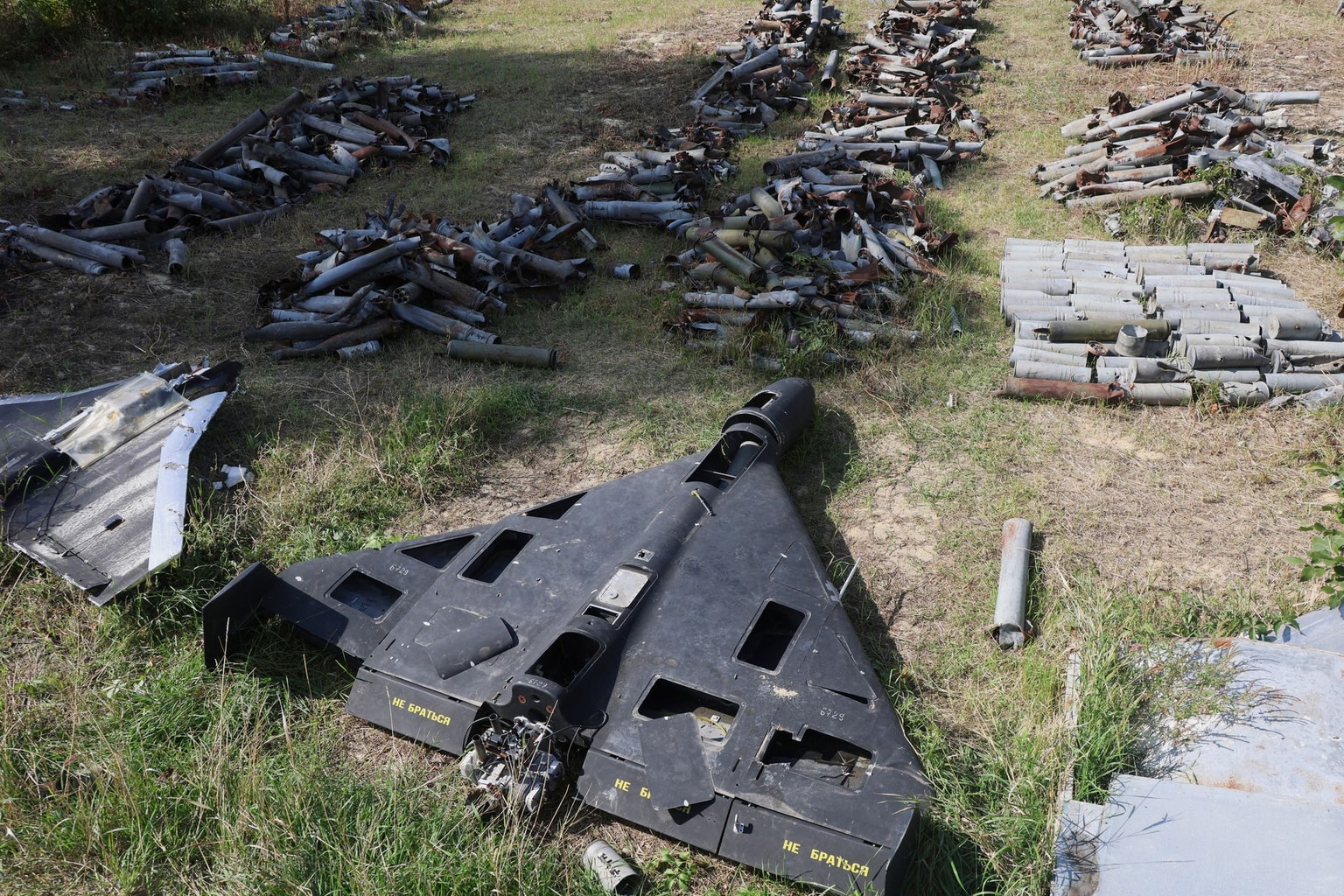
In late 2025, Lukashenko welcomed the deployment of Russia’s Oreshnik intermediate-range ballistic missile system on Belarusian territory. Russia also installed signal repeaters in Belarus that help guide Russian strike drones to targets in Ukraine, according to President Volodymyr Zelensky.
At her first press conference in Chernihiv, Kalesnikava was notably guarded in her comments on the war and Belarus’s role in it — a caution she attributes to five years of prison, where every word carried consequences.
In the penal facility in the southern Belarusian city of Homiel, some 45 kilometers (31 miles) from the Ukrainian border, where Kalesnikava and most of the female political prisoners were sent, the war was not just seen on the news; it was heard within the prison walls. For one-and-a-half months, the prisoners heard warplanes flying overhead, the clacking of cargo cars being hauled on a nearby railway, and the roar of military vehicles in the city streets.
“The word ‘war' was forbidden in these walls, but we still used it,” Kalesnikava recalls.
Kalesnikava does clearly place responsibility for Belarus taking part in the war on Lukashenko and his regime.
“Lukashenko is to blame for Belarus becoming an accomplice to the war,” she told the Kyiv Independent.
“It’s certainly not the prisoners in the women’s colony who were responsible for the fighter jets flying over us. We’ve been drawn into it. We don’t want this, and we’ll do everything we can to get Belarus out of this situation as quickly as possible, of course.”

Kalesnikava, who describes herself as an activist rather than a politician, was quick to note that Zelensky’s first meeting with the Belarusian opposition was not with Tsikhanouskaya in January, but with a group of political prisoners evacuated to Ukraine in December.
“When you arrive from the terror (in Belarus) to a country at war, in which your country is complicit, and yet you are enveloped in such care and love, it’s simply priceless,” she says.
“This shows that (our) nations support each other and that we share the same values. Our main goal is for Ukraine to be free, for the war to end, for the Russians to leave, and for justice to prevail.”
Lost to Europe?
The deployment of the Oreshnik missile and the alleged presence of Russian nuclear weapons in Belarus is “disgusting and vile,” as it has placed a target on Belarus, Kalesnikava says. Engagement, however, could prevent deeper Belarusian involvement in the war.
“It is one thing when a country is economically dependent on one neighbor, but it is quite another when there are nuclear weapons on your territory, which are equally dangerous for everyone, but the launch button is located 700 kilometers away,” Kalesnikava says.
“It seems to me that no Belarusian — including Lukashenko — can feel safe while the situation remains as it is.”
But when it comes to foreign policy and military decisions, Lukashenko’s agency has limits. Russia’s opposition to Belarus’ engagement with the West was officially pronounced in February, after Minsk’s re-engagement with the United States yielded an invitation to attend Trump’s Peace Summit in Washington. The summit was the inaugural meeting of the U.S. president’s Board of Peace initiative, which Lukashenko had eagerly signed up to.
Russia, however, promptly issued a string of sharp statements, saying that it would not “sit idly by” and watch Belarus and Russia being torn apart. Despite Lukashenko’s initial enthusiasm to join the Board of Peace, Belarusian officials skipped the summit, citing a busy schedule and a lack of visas.
Kalesnikava argues that Russia’s reaction to the engagement strategy is a demonstration of its value.
“If Putin has begun to react to this and is afraid of it, then it means that we’ve hit the mark,” she says. “This is exactly what Russia does not want, so perhaps this is one of the reasons why it’s worth thinking about it. If nothing has actually been done yet, but we’re already being warned against it (by the Kremlin), then perhaps it’s exactly what we should be doing.”

While reports of backchannel communication between Europe and Belarus have begun to appear, there is no sign of a change in the EU’s official policy: Europe continues to engage with the Belarusian opposition while isolating Lukashenko. Meanwhile, Lukashenko continues to allow an artificial migration crisis and incursions by meteorological balloons into EU airspace, which Europe regards as hybrid attacks.
Recalling meetings with European politicians in the months following her release, Kalesnikava notes that they understand that the war will eventually end with negotiations and agreements, and that it is very important to understand where Belarus will fit into this picture.
But she bats away questions about how to hold Lukashenko accountable while engaging him, what red lines there might be, and what happens if the engagement fails. Instead, she says these are questions for European politicians to answer.
“This is definitely not a question for me,” she says. “But one thing is certain: if no one starts communicating with Lukashenko, the current situation will continue. It will get even worse.”
“Putin has crossed every red line. Right? Yet to stop the loss of lives and end this war, a decision was made to begin talks on this issue."
Strengthening ties with Europe will be critical during the inevitable conclusion of Lukashenko’s rule, whether prompted by natural causes or a managed power transition. Kalesnikava warns that without proactive efforts to steer the citizenry away from Russia’s orbit, the West risks losing the hearts and minds of entire generations of Belarusians.
Belarus, once a leader in the share of Schengen visas issued per capita, currently has numerous border checkpoints shut down, transit restricted, and connections severed. In contrast, the Russian soft-power agency Rossotrudnichestvo, which typically has only one office per country, operates six in Belarus.

Isolation from the West will create a generation lacking recollection of the 2020 protests and ties to Europe — a generation who might otherwise turn to Russia for opportunities, Kalesnikava warns.
“If it’s impossible to study in Vilnius, Warsaw, or Berlin, they will study where it is possible — in Moscow, for example, or in St. Petersburg,” she says.
“I’m afraid of only one thing — that Belarus will become part of Russia, that we will be thrown back from the civilized world for years, for decades. And that is the most frightening thing — that Belarus will be lost to Europe.”