'We'll become Belarus' — Orban's opponents see election as last chance
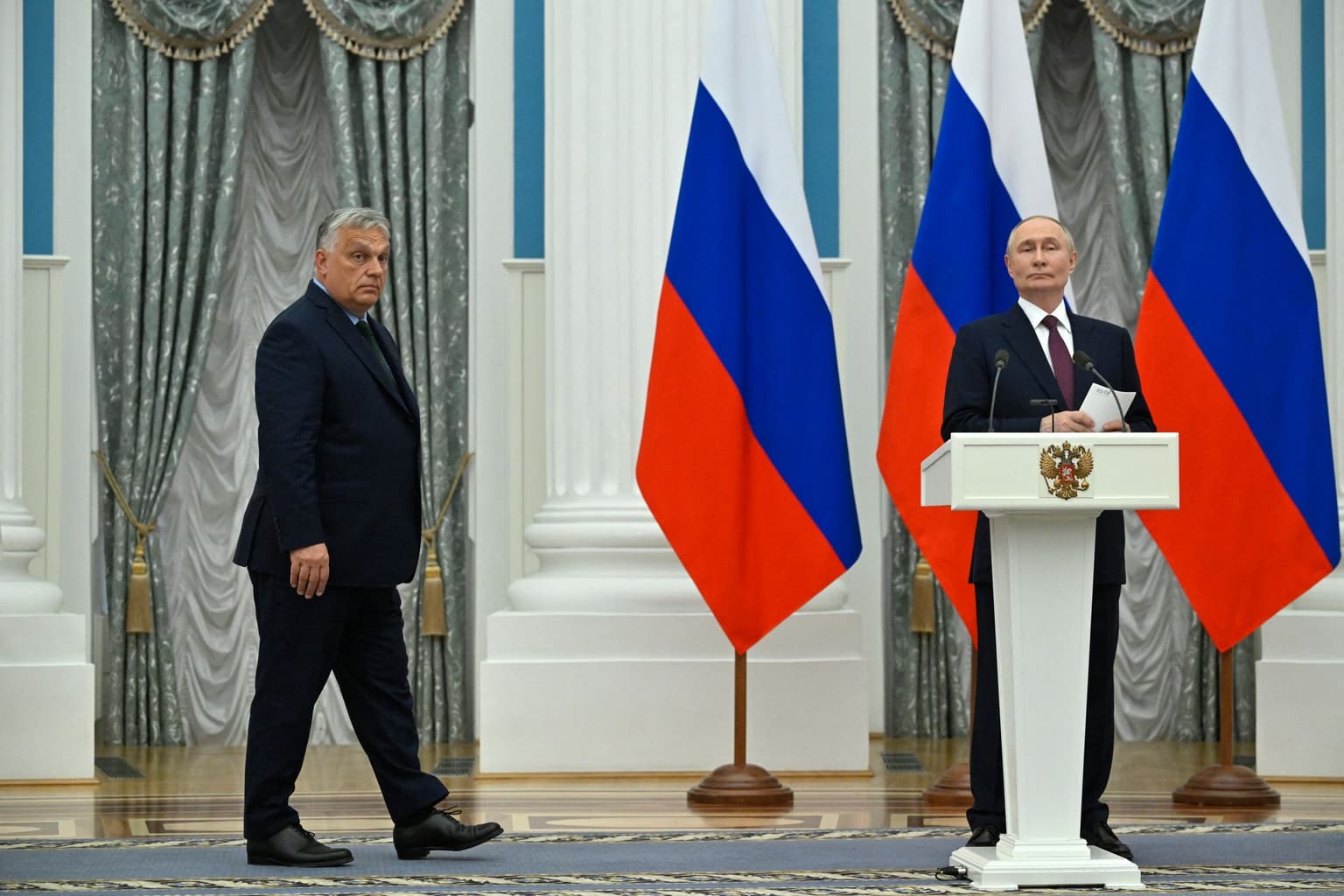
Russia's President Vladimir Putin and Hungary's Prime Minister Viktor Orban deliver a joint press statement following their talks at the Kremlin in Moscow on July 5, 2024. (Alexander Nemenov/AFP via Getty Images)
 on Google
BUDAPEST, Hungary — For some Hungarians, next month's parliamentary election is a chance to break with Russia, a country many believe holds a grip over their homeland.
In power since 2010, Hungary's Prime Minister Viktor Orban has fostered political and economic ties with Moscow while blocking EU assistance to Ukraine, deepening the rift between Budapest and Brussels.
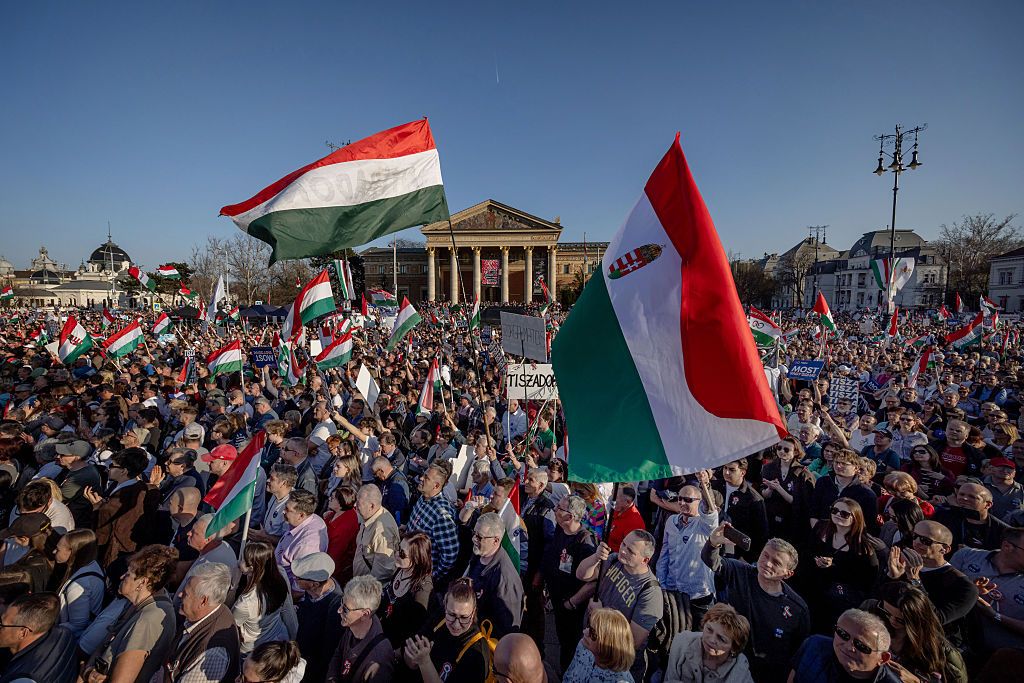
For some of Orban's opponents who came to the Tisza party rally in Budapest on March 15, it was a chance to reject the government's pro-Russia course.
"I don't think these people want to belong to Russia," a Tisza supporter told the Kyiv Independent at the rally.
The April 12 election, he said, is the last chance to "change the current political system — otherwise, we'll become Belarus."
read also
 Martin Fornusek
 Martin Fornusek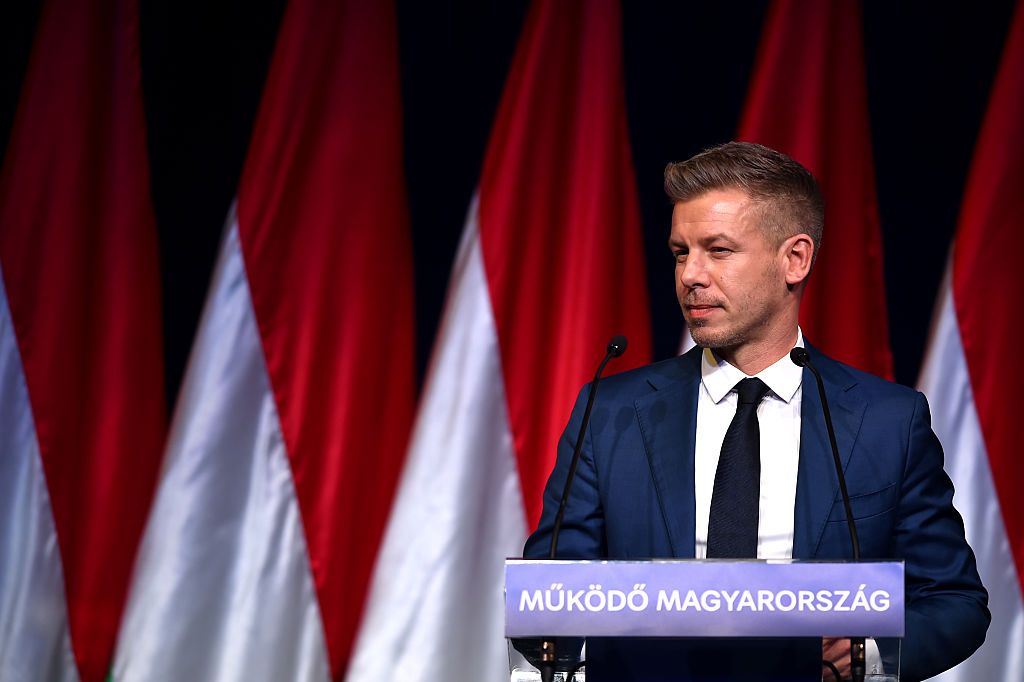
'Russians, go home'
While Tisza supporters were gathering for their march, Orban was speaking to a rival pro-government rally — also attended by the Kyiv Independent — near the Hungarian parliament building.
The prime minister has increasingly put Ukraine at the center of his campaign, and his top officials used their March 15 speeches to deride the Ukrainian leadership.
The pro-Fidesz crowd mirrored their tone, booing at the mentions of Ukraine and breaking into applause whenever it was denounced.
But a voice of the opposing camp broke through when a young man, passing by the rally, shouted at the crowd the motto of Hungary's 1956 Revolution: "Russians, go home!"
It was the same motto heard later when Tisza leader Peter Magyar addressed his supporters.

"Friends, in 1848-49 and 1956, our revolutions and freedom were crushed, bloodied," the opposition leader said in reference to two Hungarian revolutions, both suppressed with Russian arms.
"The Russians came and stayed. They crushed the revolution, but they could never break us."
While the EU sought to wean itself off Russian energy in the wake of the invasion of Ukraine, Orban's government has only deepened its reliance. The majority of Hungary's natural gas and about 90% of the oil it buys come from Russia as of 2025.
Apart from Slovakia, Hungary is the only EU country still enjoying exemption from EU sanctions on buying Russian pipeline oil via the Druzhba pipeline.
The dependence also extends into the nuclear sector, as Russia's Rosatom is leading the initiative to build Hungary's Paks-2 nuclear power plant.
The Tisza party vowed to end reliance on Russian energy by 2035 and review the nuclear project.

During his speech, Magyar has also repeated his accusations that Orban has invited Russian agents to help boost his campaign.
Many at the rally acknowledged fears of Russian meddling.
"Our history shows that this would not be the first time," Katalin, a Tisza supporter, commented on the suspicions. "And I hate to say, if you look around at global politics, it's not the last time."
Viktor Molnar, another Tisza backer, shared the concerns that Fidesz might "cheat" in the election with outside help — be it "the U.S. or Russia."
Orban has maintained warm ties not only with Russian President Vladimir Putin but also with U.S. President Donald Trump, both of whom bolster right-wing populists and Euroskeptics.
"We are really on crossroads for Hungary, whether we actually belong to Europe... or we go back in time where we belong to the not-so-friendly East," Katalin said.
Ukraine not a priority
Magyar's campaign has prioritized domestic issues — like the cost of living and corruption — but the government's pro-Russian tilt is also a vulnerability the opposition can exploit.
Orban's "relationship to Russia plays a very significant role in the election campaign," Daniel Hegedüs, deputy director at the Institute for European Politics (IEP), told the Kyiv Independent.
"Being anti-Russian is now a key mobilizing factor for opposition voters."
Yet, in the Hungarian context, "anti-Russian" does not always translate into "pro-Ukrainian."
An opinion survey from December 2025 shows that while most Hungarians feel closer to the West than to Russia, Moscow and Kyiv are viewed with near-equal skepticism.
More Hungarians have a negative view of Ukraine (71%) than Russia (68%), according to Policy Solutions' research. Roughly half also see both Ukraine and Russia as a threat to their homeland.
Tisza supporters tend to be less critical of Ukraine, while government voters are softer on Russia — but the majority of both groups view the two countries negatively, based on the poll.
Some people who spoke to the Kyiv Independent at Magyar's rally disapproved of the government's anti-Ukrainian crusade.
Recent months saw tensions surge between Kyiv and Budapest, as Orban accused Ukraine of threats and blackmail in connection with the suspension of oil flows through the Druzhba pipeline.
"We have no problem with the Ukrainian people; I think the Ukrainian people have better things to worry about than dealing with Hungarian politicians," one Tisza supporter said, calling the dispute a "made-up" issue.
At the same time, many attendees said they do not view ties with Ukraine as a priority.
"I don't care about that," Viktor Molnar said. "I only care about our home, our country… So everybody could live in a better Hungary."
According to Katalin, Hungarians need to mend their own internal divisions; only then can they work on repairing ties with Ukraine and other neighbors.
read also
Martin Fornusek Martin Fornusek