Fact-check: How Kremlin disinformation targets Hungary's election
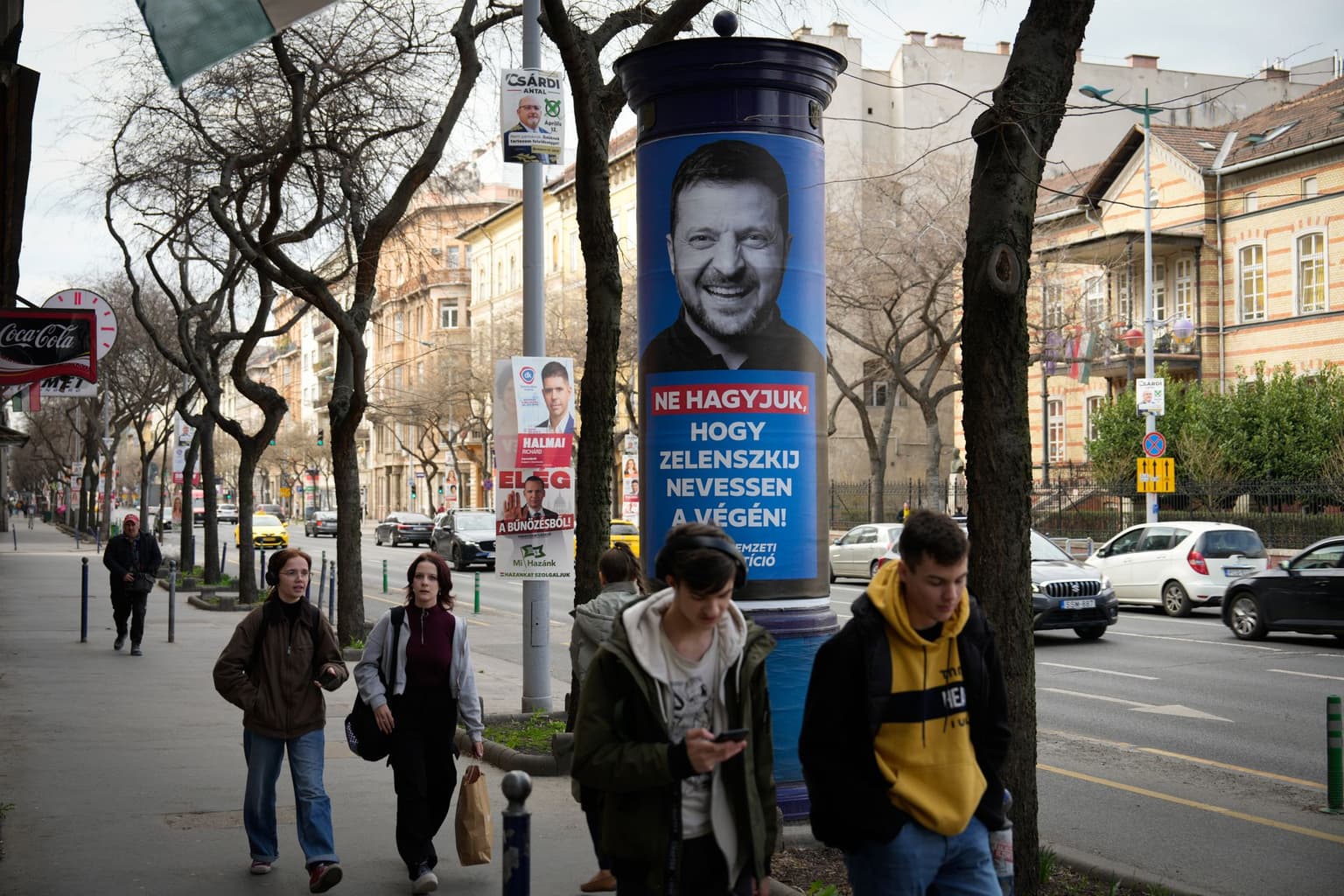
A Hungarian election poster depicting President Volodymyr Zelensky in Budapest, Hungary, on March 19, 2026. (Jaap Arriens/NurPhoto/Getty Images)
 on Google
As Hungary heads into a high-stakes election, Moscow has deployed its propaganda and disinformation machine to bolster its preferred candidate.
Viktor Orban, Hungary's Kremlin-friendly strongman, faces a real chance of defeat on April 12 that could end his 16-year grip on power.
For weeks, Russian propagandists and bot networks have pushed falsehoods about alleged attempts by Brussels and Kyiv to sway the vote, or even steal it in a "Maidan-style coup."
The methods deployed by Kremlin disinformation have included spreading fake content posing as established media — including the Kyiv Independent.
Watchdogs who spoke to the Kyiv Independent said the narrative not only aims to incite hatred against Ukraine, but also to delegitimize Orban's domestic opposition — and potential protests if he wins another term.
read also
 Peter Techet
 Martin Fornusek
'Hungarian Maidan'
"Everyone understands that Ukraine is preparing a Maidan in Hungary," pro-Kremlin propagandist Vladimir Kornilov said on his Telegram channel on March 23.
The post, which drew over 120,000 views, accompanied his column for Russian state news agency RIA Novosti on the same topic.
"Kaja Kallas will be handing out cookies in Budapest," he said, referencing a popular narrative about U.S. diplomat Victoria Nuland's role in the EuroMaidan Revolution of 2013-2014.
As Kremlin propaganda long portrayed EuroMaidan as a foreign-backed coup, the narrative serves as a useful template to delegitimize public opposition to a Moscow-backed leader.
RT state outlet pondered on March 25 whether Orban's victory could trigger "Maidan on steroids."
The phrase was distorted from U.S. journalist Michael Weiss, who talked about a possible scenario if Orban tries to "steal" the election despite the opposition Tisza party's heavy lead.
The Russian-backed messaging closely aligns with that of Orban, who has made attacking Ukraine a central pillar of his campaign.

At the same time, analysts from the LetsData tech firm have identified social media narratives suggesting that any unrest following an Orban victory would be orchestrated by Ukraine and the EU as part of a broader effort to destabilize Hungary.
"This narrative aims to discredit any potential protests and delegitimize Orban's opposition," LetsData told the Kyiv Independent.
Next to Hungary, the claims have been particularly widespread in Serbia, a country at the center of a new Hungary-related scandal, the researchers noted.
Belgrade and Budapest recently announced that explosives were discovered near a pipeline funneling Russian gas to Hungary via Serbian territory.
Budapest hinted at possible Ukrainian involvement, which Kyiv denied, while Hungary's opposition suggested the incident could be a Russian-coordinated false flag operation aimed at influencing the election.
'Matryoshka' bot campaign
The propaganda onslaught has been propped up by a coordinated bot campaign in late March.
Matryoshka, a Russian-linked disinformation network, has been disseminating fake videos across multiple platforms about Ukrainian interference and coup plots targeting Hungary, Antibot4Navalny, a group tracking Russian disinformation, told the Kyiv Independent.
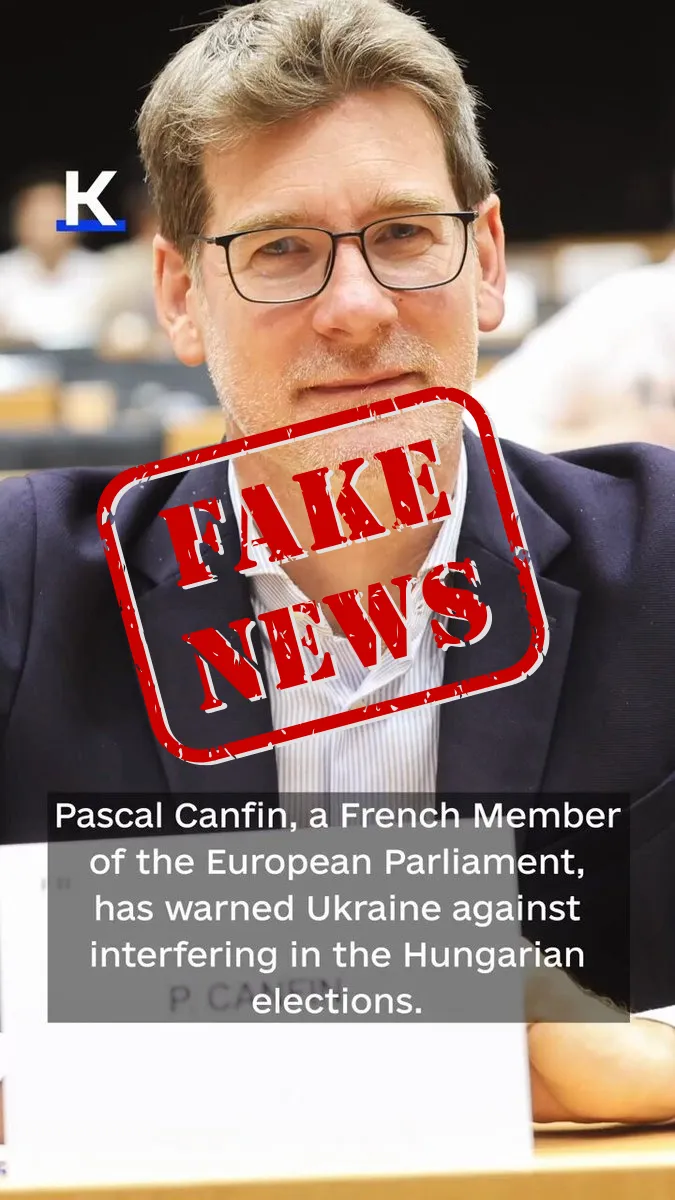
The videos impersonated reputable media outlets, NGOs, or experts to lend credence to the claims, while using unrelated stock footage.
Researchers noted that on X, the videos were posted from abandoned and likely hacked accounts, apparently in a carefully timed sequence.
A false video featuring the Kyiv Independent logo claimed that Pascal Canfin, a French member of the European Parliament, said Ukraine is preparing provocations against Hungary, including a possible coup.

Another fake post, posing as a Kyiv Independent article on Instagram, alleged that Ukraine's Culture Ministry “recognized” the creation of graffiti calling for a violent overthrow of Hungary's government.
Yet, there is little evidence that the bot campaign has been effective.
Videos gathered around 100 organic views each on X, a "negligible impact," Antibot4Navalny said.
Organic reach on TikTok is difficult to ascertain, as metrics are likely inflated by the Matryoshka operator.
Researchers have not detected coup-related content on Telegram. However, other anti-Ukrainian videos linked to Matryoshka's Hungary campaign gathered over 290,000 views in total.
"Most of the claims were reused from previous Matryoshka campaigns that either targeted other elections or exploited other 'news of the day' to the Kremlin's benefit," Antibot4Navalny says.
Russia has been perfecting its interference methods in numerous elections across Europe.
According to media reports, Moscow has deployed a team of operatives to Budapest to help sway the election in Orban's favor, using disinformation and manipulation tactics previously used in Moldova.
"Narratives typically incite hate toward Ukraine, its elected officials, citizens, and refugees" — the most common theme in Matryoshka's operations, the monitoring group told the Kyiv Independent.
'Western interference'
Framing protests and civil society activity as foreign interference has been part of Russia's toolkit long before Hungarian elections — and even before EuroMaidan.
The so-called "Color revolutions," a series of anti-government protests that took place in Georgia, Ukraine, Kyrgyzstan, and elsewhere in the early 2000s, became a popular theme in Russian propaganda.
Grassroots movements were portrayed by Moscow as Western-backed fronts, allegedly funded by the U.S. and international NGOs.
The "color revolutions" narrative "de-legitimizes democratic processes" and "reinforces the myth of Western hostility," says Alyona Hurkivska, a political scientist at the Kuras Institute of Political and Ethnic Studies of the National Academy of Sciences of Ukraine.

"The agency of democracies as such is denied through narratives of 'external control,' a typical marker of foreign disinformation."
But now, the tables have turned in Hungary. Orban, Moscow's preferred candidate, is the same one endorsed by the current U.S. administration.
Russian propagandists have taken note.
"(T)he U.S. has stripped back its regime-change machinery in Hungary, and has a keen interest in an Orban victory," RT wrote, celebrating Trump-led ideological reversal and his gutting of institutions that promoted democracy-building abroad.
Editor's note: This article was published as part of the Fighting Against Conspiracy and Trolls (FACT) project, an independent, non-partisan hub launched in mid-2025 under the umbrella of the EU Digital Media Observatory (EDMO). Click here to follow the latest stories from our hub on disinformation.

Note from the author:
Hi, this is Martin Fornusek. I hope you enjoyed this article. At the Kyiv Independent, our team strives to bring you insights into Russian disinformation, propaganda, and its ongoing aggression in Ukraine.
This work is only possible thanks to the support of readers like you. If you value independent journalism, please consider joining the Kyiv Independent's community.