Why Ukraine could start losing Western aid for the first time
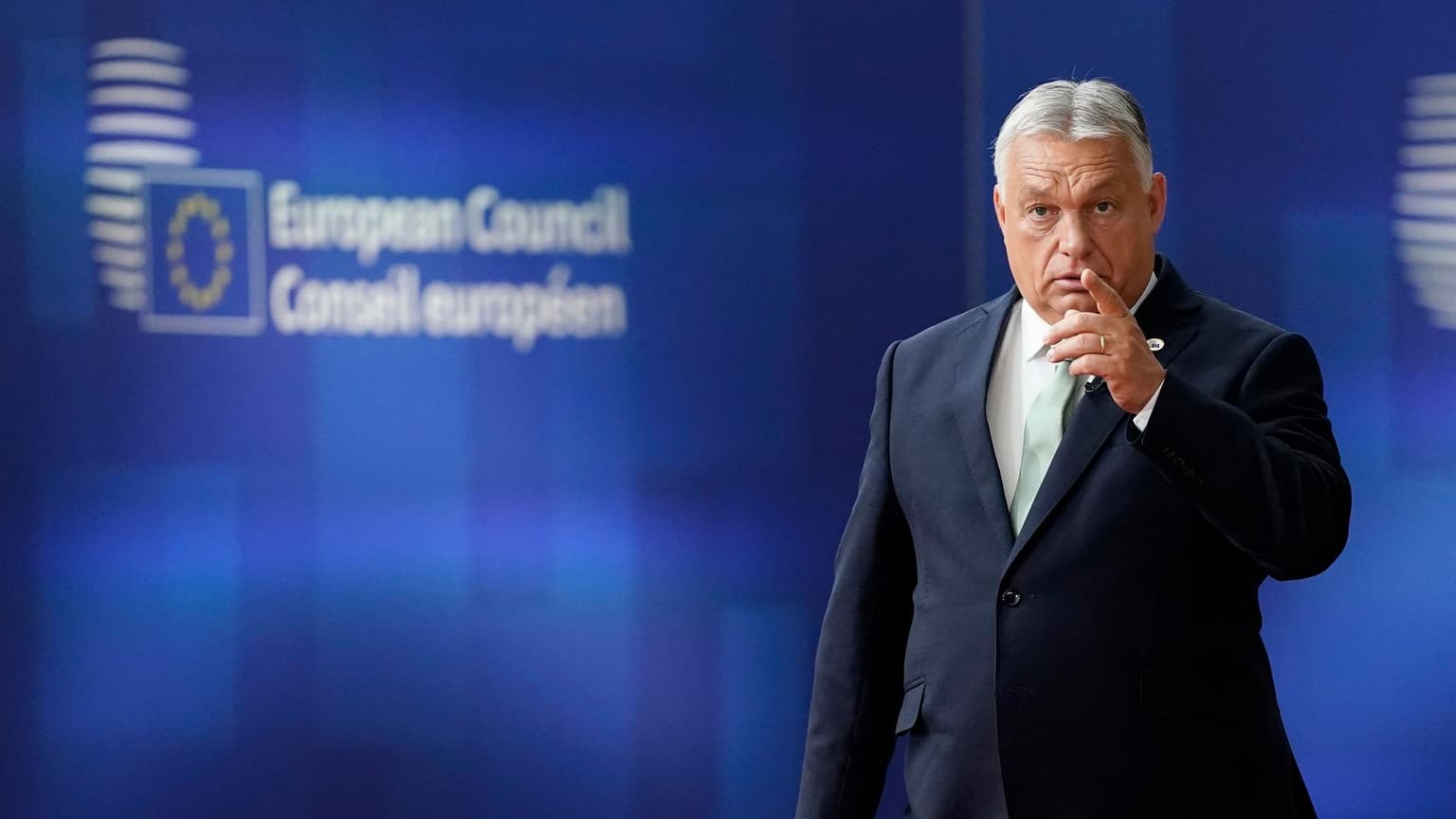
Hungary’s Prime Minister Viktor Orban arrives at the European Council meeting in Brussels, Belgium, on June 26, 2025. (Pier Marco Tacca / Getty Images)
 on Google
For more news like this directly into your inbox, subscribe to our weekly Ukraine Business Roundup newsletter.
Billions in urgently needed financing to Ukraine are at risk as a deepening political crisis jeopardizes access to aid — all while Hungary continues to block a separate financial lifeline.
Ukraine has so far failed to implement reforms needed to unlock almost $4 billion in World Bank and EU loans, putting it on track to permanently lose access to some earmarked funds for the first time since large-scale support began after Russia's full-scale invasion in 2022.
Kyiv also has until the end of March to pass a series of unpopular tax increases required under a new $8 billion International Monetary Fund program. Ukraine's parliament has yet to debate the measures, threatening the next tranche of the IMF program.
The impasse comes as Ukraine approaches a looming hole in its finances at the end of spring that only a 90 billion euro ($104 billion) EU loan can fill.
Despite giving his blessing at a summit in December, Hungarian Prime Minister Viktor Orban has since backtracked on the loan — which requires unanimous agreement from all 27 EU countries — ostensibly over a dispute relating to Russian oil transit through Ukraine.
As spring advances, losing out on even relatively small funds compared to the blocked 90-billion loan would be felt by cash-strapped Kyiv.
Which funds are at stake?
Ukraine is rapidly approaching deadlines for reforms required to unlock funds from the World Bank, European Union, and IMF.
The funds immediately at risk are a $3.35 billion loan from the World Bank and a 300 million euro ($345 million) tranche from the Ukraine Facility, a key EU funding program, according to RRR4U, a consortium of Ukrainian think tanks.
Ukraine is yet to increase the staff on its high anti-corruption court, a condition to receive the EU tranche. Although the deadline was at the end of March 2025, reforms under the Ukraine Facility have a one-year grace period until the money evaporates forever — meaning that the final deadline is looming in just under two weeks.
If unsuccessful, it would be the first time that Kyiv irretrievably loses access to EU funds — and potentially a harbinger of a cascade of additional losses later this year.
Kyiv failed to implement 14 indicators required under the Ukraine Plan in 2025, the pipeline of reforms that Kyiv is required to follow. The associated grace periods will expire periodically throughout the year, meaning that up to 3.9 billion euros ($4.5 billion) could be permanently lost over 2026, according to RRR4U.
Ukraine is also yet to finalize four reforms required to unlock $3.35 billion in funding from the World Bank's Development Policy Operation (DPO) program, with the April 20 deadline looming.

While the IMF-required tax measures also have a deadline in just under two weeks, the next tranche of the IMF program, $686 million, is scheduled for early June 2026, giving the country some leeway.
Staff from the fund arrived in Kyiv on March 18 for a scheduled visit to discuss the ongoing program.
Why have the reforms not been passed?
A cocktail of factors has contributed to the deterioration in Kyiv's appetite for reforms, including a prolonged war, administrative delays, and parliamentary gridlock.
Lawmakers' disillusionment has grown in recent months both in and outside of President Volodymyr Zelensky's razor-thin parliamentary majority, over what they see as efforts from the government to distance itself from unpopular reforms, all the while framing parliamentarians as responsible.
Lawmakers speaking with the Kyiv Independent also lamented a lack of communication and coordination from the government in crafting legislation, making the process more cumbersome than it has to be.
Older fractures are compounding the issue. Passing laws is harder for Zelensky's Servant of the People party following attempts to neuter anti-corruption agencies last summer, after which several opposition MPs have ceased to collaborate with the government and ruling party, even on reforms required from external partners.

For the hundreds of millions in EU funds set to permanently expire at the end of this month, the selection process for judges is still ongoing.
Anastasiia Radina, an independent MP and head of the parliament's anti-corruption committee, told the Kyiv Independent that the vacancies on the court are difficult to fill, and that the delays stem from genuine efforts to find suitable candidates, rather than a lack of commitment to the reform process.
The Kyiv Independent reached out to the European Union to ask whether it plans to permanently eliminate the funds, but did not get a response by the time of publication.
"The reforms are also hard," Oleksandra Betliy, research fellow at the Institute for Economic Research and Policy Consulting, told the Kyiv Independent.
"The pipeline of reforms was drafted a few years ago when it was assumed that the war would be over by 2026. But the war is still ongoing, and Ukraine is expected to complete a set of tough reforms while fighting the war.”
But Kyiv's reforms headache won't abate anytime soon.
"Some of the money from the pending 90 billion will be dependent on the same indicators that Ukraine is struggling to get through."