Why Rheinmetall and the West still don't understand Ukraine's defense tech revolution
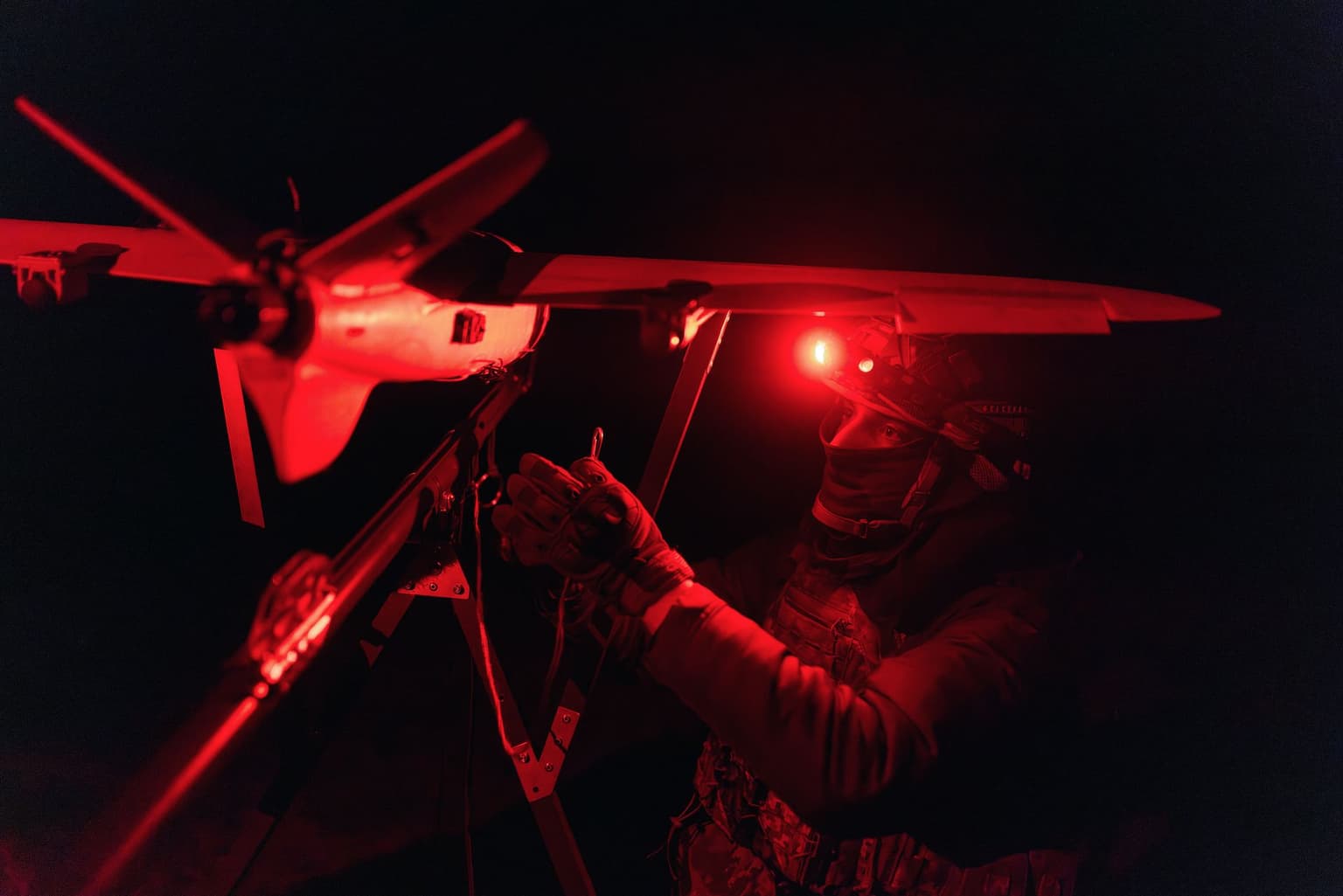
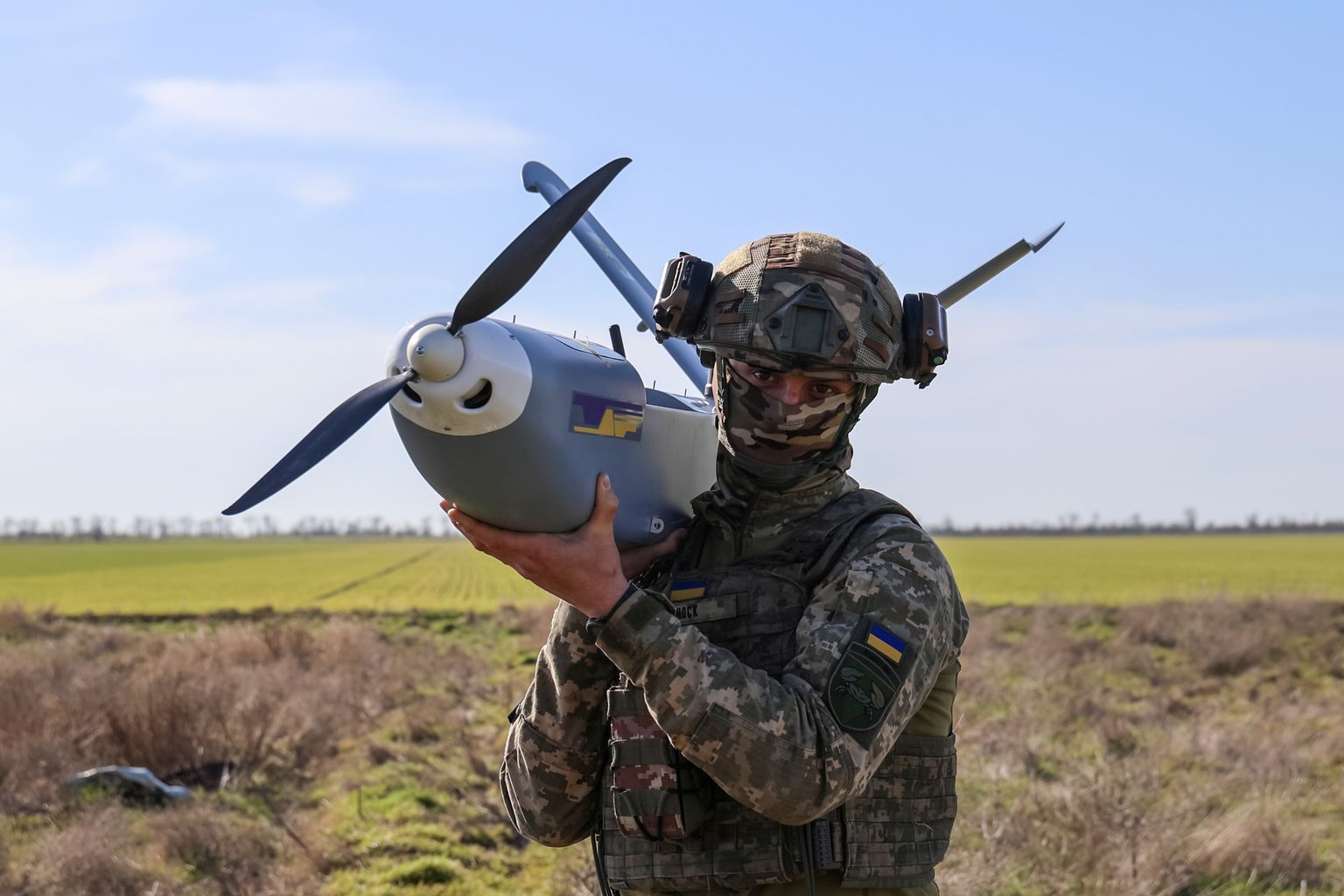
A soldier of the 127th Separate Territorial Defense Brigade launches a drone in Kharkiv Oblast, Ukraine, on March 14, 2026. (Nikoletta Stoyanova / AP)
 on Google
Bohdan Krotevych
Ex-Chief of Staff of the 12th Azov Brigade of Ukraine’s National Guard
When evaluating military technology, it helps to distinguish between two domains: the industrial and the battlefield. Rheinmetall is unquestionably a large company that produces effective weapons systems that actually work on the battlefield. This is a fact that does not require emotional amplification or denial.
But those two domains carry different kinds of authority, and conflating them leads to poor analysis.
The statement by Rheinmetall's CEO, Armin Papperger, about Ukrainian drones goes beyond professional analysis and veers into dismissiveness.
In essence, it sounds like someone from the manufacturing sector explaining to those who are actually fighting what counts as innovation and what does not. These are different domains of expertise. It would be just as strange if a front-line soldier started explaining to the CEO of Rheinmetall how to properly build a defense industry.
The issue is not criticism itself — it is necessary. The issue is the way it is presented, which resembles rhetoric more than analysis. In times like these, one would expect a higher level of professional restraint, but reality is different, and such statements require a response.
We see a large company, but we do not see it facing the realities of frontline combat against one of the largest military powers among nuclear-armed states
Substantively, the claim that Ukrainian drones lack innovation is too narrow. It reduces innovation solely to the complexity of the product.
Historically, that approach does not hold. There was nothing "extraordinary" about combining two wheels, a frame, and a handlebar — yet it became a breakthrough that changed mobility.
The same applies to conventional weapons systems. The 120-mm caliber existed long before Rheinmetall, yet the company introduced a major advancement by developing a smoothbore system that became a global standard.

Tanks, infantry fighting vehicles (IFVs), and air defense systems are not inventions of a single company or era — they are the result of continuous modification, adaptation, and improvement. Rheinmetall operates exactly in this space, and that is entirely valid. But then the same logic should apply to other segments as well.
Would it really make sense today to argue that something is "not innovative" simply because it is a modification of an existing principle? In the case of Rheinmetall, we see a large company, but we do not see it facing the realities of front-line combat against one of the largest military powers among nuclear-armed states. These are different levels of experience and different grounds for judgment.
Ukrainian drones are not a revolution at the level of physics or materials. But they are a revolution at the level of application, scaling, and adaptability. That is what defines their role in modern warfare. They have become a tool that systematically changes the balance on the battlefield.
The historical parallel is clear. The army of Genghis Khan did not invent the recurve bow as a concept, but it brought its use to a level that provided a strategic advantage and enabled the conquest of vast territories. Would it make sense to dismiss that as "non-innovative" simply because it was based on an existing principle?
In Ukraine's case, we see a similar process. Low-cost strike drones, including interceptor drones, are shaping a new way of warfare. The effectiveness of countering enemy unmanned aerial vehicles (UAVs) at a scale that covers a large country is an empirical result.

It is also important to understand that no weapon is a game-changer on its own. The decisive factor is the person using it, their tactics, and their ability to adapt. That is what separates battlefield experience from a purely industrial perspective.
It is also worth recalling Rheinmetall's own history. In 1919, the company was forced to produce locomotives, office machines, and agricultural equipment. Was that considered innovation at the time? Or did it look like improvised or low-tier production in the eyes of others? And could those efforts have been dismissed in the same way Ukrainian solutions are being dismissed today?
I am writing this because the opinion of Rheinmetall's CEO carries weight and influences the perception of foreign companies, investors, policymakers, and national leaders.
Such statements can contribute to a distorted understanding of the effectiveness and potential of Ukrainian manufacturers, and thus affect decisions regarding cooperation.
In my view, those who invest in Ukrainian manufacturers are thinking strategically. The notion that this is "simple" or "nothing complex" is a form of devaluation rooted in a backward-looking perspective. And those who remain focused on the past tend not to withstand market competition.
Dozens of Ukrainian companies are already shaping this field and proving its effectiveness in practice — Ukrspecsystems, Skyeton, Airlogix, Aerodrone, Fire Point, Taf Industries, Vyriy, Wild Hornets, and General Cherry Skyfall, among them.

It is also important to address the issue of licensing and certification. In peacetime, these are essential standards, procedures, and regulatory compliance. But war fundamentally shifts priorities.
When the situation becomes critical, certificates do not stop drones. What matters is delivering results here and now. Not on paper, not in procedure, but in reality, on the battlefield.
The difference between "certified" and "effective" becomes critical under such conditions. Practice shows that systems prevail only when they can adapt faster to the threat.
In a real war scenario, NATO countries would act in the same way. The primary instinct of any state is self-preservation. When faced with an immediate threat, countries prioritize what works over what is formally certified.
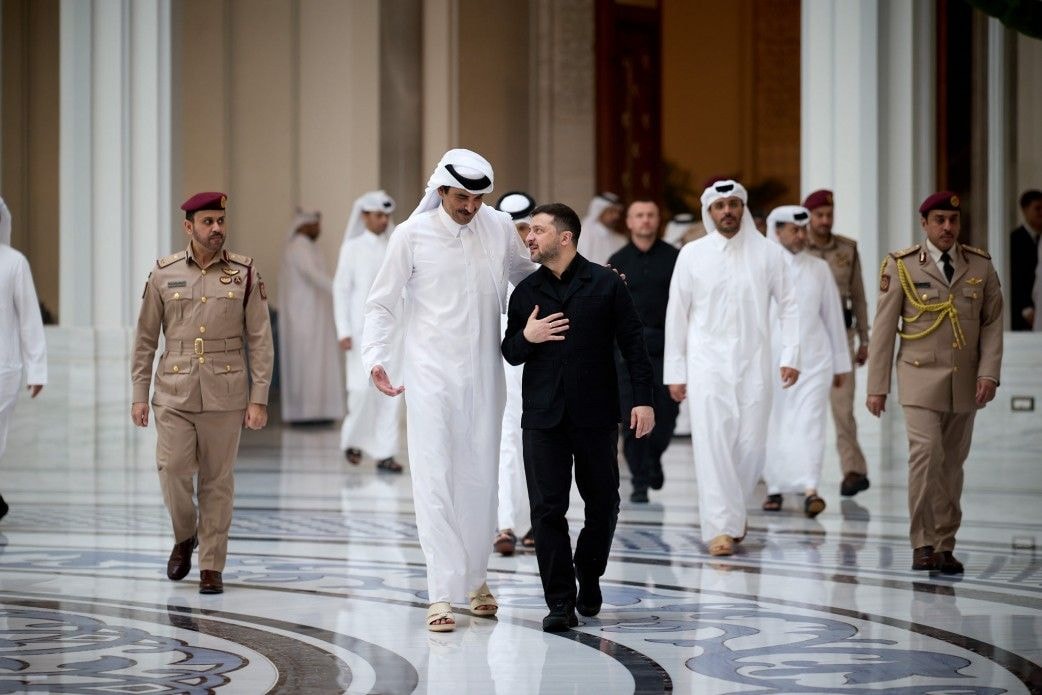
We are already seeing this dynamic emerge. Countries in the Gulf are actively engaging with Ukrainian manufacturers — negotiating deals, deploying expertise, and investing in drone technologies.
I understand why someone coming from an industrial environment may not fully appreciate this. But the experience of war always clarifies things far more sharply than any theoretical assessment.
Editor's note: The opinions expressed in the op-ed section are those of the authors and do not purport to reflect the views of the Kyiv Independent.
read also
 Kollen Post
 Dmytro Basmat
 Kollen Post