In the Middle East, chaos is Putin's new ally
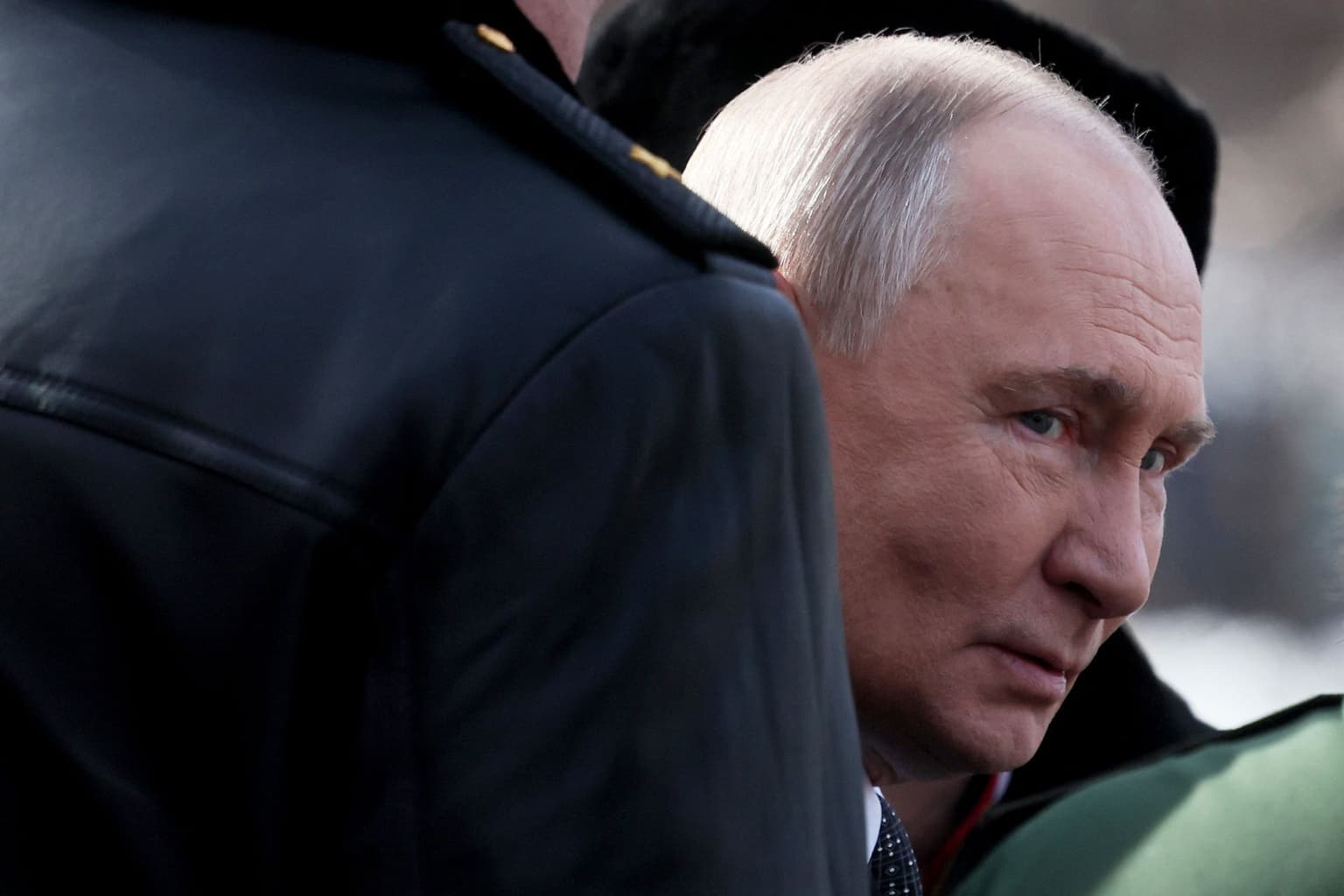
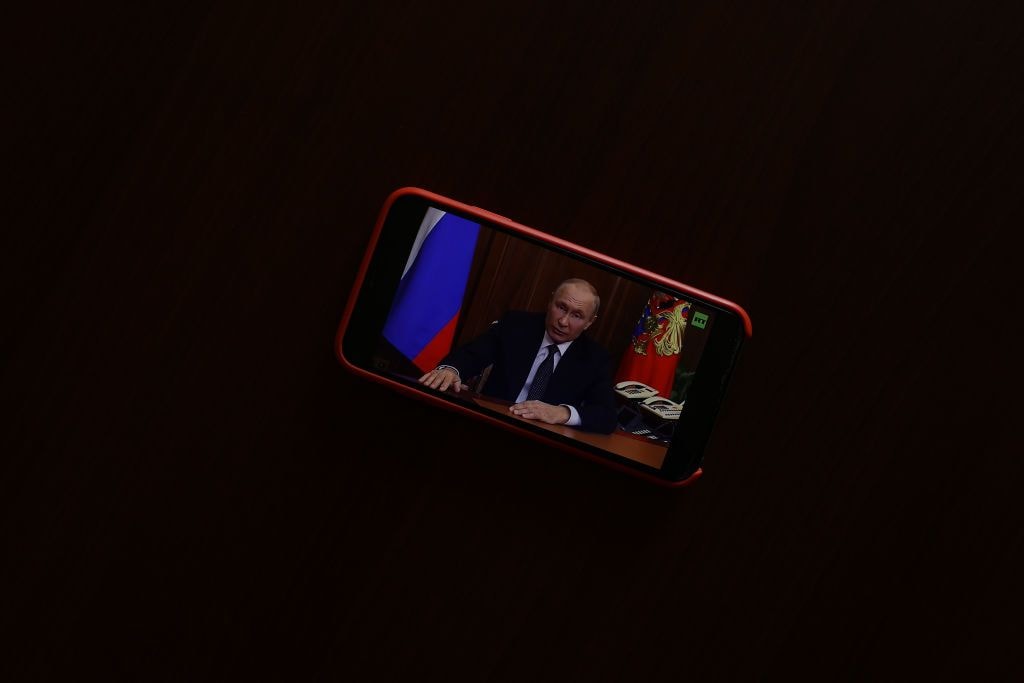
Russia’s President Vladimir Putin in Moscow, on Feb. 23, 2026. (Maxim Shipenkov / Pool / AFP via Getty Images)
 on Google
Anna Borshchevskaya
Senior fellow at the Washington Institute
If anyone was worried that Russia was going to intervene on behalf of its ally Iran in the new Middle East conflict, they need not be.
Vladimir Putin's response to the massive U.S.-Israeli campaign against Iran — and even the Israeli strike that killed Ayatollah Ali Khamenei, Iran's longtime Supreme Leader — was at best bland. He called the U.S. and Israeli strikes "cynical" and murderous, but issued neither threats, nor red lines, nor commitments to help Iran.
To understand Putin's restraint, consider his larger strategy.
Russian leader sees no benefit to a futile challenge to the U.S. or Israeli militaries. And he has other priorities. This is not to say that there aren't clear advantages to Putin's patience. The ongoing crisis presents opportunities we know he will try to exploit.
Putin can position himself as a vital part of any negotiations going forward. And then strengthen that perception by helping Tehran suppress protests and potentially raise the costs of U.S. involvement.
Even without direct military support, Russia has already played a vital role in helping Iran.
Russia has long provided Tehran with military cooperation. Iran increasingly relied on Russia in recent years to launch satellites into orbit, which helps Iran surveil military targets. Russia is also sharing real-time satellite intelligence and signal data with Iran to help track the movements of U.S. warships, according to recent reports. In the past, Iran retaliated against the U.S. with cyberattacks. Russia could help Iran do so again now.
Russia has also helped Iran block communications by supplying electronic jamming technology. Reports also suggest Iran is likely using Russian electronic warfare systems.
Last month, Russia almost certainly supplied at least some counter-satellite-communications systems to Iran, according to Forbes. Tehran reportedly used Russian Spartak armored vehicles to suppress protests earlier in the year. Moscow could provide these or other vehicles again.
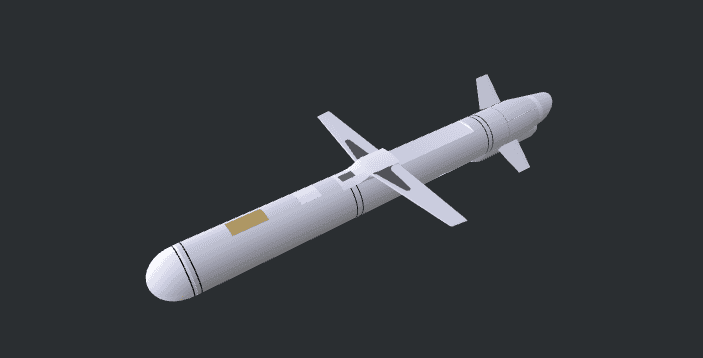
Moscow and Tehran finalized a deal last December that let Russia supply Iran with 500 man-portable "Verba" launcher units and 2,500 "9M336" surface-to-air missiles, according to the Financial Times. That reported agreement would bolster Iran's low-altitude defense capabilities if used from ships against low-flying aircraft.


These could be dangerous in the hands of Iranian proxies such as Hamas, Hezbollah, and the Houthis near U.S. military bases throughout the Middle East.
Russia's previous role in Iran's nuclear program underscores Tehran's unique dependence on Moscow.
There is evidence that Russia aided defense-linked scientists in 2024, as the Financial Times reported that they made two covert trips to Russia to obtain dual-use technologies with potential nuclear weapons applications. Russia-Iranian nuclear cooperation will likely continue, as it has since the mid-1990s, when Russia began providing technical assistance to Iran and building nuclear power plants, including Bushehr, Iran's first commercial nuclear reactor.
Russia's desire to be a global player hinges on its role as a mediator.
Russia tried to position itself as an interlocutor between the United States and Iran before, playing a role in de-escalating military tensions with Israel. In February 2025, in the first direct exchange between Trump and Putin after Russia's full-scale invasion of Ukraine, the two leaders discussed Iran's nuclear program, according to Bloomberg, and Putin agreed to facilitate Iran's nuclear talks with the Trump administration.
Russia also served as a behind-the-scenes mediator between Israel and Iran, facilitating calls earlier this year among Putin, Israeli Prime Minister Benjamin Netanyahu, and Iranian President Masoud Pezeshkian.
Of course, Russia is hardly a neutral player. The Kremlin typically acts more as Iran's lawyer.
The more U.S. attention is focused on the Persian Gulf, the less U.S. attention is focused on Ukraine, which remains Putin's priority.
Should a pro-Western government emerge in Iran, it would certainly further harm Moscow's interests in the region. But Putin would likely work with any regime in Iran that replaces it (as Moscow has swiftly and unsentimentally done in Syria after the fall of its longtime ally Bashar al-Assad). If Islamic Revolutionary Guard Corps (IRGC) hardliners end up taking power in Tehran, that would only benefit Putin more.
Russia benefits from chaos in the Middle East and relishes condemning perceived American unilateralism. This helps Moscow score points in the so-called Global South among countries generally sympathetic to Russia's narratives.
Putin continues to use his position in the Middle East to chip away at Russia's isolation for its war of aggression against Ukraine. And if a meaningful pause in the Ukraine war frees up more time and resources for the Kremlin, Russia could provide more and better assistance to Tehran.
Trump is right to focus on Iran and its nuclear program. The current regime in Tehran is dangerous to U.S. interests and partners in the Middle East. But U.S. policymakers should not lose sight of Tehran's partner — and we should remember that Russia historically rebounds from losses.
Editor's note: The opinions expressed in the op-ed section are those of the authors and do not purport to reflect the views of the Kyiv Independent.