We asked an expert about Russia's 'updated' mass missile, drone tactics
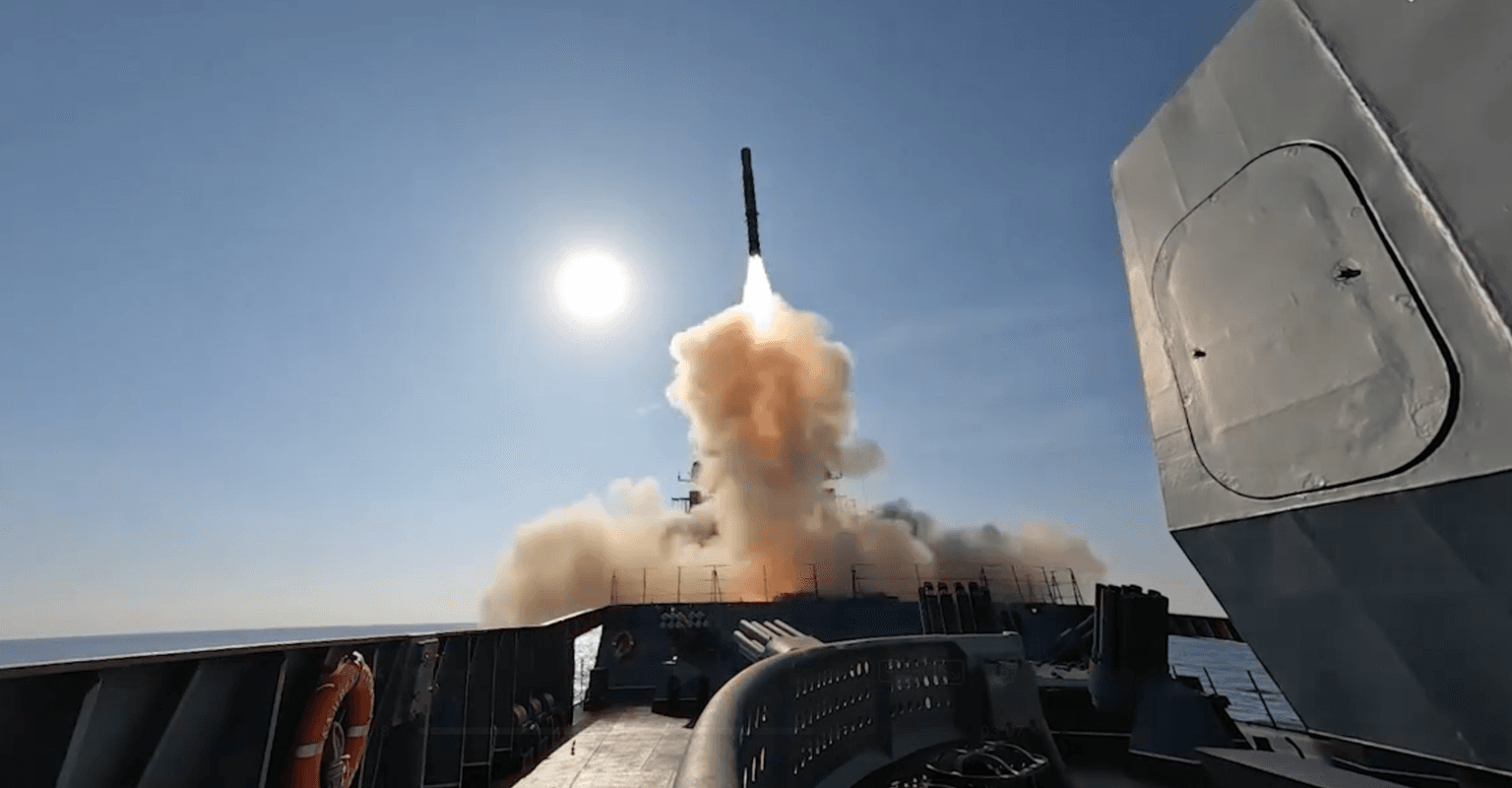
An alleged launch of a Zirkon missile in a video published by Russia’s Defense Ministry on Dec. 3, 2024. (Russian Ministry of Defense / Telegram)
 on Google
Russia launched another massive strike on Ukraine on Jan. 20, with President Volodymyr Zelensky noting the use of "updated tactics."
The recent attack hit multiple regions, with Kyiv and the country's energy infrastructure taking the brunt of the damage. Russian forces also targeted substations supplying nuclear power plants, one of Ukraine's main sources of power generation in the midst of a harsh winter.
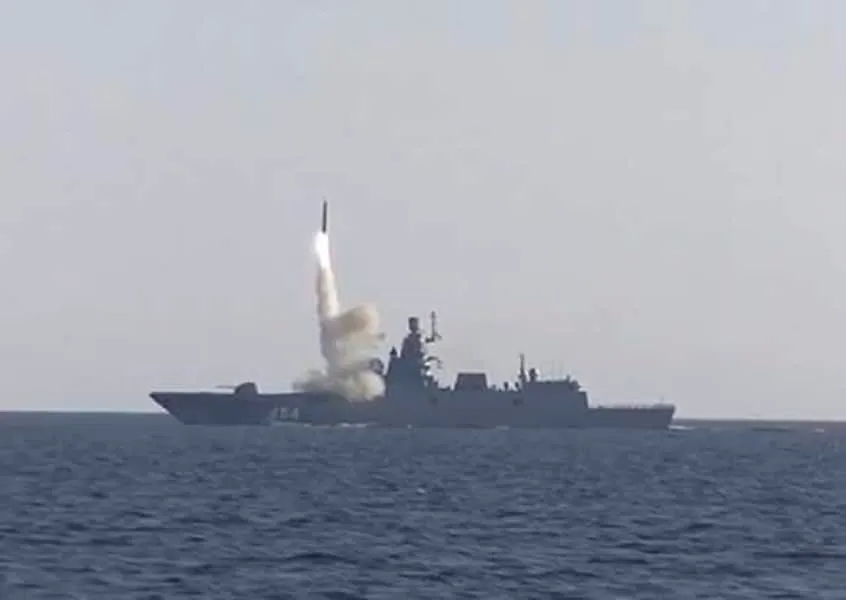
Russia launched 18 ballistic missiles, 15 cruise missiles, and 339 drones during the mass attack, killing one person and injuring three others. The strike also included a hypersonic Zircon anti-ship missile, which travels much faster than most cruise missiles.
Some of the missiles used in the attack were manufactured as early as 2026, underscoring both the lack of sufficient sanction pressure on Russia, and the continued availability of critical components for its weapons production, Zelensky said.
Retired Ukrainian officer and defense expert Viktor Kevliuk told the Kyiv Independent that this could also indicate changes in Russian production cycles or an increase in the pace of weapons production.
Yet this is not the only change Kevliuk observed, referring to the "updated tactics" used during the Jan. 20 attack.
Russia is now focusing more on Ukraine's energy infrastructure, which is particularly vulnerable as temperatures have remained well below -10 degrees Celsius (14 degrees Fahrenheit) for several weeks, according to the expert.
Kevliuk said that in previous attacks, Russian strikes could target multiple types of targets, not just energy infrastructure. He also highlighted the high intensity of this combined assault, which included dozens of missiles and hundreds of drones.
"Such a 'mix' of weapons in large quantities indicates a change in strike tactics — instead of single-type attacks, Russia is trying to overload air defense systems with a complex set of threats," Kevliuk said.
He added that there is currently no publicly available information on the routes or coordination of Russian forces during the attack, or on Russia's use of electronic warfare, making it difficult to comment in more detail on changes in tactics.
At the same time, Kevliuk said that even the available official statements point to greater challenges for Ukraine in defending the country and restoring infrastructure amid further Russian attacks.
"The Ukrainian authorities noted the use of ballistic missiles has increased, which is a more difficult challenge for the Ukrainian air defense," he said.
Unlike cruise missiles which are jet engine powered and fly in a relatively flat trajectory, ballistic missiles are rocket-powered and launched high into the atmosphere before arcing back down onto their target.


They're only guided during the initial stages of launch, so they can be less accurate than cruise missiles, but have the advantage of reaching incredibly high speeds — sometimes more than 3,200 kilometers per hour — as they approach their targets.
"In short, the Russian Federation's 'updated tactics' are a new approach to delivering massive strikes, particularly against energy facilities, using a large number of missiles of various types, including those released in 2026, which creates increased challenges for Ukraine in terms of defense and infrastructure restoration," Kevliuk said.
The day after the attack, Zelensky said Ukraine had strengthened its air defense systems, but Russia had significantly increased the number of missiles and drones it could deploy against the country.
Repelling the mass Jan. 20 attack alone cost around 80 million euros ($88 million) in air defense missiles, the president added.
"(Ukraine) needs more missiles, more air defenses," Zelensky said, adding that aside from U.S.-produced Patriot PAC-3 missiles used against Russian ballistic missiles — whose numbers have increased significantly — "nothing else works."
As Kyiv continues to call for tougher international sanctions on Russia and stronger air defenses for Ukraine, civilians are struggling to endure the winter amid repeated disruptions to electricity, water, and heating caused by relentless Russian attacks.
Following the Jan. 20 attack on Kyiv, 5,635 buildings were left without heating, or about 46% of the city's housing stock. Twelve buildings had already been without heat since a Russian attack on Jan. 9.
Two days later, about 3,000 buildings remained without heating, and emergency power cuts were in effect across the city, Kyiv Mayor Vitali Klitschko said.
The energy supply situation has also deteriorated beyond the capital. Ukrainian Prime Minister Yuliia Svyrydenko said on Telegram that the situation remains most difficult in Kyiv, as well as in Kyiv, Dnipropetrovsk, Chernihiv, Sumy, and Kharkiv oblasts.
More than 160 teams of power engineers, including crews sent from other regions, are working around the clock to restore electricity and heat, Svyrydenko added.
Most Ukrainian regions are experiencing emergency power cuts as of Jan. 22, with outages lasting 10 hours or more.