As Kyiv's social services strain to meet needs this winter, volunteers step in
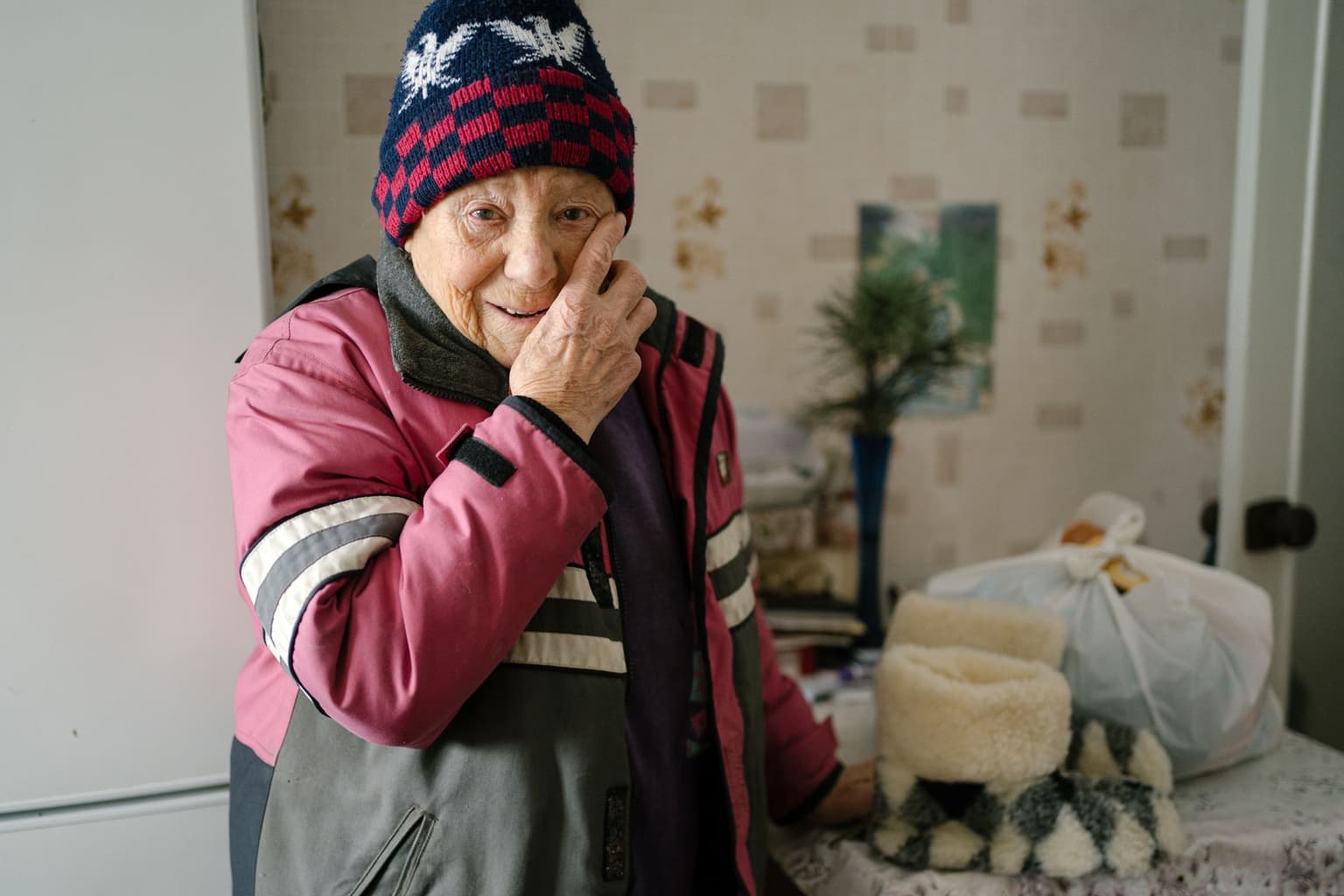
Antonina Rybalenko is seen in the apartment on the east bank of Kyiv, Ukraine, on Jan. 27, 2026. (Khrystyna Kulakovska / The Kyiv Independent)
 on Google
Valentyna Popova, an 85-year-old retired mathematician, lives in an apartment block on Kyiv’s east bank that is only minutes away from a city-installed "Invincibility Point," an emergency winter heating hub offering warmth, a place to charge devices, and sometimes tea or hot meals.
She, however, is unable to reach the hub. While her flat is on the ground floor, mobility issues keep her inside, forcing her to rely entirely on volunteers stepping in to support residents that fell through the cracks of the city’s crisis response.
Starenki is a volunteer foundation dedicated to providing essential support to elderly people like Popova who, due to various life circumstances, have found themselves lonely and deprived of care and attention from relatives or social networks.
The Kyiv Independent followed the foundation volunteers in their daily work as they moved between apartment blocks, delivering food and basic winter supplies to residents who cannot always reliably access available city services on their own.
"We knew there is going to be a problem with warmth even before the new year already, because elderly people are almost always cold, whether there is heating or not, often due to their health conditions they are cold even during summer," says Starenki co-founder Varvara Tertychna.


"The last few weeks were especially busy, people turned their attention to the needs of elderly again" she said, referring to the Russian aerial mass attack on Ukraine's energy and critical infrastructure that took place on Jan. 9, the beginning of this latest, more brutal phase of Russia's campaign against energy infurstructure in Ukraine, timed to coincide with winter temperature drops.
Since the attacks began, the capital has been facing one of the worst energy crises in the country, leaving much of the city without stable electricity, water, or heating as temperatures outside drop to −19 degrees Celsius (−2 degrees Fahrenheit).
While these conditions are broadly challenging, certain social groups remain particularly vulnerable. Over the past month, two deaths of elderly Kyiv residents sparked public speculation that cold and hunger were proving lethal — an 88-year-old Jewish woman in Podil, and 82-year-old cinematographer Pavlo Loiko. In both cases, city and regional authorities issued Telegram statements disputing those claims and saying forensic findings attributed the deaths to chronic heart disease rather than hypothermia.
The city’s outreach to the most vulnerable relies heavily on social workers and a set of announced crisis measures, including door-to-door hot meal deliveries and heated aid packages, though whether these promises are being fulfilled at the scale pledged remains in question.
Kateryna Babych, an analyst at Cedus, an independent think tank and urban bureau, said the city’s front-line social services are struggling to meet the scope of need.
"Social workers are overstretched and underpaid, responsible not only for elderly people but also for those with chronic illnesses, disabilities, and others living in what Ukrainian law defines as 'difficult life circumstances.' Even when they want to provide more support, limited staffing and resources make it nearly impossible," Babych told the Kyiv Independent.
The Kyiv City Department of Social and Veterans Policy told the Kyiv Independent that due to the current circumstances, the workload per social worker has increased to 17.6 people per social worker, compared to the normal 10–11.
The situation is particularly severe on the city’s east bank, they added.
At Popova's door, on top of the usual food package, two Starenki volunteers were delivering additional publicly-funded "warmth" aid consisting of sheepskin house slippers and a warm blanket. Simple necessities, that in current conditions can be life-saving.
"For the last four days there was no heating at all."
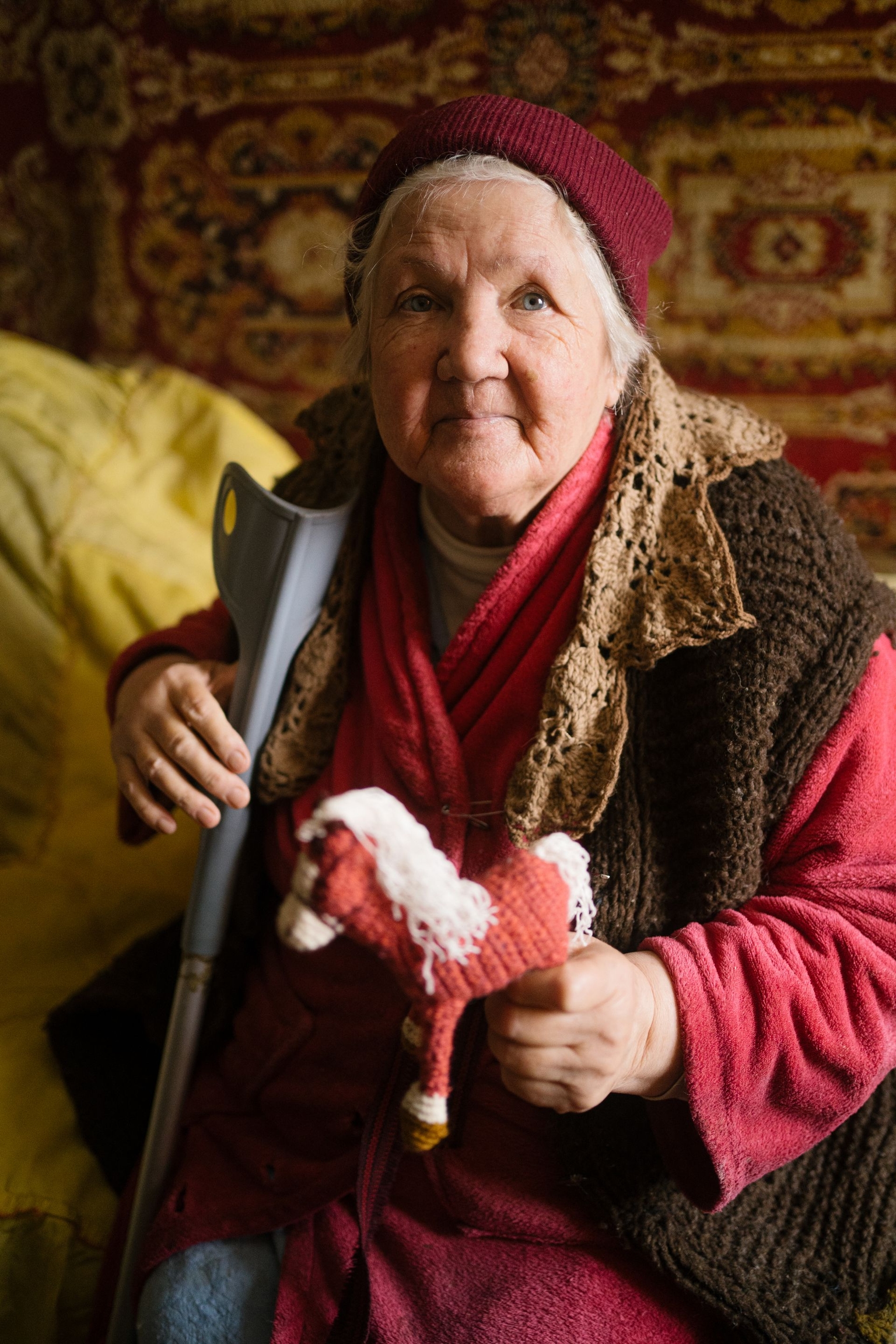
Valentyna Popova, 85, holds a handmade toy on the east bank of Kyiv in the Berezniaky neighborhood, Ukraine, on Jan. 27, 2026. (Khrystyna Kulakovska / The Kyiv Independent)
It was 14 degrees Celsius (57 degrees Fahrenheit) inside Popova's apartment that day, up from 11 degrees Celsius (52 degrees Fahrenheit) earlier in the week. "For the last four days there was no heating at all," Popova says as she greets the group of volunteers, immediately holding out her hand-crocheted pink horse as a welcoming gift.
"I really needed those!" she says as she pulls out the slippers. "What a blessing, I tried to make some myself to keep my hands busy, as there is not much else to do."

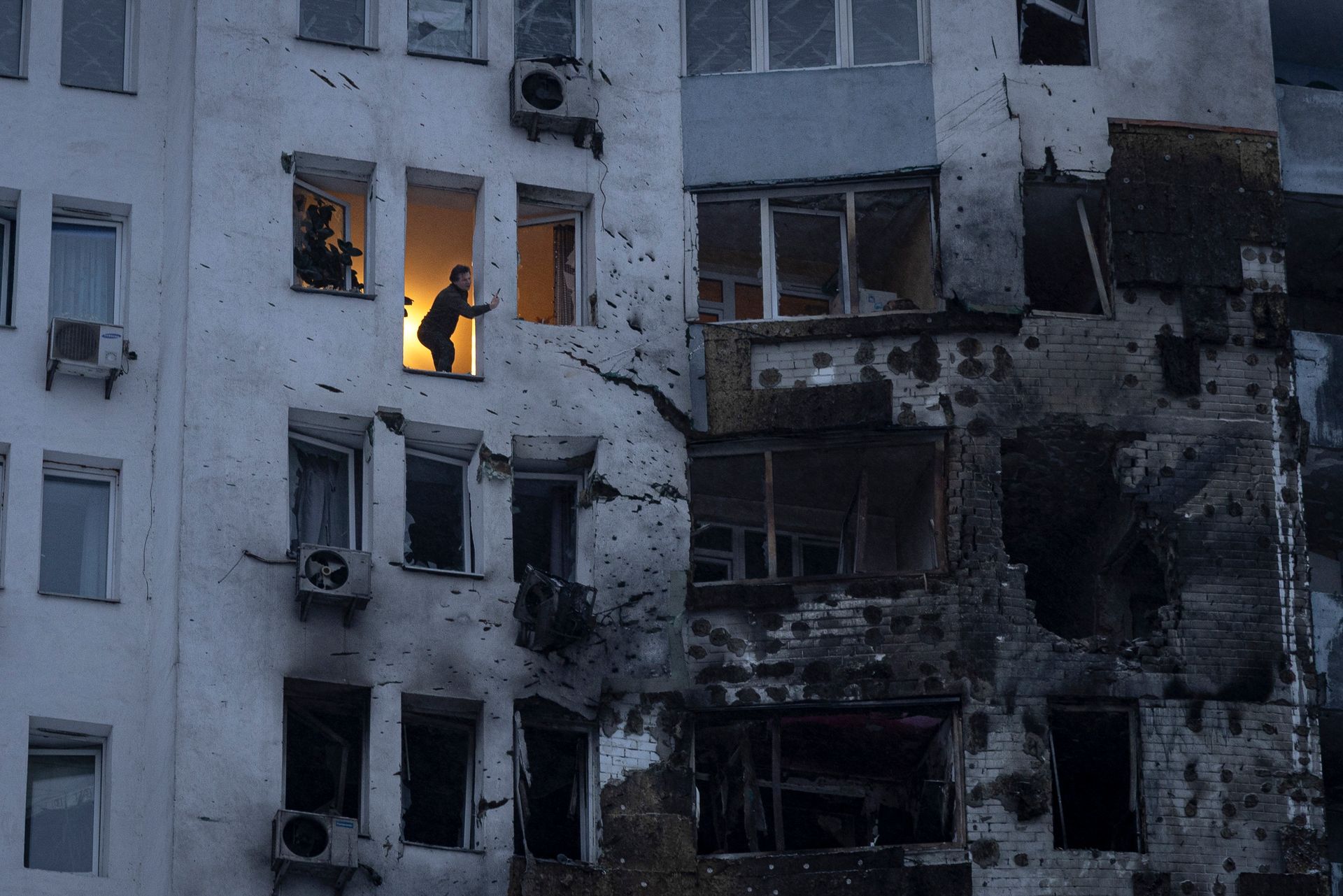
Starenki operates alongside municipal social workers, who share information about the needs of the given communities.
Today they are joined by Yulia Naumenko, 32, the youngest social worker in her department. She took on the work two years ago, when her family moved to Kyiv from Nikopol, Dnipropetrovsk Oblast, now located only 6 kilometers (3.7 miles) from the frontline.

Among her responsibilities are visiting elderly regularly, spending time with them, and assisting with basic household matters — from buying groceries to arranging a doctor’s visit.
Naumenko has 17 people under her care and was substituting for a colleague today, adding another 10 addresses to her list. Electricity in the district is available only for a few hours a day, and even when it is on, there is not enough power in the grid for elevators to operate.
After climbing countless stairs, she begins each visit with a warm smile. The elderly respond by trying to fit their life stories into those brief five- to seven-minute encounters, as the group has to hurry on to other buildings where deliveries are expected.
Tamara Babkova is 87, and lives on the 10th floor. She never had kids and in her youth, she worked as a chef.
"There was barely any electricity for almost two weeks, no hot water, but it all doesn't matter, as long as our dear soldiers are holding on."
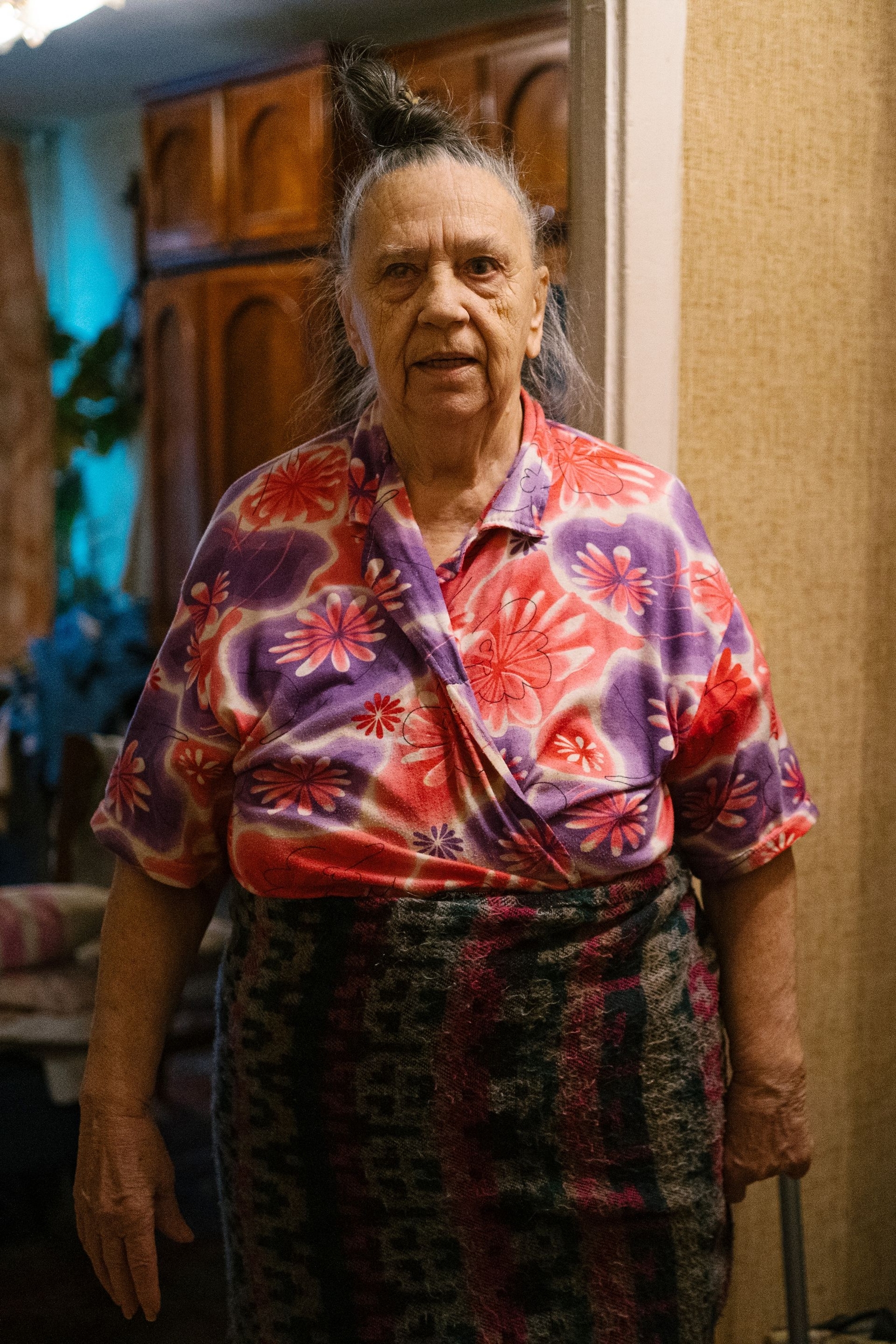
Tamara Babkova, 87, is seen in her apartment on the east bank of Kyiv, Ukraine, on Jan. 27, 2026. (Khrystyna Kulakovska / The Kyiv Independent)
Now cooking pots are her only hope to raise the temperature inside her flat by at least a few degrees. "Look what my neighbors came up with," she says proudly, "They come three times a day to reheat those pots on their gas stove and then put them around my bed, they even take care of my cockatiel, they took him in since their flat is much warmer."
"There was barely any electricity for almost two weeks, no hot water, but it all doesn't matter, as long as our dear soldiers are holding on," Tamara said. "Even though my pension is just under 90 US dollars a month, I donate to the army regularly."
Between tightly scheduled visits, the group discussed how quickly the need grows when outages stretch from hours into days. Their route leads to another apartment where cold and isolation looked different, and where the gap between announcements and delivery was harder to ignore.


Maria Samii, 77, was less enthusiastic about volunteer visit. It's 10 degrees Celsius (50 degrees Fahrenheit) inside of her apartment, in order to stay somewhat warm she has to sleep in her hat, and under multiple blankets.
In her youth she worked as a journalist at the Soviet era Pravda newspaper. "I wrote what I was assigned to and not what I wanted," she says. She lost her son to a car crash back when he was a teenager and now she says that occasional volunteer visits are the only people who keep her company.
Unable to cook for herself, she would have significantly benefited from the hot meals that Kyiv Mayor Vitali Klitschko announced would be delivered once a day to lonely elderly residents registered with district territorial social service centers, municipal offices that coordinate aid and social worker visits for vulnerable residents, according to a Jan. 13 social media post.
Naumenko said they were still waiting to hear back from the city on the deliveries.

"Yes, we did receive the questionnaire regarding that some time ago, but nothing was provided so far," said Naumenko.
The Kyiv City Department of Social and Veterans Policy told the Kyiv Independent that the distribution of hot meals, gas canisters, and hot water bottles for cooking and heating, as well as warm sleeping bags was ensured to all territorial social service centers without exception.
Tertychna said Starenki's cooperation with municipal social service departments has been close and productive, but she said the city needs to dedicate more resources to the work that social workers do — so people like Naumenko are not stretched so thin.
"We would hope to see more resources being dedicated to Social services on the city level, their work is very hard and needs to be respected and compensated properly," she said.