Bringing art to the cemetery — How 'The Invisible Gallery' reclaims legacy overshadowed by Russian imperialism
 on Google
In Ukraine's cemeteries, some graves are more than symbols of memory. They hold the truth about the country's enduring place in European culture, testifying to centuries of creative achievement and innovation — and to the lengths Russia has gone to obscure and even try to steal that legacy.
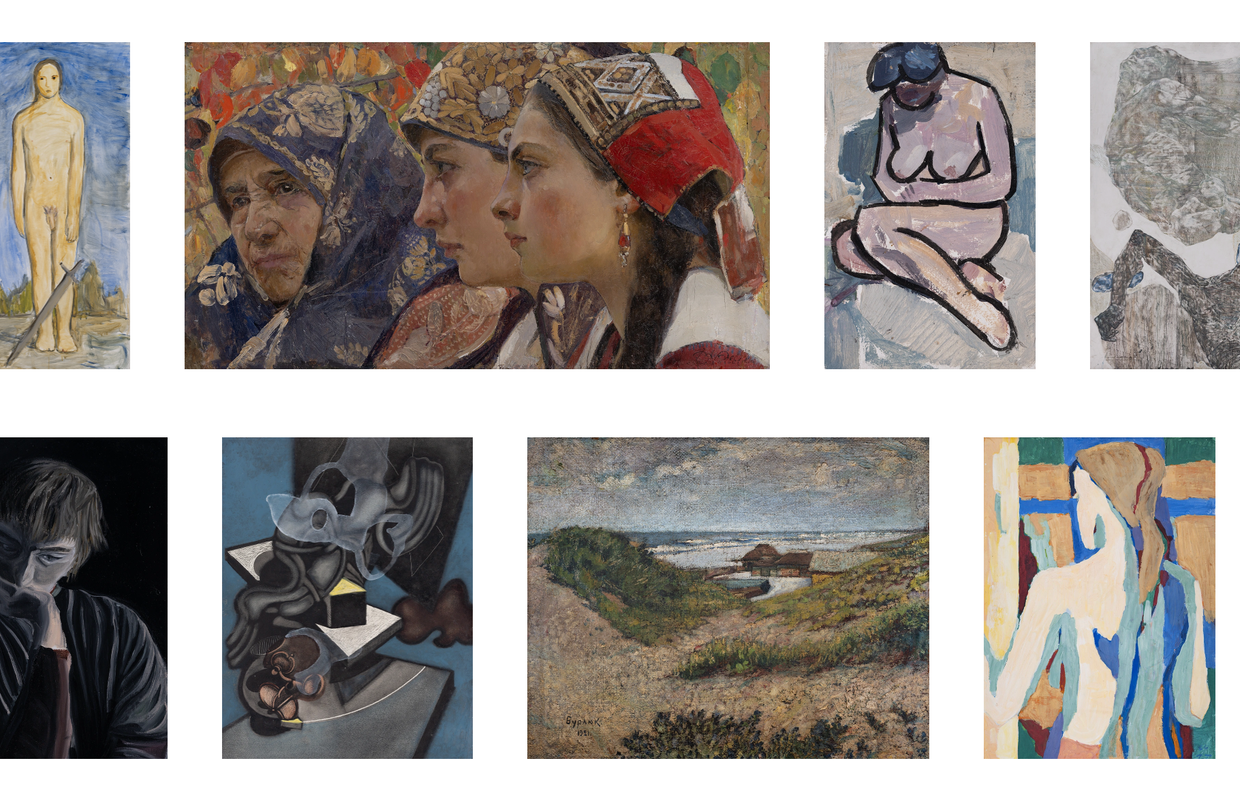
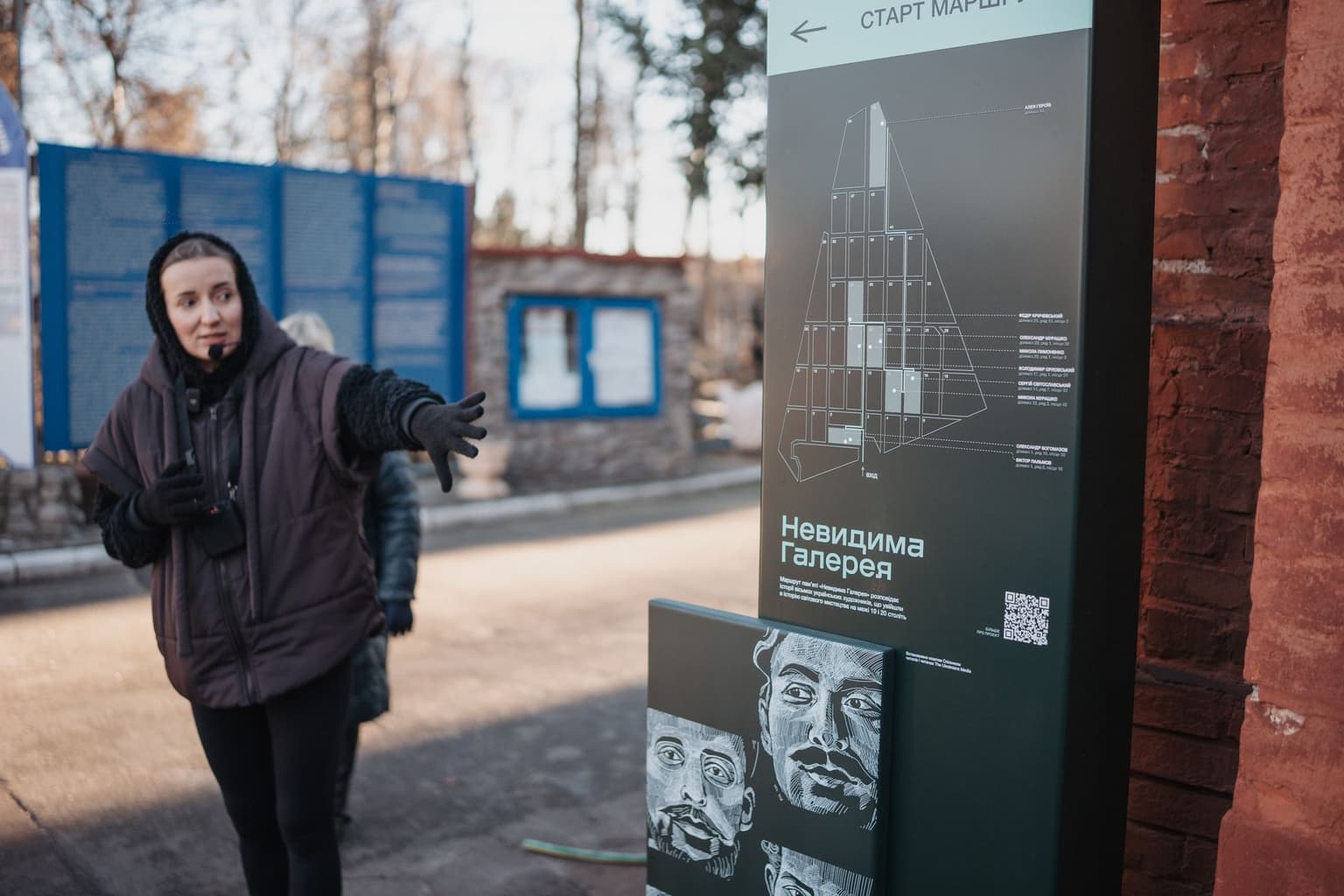
"The Invisible Gallery," a new cultural initiative that highlights the lives of eight Ukrainian artists, seeks to bring greater attention to Ukraine’s historical contributions to the art world. Through a guided tour of Lukianivske Cemetery in Kyiv, visitors can discover how these artists contributed to art amid empire collapse, war, and repression.
"Russia's long-standing colonial policy toward Ukraine has historically led many Ukrainian artists to be mistakenly associated with Russian culture, or for their legacy to have been suppressed in the USSR," said journalist Darka Hirna, who conceived the project.
"The ongoing full-scale war has intensified discussions in Ukrainian society about these artists and how they often had no choice but to study and work in Russia, yet still identified themselves with Ukrainian culture."
In order to realize Hirna’s idea for "The Invisible Gallery," The Ukrainians Media teamed up with Lady Di Atelier, Lukianivske Cemetery, and the National Art Museum of Ukraine. An interactive website allows people to explore their legacies in greater depth.


There are around 40 artists buried at the cemetery in total. However, "The Invisible Gallery" focuses specifically on artists Oleksandr Bohomazov, Mykola Murashko, Viktor Palmov, Fedir Krychevskyi, Oleksandr Murashko, Volodymyr Orlovskyi, Serhii Sviatoslavskyi, and Mykola Pymonenko.
Mykola Murashko (1844–1909) was a founder of the Kyiv Drawing School and authored some of the earliest manuals for art students in Ukraine.
Volodymyr Orlovskyi (1842–1914) is considered one of the founders of Ukrainian Realist landscape painting, while Serhii Sviatoslavskyi (1857–1931) specifically excelled in plein air landscape painting, capturing Ukrainian outdoor life with atmospheric sensitivity.
Realist painter Mykola Pymonenko (1862–1912) documented urban and rural Ukrainian life with ethnographic precision, and among his students was a young Kazimir Malevich.
Oleksandr Murashko (1875–1919), nephew of Mykola Murashko, studied under Ilya Repin at the Imperial Academy of Arts before evolving from realism into a vivid, colorful Impressionism influenced by his time in Munich and Paris. His psychologically penetrating portraits, including the iconic "Girl in a Red Hat", established him as one of Ukraine's most famous artists.
Fedir Krychevskyi (1879–1947), an early modernist painter who synthesized Ukrainian folk traditions with European modernism, also became one of the founders and rector of the Ukrainian Academy of Arts.
Oleksandr Bohomazov (1880–1930) emerged as a leading figure in Ukraine's avant-garde scene, developing a distinctive Cubo-Futurist style that fragmented form and color into dynamic, energetic compositions. Viktor Palmov (1888–1929) pushed avant-garde experimentation even further through bold color contrasts and expressive techniques that challenged conventional artistic approaches.
The lives of these eight artists spanned periods of massive upheaval for both Ukraine and the world, including World War I triggering the collapse of the Russian Empire in 1917, the Ukrainian War of Independence from 1917 to 1921, the Communist authorities' establishment of the Ukrainian SSR in 1922, the Great Terror of the 1930s under Soviet leader Joseph Stalin, and the mass devastation caused by World War II.

Informational plaques featuring each of the eight artists draw visitors from the hush of the cemetery into their lives and the periods they inhabited.
"The priority (of this project) was the visual appeal of the informational plaques at the cemetery and ensuring that interacting with them was enjoyable and convenient," Kateryna Samboryk, co-creator and producer of "The Invisible Gallery," told the Kyiv Independent.
As the project's launch approached, the creators of the project realized it needed to begin with an immersive debut tour that would emphasize the appeal of visiting the cemetery — a task for which they enlisted the help of the cemetery staff. This included a woman whom the creators of the project affectionately refer to as Ms. Oksana.
"Ms. Oksana revealed to attendees (of the tour) details about the artists’ burials, how they lived, what they did for their country beyond creating incredible paintings, as well as information about their families, estates, and the sculptures on their graves," Samboryk said.
"In the spring, we plan to expand the series of tours and reach an even larger audience."

By drawing visitors' attention to these artists' through visits to their graves, Hirna hopes the project will do more than revive interest in their work. She also aims to spotlight a larger vision — a public discussion about Ukraine's need to cultivate its own kind of Pantheon.
"We are used to the fact that many of the graves of our state builders and prominent public and cultural figures are scattered across cemeteries around the world due to the terrible events of the 20th century," she said.
In France, the Pantheon serves as a secular mausoleum, a place where the country's most celebrated writers, scientists, and political figures are laid to rest, their collective achievements enshrined as a testament to their impact on French society.
Embracing this European tradition of cultural memory, "in which a historical cemetery is not only a place of mourning but also a cultural space," would help strengthen Ukrainian society during one of its most difficult periods, according to Hirna.


Note from the author:
Hi, this is Kate Tsurkan, thanks for reading this article. I always love a good cemetery story, not to mention one that's mixed in with decolonizing historical memory. I hope you were intrigued by this project as much as I was when I first learned about it. If you like reading about this sort of thing, please consider supporting The Kyiv Independent.