Ukraine war latest: US, Ukraine peace talks to continue on Dec. 15 in Berlin as Zelensky calls for 'Article 5-like' security guarantees
 on Google
Key developments on Dec. 13-14:
- US, Ukraine peace talks to continue on Dec. 15 in Berlin as Zelensky calls for 'Article 5-like' security guarantees
- Russia’s December oil and gas revenue set to drop to lowest level since 2020, Reuters reports
- US lifts sanctions on Belarusian potash, as Minsk releases over 100 political prisoners, including top opposition figures
- Ukraine says it destroyed pipeline Russia used to infiltrate Kupiansk, releases video
- Ukraine sanctions nearly 700 vessels tied to Russia’s 'shadow fleet'
US, Ukraine peace talks to continue on Dec. 15 in Berlin as Zelensky calls for 'Article 5-like' security guarantees
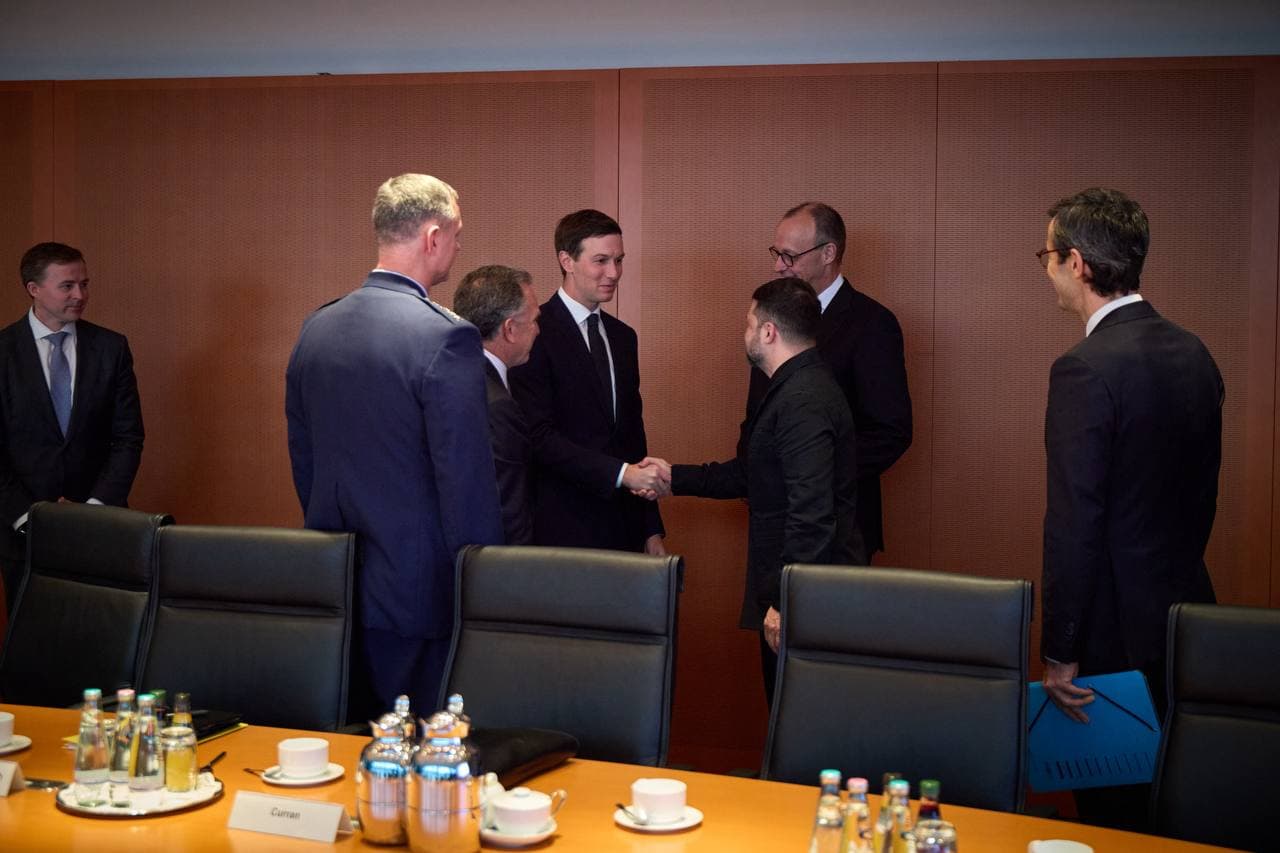
President Volodymyr Zelensky concluded his meeting U.S. envoys Steve Witkoff and Jared Kushner in Berlin on Dec. 14, as talks continue to finalize a peace plan to end Russia's full-scale war.
The visit is part of renewed diplomatic efforts, after the U.S. backed a 28-point plan that many viewed as effectively pushing Ukraine toward capitulation in Russia's all-out war. The proposal was subsequently reduced to 20 points following consultations with Ukrainian and European representatives.
The talks, which lasted for more than five hours on Dec. 14, will continue on the morning of Dec. 15, Ukraine’s Presidential Office told public broadcaster Suspilne.
In a readout provided by Witkoff, the U.S. special envoy said that a "lot of progress was made" during the meeting, without providing details.
Speaking ahead of the meeting, Zelensky signaled that Ukraine seeks NATO-like security guarantees as part of a peace deal to prevent future Russian aggression, as full membership is opposed by the U.S. and other partners.
Ahead of the meeting, Axios reported, citing a senior U.S. official, that the Trump administration may be willing to provide Congress-approved NATO-like security guarantees.
"We want to give the Ukrainians a security guarantee that will not be a blank check on the one hand but will be strong enough on the other hand. We are willing to send it to Congress to vote on it," the U.S. official told Axios.
As the U.S. and some European partners do not back Ukraine's bid to join NATO, Kyiv instead seeks "Article 5-like" bilateral guarantees from the U.S., European countries, and other partners, he noted.

"And that's already a compromise from our side," Zelensky said, adding that such guarantees on the American part must be confirmed by the U.S. Congress.
According to the president, Ukraine is not leading a "direct dialogue with the Russian side," as Moscow's positions are relayed by the U.S.
Kremlin aide Yuri Ushakov said that Moscow had not yet reviewed the Ukrainian and European revisions to the peace plan, but added that they "will likely not be constructive" and Russia will "strongly object" if any changes are implemented. Ushakov stressed that Moscow is determined to stand its ground on territorial issues.
The Kremlin has demanded that Ukraine cede the entire Donetsk Oblast, including territory that Russian forces have been unable to capture, as a key condition for any peace deal.
Speaking about Donbas, Zelensky said the only fair option would be a ceasefire based on the "we stand where we stand" principle, and the matter would be resolved later through diplomatic means.
Any proposal for a "free economic zone" or a "demilitarized zone" — an idea backed by the U.S. — would only be just if both sides withdraw their forces symmetrically, Zelensky added, calling it a "question that currently has no answer."

Russia’s December oil and gas revenue set to drop to lowest level since 2020, Reuters reports
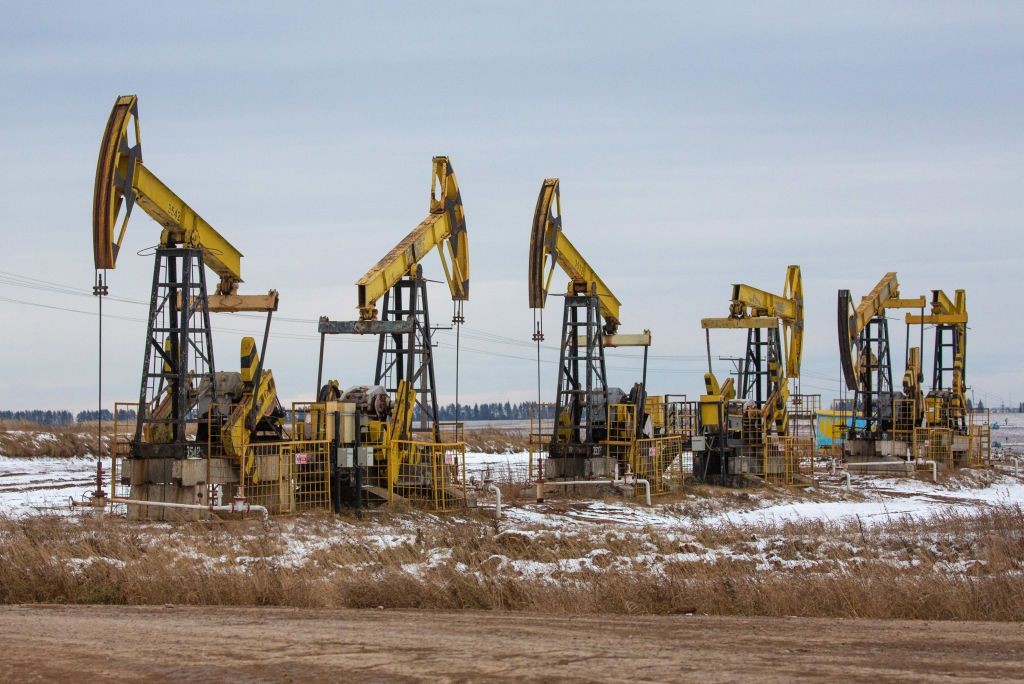
Russia’s oil and gas revenue in December is expected to be nearly half compared to the previous year, Reuters reported on Dec. 12.
The decline, down to about 410 billion rubles ($5.17 billion), is being driven by lower global oil prices and a stronger ruble, bringing monthly revenues to Russia's lowest level since 2020.
Oil and gas income remains the Kremlin’s main source of funding, accounting for roughly a quarter of federal budget revenues.
These revenues have been strained by rising defense and security spending, since the start of Russia’s full-scale war against Ukraine in 2022.
For the full year, oil and gas revenues are projected to total 8.44 trillion rubles ($105 billion), nearly 25% lower than last year and below the Finance Ministry’s oil-and-gas earnings forecast, according to Reuters calculations based on industry and official data.
Analysts said that Russia plans to cover the December budget deficit by borrowing through government bonds, but warned that the situation could become more difficult in 2026 if oil prices stay lower and currency assumptions do not hold.
Ukraine and its Western allies have repeatedly said efforts to curb Russian oil revenues are aimed at undermining Moscow’s ability to finance the war.
As part of that effort, Ukraine has repeatedly targeted Russian oil and gas infrastructure, including refineries and storage facilities, seeking to disrupt a major source of Kremlin funding.

US lifts sanctions on Belarusian potash, as Minsk releases over 100 political prisoners, including top opposition figures
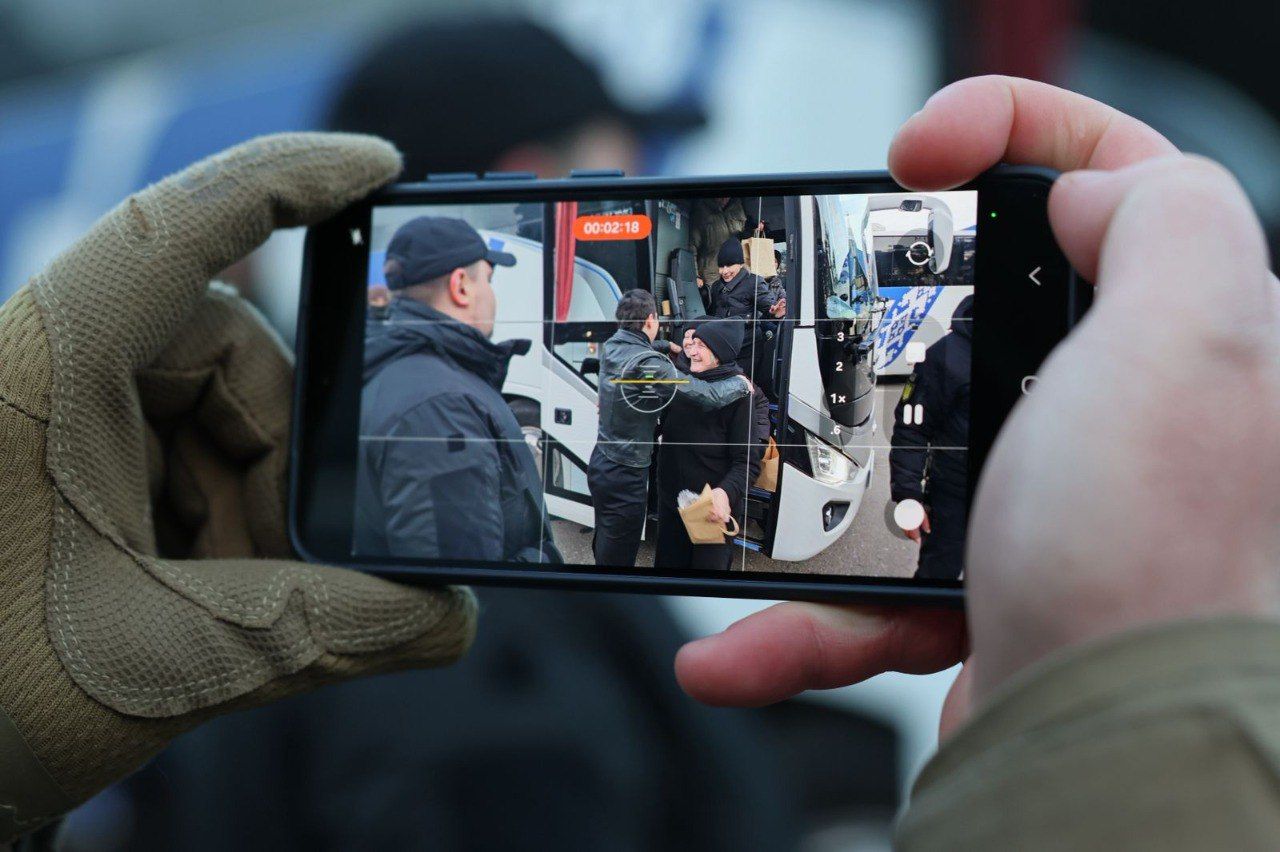
More than 100 political prisoners were released from Belarus on Dec. 13, including several high-profile figures, in exchange for the U.S. lifting its sanctions on Belarusian potash.
Of those released, 114 were transferred to Ukraine, including prominent opposition figures Maria Kalesnikava and Viktor Babaryka, a former presidential candidate in the disputed 2020 election, HUR said. Nobel Peace Prize laureate Ales Bialiatski was also released.
"I am very happy that I am free. I understand that in order for us to be free, we had to do a lot of work. We were able to be free thanks to the efforts of many thousands of people. First of all, the American diplomats, the American government officials, who made an effort for us to be free," Bialiatski said.
The Nobel Peace Prize laureate was told to ask for a pardon while in prison, but declined to do so, he said, adding that he was only told of his release earlier in the day.
The move comes amid a warming of relations between Washington and Minsk and follows the lifting of sanctions on Belarus's flag carrier, Belavia, in November.
"Per the instructions of President Trump, we, the United States, will be lifting sanctions on potash," U.S. presidential envoy to Minsk John Cole said on Dec. 13 following a meeting with Belarusian leader Alexander Lukashenko.
"This is a very good step by the U.S. for Belarus," Cole said.
Potash is one of Belarus's key exports and its most significant mineral resource, with the state-owned producer Belaruskali ranking among the world's largest suppliers.
Cole said Washington and Minsk would continue talks on sanctions and expressed hope that other measures could eventually be lifted altogether.
The lifting of sanctions was in exchange for the release of 123 political prisoners in Belarus, which included five Ukrainian nationals, Ukraine's military intelligence agency, HUR, said in a public statement.
Sviatlana Tsikhanouskaya, exiled Belarusian opposition leader, told journalists in Vilnius on Dec. 13 that she is still awaiting a full list of those who have been released.
Eight released political prisoners, including Bialiatski, were transferred directly to Vilnius, Lithuania, while the rest "unexpectedly" ended up in Ukraine, according to Tsikhanouskaya. She is coordinating with Polish and Ukrainian authorities to ensure the safe transfer of prisoners to the Lithuanian border, she said.
"Now we have more than 100 people in Ukraine, we will try to agree now with the Polish, Ukrainian, American, and Lithuanian blocs about further steps, so that they can all move, at least to Lithuania, to Vilnius, so that we can see them here tomorrow or the day after tomorrow. But again, there is no solution yet," Tsikhanouskaya's chief political advisor, Franak Viachorka, told the Kyiv Independent.
The released prisoners were taken to Ukraine "at the very last moment" despite initial plans for all to arrive in Lithuania in Minsk's attempt "to harm people," he said, adding that Kyiv was not expecting the arrival of the released prisoners, but that they are now "secured, and they are being treated" in Ukraine.

According to President Volodymyr Zelensky, Minsk informed Kyiv via intelligence channels that it was ready to release the prisoners to Ukraine rather than "this or that EU country."
Tatsiana Khomich, the sister of Kalesnikava, said she had spoken with her and that Kalesnikava appeared well and was now free, a Kyiv Independent journalist reported on the ground.
"We knew about the possible release for a long time," Khomich told reporters. "But as we saw recently, as well as last month, it was kind of a surprise every time who was released. And, of course, I could not believe it until now."
Khomich added that lifting sanctions on Belarusian potash in exchange for the release of political prisoners was a "fair price."
Veteran politician Pavel Seviarynets, political analyst Alexander Feduta, and journalist Marina Zolotova are among the Belarusian citizens freed from captivity, according to a full list of names released by the Ukrainian government project "I Want to Live."
An Australian citizen has also been released as a part of the deal, Viachorka said.
Zelensky said the release of Ukrainian citizens was made possible by the involvement of the U.S., as well as cooperation between Ukrainian and U.S. intelligence services.
The president also said he had instructed HUR and other bodies within the Coordination Headquarters for the Treatment of Prisoners of War (POWs) to intensify efforts to secure the release of Ukrainian POWs before the end of the year.
Belarus faces sanctions from a number of Western countries, including the U.S., over political repression by Lukashenko's regime. The restrictions were expanded after Russia launched its full-scale invasion of Ukraine, as Minsk is a close ally of the Kremlin.
U.S. sanctions imposed on Belaruskali in 2021 forced Belarus to redirect its potash shipments via Russia, tying Minsk more closely to the Kremlin economically.
Washington previously lifted sanctions imposed in 2021 on Belarusian airline Belavia after Lukashenko released 52 political prisoners in September.
The U.S. also removed the private jet used by Lukashenko's family from its sanctions list and authorized three additional aircraft linked to Lukashenko to operate.
Tsikhanouskaya told reporters that the release of prisoners may reflect Lukashenko's desire to continue dialogue with U.S. President Donald Trump, but stressed it does not signal any fundamental change in his regime.
"Sanctions are instruments. It is leverage to make dictators do something," Tsikhanouskaya said. "Lukashenko will not release people because he somehow became humane. He wants to sell people as expensively as possible."
Tsikhanouskaya also said that the sanctions against Belarus must remain in place, adding that political repression continues.
Former election staff coordinator to Babaryka, Ivan Kravtsov, expressed hope that the release of political prisoners is a step in the right direction.
"I hope that we will come pretty soon to the point when there will be zero political prisoners in the country. Because it is absolutely logical that if Lukashenko, on his part, expects normalization of relations with the West, then there should not be political prisoners. I think we will come to this," he said.
Lukashenko, who has ruled Belarus since 1994, is widely seen as a close ally of Russian President Vladimir Putin. Lukashenko allowed Russian forces to use Belarusian territory to launch attacks on Ukraine at the start of Moscow's full-scale invasion in 2022.
Ukraine says it destroyed pipeline Russia used to infiltrate Kupiansk, releases video
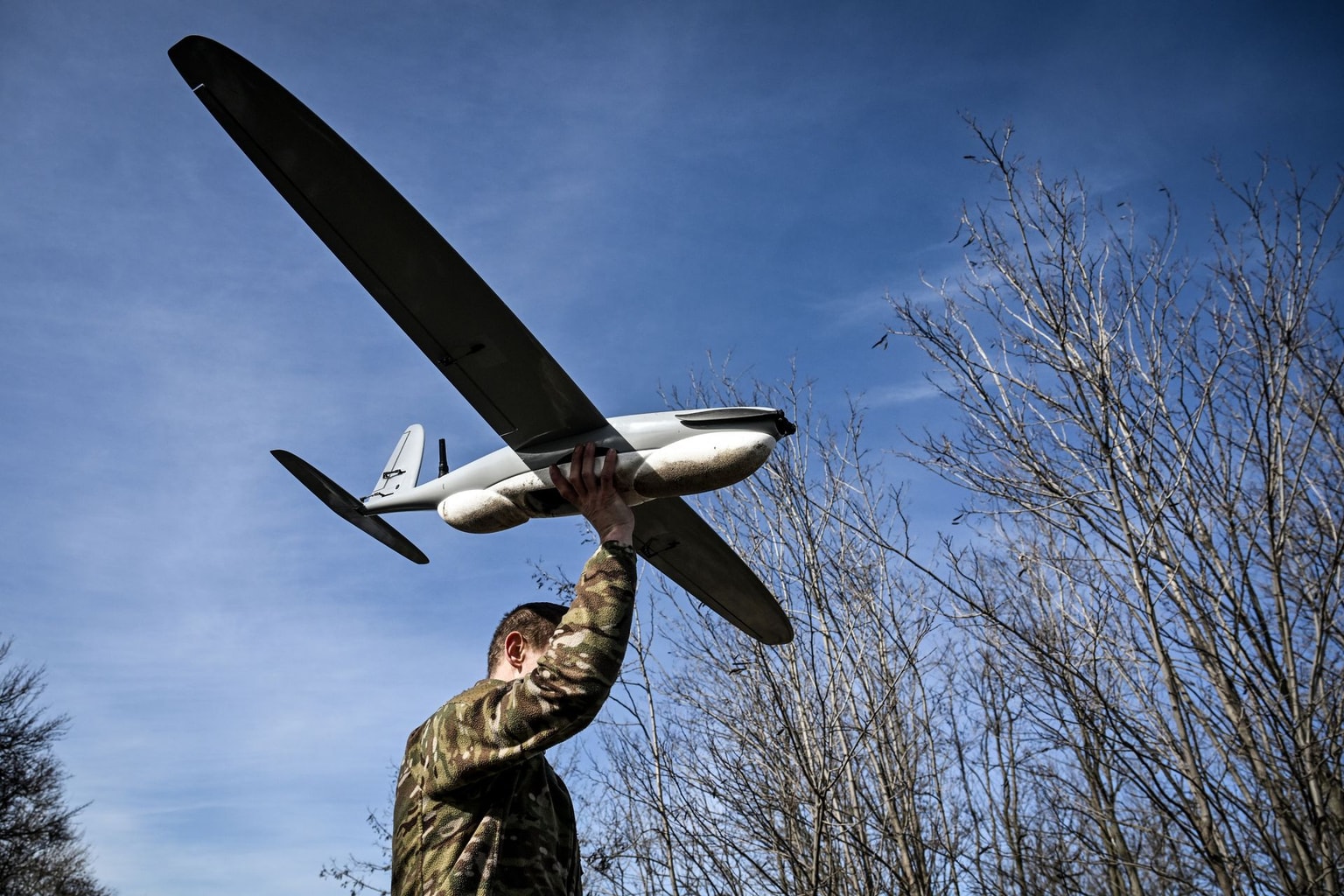
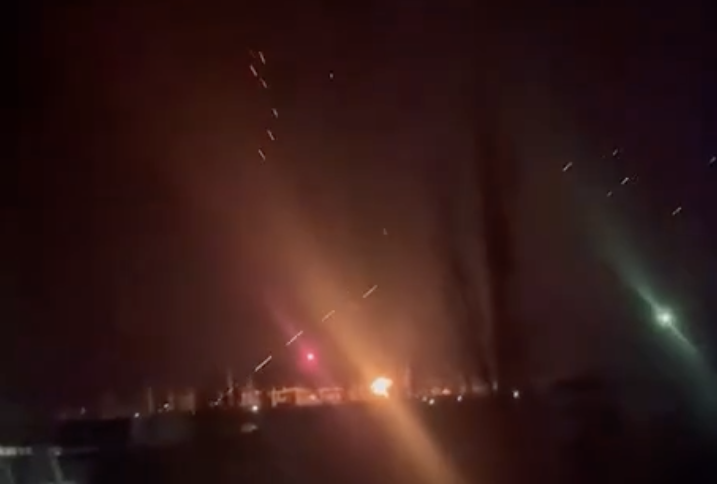
Ukraine's 429th Separate Drone Regiment "Achilles" claimed on Dec. 13 the destruction of a pipeline used by Russian troops to infiltrate the front-line town of Kupiansk in Kharkiv Oblast.
The news came shortly after Ukraine's National Guard said its 2nd Khartiia Corps carried out a successful counterattack north of Kupiansk, a development that flatly contradicted Russia's recent claims of capturing the northeastern town.
The "Achilles" regiment entered the Kupiansk sector in April and, since then, has killed 998 Russian soldiers and injured another 879, the unit's statement read.
The regiment described the pipeline as a "critically important logistical channel" for Russian forces. The route was discovered during reconnaissance and destroyed in a joint operation with other Ukrainian units.
"It was a safe route that allowed (Russia) to build up strength while bypassing (Ukrainian) fire," the "Achilles" said.
In September, reports emerged that Russian troops used a gas pipeline to infiltrate Kupiansk, a tactic they adopted during the Battle of Avdiivka.
Kupiansk lies 104 kilometers (65 miles) east of Kharkiv, the regional center. Fighting has been fierce around the town, which was occupied at the start of the full-scale invasion before being liberated in September 2022.
Battles in the Kupiansk sector are ongoing, the "Achilles" said.
Ukraine sanctions nearly 700 vessels tied to Russia’s 'shadow fleet'
President Volodymyr Zelensky announced on Dec. 13 that Ukraine’s sanctions against nearly 700 vessels linked to Russia’s shadow fleet had entered into force.
Zelensky said the vessels account for a large share of Russia’s fleet used to transport oil and other energy resources, providing funding that helps sustain the war, and noted that they operate under the flags of more than 50 jurisdictions.
Russia relies on its fossil fuel revenue to fund its war against Ukraine. Since Feb. 24, 2022, Russia has exported some 958 billion euros worth of fossil fuels — 68% of which was oil, 20% gas, and 12% coal, according to the Russia Fossil Tracker project led by CREA.
“We will continue working to ensure that each of these vessels, every shipowning company, and the entire infrastructure of Russia’s exports of oil and other energy resources also get blocked by our partners,” Zelensky said.
“Pressure on Russia and diplomacy aimed at ending the war must go hand in hand to achieve the necessary result,” he added.
Russia's shadow fleet has been increasingly targeted by Western sanctions as Ukraine's international partners seek to limit Russian oil revenues.
The shadow fleet includes hundreds of older, often uninsured or poorly maintained tankers. These typically operate under the flags of other countries and have little transparency, making it difficult for regulators to enforce sanctions.