Ukraine wants whistleblowers. How is it strengthening their protection?

A collection of placards are displayed during an anti-corruption demonstration in Kyiv, Ukraine, on July 31, 2025. (Mykhaylo Palinchak/SOPA Images/LightRocket via Getty Images)
 on Google
Hanna Novosolova
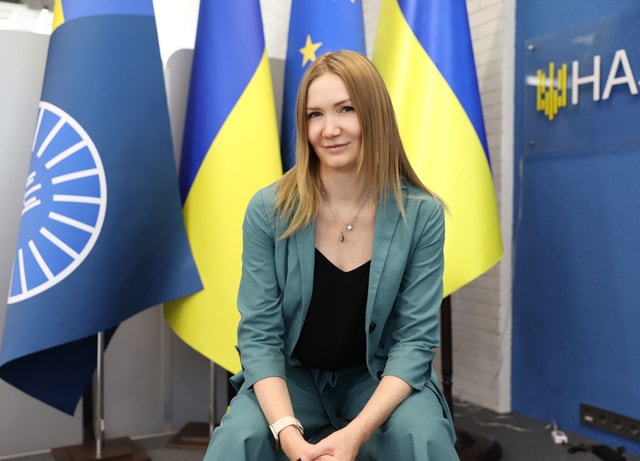
About the author: Hanna Novosolova is Chief Specialist at the Department for Coordination of State Information Policy on Corruption Prevention at the National Agency on Corruption Prevention (NACP).
On International Anti-Corruption Day, attention turns to those who expose wrongdoing from within organizations: whistleblowers.
They are often the first to detect and report corruption, yet they may face threats, dismissal, and lasting damage to both their careers and personal lives.
Even amid a full-scale war, Ukraine is working to build a system that not only shields whistleblowers from retaliation but also rewards them fairly.
What has Ukraine already accomplished in this area, and what remains to be done?
International experience shows that effective whistleblowing systems rest on two pillars: strong protection from retaliation and meaningful financial incentives. Without protection, fear silences potential whistleblowers. Without fair compensation, few people are willing to risk their careers and safety.
Research from the Stockholm School of Economics shows that most whistleblowers begin with the same simple impulse: they see wrongdoing and want it fixed.
In the United States, nine out of ten whistleblowers first attempt to report misconduct within their organization before turning to authorities. But moral conviction does not pay legal bills. It does not protect against dismissal, lawsuits, blacklisting, or being quietly frozen out of a profession.
Whistleblowers are often praised after the fact, but in real time, they are forced to choose between their conscience and their livelihood. That is why money matters — not as a bribe, but as basic fairness. If one takes personal risks for the public good, the public should share the cost.
The U.S. model is widely regarded as a success story.
Under the False Claims Act, whistleblowers can receive between 15 and 30% of the funds they help recover, with no upper limit. Since 1986, this system has brought more than $50 billion back into the federal budget and paid around $7 billion to the individuals who made it possible.


Europe has adopted a protection-first approach. It's 2019 Whistleblower Protection Directive mandates safeguards against retaliation and sets minimum standards for reporting channels.
Most EU member states provide no statutory rewards or only modest financial incentives. Where payouts are symbolic or tightly restricted — such as Hungary’s 1% cap on fines or Slovakia’s sector-limited rewards — participation remains low, even when strong legal protections exist on paper.
South Korea shows what happens when incentives are real. After raising the maximum reward from about $19,000 to $94,000, the number of reports increased sharply. Between 2002 and 2013, more than 28,000 reports helped recover $60 million and generated about $6.2 million in rewards for whistleblowers.
The opposite story plays out in parts of Africa. In Ghana and Kenya, weak protection and fear of retaliation keep reporting low. Nigeria’s whistleblower policy initially led to the recovery of about $378 million. Participation then collapsed as protections remained vague and payments inconsistent. When the state fails to protect its whistleblowers, people remain silent.
The lesson is clear: generous rewards alone will not overcome fear, and legal safeguards without real financial support will not convince many to step forward.
Ukraine is developing its whistleblowing system with an eye on international experience, but its legal framework still needs to be further strengthened and broadened.
Under current law, whistleblowers may receive 10% of the damages linked to the corruption they expose, capped at about Hr 24 million ($600,000). In practice, that promise applies only to a small subset of cases where the damage exceeds Hr 15.14 million (around $380,000). Rewards are paid only after a court conviction and require the court’s approval.
In practice, these procedures significantly delay the payment of rewards, as whistleblowers are forced to wait for compensation until lengthy court proceedings are completed. Still, recent rulings by the High Anti-Corruption Court show that the system can work when all conditions are met.

In 2023, the court issued its first decisions on rewards, with payouts made in 2024. A Defense Ministry audit official received Hr 1.68 million ($39,770) for reporting a Hr 24 million ($568,000) bribe offer from a private company. Another whistleblower, who exposed an attempt to bribe the heads of the National Anti-Corruption Bureau (NABU) and the Specialized Anti-Corruption Prosecutor’s Office (SAPO), received Hr 13.3 million ($314,800).
These payments became possible only after the government changed budget rules to allow anti-corruption funds to be used for whistleblower rewards. This workaround exposed the system's incompleteness and highlighted the direction for further improvements.
A new draft law is currently being developed to streamline procedures, remove bureaucratic barriers, and introduce clearer timelines and rules for payments.
Early changes in Ukraine’s whistleblowing system are already becoming visible.
Two years ago, the government launched the Unified Whistleblower Reporting Portal to provide a safer channel for reporting corruption and related offenses. Since then, more than 11,000 public institutions and companies have joined the system, and nearly 8,000 reports have been filed.
So far, 165 people have been formally recognized as whistleblowers — a small number, but a clear sign that reporting wrongdoing is becoming more common.
The National Agency on Corruption Prevention is now working on the next step: making it easier for whistleblowers to get rewards, strengthening protections in the defense and security sectors, and expanding reporting channels, particularly for military personnel.
These measures form part of a recently presented Roadmap for the development of a whistleblowing institute, intended to feed into Ukraine’s State Anti-Corruption Program for 2026–2030 and align it with EU and NATO standards.
The main goal is to reinforce whistleblower protections in practice and create a reward system that is clear and fair: everyone should know who pays the money, how the amount is calculated, and when it will be paid.
Experience from other countries shows that whistleblowing only works when three things are in place: strong protection, real financial incentives, and easy-to-use reporting tools.
If Ukraine follows through on this roadmap, it has a real opportunity to transform its existing legal framework into a robust system that protects those who speak up, compensates them fairly, and earns lasting public trust.
Editor’s note: The opinions expressed in the op-ed section are those of the authors and do not purport to reflect the views of the Kyiv Independent.