Ukraine used Storm Shadow to strike Russia's most irreplaceable weapons factory — and why it matters
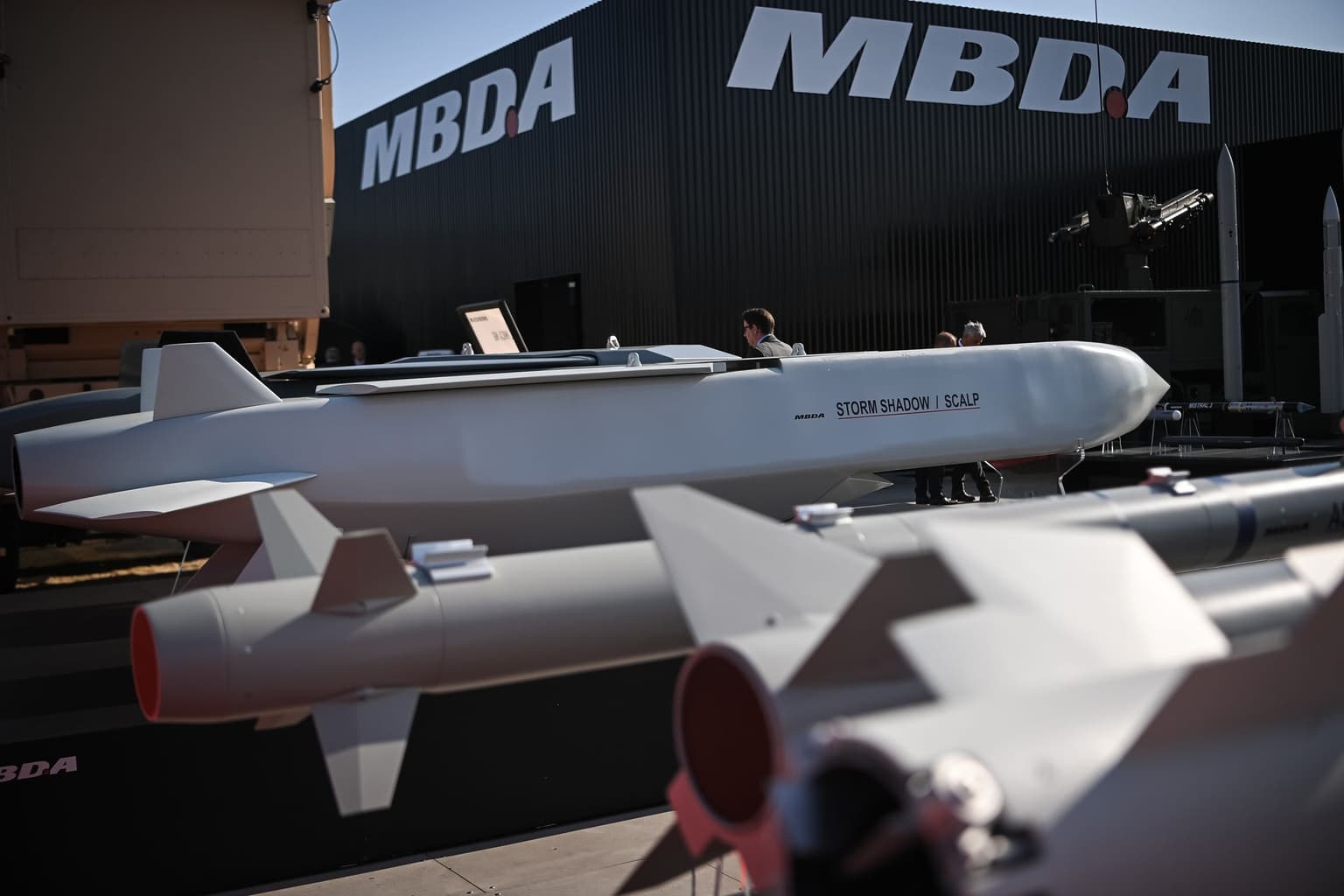
An MBDA Storm Shadow/Scalp cruise missile on display at the Paris Air Show in Paris, France, on June 17, 2025. (Matthieu Rondel / Bloomberg via Getty Images)
 on Google
Liubov Tsybulska
Founder and current director of NGO "Join Ukraine"
As you read this, somewhere at a TSMC fab in Taiwan's Hsinchu a robot is moving a silicon wafer packed with transistors measuring 2 nanometers — 20 atoms in a row.
Mass production of chips using the 2-nanometer process began in late 2025, and TSMC's entire 2026 capacity is already sold out — Apple, Qualcomm, NVIDIA, and AMD are all in line. Samsung has launched its own 2-nanometer Exynos 2600 processor. Intel is advancing its 18A node (1.8 nm).
We are talking about the kind of density and efficiency that just five years ago seemed theoretical.
Now — Russia. Its most advanced serial (not experimental) process is 90 nanometers at the Mikron plant in Zelenograd, a city near Moscow. That is the level TSMC reached in 2004.
The Kremniy El plant in Bryansk — until recently Russia's second-largest producer of microelectronics for the Defense Ministry — was serially manufacturing products at 500 nm design rules, had theoretical capabilities in the 250–90 nm range, and was planning to reach serial 350 nm production for more complex devices.
For comparison: 500 nm is mid-1990s by global standards. But here is what matters: for missiles, that level is entirely sufficient.
A cruise missile does not need a processor capable of running large language models that it would chat with before diving into a thermal power plant near Kyiv.
It needs a reliable, vibration- and temperature-resistant microchip that correctly processes guidance system signals. Power electronics, discrete semiconductors, and analog microchips — none of this requires cutting-edge lithographic processes, but all of it requires specialized manufacturing. That is exactly what Kremniy El was making.
On March 10, 2026, Ukraine's Air Force struck this plant with Storm Shadow cruise missiles.
The missiles were carried by Su-24 frontline bombers, with the air defense penetration route prepared well in advance. It was at least the seventh attack on the plant since 2022.

The previous six, carried out by drones, did not inflict critical damage. The difference this time was the weapon. The Storm Shadow's 450 kg warhead first penetrates the structure with a shaped charge, then detonates inside the building — destroying not the roof and walls but the cleanroom equipment inside.
Satellite imagery by CyberBoroshno recorded at least five hits on the main production building. The fire covered approximately 1,400 m² (15,069 square feet). ISW assessed that the damage would likely force Russia to deactivate the facility. Analysts at Militarnyi and Defence Express assessed the plant as effectively destroyed.

To understand why this cannot be quickly restored, one thing needs explaining: semiconductor manufacturing is perhaps the most demanding industrial process in existence.
Cleanrooms operate at ISO Class 1–4, with no more than 10 particles of 0.1 microns per cubic meter of air. A single speck of dust on a silicon wafer — and an entire batch of microchips is scrap.
Now imagine a 450-kilogram warhead entering such a room. Radio Liberty noted that even a serious structural shock to the building — without a direct hit — makes continued cleanroom operation impossible.
The plant housed German lithographic equipment worth hundreds of thousands of dollars, as well as Soviet-era machines that are impossible to repair — the manufacturers no longer exist. According to the Belarusian intelligence project BELPOL, the strike destroyed Belarusian Planar equipment worth millions of dollars. Russia cannot order new equipment — because of sanctions. Nor can it manufacture its own — it never has.
The plant ranked second in Russia in microelectronics production for the Defense Ministry, employing over 1,700 people. Its products went into Iskander missile systems, Kalibr cruise missiles, Pantsir, S-300 and S-400 air defense systems, Topol-M and Bulava intercontinental ballistic missiles, the new Izdelie-30 cruise missile, as well as radars, electronic warfare systems, and UAVs.
Key customers included Almaz-Antey and the Tactical Missile Weapons Corporation. In November 2024, the plant unveiled a development strategy worth 18.3 billion rubles through 2030. That strategy now has little more than collectible value.
Officially, 7 people were killed and 42 wounded, although the Severny Kanal channel reported approximately 30 workers missing (but it has not been officially confirmed).
The loss of specialists is a separate critical issue: semiconductor manufacturing process engineers are a narrow specialization even in peacetime, and rebuilding that human capital could take years.
Ukraine's General Staff estimated the plant's downtime at a minimum of six months. Independent analysts consider even that forecast overly optimistic — Defence Express speaks of years. What's needed is not simply rebuilding walls, but installing new cleanroom equipment (which doesn't exist and can't be purchased), recruiting and training personnel (who also don't exist), and achieving a stable production process.
RUSI, in its study "Disrupting Russian Air Defence Production," states directly that disruptions in the production of air defense components are sufficient to increase the effectiveness of Ukrainian strikes throughout 2026.
The cascade effect is concrete: fewer microchips — fewer interceptor missiles — less effective air defense — greater vulnerability to subsequent strikes. Euronews noted that Russia has stockpiles of components, and the impact will be felt gradually. But it is precisely this gradualness that makes this strike strategic — it creates a deficit that will grow over time.
It would be naive to think that the destruction of a single plant would paralyze Russia's defense industry. The only major alternative manufacturer — Mikron in Zelenograd — while unable to fully replace Kremniy El's product line due to different technological specialization, will receive additional orders and attempt to cover the main gaps.
Russia's defense industry already critically depends on smuggled foreign microchips — after Kremniy El's destruction, these channels become even more critical, giving sanctions enforcement and strengthening concrete, measurable significance.
The strike on Kremniy El demonstrates that Ukraine is capable of identifying and hitting specific bottlenecks in the Russian weapons production chain.
Not "a factory in general," but precisely the right building, with precisely the type of munition that destroys cleanroom equipment.
According to the Telegram channel Kremlin Snuffbox, Bryansk region Governor Alexander Bogomaz allegedly called for "stopping the bombing of Ukraine for now" until the issue of protecting the Bryansk region is resolved.
This information is not officially confirmed — but such leaks from insider channels often reflect real sentiments within Russian regional elites. Even pro-Russian Z-bloggers criticized the Kremlin's official response, which attempted to simultaneously label the strike a "terrorist attack against civilians" and acknowledge a hit on a military factory.
Cognitive dissonance is an unpleasant thing, even for propagandists.
What changed on the ground is what matters most: Russia's second-largest producer of microelectronics for the Defense Ministry no longer produces microelectronics. And that is a concrete result that cannot be quickly offset.
Editor's note: The opinions expressed in the op-ed section are those of the authors and do not purport to reflect the views of the Kyiv Independent.