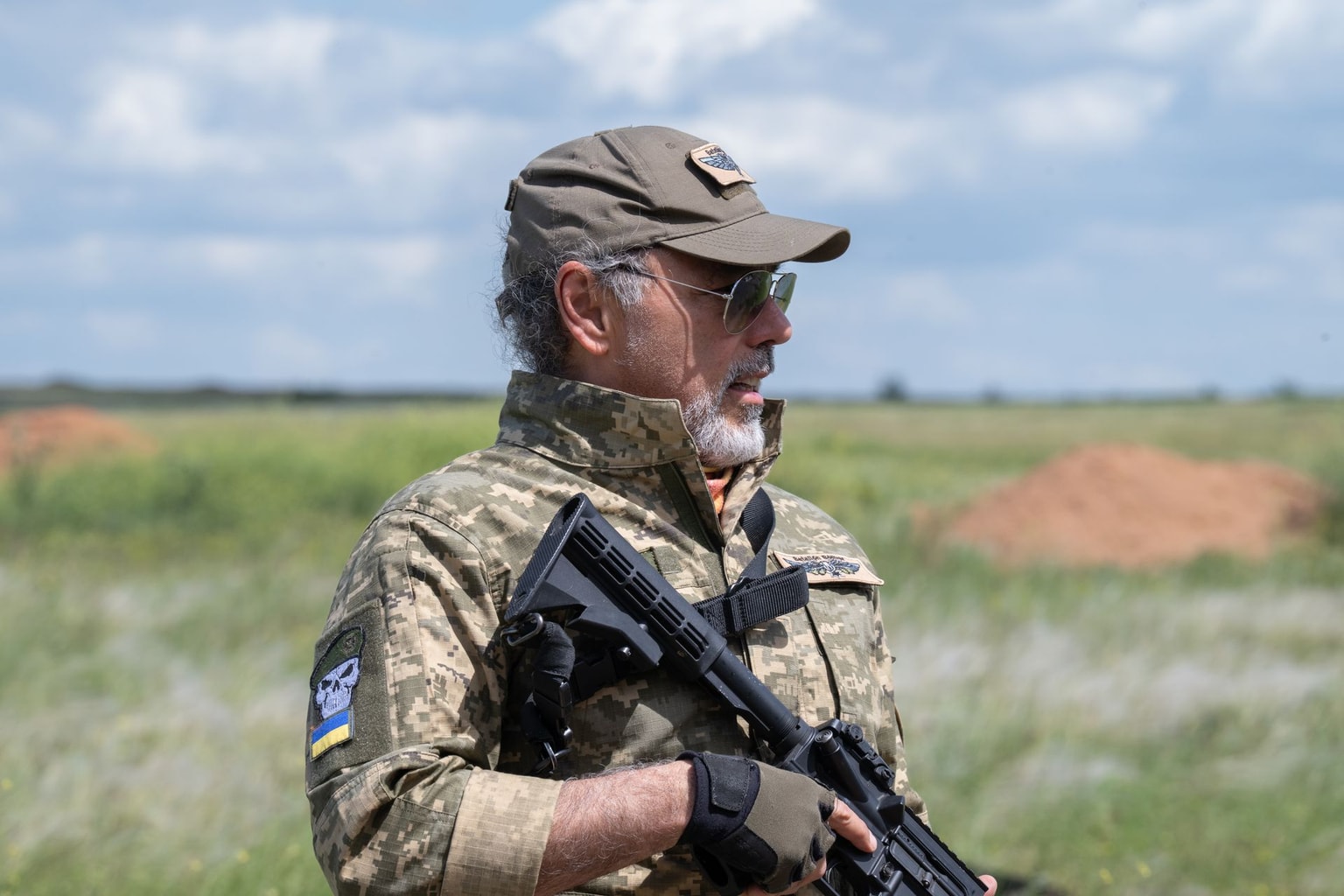
Ukraine is becoming a foundational pillar for Europe's new security architecture
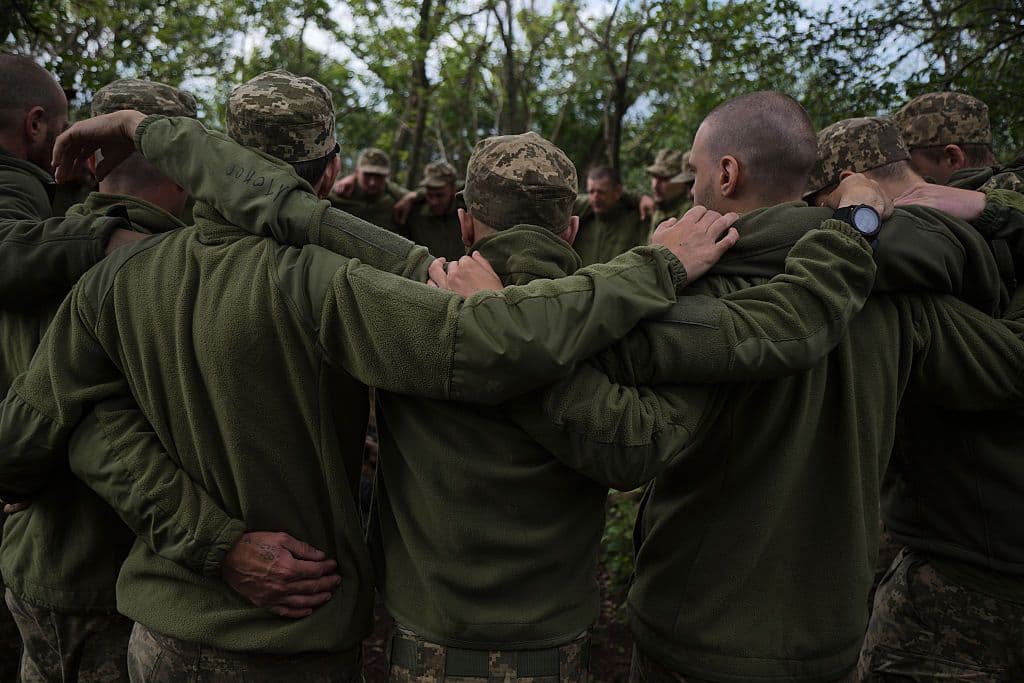
Servicemen of the Armed Forces of Ukraine attend a Trinity Day service led by chaplains of the 93rd Mechanized Brigade at an undisclosed location in the Donetsk Oblast, Ukraine, on May 31, 2026. (Pierre Crom/Getty Images)
 on Google
Aliona Hlivco
Founder and CEO at the St. James’s Foreign Policy Group
For decades, the central question of Ukraine's relationship with Europe was whether Ukraine would ever become part of the European Union. Today, the debate has fundamentally changed, and the question is no longer whether Ukraine belongs to Europe, but rather if Europe can credibly defend itself in today's volatile security environment without Ukraine.
The answer is clear: it cannot.
Ukraine is steadily becoming one of the key security providers on the European continent. This had stemmed not simply from its ability to withstand the largest war in Europe since 1945, but from the fact that in this time, Ukraine has developed the continent's most combat-experienced military, one of the world's most innovative defense tech sectors, and a new doctrine of warfare that is changing how the world is going to fight wars in the future.
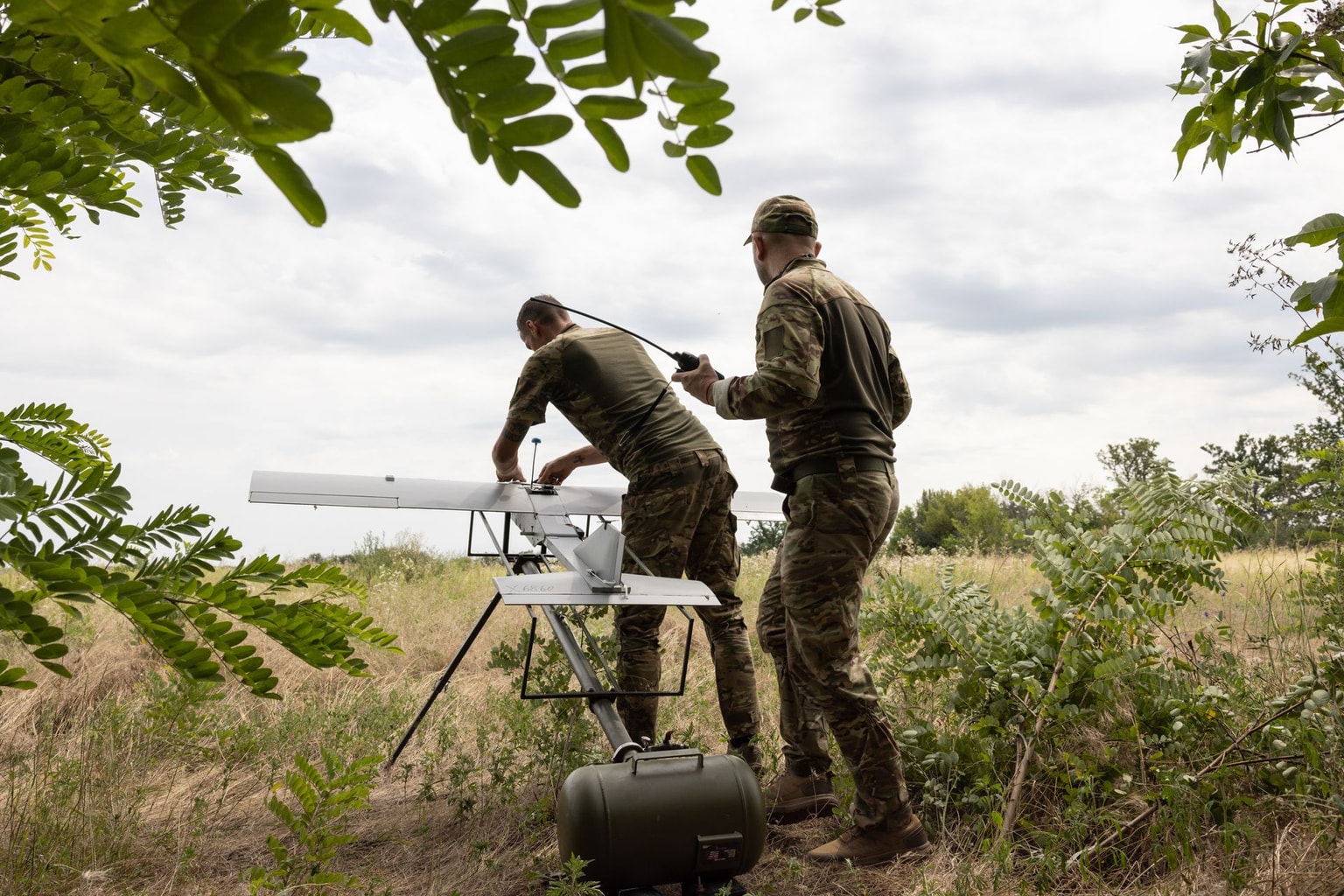
From battlefield drones and artificial intelligence-enabled targeting to rapid innovation cycles between the front-line units and manufacturers, Ukraine is pioneering capabilities many NATO and EU states are only beginning to comprehend.
The war has transformed Ukraine from a consumer of European security to a net provider of it.
Discussions in Brussels increasingly focus on how Ukraine can be integrated into Europe's political and security structures before the full EU membership is completed.
One proposal put forward by German Chancellor Friedrich Merz is a phased integration that would allow Ukraine to participate in key EU meetings and instruments prior to its formal accession.

While Kyiv has, perhaps understandably, been cautious about what could constitute any substitution for the full membership, many European policymakers view such measures not as an alternative to accession but as a viable mechanism to accelerate. Unconventional times call for unconventional means.
The reality is that Europe faces its own political constraints.
Upcoming elections across several member states, as well as the eventual need for national referendums and ratification procedures, create uncertainty about the accession timeline.
Concurrently, the security challenges are not waiting for the European bureaucracy to catch up. As a result, Europe is considering how to begin the practical integration sooner.
Ukraine has aligned its foreign and security policies with the European Union to an unprecedented degree, thus almost fulfilling Cluster Six — External Relations. It is increasingly connected to European defense-industrial initiatives and is becoming an integral component of Europe's broader defense ecosystem.
The logical next step is deeper participation in the institutions that form European security policy and defense cooperation.
In a recent research paper for the Wilfried Martens Center for European Studies, I argued that Europe is entering a period of strategic transition in which existing security structures will need to evolve to meet the challenges of our time — aggressive Russia, growing instability around Europe, and an increasing uncertainty about America's engagement on the continent.
The central conclusion was clear: Europe's future security architecture must be built around capabilities and contributions rather than institutional habits inherited from a different era. To that end, Ukraine is becoming an indispensable contributor to European security itself.
At the same time, the European Union itself is undergoing a collective reckoning of its ability to defend itself, not only industrially and militarily, but institution-wise too.
Among the ideas gaining traction is one from the Commissioner for Defense and Space, Andrius Kubilius, the creation of a European Defense Union with the European Security Council as its governing body.
Such an initiative would categorically not aim to replace NATO, rather would strengthen the European pillar of the Alliance, while finally creating a mechanism to operationalize Article 42.7 of the Treaty on European Union.
Ukraine should be and already is central to these discussions from the outset. Any future European security architecture that excludes Ukraine would be strategically incomplete.
Ukraine brings assets that no other European state currently possesses: large-scale battlefield experience, a highly innovative defense sector, and a new military doctrine forged by the realities of twenty-first-century warfare.
Significantly, European leaders are already discussing the future balance of power on the continent beyond the current war, including how to compensate for a reduced American military presence. Ukraine possesses the most combat-experienced and ingenious officers whose expertise will remain invaluable long after the guns and the drones fall silent.
The debates are already taking place in Brussels on how, even before the war ends, similarly to the Middle East model, Ukrainian military professionals can help strengthen European readiness through training, doctrine development, and sharing operational lessons learned.
Many of these ideas may still appear ambitious, both in the EU and Ukraine. Yet, history has a way of accelerating what once seemed impossible.
A decade ago, few would have imagined a European Defense Commissioner, a continent-wide rearmament effort, or serious discussions about strategic autonomy. Today, all three are realities. Russia's aggression has forced Europe to confront vulnerabilities that can no longer be ignored.
The strategic logic is becoming unavoidable. Europe's security will be built with Ukraine at its foundation. The country that once stood at the gates of Europe is increasingly becoming one of the pillars upon which Europe's security will rest.
Editor's note: The opinions expressed in the op-ed section are those of the authors and do not purport to reflect the views of the Kyiv Independent.