After bashing allies, Trump now wants their help — except from Ukraine

U.S. President Donald J. Trump sits at a table monitoring military operations during Operation Epic Fury against Iran, with U.S. flags visible behind him, in Washington, United States, on March 2, 2026. (The White House via X Account/Anadolu via Getty Images)
 on Google
Editor's note: The story has been updated with additional comments.
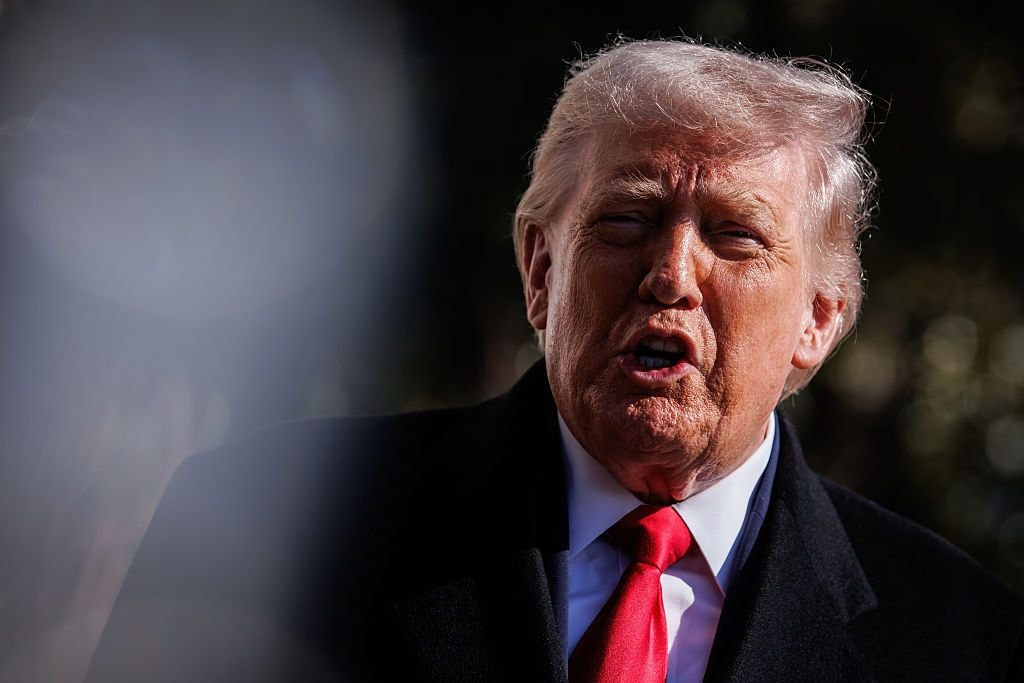
After months of disparaging his European allies, U.S. President Donald Trump suddenly seeks their assistance.
But none rush to send warships to reopen the Strait of Hormuz amid Washington's ongoing war with Iran, even as Trump warns that a lack of action would be "very bad" for NATO's future.
Experts who spoke to the Kyiv Independent see an emerging pattern.
"Take unilateral actions without including allies, then bully them into supporting that action," — this is how Trump's approach was described by Daniel Hamilton, a foreign policy expert at the Brookings Institution.
Adding to the irony, Trump has dismissed the one partner who offered assistance with shoring up drone defenses against Iranian attacks — Ukraine.
For Ukrainians, Trump's reaction comes as little surprise.
"Trump is being Trump here," Volodymyr Dubovyk, head of Odesa National University's Center for International Studies, told the Kyiv Independent.
"Accepting help from (President Volodymyr) Zelensky would be kind of embarrassing for Trump since he continues to maintain that Ukraine does not have cards," he said.
'Not our war'
In his 14 months in office, Trump cast doubt on his commitment to Article 5 and downplayed the role that allied soldiers played in the War in Afghanistan. He threatened to annex Greenland — the territory of a NATO ally — and then to impose tariffs on countries opposing the move.
The U.S. leader also repeatedly said that the Russia-Ukraine war is primarily Europe's responsibility, while drastically reducing assistance to the war-torn country.
Now, the U.S. and Israel initiated a war with Iran without consulting European allies — even as the subsequent energy shock is likely to have an economic impact on Europe.
On March 7, Trump mocked the U.K. for putting two of its aircraft carriers on standby, saying, "We don't need people that join wars after we've already won!"
He changed his tune just this week, calling on London, as well as China, France, Japan, and South Korea, to send warships and reopen the Strait of Hormuz, a key route for about 20% of global oil trade.
While the U.K. and several European allies said they are discussing ways to reopen the strait, none have agreed to join Washington's war.
"Allies have already stepped up to provide additional security in the Mediterranean," a NATO official told the Kyiv Independent.
"We are aware that individual allies are talking with the U.S. and others on what more they might do, including in the context of security in the Strait of Hormuz."
German Defense Minister Boris Pistorius summarized the situation more bluntly: "This is not our war."

"A war that is illegal under international law, unconstitutional under U.S. law, and contrary to European economic and security interests is not a war European states should aid without serious consideration," Nevada Joan Lee, a policy fellow at the European Council on Foreign Relations, told the Kyiv Independent.
However, Trump's warnings regarding NATO play on Europe's insecurities.
According to Hamilton, Trump very well understands the fears of NATO allies that the alliance will evaporate, and he uses this "sensitivity to extract advantage whenever he can."
The U.S. president framed the war with Iran through NATO commitments even though the collective defense principle, enshrined in Article 5, concerns defense, not offensive wars.
While Trump's threats toward NATO complicate the issue, Lee said, they do not change the underlying logic.
"If European leaders decide to help with the Strait of Hormuz without getting any concessions out of it… they will continue to be dragged into conflicts for which they are not consulted, not compensated, and which go against their interests," she said.
"European leaders would be wise to condition sending support only after a ceasefire is reached," the expert argues — not to punish Washington, "but to work towards a relationship where a unilateral war and subsequent call for help is not possible."
Help from Ukraine as a sign of weakness
As Trump seeks assistance from other partners, the rejection of Kyiv's open offer to strengthen security in the Middle East is all the more jarring.
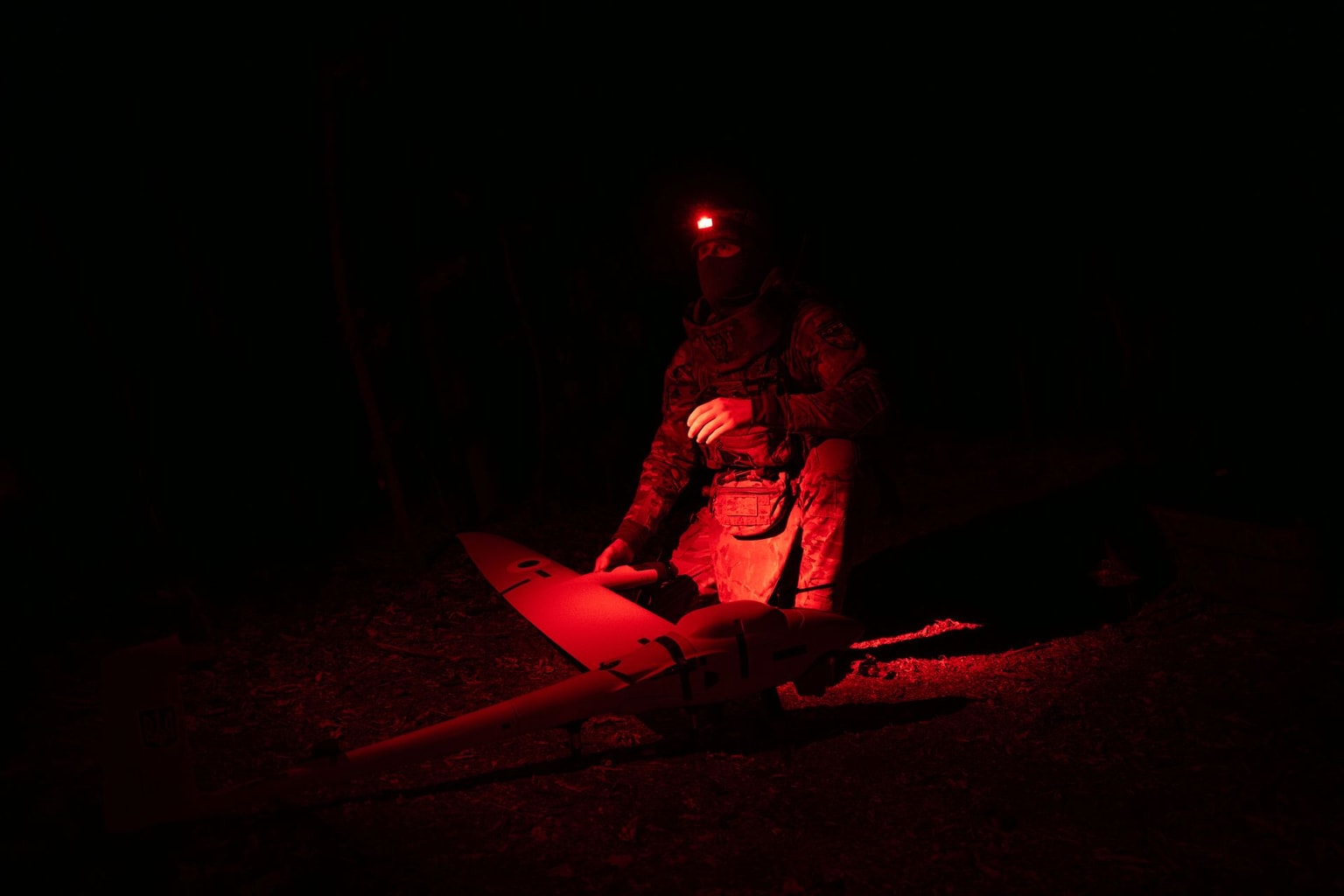
Ukraine, facing Russian attacks by hundreds of Iranian-designed Shahed drones on a regular basis, has dispatched its experts and interceptor drones to help counter Iran's attacks.
While Zelensky said that, at Washington's request, Kyiv also sent its teams to help protect U.S. military bases in Jordan, Trump claimed no such aid is needed.
"We know more about drones than anybody. We have the best drones in the world, actually," Trump said in an interview with Fox News published on March 13.

"The last person we need help from is Zelensky," he said separately, instead accusing the Ukrainian leader of stalling peace talks with Russia, adding that Russian President Vladimir Putin is "willing to make a deal."
Moscow, which has repeatedly rejected a ceasefire in Ukraine and continues to push its territorial demands, promptly supported Trump's criticism of Zelensky.
International politics expert Jenny Mathers explained the U.S. president's position as a sign of a "fragile ego," rather than a reflection of the U.S.'s actual military needs.
It is time to come to terms with the fact that for Trump, seeking help is a sign of weakness, says Yaroslav Yurchyshyn, a Ukrainian lawmaker for the opposition Holos party.
"At the same time, we know that many of our service members are already working — and will continue to work — both with the United States and with its partners in the Middle East," the lawmaker told the Kyiv Independent.
As for Trump's public statements, he says, "It is important to understand that within Trump's administration, public positioning is often treated merely as an element of political play — one that is the easiest to change."
But Mathers argues that the lesson for Kyiv is clear: "The United States under the Trump presidency is not a reliable ally for Ukraine and will not behave in an honest or honorable way."
"The sooner Ukraine is able to put alternatives in place to the support that the U.S. continues to provide, the better for Ukraine's security," she told the Kyiv Independent.
read also
 Tim Zadorozhnyy
 Martin Fornusek
 Luca Léry Moffat
 Givi Targamadze