Trailing in polls, Orban goes all-in on Ukraine
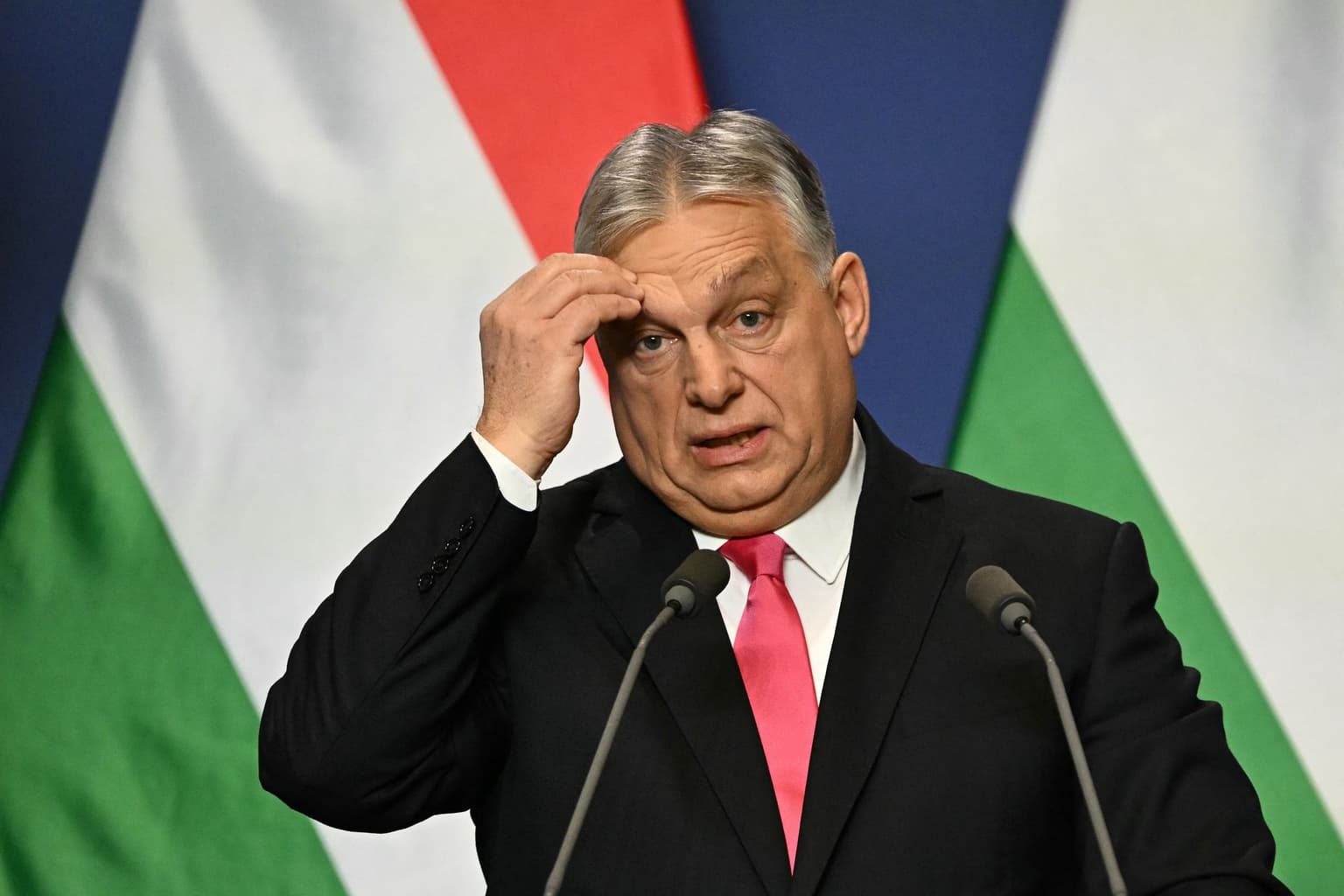
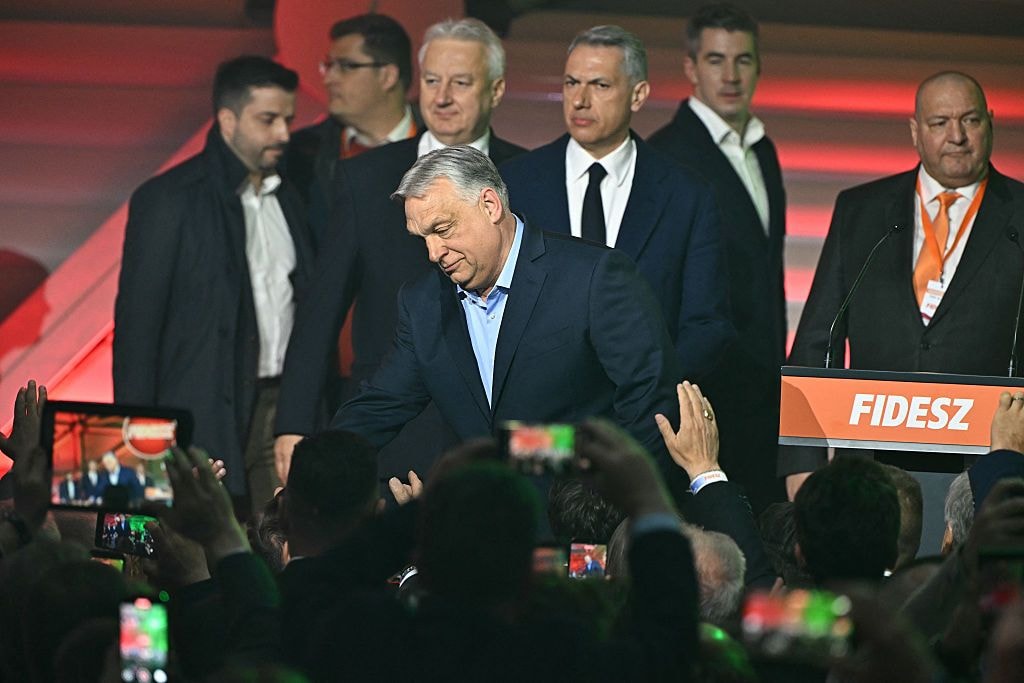
Hungary’s Prime Minister Viktor Orban in Budapest, Hungary, on Jan. 5, 2026. (Attila Kisbenedek / AFP via Getty Images)
 on Google
Facing a real chance of defeat in the April parliamentary elections, Hungarian Prime Minister Viktor Orban can’t stop talking about President Volodymyr Zelensky and Ukraine.
Just in the past few weeks, the Hungarian strongman called the war-torn country an "enemy" and accused its leadership of blackmail, deception, and election interference.
Orban even deployed troops to defend Hungary's energy infrastructure against a claimed Ukrainian threat.
Hungary's leader is "desperately losing" his pre-election fight, Pavel Havlicek, a research fellow at the Association for International Affairs in Prague, told the Kyiv Independent.
To avert defeat, he is "picking external fights," seeking to mobilize Hungarian voters against Ukraine while also pointing the finger at the domestic political opposition, the expert says.
Orban's latest spat with Kyiv centers on the suspension of operations on the Druzhba pipeline, a key route that delivers Russian oil to Hungary and Slovakia via Ukrainian territory.
While Ukraine said that the pipeline requires lengthy repairs due to a Russian attack in late January, Bratislava and Budapest accused Kyiv of deliberately holding up the supplies.
Orban responded by blocking the next round of EU sanctions and a 90-billion-euro ($106 billion) loan to Kyiv, while demanding a joint Hungarian-Slovak inspection and intervention by the European Commission.
Soon after, Orban made a call to Moscow, the first time in months.
Hungary's tight race
In power since 2010, Hungary's illiberal, Kremlin-friendly leader is facing one of his toughest challenges yet.
Peter Magyar's opposition Tisza party is polling around 45-50%, with Orban's Fidesz party oscillating around 40%.
To close the gap, Orban and pro-government media have accused the opposition of colluding with Ukraine and the EU in an effort to drag Hungary into war.

"We also see that you, Brussels, and the Hungarian opposition are coordinating efforts to bring a pro-Ukraine government to power in Hungary," Orban said in an open letter to President Volodymyr Zelensky published on Feb. 26.
Magyar, a 44-year-old former Fidesz insider, is seeking to avoid giving Orban extra ammunition.
While backing humanitarian support for Ukraine and denouncing Russian aggression, the opposition leader spoke against sending Hungarian arms or fast-tracking Kyiv's EU membership.
Most recently, Magyar weighed in on the Druzhba dispute by suggesting that he and Orban personally inspect the pipeline together.
"If (Orban) possesses credible information about a real threat, he should stop spreading incitement and panic," and instead brief Magyar and NATO partners on the situation, the opposition leader said on X.
Andras Racz, a foreign policy expert at the German Council on Foreign Relations, says that while Magyar has been cautious on Ukraine, his broader message is clear: Hungary aims to return to being a reliable, constructive EU partner — ending the era of Orban's vetoes.


Orban's 'desperate' fight
Despite right-wing populism being on the rise elsewhere in Europe and the U.S., Orban's popularity has been sliding amid corruption scandals and economic stagnation.
The prime minister "is politically desperate, and because of this desperation, he is prepared for further escalation, which Ukraine and the EU should avoid," Daniel Hegedüs, deputy director at the Institute for European Politics (IEP), told the Kyiv Independent.
To defuse Orban's narrative, Kyiv should accelerate repairs and ask Hungary to contribute to restoring the pipeline, the expert suggests.
"The EU and Ukraine must be aware that their relationship with the Orban regime has entered an endgame phase," he added.
Nevertheless, after 16 years in power, Fidesz has ensured that the election scales will be tipped in its favor by creating a lopsided electoral playing field and by consolidating a vast media empire.
Hegedüs has not ruled out that Fidesz could employ other underhanded methods — including rigging "election-day processes to an extent that significantly influences the results, while simultaneously accusing Ukraine, the EU, and Tisza of interference and electoral fraud."
What about Slovakia?
Slovak Prime Minister Robert Fico joined Orban's blockade of the EU's 20th Russia sanctions package and declared a halt to emergency electricity supplies to Ukraine, a step even Hungary has not taken.
While Slovakia's next election is expected only in the fall of 2027, some observers also see Fico's moves through the lens of domestic politics.

Daniel Sitera, a researcher at the Institute of International Relations in Prague, argues that the disruptions highlight the shortcomings of Fico's strategy of relying on both inexpensive Russian gas and Hungary's energy giant MOL, which owns Slovakia's Slovnaft refinery.
"As a result, Fico must now explain to the Slovak public the failure of Slovakia's dual dependence on both Russia and Orban's regime, which risks translating into higher energy costs," Sitera told the Kyiv Independent.
Grigorij Meseznikov, the president of the Institute for Public Affairs (IVO) think tank in Bratislava, says that by actively engaging Kyiv, Fico hopes to position himself as the one who "saved the Slovak economy" once the supplies resume.
Although the Slovak prime minister has long relied on anti-Ukrainian rhetoric, Meseznikov argues that it has not been his primary mobilization tool, nor has it delivered significant political dividends.
After a phone call with Orban and Zelensky last week, Fico backed a joint Hungarian-Slovak inspection of the pipeline, with EU involvement. He claimed Zelensky had rejected requests from Bratislava and Brussels for such an inspection, citing the position of Ukrainian intelligence.

Kyiv has not publicly commented on the proposed inspection, instead inviting Fico for talks in Ukraine either on March 6 or 9, an offer the Slovak leader accepted.
The Kyiv Independent has reached out to the Ukrainian Foreign Ministry for comment.

What comes next?
After Hungary released satellite images purporting to show the Druzhba pipeline operational, Zelensky countered that the damaged equipment — including an underground pipe — cannot be detected from space.
Serhii Koretskyi, CEO of the Naftogaz energy company, told Bloomberg the targeted facility burned for 10 days, causing serious damage.
A full assessment should be ready soon, he added.
The timeline for resuming supplies remains unclear, and a Naftogaz spokesperson referred to Koretskyi's statement when approached by the Kyiv Independent.

Given that the Druzhba pipeline accounts for roughly 86–92% of Hungary's crude oil imports and almost the entirety of Slovakia's supply, alternatives are being pursued.
A Ukrainian oil route running from Odesa is a "theoretical alternative," but it passes through the same damaged hub in Brody in western Ukraine, says Andrej Nosko, a Central European energy policy and security expert at Matej Bel University in Banska Bystrica.
Nosko named Croatia's Adria pipeline, running from the Adriatic Sea, as the "sole realistic alternative to Druzhba for MOL's refineries in Százhalombatta in Hungary and Bratislava in Slovakia."
But while Zagreb claimed the pipeline could meet both Slovakia's and Hungary's needs, Budapest alleges that Adria's capacity is insufficient and that its use is too costly.
"The reality is that without independent verification we cannot tell who is right," Nosko says, adding that "the current incentive structure dictates for MOL to continue relying on Russian imported oil for as long as possible."
Oleksiy Sorokin contributed reporting.

Note from the author:
Hi, this is Martin Fornusek.
I hope you enjoyed this article. In our team, we believe fact-based and truthful reporting should be available to all – that's why we don't use any paywall.
If you'd like to help us provide you with more in-depth coverage of Ukraine's struggle against Russian aggression, European politics, and other topics, please consider joining the Kyiv Independent community.