Film awards race shows what stories about war West prefers to hear
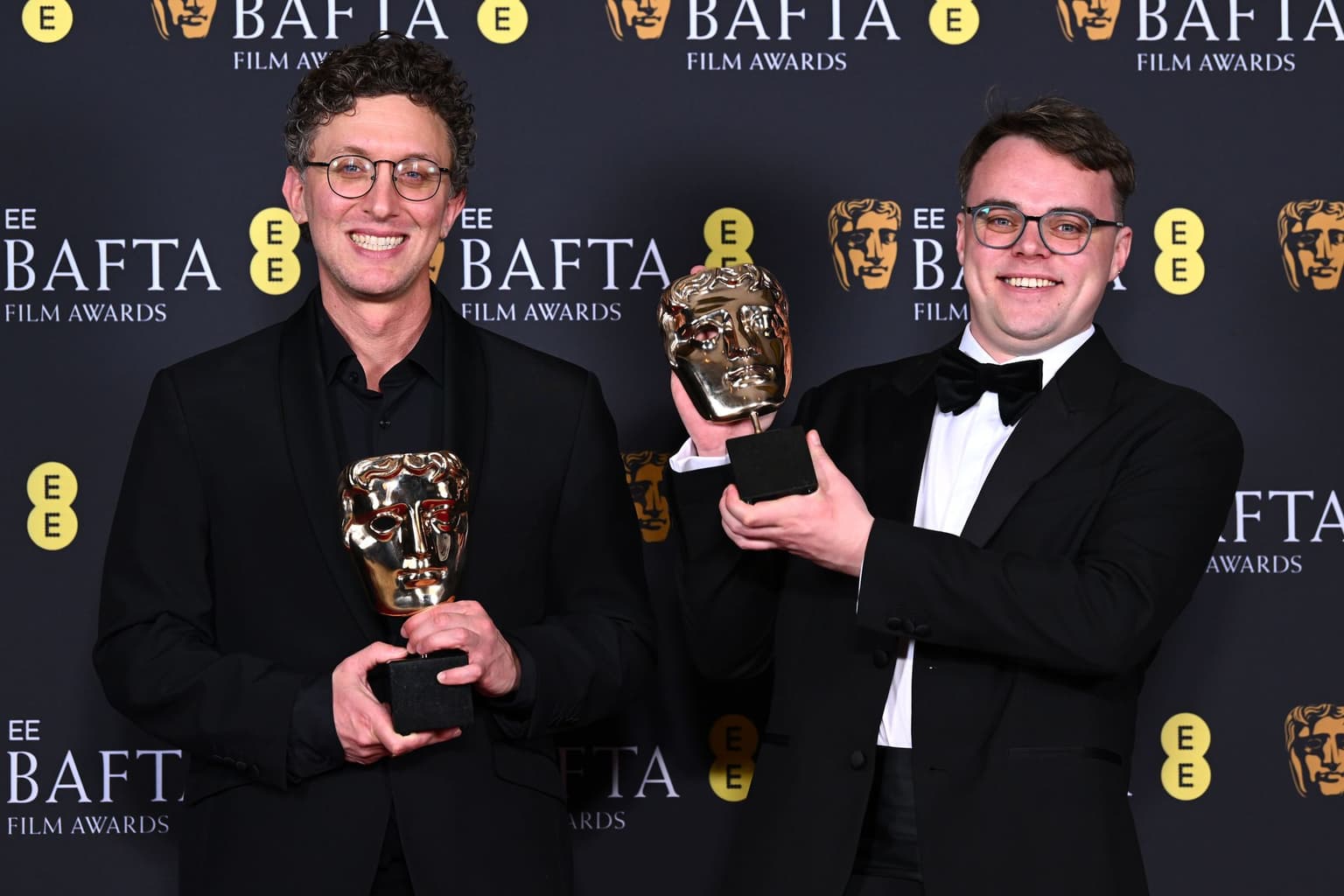
David Borenstein (L) and Pavel Talankin (R) pose with the Documentary Award for Mr Nobody Against Putin during the BAFTA Film Awards in London, England, on Feb. 22, 2026. (Joe Maher / BAFTA / Getty Images for BAFTA)
 on Google
Nana Gongadze
Communications professional
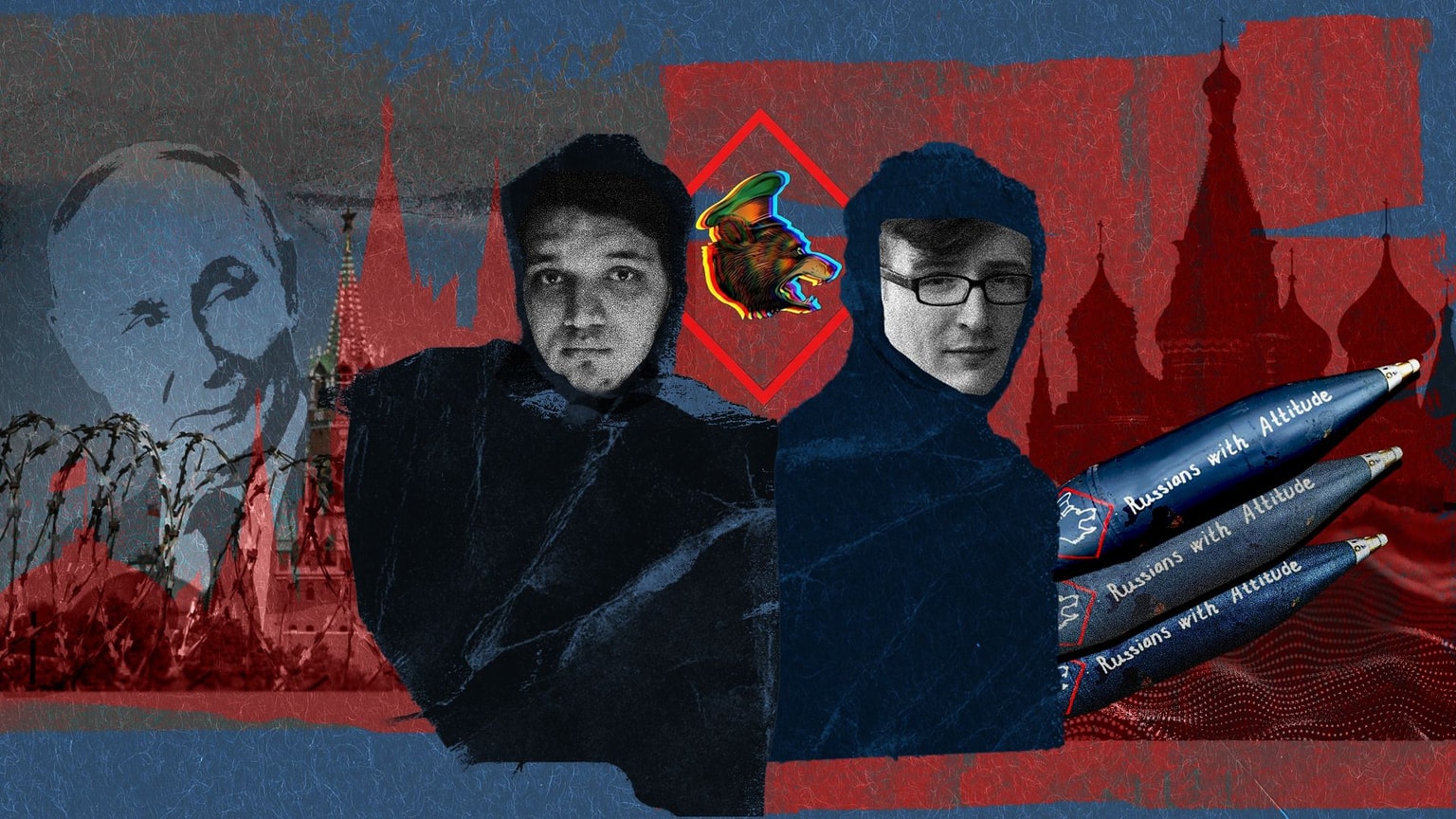
Two films about Russia and Ukraine are generating buzz in this year's film awards season: Mstyslav Chernov's "2,000 Meters to Andriivka" and "Mr. Nobody Against Putin," directed by American documentarian David Borenstein and Pavel Talankin, the film's protagonist and a former videographer at a secondary school in Russia.
Two of the most prestigious Western honors have gone to "Mr. Nobody." One, it beat out "2,000 Meters" for the Best Documentary BAFTA Award during Sunday's ceremony. Second, at the upcoming Oscars, it is one of the five nominees for Best Documentary Feature, whereas "2,000 Meters" only made the 15-film shortlist.
This disparity is drawing controversy among Ukrainians and their allies.
Many are questioning why a film as searing, brave, and unapologetically Ukrainian as "2,000 Meters" is being snubbed in favor of a Russian story whose young subjects ultimately live relatively normal lives, oppressed as they may be.
The recognition disparity ultimately reveals one crucial fact: that there are some stories about the war and about the world that Westerners would rather hear and recognize than others. They prefer to be comforted by the image of the elusive "anti-war Russian" and his everyday resistance, rather than to be confronted with the dark, messy reality of what Ukraine has to do to survive.
The team behind "2,000 Meters to Andriivka" deserves praise for creating a hauntingly powerful film that unflinchingly confronts the West's own voyeuristic scorekeeping of the war and the trivialization of Ukraine's military's sacrifices.

"Mr. Nobody Against Putin" is not a film without merits. It demonstrates effectively the staggering lengths to which the Russian state is going to indoctrinate its children by actually showing these moments in action. This is particularly important for the Western viewer, who has much less understanding of the reality of life inside Russia.
Protagonist Pavel Talankin's footage of indoctrination efforts in the secondary school, which he captured thanks to his then-role as the school's videographer, is shocking. The existence of these measures is not surprising to those of us keeping up with the reality of Russian propaganda, the militarization of Russian youth, and the general apathy and support levels for the war amongst average Russians.
But for some, it is a worthwhile reality check. Yes, things are that bad inside Russia, and plenty of Russians are not bothered by the current state of affairs, and millions are employed keeping the war machine running. Ideally, the film helps more people step away from the "Putin's war" narrative.
"Mr. Nobody Against Putin" is not a feel-good film in the conventional sense. But, ultimately, it paints as inspiring Talankin's moves of everyday resistance, and of the role he plays as the only person in his entire school willing to call out what is happening.
It even ends on a wistful sequence of Talankin dancing with his students at a graduation party, the night before he flees Russia for good with Western help. There is not much evidence that anyone in his town is on his side, but at least the viewer can be comforted by the fact that someone tried, that maybe he helped some students resist their attempted programming, and that he escaped to safety in the West.


On the other hand, "2000 Meters to Andriivka" is, in some ways, a feel-bad film. It can be difficult to watch, from its heartpounding helmet-cam footage of live combat to its heartbreaking sequences of military funerals. It is a film that challenges you to look at war in the face, the face of a generation of brave soldiers who are cut down in the prime of their lives fighting a grinding war of attrition, yet one they know is existential.
But it does not stop there. It challenges the viewer to consider the West's role in enabling the carnage: by failing to supply Ukraine with what it needs to win, and to callously treating the counteroffensive like a horse race.
Some of the most effective sequences in the film are those where the audio of Western media coverage of the fighting is overlaid on top of the real thing.
"Western officials have expressed disappointment in the much-vaunted counteroffensive, which began in June. Ukraine has only taken back an estimated 100 square miles since then," one such recording says, over a still shot of hundreds and hundreds of Ukrainian military graves, each with its own flag.
"This is the shameful way your media and officials treat our sacrifices," it seems to say, as it should. Ukrainians fight on, but the cost of our failure to assist more effectively is staggering.
The outcome on the Western awards stage was, in many ways, predictable and revealing.
"Mr. Nobody" may be an effective depiction of youth militarization efforts in Russia. But ultimately, it focuses on painting a portrait of an individual's often symbolic resistance.
"2,000 Meters," on the other hand, demands viewers confront the staggering cost Ukrainian soldiers pay serving as the actual and only immediate bulwark against Russian revanchism.
There is no single hero, for one man cannot win a war; only brothers in arms. Praising individual dissent may feel like a satisfying rebuke to Putin, and it is much cheaper and easier than the difficult, expensive work of supporting a military effort.
However, only one makes a tangible difference.
Editor's note: The opinions expressed in the op-ed section are those of the authors and do not purport to reflect the views of the Kyiv Independent.
read also
 Tania Myronyshena
 Nykole King
 Tim Zadorozhnyy