Rise and fall of Yulia Tymoshenko, the 'founding figure of Ukrainian populism'
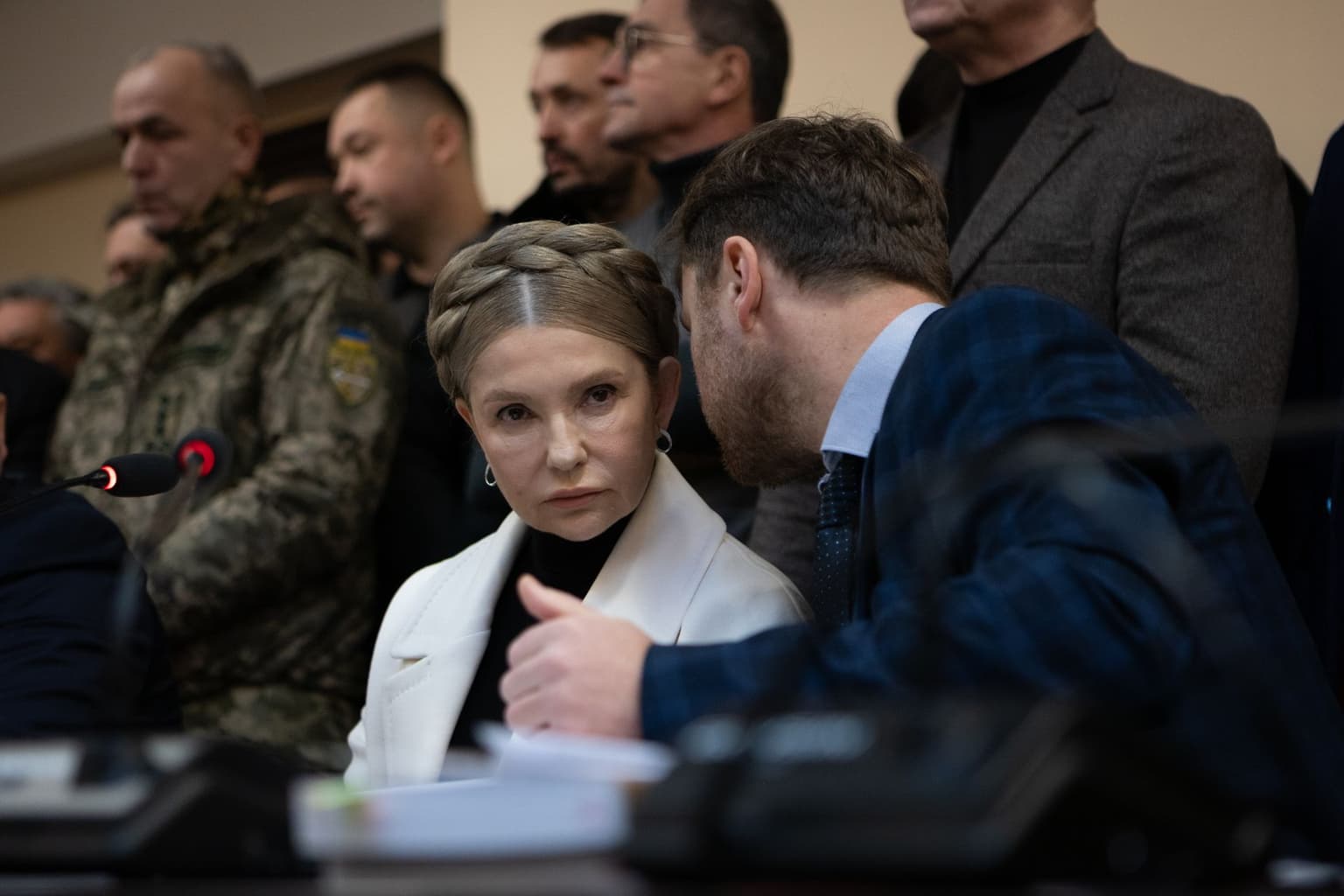
Yuliia Tymoshenko, head of the Batkivshchyna parliamentary faction, attends a court hearing at the High Anti-Corruption Court in Kyiv, Ukraine, on Jan. 16, 2026. (Oleksandr Magula / Suspilne Ukraine / JSC “UA:PBC” / Global Images Ukraine via Getty Images)
 on Google
It’s hard to imagine Ukraine’s political scene without Yulia Tymoshenko.
A veteran politician, Tymoshenko has held a variety of government posts, serving as the country’s prime minister twice, being defeated in a presidential runoff back in 2010, and leading the country's opposition at different times.
On Jan. 14, Tymoshenko was charged with bribery — the third trial of her tumultuous 30-year political career.
Tymoshenko, now the 65-year-old leader of the Batkivshchyna party represented by 25 lawmakers in parliament, has been recorded by the National Anti-Corruption Bureau (NABU) allegedly offering bribes to members of parliament.
Just like 15 years ago, during her previous trial, Tymoshenko denied the accusations and portrayed the case as political.
For her supporters, now few in numbers, Tymoshenko remains a democratic firebrand and a hero of the pro-Western 2004 Orange Revolution.
Others, however, accuse her of corruption and view her as a relic of the post-Soviet old guard and an irresponsible populist who has shifted her political leanings to stay afloat.
"She's not the kind of figure you can judge in a linear way, or paint entirely in white or black tones," political analyst Volodymyr Fesenko told the Kyiv Independent. "She is definitely one of the most prominent figures in Ukrainian politics. She is a very striking figure and at the same time a very controversial one."
Oleksiy Haran, a politics professor at the Kyiv Mohyla Academy, argued that Tymoshenko has a natural "talent for politics."
"She truly had a gift — she knew how to maneuver," he added. "She had charisma. But over time, that gradually faded when people saw that she was playing the same games she used to accuse everyone else of playing."

Tymoshenko's rise
In the 1990s, Tymoshenko, together with her husband, founded the United Energy Systems of Ukraine, the country's biggest natural gas importer. Success in business propelled her onto the political stage.
Her meteoric rise to fame was driven by Pavlo Lazarenko, the country’s prime minister from 1996 to 1997, who saw Tymoshenko as his protege.
Lazarenko fled Ukraine amid a corruption investigation in 1999. In 2004, he was sentenced to nine years in prison on extortion, money laundering, and wire fraud charges in the U.S.
Tymoshenko was elected as a member of parliament in 1996 and co-founded the Batkivshchyna party in 1999 following Lazarenko’s escape. The party has been elected to every Ukrainian parliament since 2002.
From 1999 to 2001, she was a deputy of then Prime Minister Viktor Yushchenko and spearheaded a reform in the energy sector.
In 2001, Tymoshenko was one of the key opponents of President Leonid Kuchma. She and her husband were arrested on charges of smuggling Russian gas in what was widely seen as a political reprisal by Kuchma.

She spent 42 days in a detention facility, but the case collapsed, and she was released from jail, boosting her popularity.
“If we didn't have Yulia, we would have seen Leonid (Kuchma) morph into (Belarusian dictator Aleksander) Lukashenko a long time ago,” Serhiy Taruta, a businessman, lawmaker from the Batkivshchyna party, and longtime friend of Tymoshenko, told the Kyiv Independent.
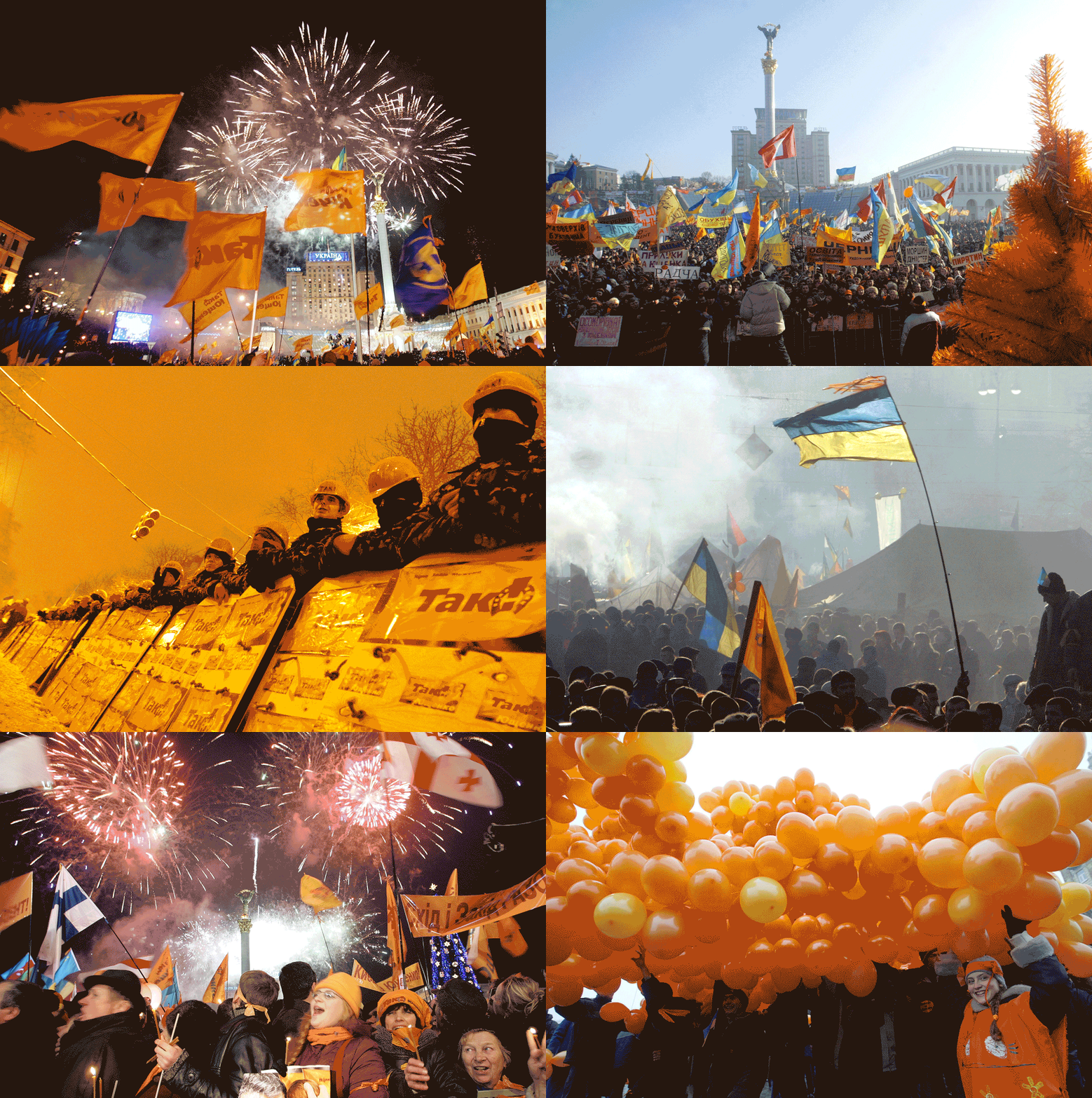
Tymoshenko played a pivotal role in the 2004 Orange Revolution, which was sparked by voting fraud in favor of Kuchma-backed candidate Viktor Yanukovych during a presidential election. The results of the election were annulled, and Tymoshenko's ally Yushchenko was elected as president.
"If it hadn’t been for her powerful role back then, in 2004, it’s still unclear how everything would have ended," Fesenko said. "They could have lost. Tymoshenko (and her protege Oleksandr Turchynov) held (Yushchenko's) election campaign together.”
Tymoshenko’s populist policy
Following the Orange Revolution, Tymoshenko twice served as prime minister — in 2005 and from 2007 to 2010. During her time in office, she fell out with Yushchenko — a rift that became one of the biggest political stories of the late 2000s.
As prime minister, she pursued a populist policy.
Her government supported increasing social spending, confiscating assets privatized with violations and re-privatizing them, imposing price controls, and intervening in the markets to push prices down.
Since then, Tymoshenko has developed a unique brand of populism targeting mostly the poor and elderly. Retired women have been her core support group ever since.
Tymoshenko has opposed farmland sales and liberalization of utility tariffs. She has also attacked the pro-Western rule of law and free-market reforms, claiming that they restrict Ukraine's sovereignty through the influence of foreign experts on appointments to state jobs.
"She was essentially the founding figure of Ukrainian populism," Fesenko said. "In fact, she was the grandmaster and genius of Ukrainian populism."
Political analyst Oleksiy Kovzhun told the Kyiv Independent he had stopped working as a consultant for Tymoshenko in 2008 when he "realized that she was shifting from a progressive politician to a reactionary one" and bet on "impoverished older women."

During her premiership, Tymoshenko met Russian President Vladimir Putin several times and enjoyed an apparently good relationship with the Kremlin, prompting her critics to claim that she was pro-Russian.
Fesenko said, however, that reality is more complicated and that he would not describe Tymoshenko's relationship with Putin as friendly.
"It’s a well-known story where both sides try to deceive their opponent, to use them for their own benefit," Fesenko said. "It seems to me that they are both extremely cynical, and that helped them reach agreements."
Persecution and jailtime
In 2010, Tymoshenko was the leading pro-Western candidate. She ran in a presidential election but lost to her political archenemy, the pro-Russian politician Yanukovych, receiving 45.5% in the runoff.
Under Yanukovych, several criminal cases were opened against Tymoshenko in what was widely seen as a political vendetta.
In 2011, a court sentenced her to seven years in jail for allegedly abusing her power while signing the 2009 contract to buy natural gas from Russia.

In 2013, the European Court of Human Rights ruled that Tymoshenko's detention was arbitrary and unlawful and likely was politically motivated.
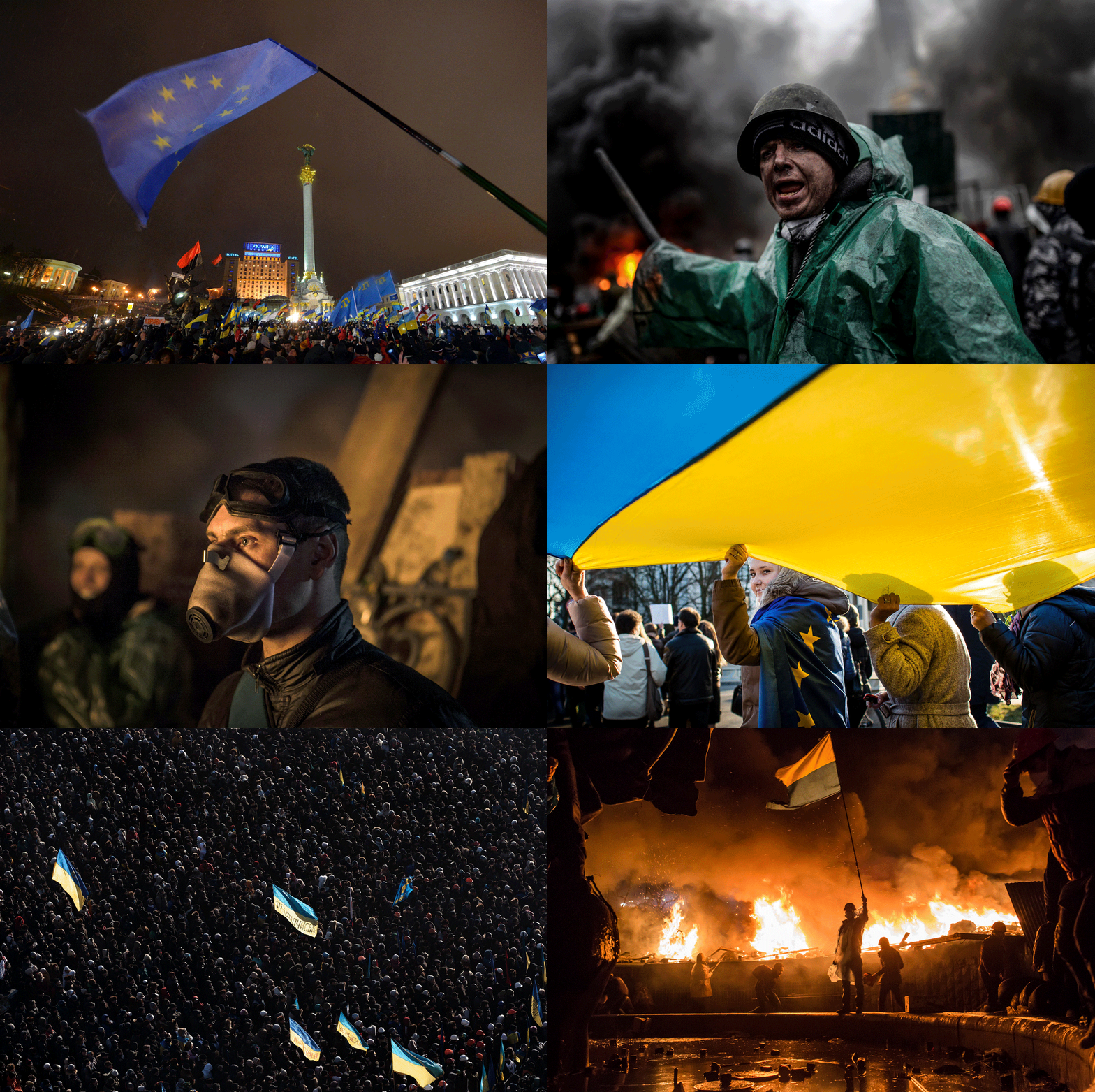
After spending three years in prison, she was released from prison following the 2014 EuroMaidan Revolution, which overthrew Yanukovych.
Her political capital had evaporated by then.
Kovzhun said that, when she spoke to EuroMaidan protesters in a wheelchair after being released from jail, it was clear she had lost touch with the people.
"These were people who smelled like smoke, who had stood for months on the Maidan under police batons, under bullets — they’d been scorched by fire," he said. "And then a lady shows up saying, 'I’ll protect you from injustice.' Their question was 'Who are you?’ That’s when she lost her connection to the people."
Fesenko argued that EuroMaidan supporters "saw Tymoshenko as an outsider."

"They wanted a different, new kind of politics," he added. "And there were many people there who were disillusioned with what had happened after the Orange Revolution. They no longer believed in Yulia. The Maidan moved forward, but Yulia remained in the past."
Tymoshenko was the runner-up in the 2014 presidential election with a mere 13% of the vote, while her competitor, Petro Poroshenko, won in a landslide with 55.5%.
"We see that trust in her was declining, and her electoral results were poor," Haran said. "She didn’t believe at all that she could lose to Poroshenko. But she did lose. In other words, her star was on the decline."
Political fringe
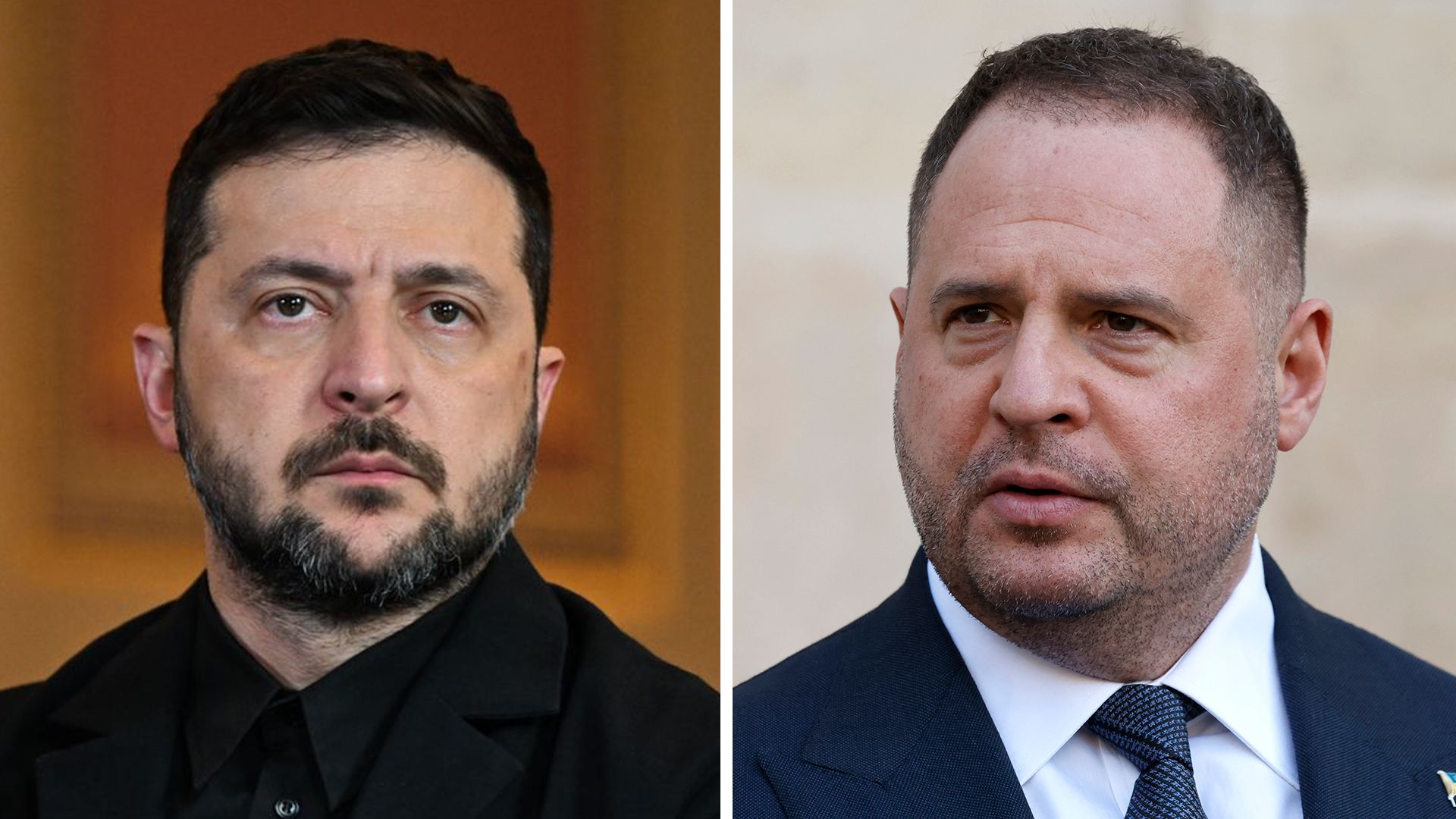
In the 2019 presidential election, Tymoshenko came third with 13.6% of the vote, losing to both Poroshenko and Volodymyr Zelensky, who won the election.
“We remember when the 2019 elections were held, and when Zelensky did not launch his campaign, if Zelensky had not run, she would definitely be president,” Taruta said.
Fesenko said that there was a popular desire for new faces, and Tymoshenko was not one of them.
"In 2019, people wanted renewal, because they were disillusioned with Poroshenko and with others — both those who were from the EuroMaidan camp and those who weren’t," Fesenko said. "At that point, there was a desire to cast aside everyone who had been part of the old politics."
Kovzhun argued that Tymoshenko "was pushed to the political fringe."
Her current support rate balances between four and six percent, depending on the poll.
Both under Poroshenko and Zelensky, Tymoshenko and her party presented themselves as part of the opposition but often supported the administration's initiatives.

In July 2025, Tymoshenko supported a law, initiated by the Zelensky administration, that eliminated the independence of the National Anti-Corruption Bureau (NABU) and the Specialized Anti-Corruption Prosecutor's Office (SAPO). She virulently attacked the anti-corruption agencies, accusing them of being a tool of foreign governments.
The law was later overturned under public and Western pressure.
But in recent weeks, Tymoshenko apparently decided to move against the incumbent administration.
According to the NABU, she allegedly offered bribes to lawmakers for rejecting the appointment of ministers and sought to "take down" Zelensky's majority in parliament.
One possible explanation is that she wanted to provoke the creation of a new Cabinet and get government jobs for her party, according to Fesenko.
Tymoshenko's actions were likely inspired by the weakening of Zelensky's grip on parliament amid a large-scale corruption investigation targeting his inner circle, which led to the resignation of President’s Office Head Andriy Yermak in November, he added.
"Since the 2000s, she has essentially always worked using other people’s money," Fesenko said. "She knew how to find that money — she’s one of the grandmasters of fundraising. The corruption case may damage or even bury (Tymoshenko's political career). Yulia may become toxic for sponsors, and she won't make it without money."