Rethinking Ukraine's economy
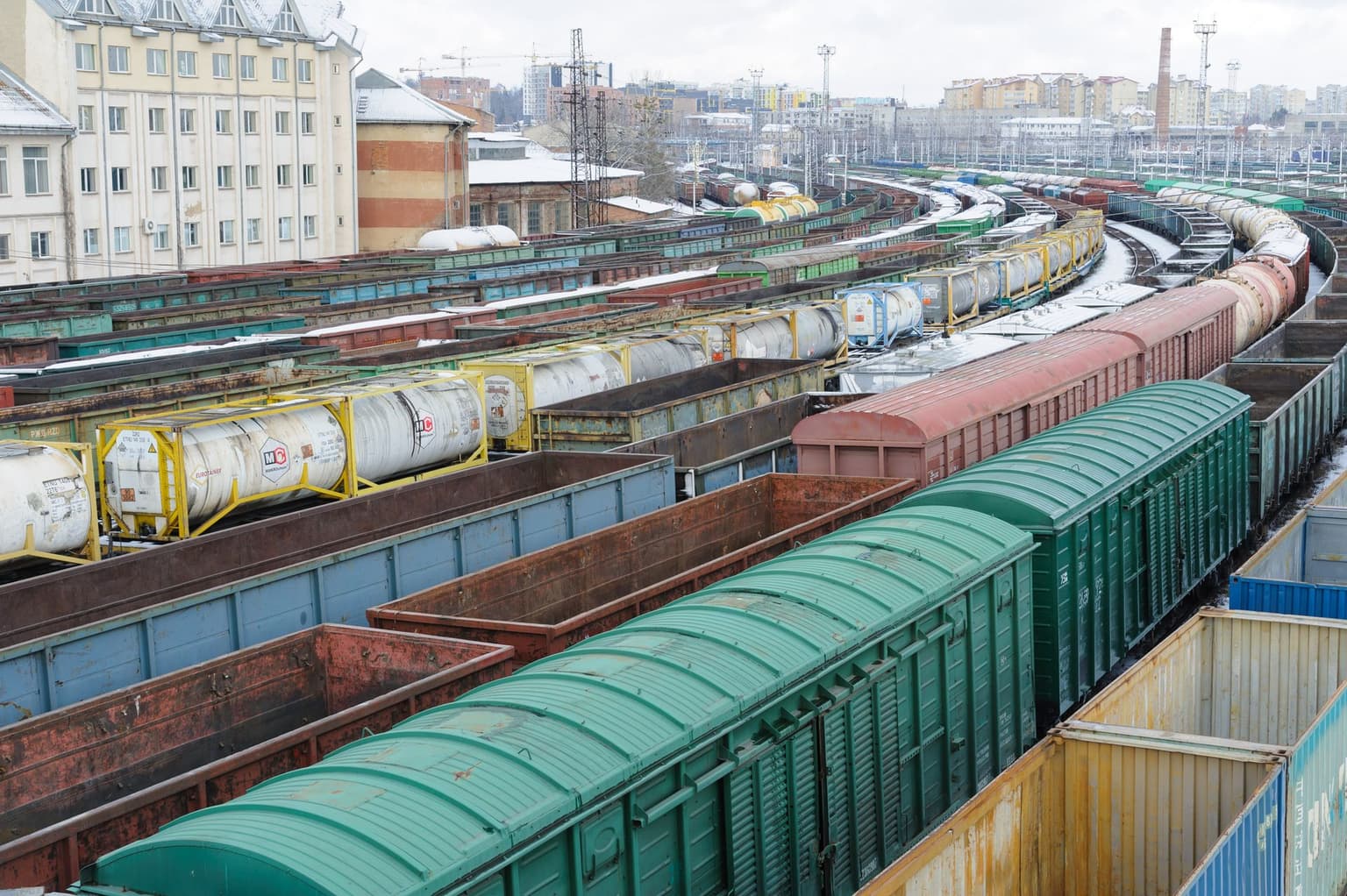
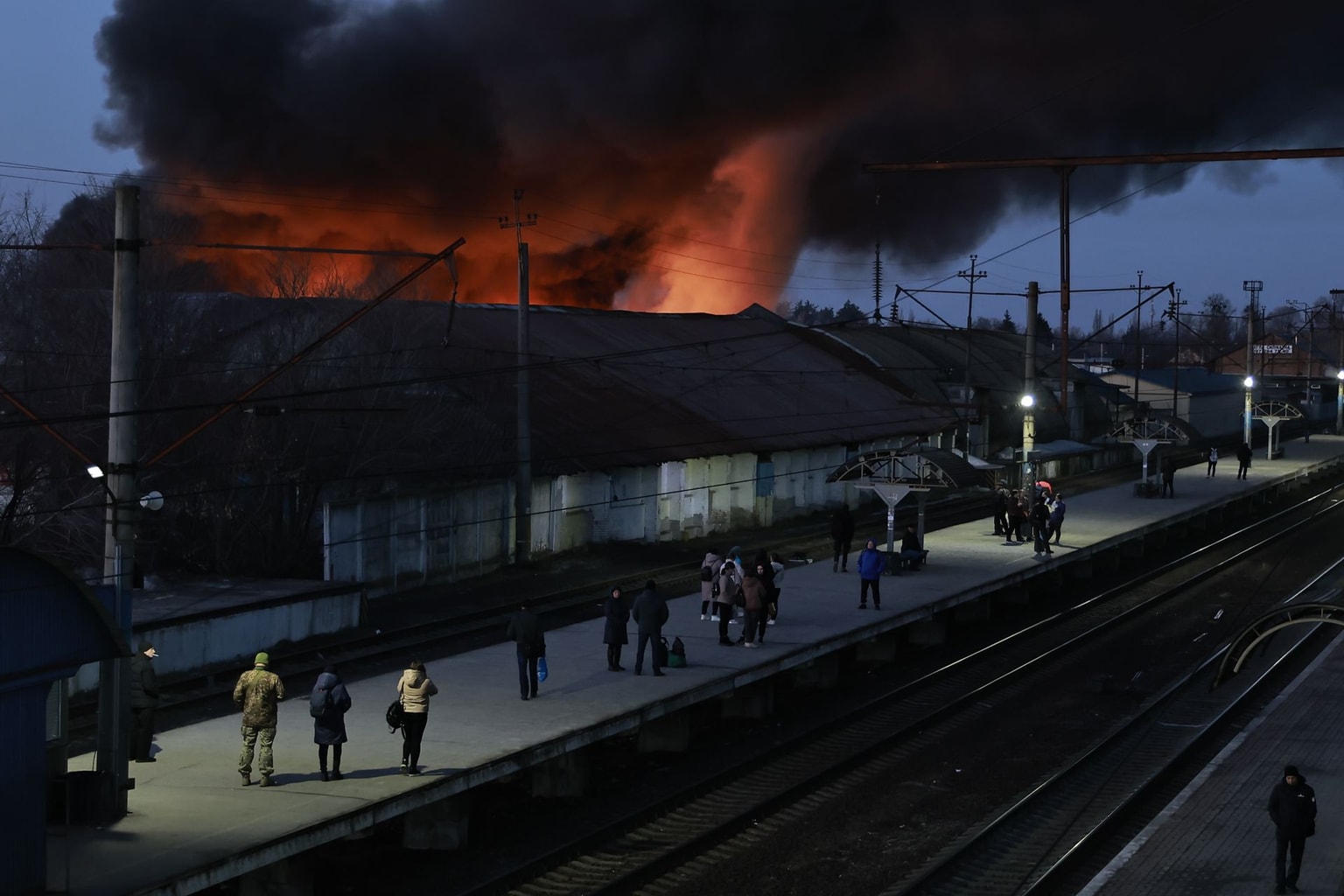
Trains and freight wagons stand on railway tracks at Lviv Railway Station in Lviv, Ukraine, on Jan. 18, 2022. (Mykola Tys / SOPA Images / LightRocket via Getty Images)
 on Google
Andrei Kirilenko
Professor of Finance at the Cambridge Judge Business School
What kind of an economy does Ukraine have?
This question is not of abstract interest. International financial institutions, supporting governments, private investors — anyone with an economic interest in Ukraine needs to know what they have a stake in.
Without having a realistic macroeconomic framework, it's hard to make sense of various economic indicators — like real gross domestic product (GDP) growth, inflation, investment, money demand, imports, exports, and capital flows — they remain isolated readings on a dashboard rather than signals of a coherent macroeconomic framework.
Let's begin with what Ukraine's economy is not. It is not a peace economy. So, any macroeconomic framework of a fully peaceful economy does not apply.
In a peaceful economy, value is created through civilian consumption and civilian investment, not destroyed in a war. Even creating a full army of terracotta soldiers and burying them underground is still a peaceful economic activity, because 5,000 years later, the terracotta army is mostly still there. It is just a very long-term investment in tourism.
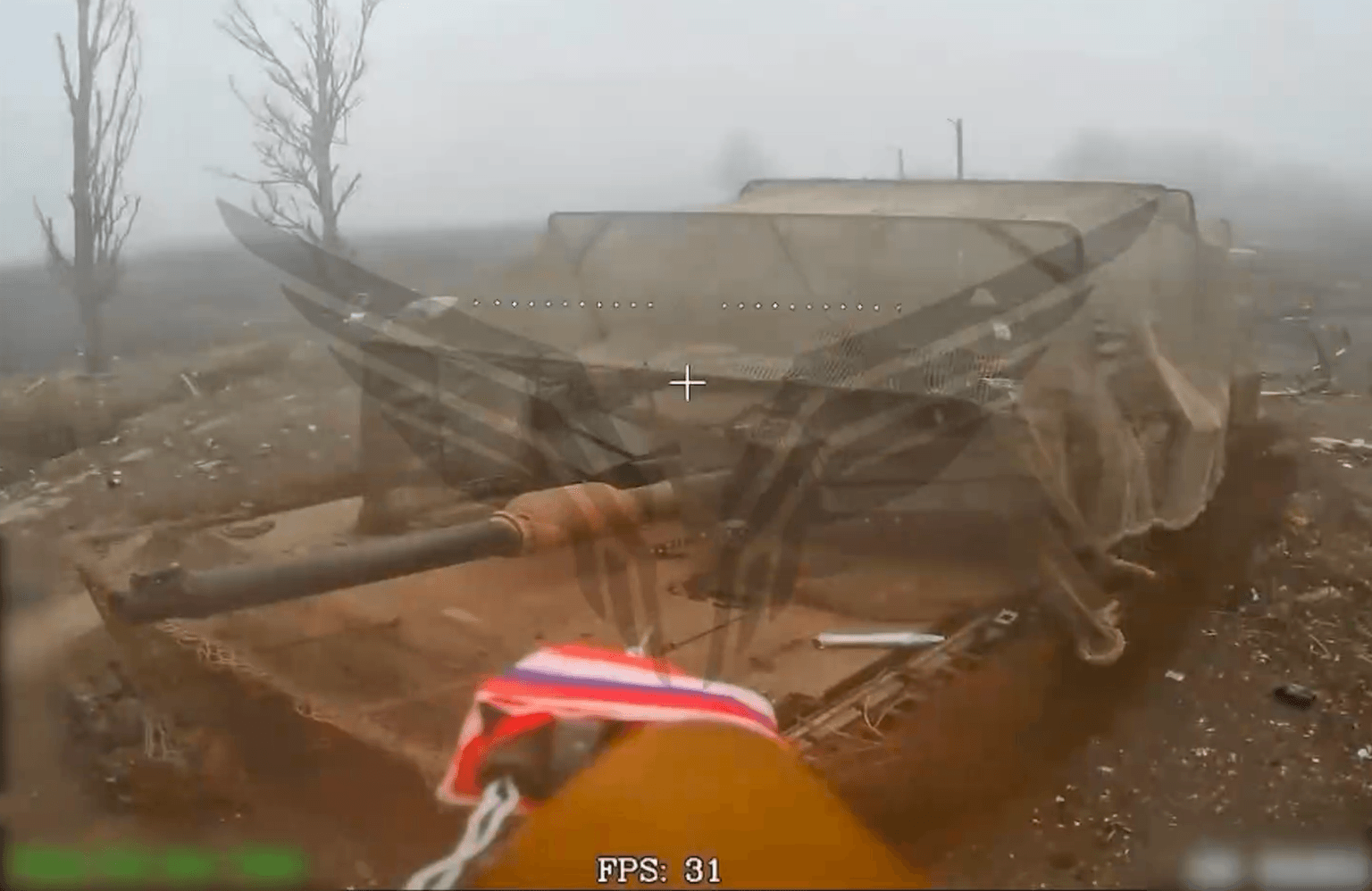
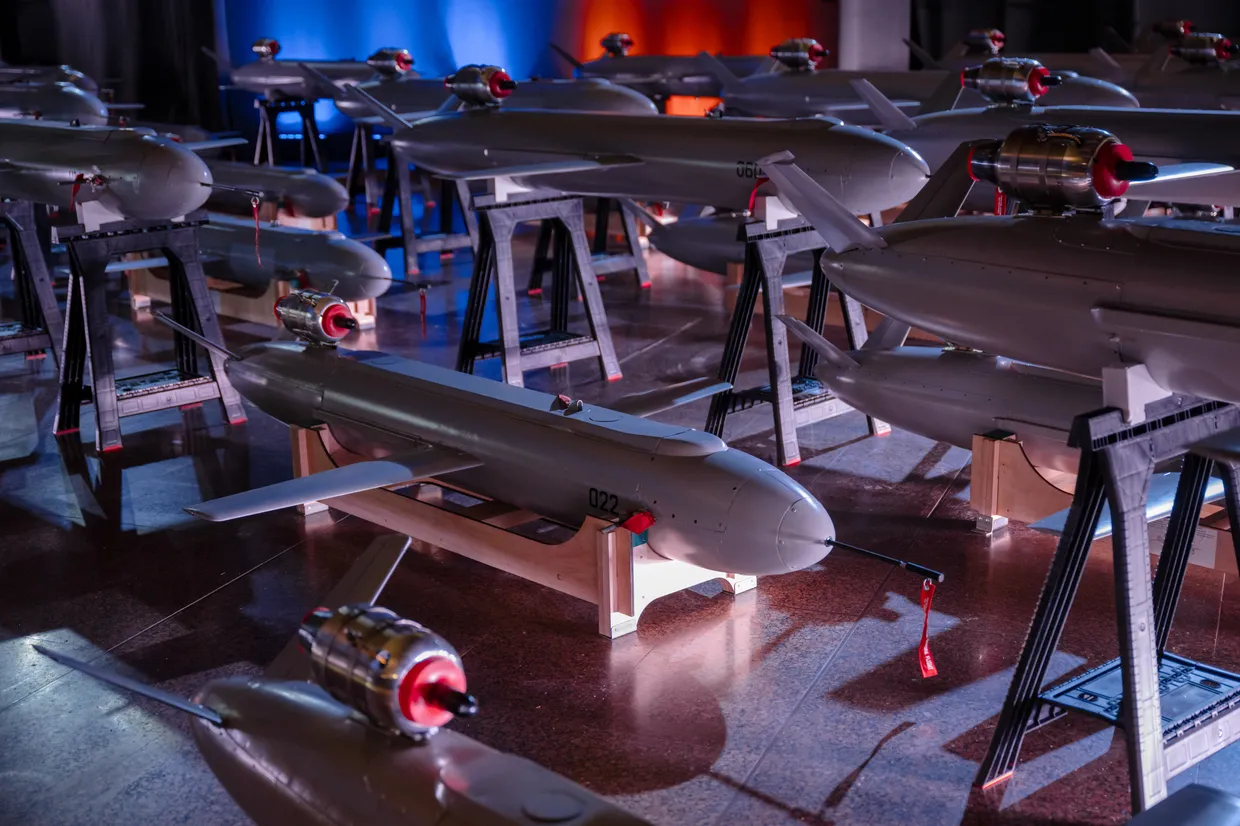
But Ukraine's economy is not a full war economy either. Ukraine is at war, but its economy does not fully prioritize the war effort. So, any macroeconomic framework of a fully wartime economy does not apply either. At the same time, it cannot be denied that a lot of economic value is created in Ukraine, not to be consumed or invested, but to be destroyed. Drones, munitions, fuel, supplies — all of it is created just to be quickly destroyed.
Can Ukraine be considered a fortress economy?
A fortress economy is an economy that can survive without external financing for long enough. A fortress economy is defined by its small external debt, significant foreign reserves, and a large current account surplus (it sells more abroad than it buys from abroad).
A fortress economy also conducts a lot of its external activity in the economic shadow — via shadow fleets, shadow businesses, and shadow payment systems. But his description applies to countries such as Russia, Iran, or North Korea — not to Ukraine.
So, what can we call Ukraine's economy? It seems to be increasingly turning into a frontier economy for the eastern border of Europe. East of that frontier, money, goods, services, and people cannot easily flow into Europe.
An example of a frontier economy is the Limes Germanicus — a long system of fortifications built during the 1st and 2nd centuries AD to protect the northern frontier of the Roman Empire. Along that frontier, an economy developed that was connected to the rest of the Roman economy while also fulfilling additional duties, such as controlling the movement of goods, money, and — especially — people from hostile territories beyond the frontier.
But enough history. What kind of macroeconomic pattern would be consistent with a hypothesis that Ukraine is turning into a frontier economy?
The pattern would be directional. It would resemble a river of economic value flowing towards a waterfall — frontier — where it is destroyed. At the frontier, all drones, munitions, arms, equipment, and supplies in their entirety are slated for economic destruction in order to fulfill the military purpose of defending it.
In terms of the macroeconomic indicators, money (both public and private) would be created in the form of reserve money, cash, and bank deposits — further West from the frontier and destroyed via lost or damaged cash, account overdrafts, and fraudulent, unrecoverable payments closer to the frontier.
On the fiscal side, revenues would exceed expenditures further West from the frontier and vice versa closer to the frontier. Trade in goods and services would originate further west from the frontier and diminish towards the frontier.
While the "frontier economy" or Limes Ukrainicus — hypothesis is still being tested using available data and the scientific method, it already offers a more realistic framework than the peaceful or wartime models typically applied to Ukraine.
Donors, partners, and investors do not need to wait for definitive proof to adjust their analysis. Ukraine is not a standard emerging-market or post-war investment case. It is an active frontier of Europe, where economic value is continuously created, redirected, and deliberately destroyed to sustain that frontier.
Editor’s note: The opinions expressed in the op-ed section are those of the authors and do not purport to reflect the views of the Kyiv Independent.