Why Ukraine’s embattled prosecutor general survived the government reshuffle
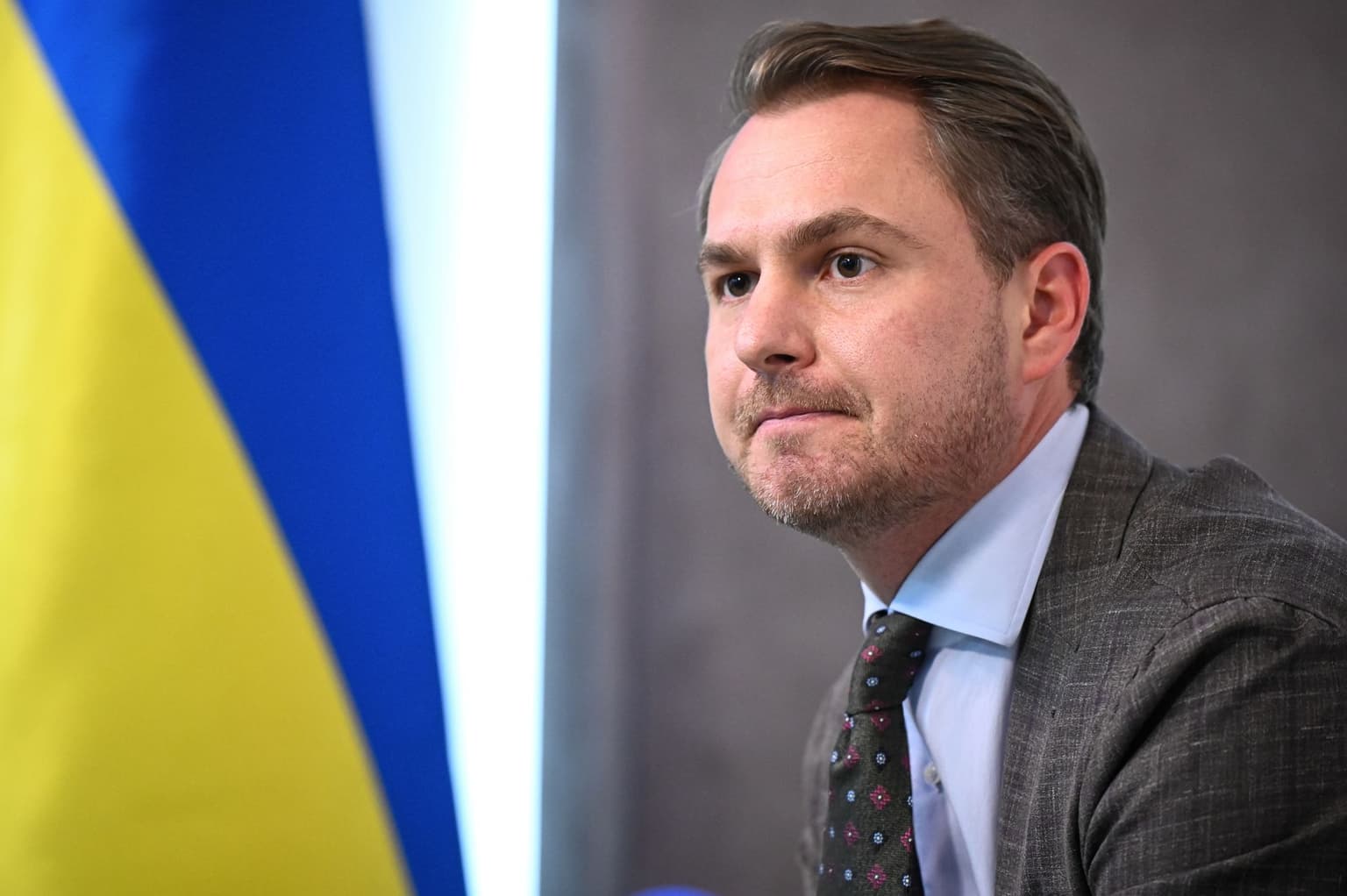
Prosecutor General of Ukraine Ruslan Kravchenko holds a briefing in Kyiv, Ukraine, on July 23, 2025. (Danylo Antoniuk / Ukrinform / NurPhoto via Getty Images)
 on Google
Amid a major government reshuffle that saw ministers trade portfolios and several senior security officials change posts in recent days, one notable absence stood out.
Prosecutor General Ruslan Kravchenko, long criticized as ineffective and subservient to the president, has seemingly kept his job.
In mid-December, Kravchenko publicly threatened to go after his opponents who demanded his resignation.
"I know everyone who is now working against me and against the Prosecutor General's Office as an institution — don’t bother hiding, I will come after each of you personally," he ranted on Facebook.
Kravchenko has faced scrutiny primarily due to his role in the recent crackdown on the National Anti-Corruption Bureau (NABU) and the Specialized Anti-Corruption Prosecutor's Office (SAPO).
"When the prosecutor general tries to destroy the anti-corruption infrastructure in a country at war and thus weakens Ukraine's international standing, it's sufficient grounds for dismissal," Yaroslav Yurchyshyn, a lawmaker from the opposition Holos party, told the Kyiv Independent.
"We can't afford to have a prosecutor general who is involved in personal conflicts in the interests of the President's Office."
According to a source familiar with the thinking behind the government reshuffle, however, Kravchenko secured his post not because he was held in high regard by the president, but rather because no one volunteered to take his place.
The Prosecutor General's Office did not respond to requests for comment on the controversies around Kravchenko.

Not a great start
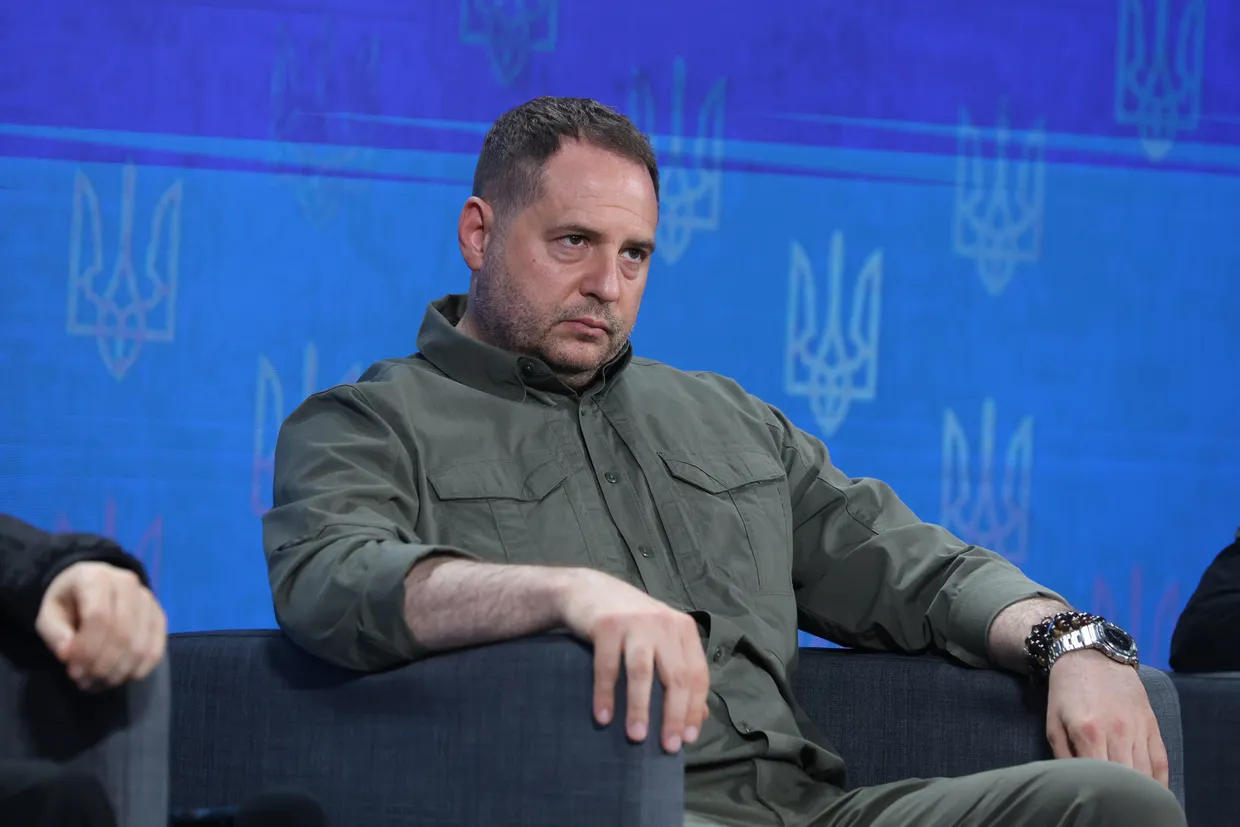
Appointed as prosecutor general in June, Kravchenko was seen as a protégé of Andriy Yermak, then head of the President's Office, according to anti-corruption activists and pro-government lawmakers.
The prosecutor general's political fortunes took a hit when Yermak resigned following searches at his premises conducted by the National Anti-Corruption Bureau on Nov. 28.
Yermak is being investigated by the Anti-Corruption Bureau in a case involving state nuclear power monopoly Energoatom, the biggest corruption scandal of Zelensky's presidency.
Kravchenko was among the people said to be tasked with preventing the investigation from taking place. The prosecutor general has spearheaded the authorities' attacks on the anti-corruption infrastructure.
A law signed by Zelensky in July subordinated the NABU and SAPO to the prosecutor general and effectively eliminated their autonomy. Although their independence was restored under public and Western pressure, the conflict between the President's Office and the anti-corruption agencies continued until Yermak’s resignation.
"Kravchenko was appointed specifically to launch an attack on anti-corruption institutions."
Shortly before the law was signed, the Prosecutor General's Office, the Security Service of Ukraine (SBU), and the State Investigation Bureau conducted at least 70 searches at the Anti-Corruption Bureau. Two detectives of the bureau were arrested at the time and charged with high treason and aiding Russia.
Kravchenko backed these arrests.
Following Yermak’s resignation, the two detectives were released from detention facilities. Some commentators saw it as a sign that the political will to continue the crackdown on anti-corruption institutions had evaporated.

"Kravchenko was appointed specifically to launch an attack on anti-corruption institutions," Daria Kaleniuk, executive director of the Anti-Corruption Action Center, told the Kyiv Independent.
A law enforcement source told the Kyiv Independent that cooperation between the anti-corruption agencies and the Prosecutor General's Office had "deteriorated" since Kravchenko was appointed.
"He is an unbalanced person — that’s clear even from his public statements," the source said. "He was appointed to this position solely to organize the persecution of the NABU and SAPO."
Controversies pile up
Under Kravchenko, law enforcement agencies have also targeted one of Ukraine's most prominent anti-corruption activists, Vitaly Shabunin.
In July, Shabunin, head of the Anti-Corruption Action Center’s executive board, was charged with evading military service and fraud.
Shabunin, who joined the Armed Forces of Ukraine as a volunteer at the beginning of Russia's full-scale invasion in 2022 and has served since then, denied the accusations and said the cases were fabricated and politically motivated.

On Dec. 16, Shabunin also accused the Prosecutor General's Office and the State Investigation Bureau of leaking his explicit photos to social networks. The photos were stored on a phone seized during searches, according to Shabunin.
The Prosecutor General's Office denied the accusations in a comment to the Kyiv Independent and said that it would "provide an appropriate legal assessment" if there is evidence of someone leaking the photos. The State Investigation Bureau did not respond to a request for comment.
In November, the Anti-Corruption Action Center also published an investigation according to which the brother of Deputy Prosecutor General Maria Vdovichenko works as a military prosecutor in Russia. Her father has a business in Russian-occupied Crimea, while her other relatives have Russian passports, according to the investigation.
The Prosecutor General's Office did not respond to a request for comment on these accusations.
Holding on to his seat
On Dec. 12, Kravchenko reacted to the intensifying demands for his resignation.
"I have not resigned, and I am not going to resign," he wrote on Facebook, adding that he would go after everyone who "works against" him and the Prosecutor General's Office.
The threats prompted more backlash from the public, with Facebook users ridiculing and lambasting Kravchenko.
"He is an immature person for such a position," Kaleniuk said. "He has started threatening everyone who supports his dismissal. Will Kravchenko go after me?"

Political analyst Volodymyr Fesenko told the Kyiv Independent that, amid calls for his resignation following Yermak’s ouster, Kravchenko feels seriously threatened.
He attributed this reaction to Kravchenko's lack of political experience.
However, the prosecutor general became increasingly aware of the ongoing tug-of-war between various groups and stepped back from signing controversial charges against Yermak's opponents in late 2025.
Fesenko argued that Kravchenko "didn't want to be the scapegoat" and "has his own personal interests, not Yermak's."
"A lot of people forget about their former patrons," he added. "Everyone sees that Yermak is toxic. Everyone is now focused on their own political survival."
Is Kravchenko’s dismissal likely?
Despite all the controversies, Kravchenko's dismissal appears to be unlikely in the near future.
A source in Zelensky's party faction in parliament told the Kyiv Independent that "his appointment was a mistake, but for now there are no grounds to dismiss him."
Fesenko said that Zelensky is reluctant to fire Kravchenko because he would have a hard time replacing him.

Zheleznyak and Yurchyshyn said that no one had started yet to collect signatures in parliament for the prosecutor general's dismissal.
Currently, some lawmakers are hesitant to support Kravchenko's dismissal because charges against members of parliament are subject to approval by the prosecutor general, Yurchyshyn said.
"But the more he communicates in this way, the less fear they have," he added in a reference to his recent Facebook post.
According to a source familiar with the ongoing government reshuffle, Kravchenko’s dismissal isn’t a priority at this time.