Loss and loneliness in a contemporary Moldovan classic
 on Google
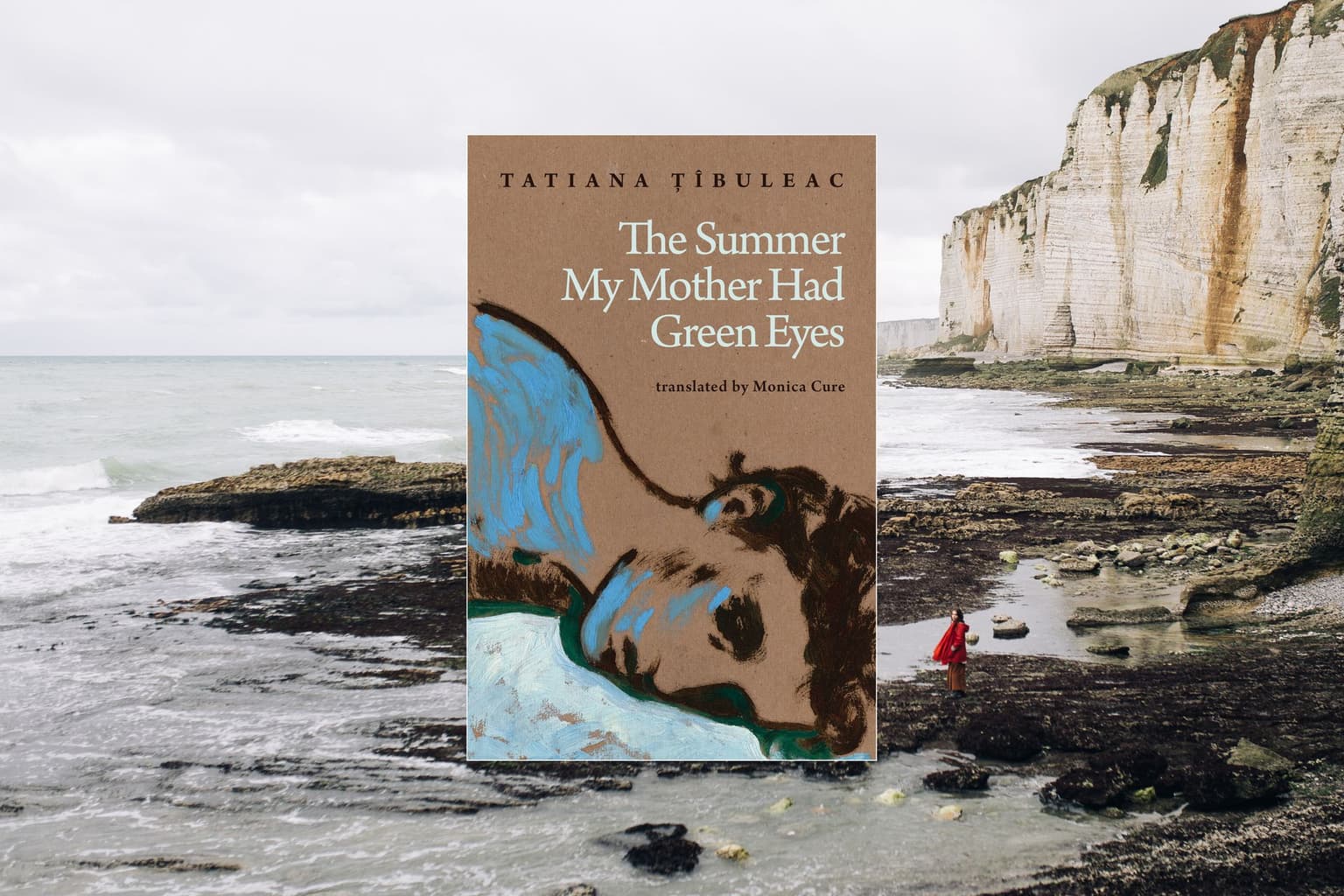
From the early pages of "The Summer My Mother Had Green Eyes," we are swimming in the protagonist Aleksy's grief. The story begins at a point in his late teenage years when he "hated (his mother) more than ever," and could have "killed her with a thought." She is not a source of love and strength in his life — that is, the woman who gave him life — but of utter repulsion and shame.
Moldovan-Romanian author Tatiana Țîbuleac's novel, recently translated from Romanian by Monica Cure and published by Deep Vellum, loses none of its unsettling power when read in English.
The book is both unflinching in its emotional honesty and luminous in its prose. It's a reminder of the value of translation, given that the novel's themes — such as the toll we allow grief to take on us, the turmoil of adolescence — are universally relatable, even if the original language kept it out of reach for many readers until now.
At its core, "The Summer My Mother Had Green Eyes" is a novel about loneliness — about how it is more often than not self-imposed, and how once it takes hold, it often becomes all-consuming. Aleksy, at the novel's start, is looking forward to a summer trip with his friends Jim and Kalo to Amsterdam, where he plans to take part in every conceivable form of debauchery, "even if I were to catch AIDS, even if I were to drown under a bridge and be found full of maggots only after a century — that had been my biggest dream since I was fourteen years old."
Aleksy's bravado is more for show than anything else. These are, as he admits, the only friends he has ever had — he has never had a girlfriend, either. The anger that seems to animate his very breathing makes him think that normal initiation rites on the path to adulthood must be achieved through extremity, as though anything less would fail to register. What he seeks is not fulfillment but self-annihilation in a world in which he feels painfully unseen.
Underlying this performative recklessness is a diffuse but deeply felt sense of betrayal. Aleksy's father has long been absent from his life, leaving a void that his mother cannot entirely fill, burdened as she is by the trauma of his younger sister Mika's death. The precise circumstances of Mika's death remain deliberately vague, leaving the reader to process only its catastrophic aftermath on the family.
Aleksy confesses that he misses his sister so intensely he feels "like ripping (his) eyes out." As the novel progresses, it becomes clear that Aleksy's anger toward his mother is rooted in her inability to have managed the ordinary rhythms of life while dealing with her grief.
"I would've liked Mum to remember me at least once — her other child, pushed into this world by the same unconscious uterus. I would've liked Mum to have sat next to me — she didn't have to comfort me or ask me how I felt — and to have told me to get out of her sight for seven months, and then we'll see," Aleksy explains.
"That would've been the honest way for an adult to deal with a boy who was still wetting his bed and asking himself to this day if he could've saved his sister from dying."

Amid this ticking time bomb of familial resentment, Aleksy's mother persuades him to abandon his plans in Amsterdam and spend the summer with her in a village in the north of France. The urgency of her insistence — carried so far as to include threats of suicide if he refuses — is not immediately explained. Yet Aleksy, despite describing his mother in a multitude of grotesque ways — including lines like "sometimes I'd ask myself if she weren't just a lump of dough that had come alive" — ultimately yields his own plans to hers.
What follows is one of the most powerful and original explorations of a mother-child relationship in contemporary literature, inlcuding the ways in which parents wrestle with how they have failed their children. The novel traces the many contours of Aleksy’s loneliness, while granting over time a near-equal weight to his mother’s, as she begins to face the amount of years their family surrendered to her grief. If the death of a child buries a part of the parent with them, the loss of a living child’s love exacts a quieter, no less devastating toll.
This realization of lost time comes when her own time has nearly run out. Death has claimed not only Mika and shattered the family, but is also closing in on Aleksy's mother. She brings him to northern France because she is dying of cancer, and the doctors have made it clear: this is her last summer on earth. After years of turning away from life, she is now desperate for her own untimely end to carry some measure of meaning.
How that unfolds is what makes the novel so interesting. Aleksy, recalling this summer as part of a therapy exercise, is confronted by words "swarming over (him) like a bewitched wolf pack" as he struggles to process it.
"The Summer My Mother Had Green Eyes" is ultimately a testament to the redemptive power of engaging with memory and storytelling, no matter how painful it may be. Aleksy’s recollections, shaped by grief and anger, become a means of better understanding himself and his mother, of mapping the invisible contours of loss and loneliness that came to define his life. Țîbuleac’s novel reminds us that even when love has been fractured, even when time has been stolen by grief, the human heart is capable of stitching together fragments of life into moments of beauty.
As Aleksy himself observes, "Beautiful memories, though they are few and faded, take up more space than all the files of pus together, because a single beautiful image contains emotions, smells, and memories that last for entire days. These memories are the most precious part of me — the shiny pearl born from the hollow shell. The green bud rising from the carcass."
Note from the author:
Hi, this is Kate Tsurkan, thanks for reading this article. I've written a lot about books from Ukraine and Russia, but keep a look out as our book review section starts to expand to cover books from other countries in the region.. If you like reading about this sort of thing, please consider supporting The Kyiv Independent.