Exclusive: Russian negotiators soften hardline stance in private, US officials say. Ukrainians urge caution
 on Google

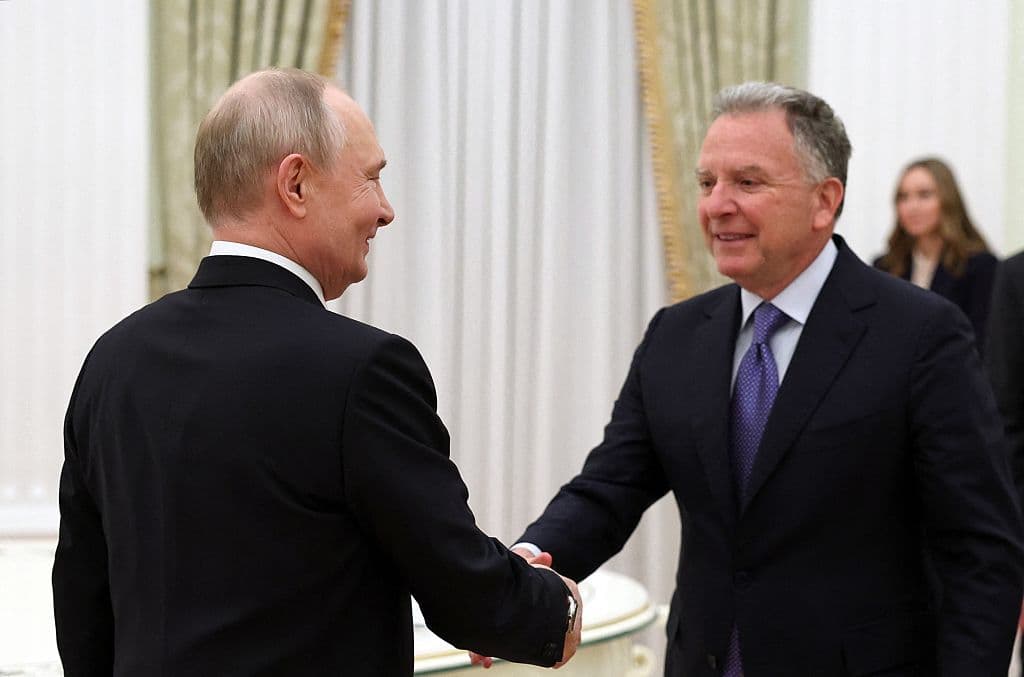
U.S. officials leading the talks are convinced that Russian negotiators have taken a more pragmatic tone behind closed doors than Moscow's public hardline rhetoric suggests, according to two people familiar with the matter.
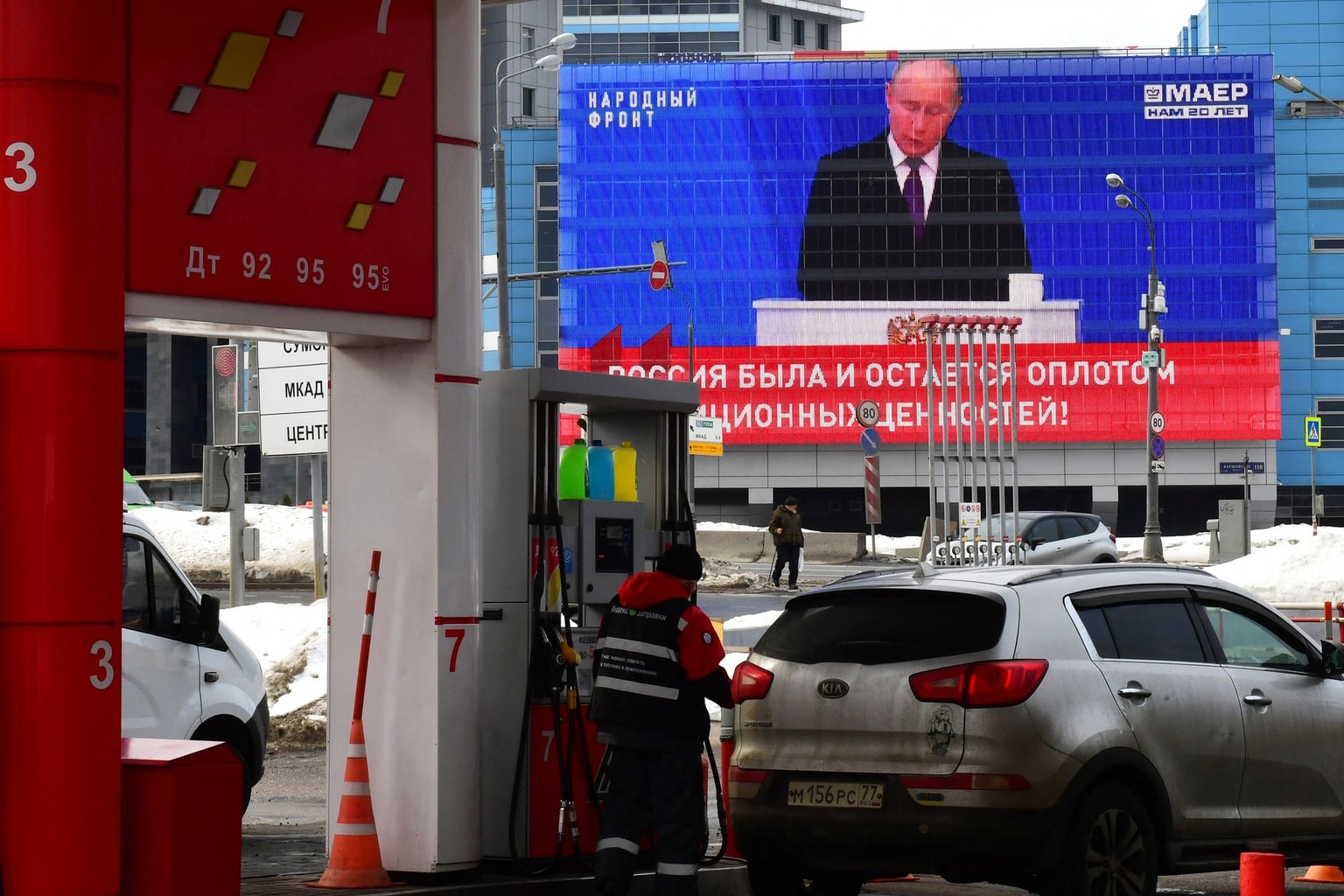
The Kremlin has consistently used public statements before and after each round of talks to reiterate — and at times escalate — its maximalist demands on Ukraine, including territorial and political concessions.
"They usually say their maximalist demands, and then they allow their private negotiating teams to work with flexibility," one U.S. official believed.
"That's something that's been happening for a long time."
A Ukrainian official familiar with the ongoing negotiations told the Kyiv Independent that the U.S. negotiating team assesses the talks "in a very specific way," adding that even basic civility is viewed as a meaningful indicator.
"If everyone is polite, that's seen as a positive sign," the source said.
Public pressure, private maneuvering
Russian strategy was again on display following U.S. envoys' visit to Moscow on Jan. 22.
After the meetings, Kremlin aide Yuri Ushakov said there was "no point in hoping" for a settlement of Russia's war against Ukraine unless Kyiv complied with Moscow's maximalist territorial demands.
Other Russian officials have made similar statements in public, sometimes using even more uncompromising language.
Russian Foreign Minister Sergey Lavrov, who has recently been sidelined from the negotiation track, has repeatedly demanded President Volodymyr Zelensky's removal and revived calls for the so-called "denazification" and "demilitarization" of Ukraine.
The U.S. official described such remarks as part of a strategy to anchor positions in public rather than reflect the substance of negotiations.
"I tend to ignore most public statements from leaders," a U.S. top official told journalists.
"President Putin said unequivocally that he wants to see a diplomatic settlement of this deal. We want to take him at his word."
Alexandra Filippenko, a U.S.–Russia relations expert, told the Kyiv Independent that the U.S. side "has a tendency to be misled" when negotiating with Putin, a former KGB officer.
She pointed to the 2001 summit, when President George W. Bush said he looked Putin "in the eyes" and sensed his sincerity — a moment that later came to symbolize Western misjudgment of his intentions.
Inside the Abu Dhabi talks
The U.S. official told a group of journalists they saw an improvement in terms of communication and topics discussed during the two-day trilateral talks between Ukraine, Russia, and the United States held in Abu Dhabi on Jan. 23–24.
"The mood in the room really surpassed our expectations."
The delegations even broke for lunch together on the second day, continuing discussions informally, the official said, adding that "everybody looked almost like they were friends."
Officials from the UAE involved in the discussions also viewed the atmosphere at the talks as "positive and constructive," a government spokesperson said.
Ukraine's delegation included National Security and Defense Council Secretary Rustem Umerov and President's Office Head Kyrylo Budanov, among other officials.
Russia was represented by senior Defense Ministry officials led by Admiral Igor Kostyukov, head of military intelligence.
On the U.S. side, Special Envoy Steve Witkoff and Jared Kushner, President Donald Trump's adviser and son-in-law, were among those present.
A source in the President's Office said that within the U.S. delegation, Kushner is emerging as the dominant figure, wielding greater influence over the talks.
Despite the atmosphere described by the U.S. official, the talks unfolded alongside a mass Russian missile and drone attack on Ukrainian civilian targets, including energy infrastructure, launched shortly after the first day concluded.

The U.S. official did not interpret the strike as a signal of disregard for Trump's peace process, describing the war as already "brutal."
"That's why it's so important that we spend the time and effort to try and build bridges where they've all been destroyed," the official said.
What was discussed
According to the U.S. official, de-escalation was a central theme of the Abu Dhabi talks. Discussions focused on steps needed to ensure that, if the war ends, it does not resume.
Another U.S. official said the meeting was notable because Russian and Ukrainian delegations had not interacted directly in person for a long time.
"It was great seeing both sides interact with each other," the official said.
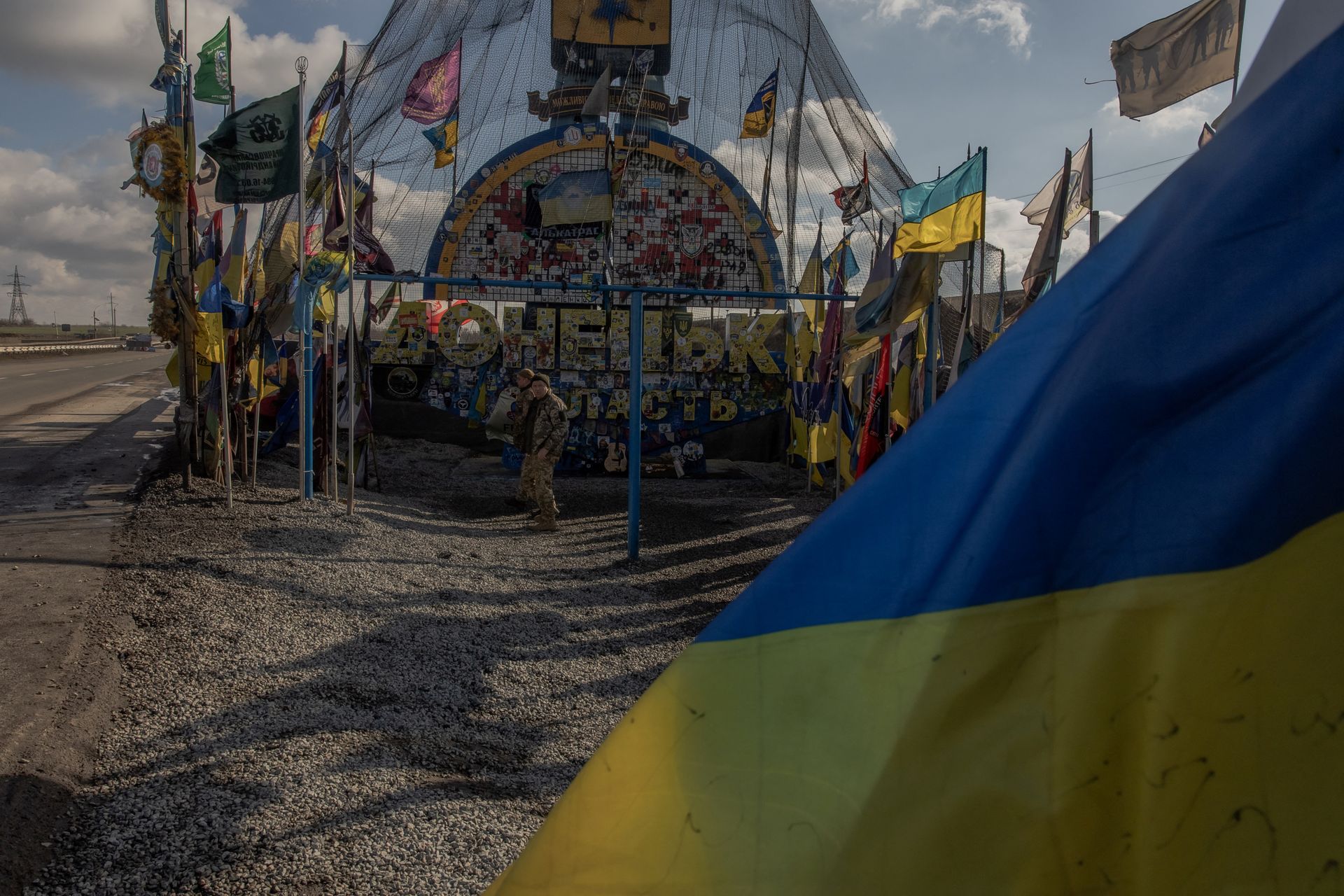
No understanding was reached on the most sensitive issue — territory. Russia continues to demand that Ukrainian forces withdraw from Donbas, tying any deal to those terms.
Luhansk Oblast is almost entirely under Russian control, while Ukrainian forces still hold roughly 6,600 square kilometers (2,550 square miles) of Donetsk Oblast, including Sloviansk and Kramatorsk.
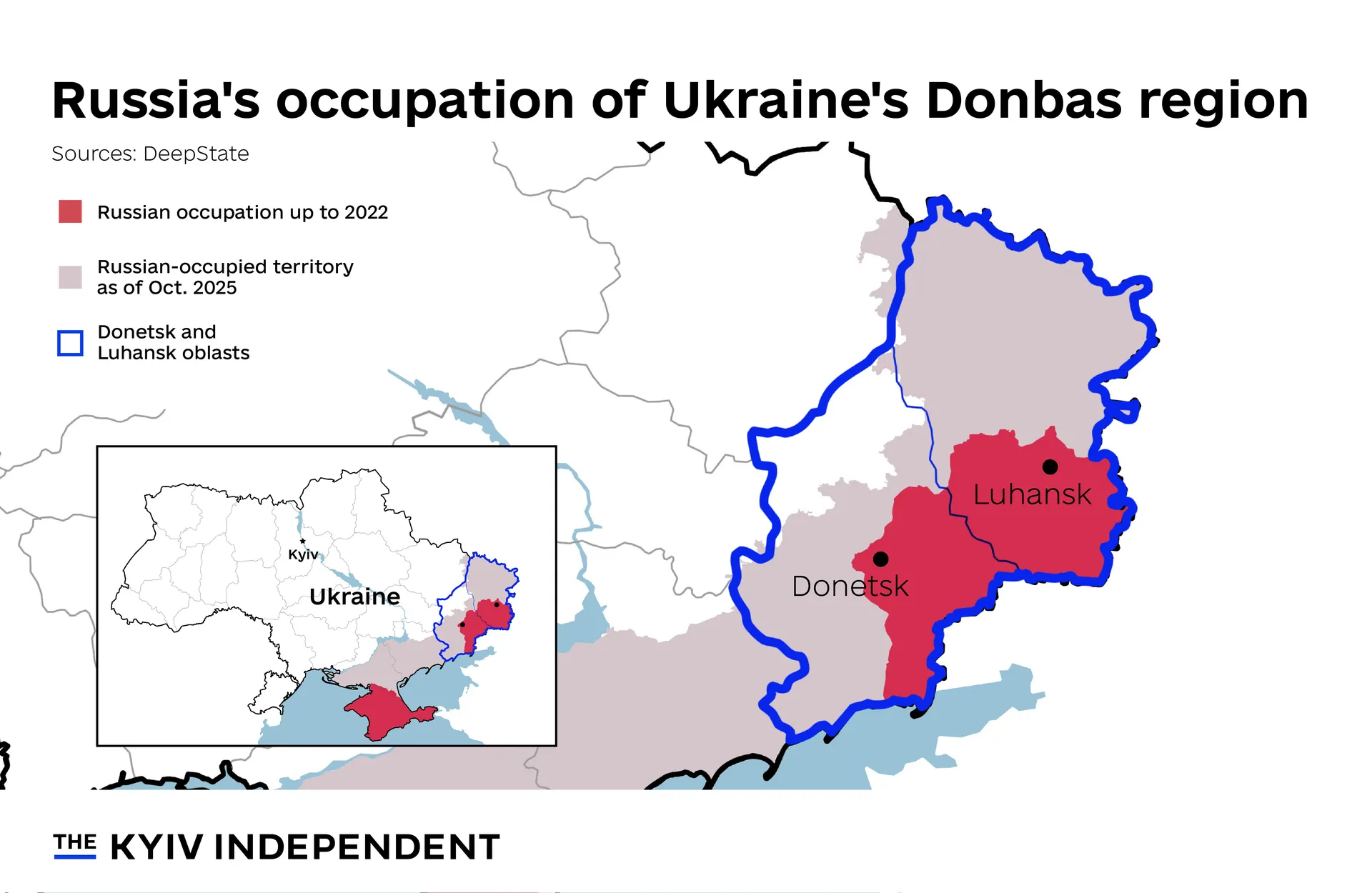
Kyiv has ruled out withdrawal, signaling it could consider a demilitarized zone. U.S. officials have also floated the idea of a free economic zone in parts of the region.
The issue is expected to return to the agenda in later rounds, the U.S. official said.
Both U.S. officials confirmed that a ceasefire was discussed as a possible step toward holding a referendum on territorial issues. Zelensky has repeatedly said any territorial decision must be made by Ukrainians themselves through elections or a referendum.

Zaporizhzhia Nuclear Power Plant
Control of the Zaporizhzhia Nuclear Power Plant emerged as another major point of contention, according to two U.S. officials.
"We have not yet agreed upon a final framework as to how that plant will be overseen and run," one U.S. official said.
Russia seized the plant in 2022. Before the full-scale invasion, it generated about 20% of Ukraine's electricity and remains the largest nuclear power facility in Europe.
Under a U.S.-backed framework discussed in the talks, the plant would be jointly operated by Ukraine, the United States, and Russia. Kyiv fears such an arrangement would legitimize Russia's occupation.
The U.S. official said the plant "will be shared on an equitable basis" and that the International Atomic Energy Agency would have a role.
A source in the President's Office noted that Moscow has moved from pushing for a 50–50 arrangement with the United States to now discussing a direct 50–50 framework with Ukraine over the Zaporizhzhia plant.
The source added that this might be the progress U.S. officials were talking about.
What's next
The next round of talks is expected on Feb. 1.
The most difficult issues — Russian demands for Ukrainian withdrawal from parts of Donbas and control of the nuclear power plant — are set to dominate the agenda.
One U.S. official said Washington hopes to push the process "toward its final culmination," though Moscow has yet to signal readiness to accept any of the proposals.
Zelensky has said he is waiting to see whether Russia is prepared to move toward peace.
Note from the author:
Hi, this is Tim. The author of this article. Thank you for taking the time to read it. At the Kyiv Independent, we don't have a wealthy owner or political backing. We rely on readers like you to support our work.
If you found this article interesting, consider joining our community today