India’s short-sighted embrace of Russia will endanger its own national security
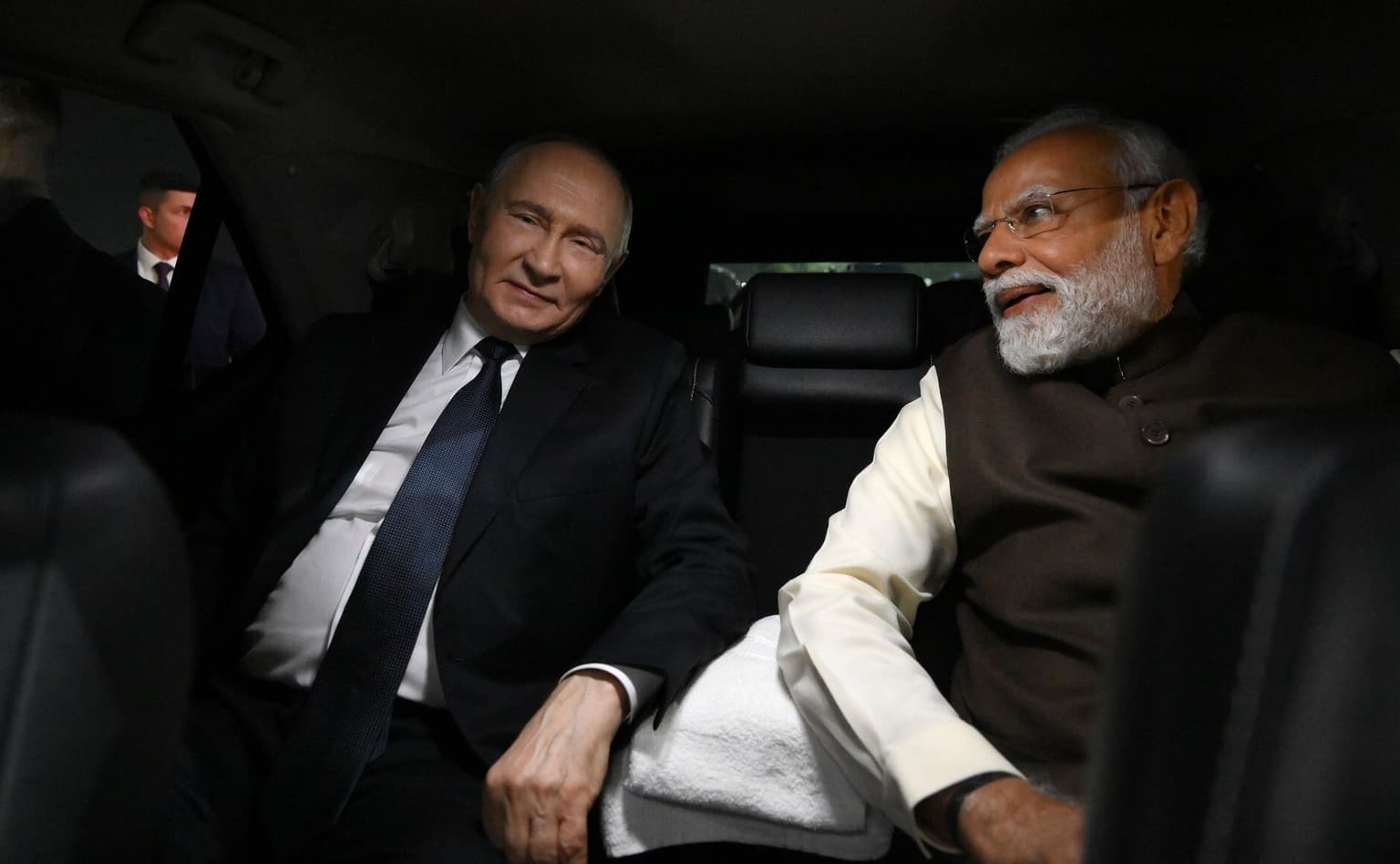
Indian Prime Minister Narendra Modi and Russian President Vladimir Putin arrive at the residence of the Prime Minister of India, where an informal dinner will be held in New Delhi, India, on Dec. 4, 2025. (Kremlin Press Service/Anadolu via Getty Images)
 on Google
Michael Rubin
Senior fellow at the American Enterprise Institute
About the author: Michael Rubin is a senior fellow at the American Enterprise Institute and director of policy analysis at the Middle East Forum.
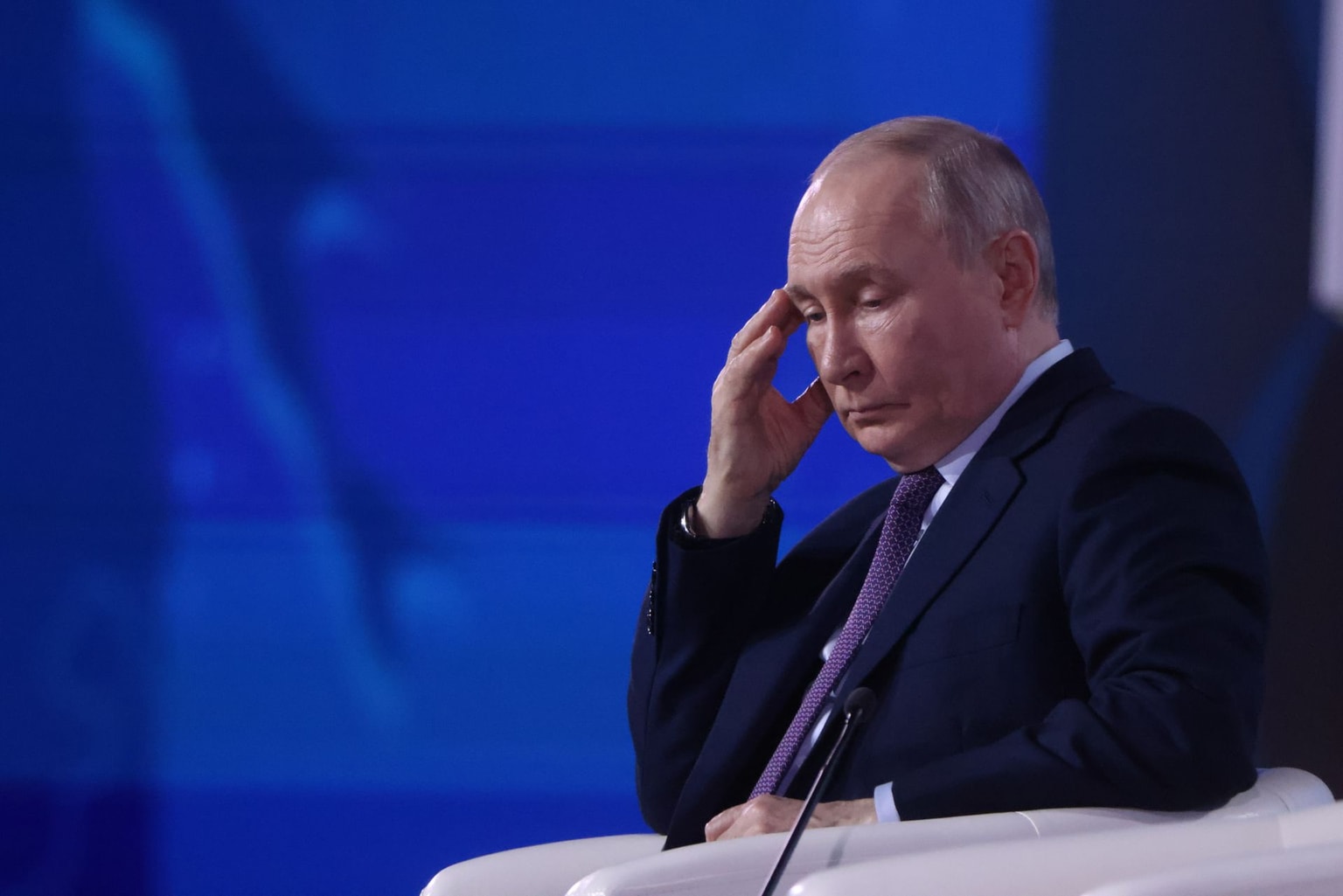
It was all pomp and circumstance when Russian President Vladimir Putin arrived in India. Putin made his first state visit to India 25 years ago, shortly after assuming power in Moscow, and has visited ten times since, although this is his first since the 2022 all-out invasion of Ukraine.
“India is not neutral, India is on the side of peace,” Prime Minister Narendra Modi told Putin.
“We support all efforts towards peace.” Over-shadowing Modi’s comments are not only India’s significant trade with Russia — more than $68 billion in the past year — but also Modi’s increasing frustration with U.S. President Donald Trump.
During Trump’s first term, Modi and the U.S. president enjoyed close personal ties. They met repeatedly and helped shape a Quad alongside Japan and Australia to tackle the threat of a rising China. As India was not only the world’s most populous democracy but also a rising economy — today the world’s fourth largest — it was a relationship that diplomats and strategists in both countries saw shaping 21st-century security.
Trump has never explained his second-term reversal.
The Quad has not met, and Trump has not seen Modi. After the April 2025 Pahalgam massacre, a terror attack on a tourist area in which Pakistan-based terrorists singled out Hindu men, Trump seemingly sides with Pakistan.
After India launched attacks on Pakistan, Trump bragged he had forced Modi to accept a ceasefire.
Personal spite is a shaky foundation upon which to base policy that will reverberate for decades.
The decision by Jawaharlal Nehru, India’s founding prime minister, to rebuff U.S. President Harry S. Truman’s overture for strategic ties forced the United States instead to side with Pakistan during the Cold War. That U.S.-Pakistan relationship — and its accompanying tolerance for Islamic extremism — ultimately harmed both India and the United States.
Modi has reason to be frustrated with the hypocrisy of Trump’s 50% tariffs, half of which are due to the India-Russia energy trade. He is also correct about Trump’s hypocrisy.
Not only does the United States buy critical minerals from Russia, but Trump embraces Putin as much if not more than Modi. The United States also encourages transshipment of Russian gas through Azerbaijan to Europe in what amounts to a poorly disguised laundering operation.
India’s defense doctrine has traditionally sought to multisource rather than become dependent on any single supplier.
Still, Modi is foolish to rely on Putin for defense after the Russians defaulted on previous Indian military purchases in 2023.

Rather than preserve India’s economic independence, Modi endangers it by throwing allies like the United Arab Emirates, Saudi Arabia, Israel, and Greece under the bus by pivoting away from the India-Middle East Economic Corridor, which Modi unveiled at the G20 Summit in 2023, to tie India more to Russia trade.
The real danger for India, however, is the moral equivalence and tolerance for aggression that Modi now signals as he seeks to re-ingratiate himself with Putin. India cannot simultaneously be on the side of peace and reward aggression.
Failure to condemn Putin’s actions in Ukraine undermines Indian security in three ways.
First, India voids the possibility of diplomacy to resolve its own disputes now and in the future.
After all, Modi now ignores Russia’s violations of the 1991 Almaty Declaration, in which Moscow recognized Ukraine’s independence within borders established during the Soviet Union, and the 1994 Budapest Memorandum in which Russia, the United Kingdom, and the United States agreed to protect Ukraine’s sovereignty in exchange for Kyiv’s decision to forfeit its legacy Soviet nuclear weapons.
Ignoring both agreements signals all future aggressors that New Delhi considers diplomatic agreements optional.
Second, Modi sets India up to suffer the same type of aggression Ukraine now faces. Just as Russia occupies Crimea and claims the Donbas, China occupies Aksai Chin, a chunk of Indian Kashmir larger than Odesa Oblast, and claims Arunachal Pradesh, a border region more than 1.5 times the size of the Donbas. If Modi believes peace is more important than justice, he cannot complain if China seeks to further its aggression into India.
Third, Modi justifies exterminationalist ideologies.
Putin’s 2021 Kremlin writing and pre-invasion speeches show he does not accept Ukraine’s historical right to exist. Ukrainian nationality, language, and culture are artificial constructs of Russia’s enemies, he argued. Those who most oppose India — Islamists in Pakistan and Turkey — also root their animosity toward India in ideology. Both see Hindus are sub-human.
Just as Turkish President Recep Tayyip Erdogan promotes pan-Ottomanism, Islamists from Istanbul to Islamabad now also embrace pan-Mughalism, seeking the resurrection of Islamic rule over the Indian subcontinent.
True security and moral policy rest not on short-term transactionalism but rather on democracies sticking together against the forces of revisionism and aggression.
Modi may believe his short-term deals with Putin carry no cost, but those who seek to change the international order by force will not agree. Rather, in Modi’s embrace of Putin, they see a green light to seize upon Modi’s precedent and posturing to one day turn their guns on India itself.
Editor’s note: The opinions expressed in the op-ed section are those of the authors and do not purport to reflect the views of the Kyiv Independent.