Ukrainian infantry fight to survive on the Pokrovsk front as Russia closes in
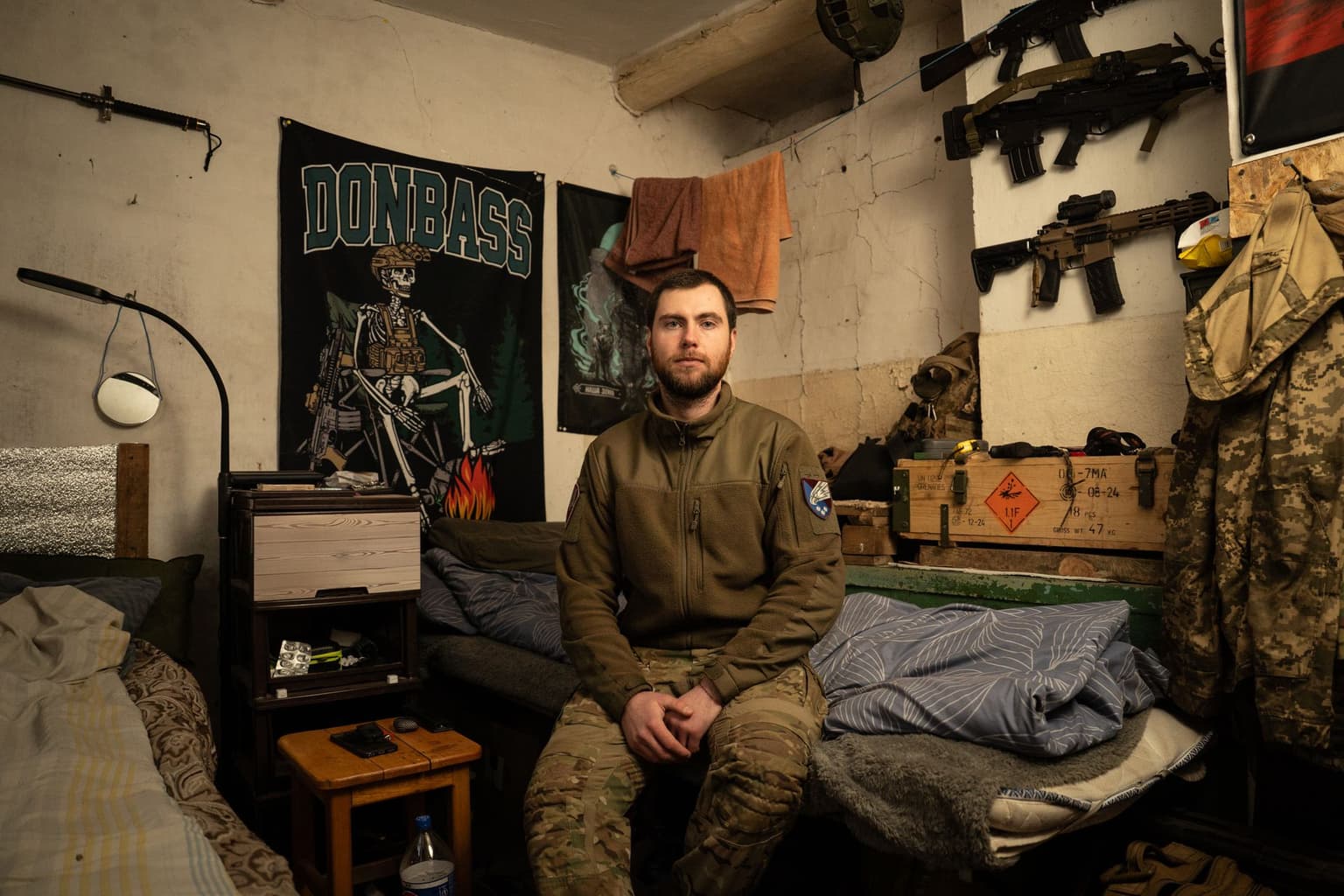
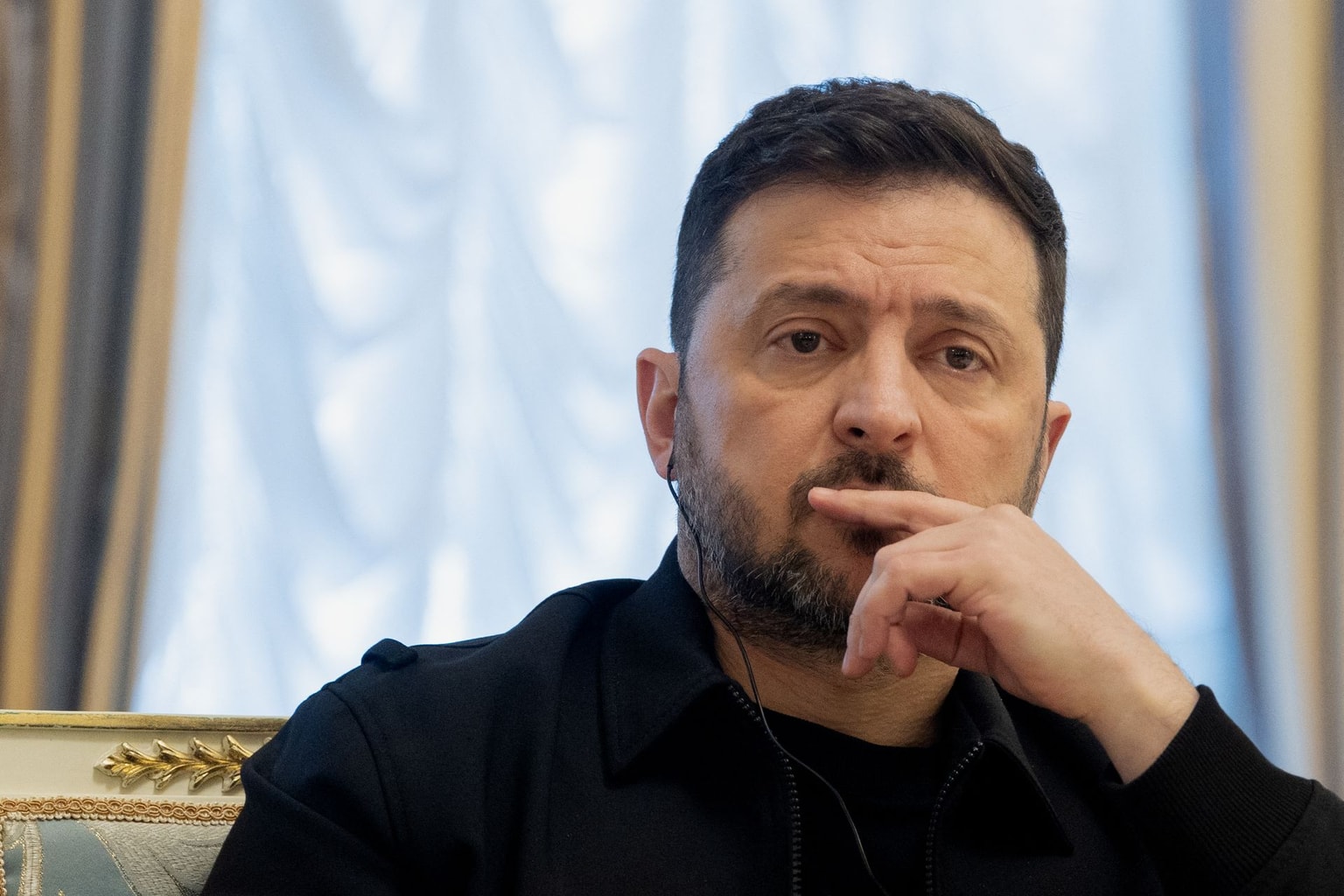
Valentyn, a 26-year-old platoon commander in the 25th Air Assault Brigade, in Donetsk Oblast, Ukraine, on Jan. 23, 2026. (Patryk Jaracz / The Kyiv Independent)
 on Google
DONETSK OBLAST — Walking through the mine-infested field under intense Russian drone surveillance was the scariest part of the mission for 22-year-old infantryman Mykola.
"If you stop, you die," said Mykola, a small-framed soldier with dark circles under his eyes and a tired stare.
"When we were walking to get to the positions, it wasn't hard to walk — it was hard to realize that you may not walk out alive because there were a lot of our dead around."
The walk to his positions near the eastern town of Myrnohrad was 22 kilometers (about 14 miles). Weather conditions and the intensity of Russian drones dictate the pace. It can take anywhere from a day to two weeks, depending on how often he and his comrades need to take cover from Russian drones. Soldiers and commanders interviewed for this story are not identified by their full names due to security concerns.
Located merely five kilometers (about three miles) northeast of Pokrovsk, a key logistics hub in Donetsk Oblast, Myrnohrad — once a quiet town — has faced an onslaught of Russian offensives since the fall of 2025.

The Pokrovsk front currently faces the fiercest fighting, with Russia ramping up its offensive in late 2025 to finally capture the city, a highway and railway junction that used to connect the upper parts of Donetsk Oblast with key cities farther west, such as Dnipro.
Pressuring Pokrovsk and Myrnohrad from the north, east, and the south, Russian troops have gradually closed in on the Ukrainian pocket over the past year, in a slow and costly operation to force Ukraine's withdrawal by cutting off supply routes.
Russia appears to have either pushed out or eliminated the last small groups of Ukrainian infantrymen clinging to Pokrovsk and Myrnohrad, according to Emil Kastehelmi, an analyst at the Finland-based Black Bird Group, which closely analyzes the war using open-source footage. The situation on their outskirts is likely still "relatively messy," but the fight appears to be mostly over, with Russian troops actively trying to consolidate their latest gains, he added.
"Even though Russians gained these urban areas, the slow fight will most likely continue, without very rapid changes from either side," Kastehelmi told the Kyiv Independent on Feb. 17.
Independent Ukrainian open-source battlefield monitoring group DeepState has designated Myrnohrad as occupied by Russian forces on its map on Feb. 17. The Ukrainian military has yet to announce the fate of the town.
"It was hard to realize that you may not walk out alive because there were a lot of our dead around."
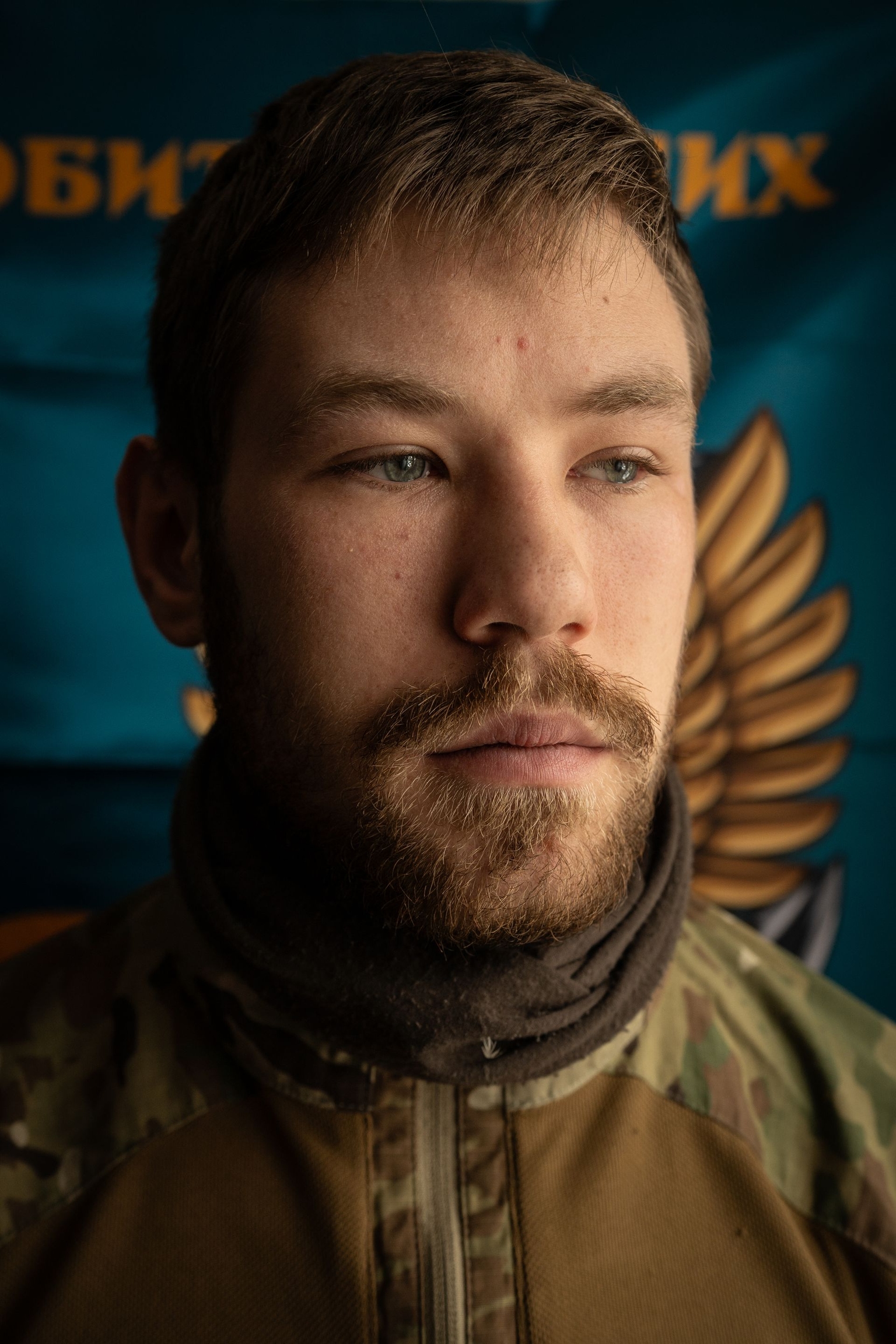
Mykola, a 22-year-old infantryman in the 38th Marine Brigade, is seen in Donetsk Oblast, Ukraine, on Jan. 23, 2026. (Patryk Jaracz / The Kyiv Independent)
The reality on the ground is bleak, especially the long walk to the positions, where it is easy to get lost since the commanders have to plan new routes almost every time, soldiers say.
Mykola is originally from Kherson, a city temporarily occupied by Russia in 2022. He said he tried to enlist as a teenager but was turned away for being too young until last year.
The 22-year-old, a member of the 38th Marine Brigade, said the learning curve has been steep. Panic can prove fatal in combat. One wrong move could give away the location to Russian drones relentlessly hunting Ukrainian soldiers from above, he said.
"If one person panics, it could kill the entire group," Mykola said, speaking to the Kyiv Independent near his safe house not far from the front line.
To this day, Mykola doesn't know the fate of six of his friends who lost radio contact in a field while walking back to the rear from their position on New Year's Day. They are considered missing in action (MIA) since their bodies have not been found.


Mykola says his walk to the position during his last mission — which lasted two months until December 2025 — was a nightmare. One of his older comrades was killed, and another was wounded after they could not move quickly enough to evade drones. He took the wounded man to an evacuation point and passed on the coordinates for his fallen comrade.
"You can only help the wounded at the end," Mykola said, stressing how crucial it is to first prioritize your own survival.
With Russian drones controlling all routes into Myrnohrad, planning routes for troops to enter and exit positions is the most challenging task, according to a deputy battalion commander with the 38th Marine Brigade, who goes by his callsign "Webster." He said he tries to pick foggy days when drones are not able to work effectively, or brief moments when Russia focuses on another part of the front.
The soldiers are usually given a few possible routes in and out since Russia tends to mine the paths as soon as it sees them being used or destroy them with weapons like artillery and aerial guided bombs (KABs), said Valentyn, a platoon commander from the 25th Air Assault Brigade fighting in Pokrovsk.
"You have to control your emotions, because you could get killed (if you lose control)."
Both sides' expansion of the "kill zone" to about 30 kilometers (about 19 miles) has made it practically impossible to drive up anywhere near the positions, forcing infantrymen to walk each time. With Russian troops advancing, more drones are reaching the rear of Ukraine's last positions in Myrnohrad and Pokrovsk.
Reaching the positions is only the beginning. Infantrymen have to hold their positions against Russian assaults, one after another. Urban fighting offers both sides shelter in abandoned buildings and houses, where their troops can hide from drones rather than having to try digging dugouts or trenches in winter-hardened ground.
"There are drones, there are bastards," Mykola said, referring to Russians. "You need to move fast so neither finds you."
Aerial guided bombs (KAB) are the scariest because they can easily zero in on even a multi-story building, leaving soldiers trapped under the rubble, according to soldiers and commanders who spoke to the Kyiv Independent.
The first thing Mykola had to do after reaching Myrnohrad's outskirts in the fall of 2025 was turn a two-story house into a position. Every move had to be calculated to avoid omnipresent Russian drones from noticing, Mykola recalled. He knew not to touch the house's exterior to keep his position as discreet as possible, but he placed furniture, such as shelves, in front of windows to protect against shrapnel from potential attacks.
Russian troops often assault in the dark or on foggy days, avoiding daylight when it is incredibly risky to move forward without being spotted, according to the soldiers.
Fog makes it especially difficult to spot Russian troops occupying a nearby position, according to Mykola. He said a few Russian soldiers were once waiting in an adjacent house just 10 meters away during his last mission, until he noticed an elderly local woman speaking to them, giving away their position.
"If there is a fog, (Russian troops) sit quietly and wait for others to arrive," Mykola recalled.


Life at the position depended on the number of Russian drones overhead. Mykola said some days he could barely even stick his head out the door, while on other days he could patrol the area and collect essentials, such as food and power banks.
Knowing which buildings in the Myrnohrad area were still intact or destroyed helped him find cover while patrolling his sector, Mykola said. Even running to thin tree branches, which barely provide cover, is better than doing nothing at all, he explained.
Russian drones spotted Mykola and his comrade firing at Russian forces at the neighboring house, and they vacated the house immediately. A KAB strike destroyed the house soon after, leaving nothing but ruins, he recalled.
"You have to control your emotions, because you could get killed if you don't."

A note from the author:
Hi, this is Asami, the author of this article. Thank you for reading it till the end. At the Kyiv Independent, we try our best to shed light on both positive and alarming developments in Ukraine. Please consider supporting our reporting, which is available without a paywall thanks to the support of our members.