If Europe wants real peace, it must make a frozen war unattractive
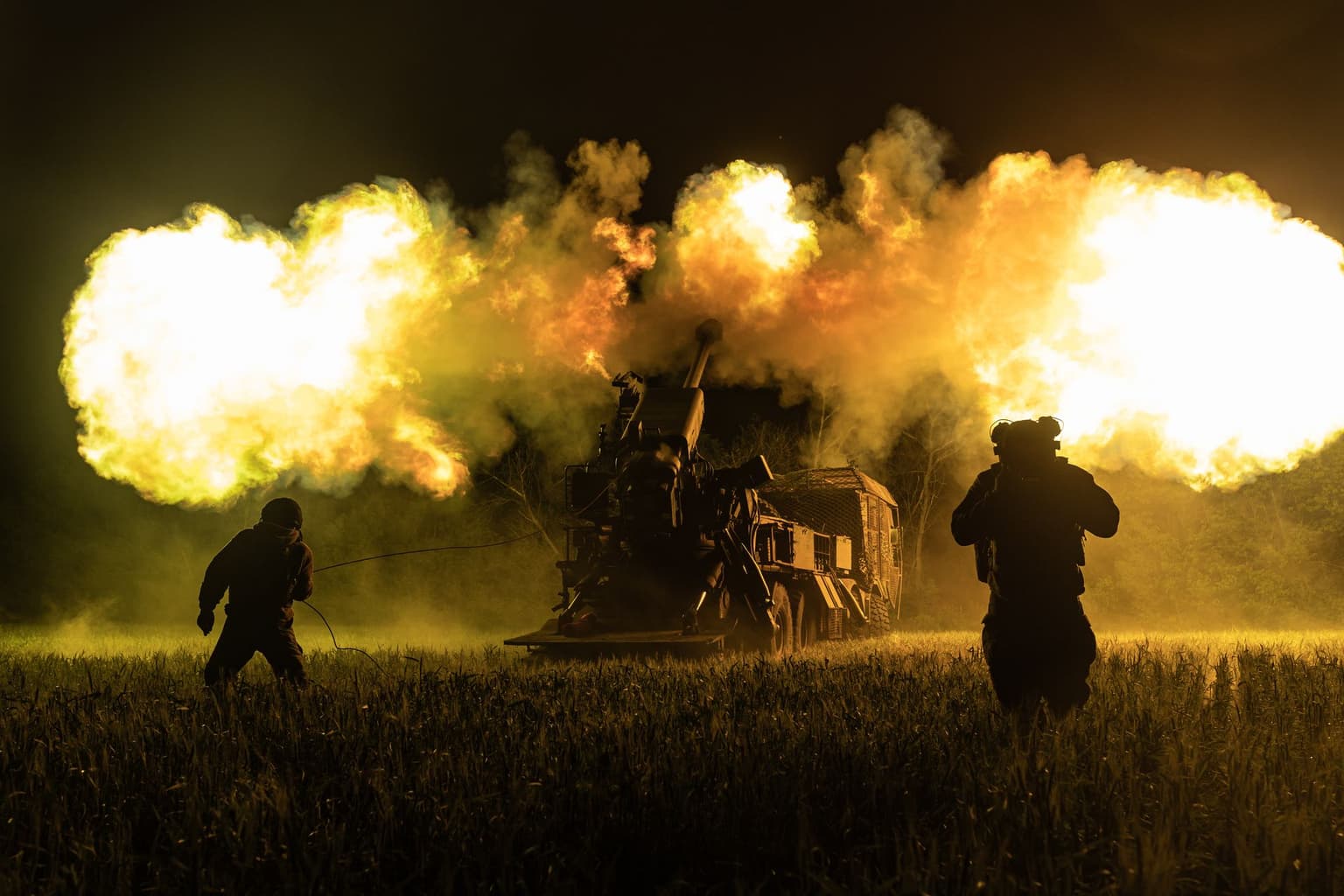
Ukrainian soldiers from the 30th Brigade fire a Bohdana artillery system at Russian positions in Donetsk Oblast, Ukraine, on May 31, 2026. (Diego Herrera Carcedo / Anadolu / Getty Images)
 on Google
Joni Askola
Finnish geopolitical analyst
A negotiated ceasefire that produces a de facto freeze of the war would be the worst outcome for Ukraine and the best outcome for Russia.
To understand why, one needs only to look at what the war itself is revealing. Moscow is on a losing trajectory, and a freeze would lock in conditions that let Russia avoid the political and economic costs of defeat, while denying Kyiv the space it needs to prevail and rebuild.
The human impulse to stop the fighting is understandable, but ending active combat without a credible, enforceable pathway to a durable settlement would institutionalize aggression and consign Ukraine to prolonged insecurity.
On the battlefield, the picture has shifted in Kyiv's favor. Over recent months, Ukrainian forces have regained the strategic initiative.
The growing use of mid-range strike drones and precision fires has allowed Kyiv to target logistics hubs, rear areas, and lines of communication, complicating Russian supply chains and blunting the prospect of sustained advances.
Russian loss ratios are rising, and unit competence is eroding when recruits reach the front after only days of training. Moscow still does not control any of the regional capitals and special-status cities it sought to subdue, and its proclaimed strategic aims remain out of reach.
Got an opinion on anything you've read in the Kyiv Independent so far?
and it may appear in our Letters section.
Moscow is farther from achieving its strategic goals now than in March 2022, leaving Russian President Vladimir Putin in a difficult strategic position. He faces four broad options.
One is to negotiate an end to the war. That would amount to a political defeat for Moscow. While its forces still retain the capacity to fight, it is highly unlikely for the Russian leader to choose political defeat. He must be forced.
A second option is to continue the current attritional strategy and hope that time, exhaustion, and Western fatigue produce a favorable outcome. Postponement or maintaining the status quo are plausible options, as Mr. Putin has repeatedly delayed decisive decisions. But the current trajectory is unsustainable.
A third option is to freeze the conflict. A freeze would create a de facto partition, preserve Moscow's gains without formal annexation, and, if paired with a ceasefire, remove one of Kyiv's most effective asymmetric levers. This seems by far to be Russia's best bet.
"If Europe is serious about long-term security, it must make clear that any ceasefire is only a first step on a credible, enforceable road to a durable settlement."
The fourth option is escalation, potentially including further mobilization, hybrid operations in Europe, or other measures. Escalation is dangerous and unpredictable, but it remains plausible if Moscow concludes that postponement no longer serves its interests.
From Moscow's narrow perspective, a freeze makes strategic sense.
It reduces the fiscal and manpower costs of active campaigning, allows Russia to consolidate control over occupied areas without the political pain of demobilization, and provides a perpetual pretext for authoritarian rule at home.

It also robs Ukraine of a key asymmetric advantage. Strikes on logistics and energy infrastructure have been central to Kyiv's strategy of imposing costs on Russia and degrading its ability to sustain operations. A ceasefire would blunt that strategy and make reconstruction and governance in Ukraine far harder.
For Ukraine, the consequences would be catastrophic. Funding for reconstruction would be harder to mobilize, governance would be fractured by insecurity, and millions of displaced people would remain in limbo.
Politically, Kyiv would be forced to manage a permanent emergency economy and precarious sovereignty. International support would be harder to sustain if the conflict is presented as frozen rather than as a war that can be won or decisively resolved.
A freeze would be inherently precarious because Moscow would still have the means to reignite large-scale hostilities quickly if it judged the political moment favorable.
It is therefore absolutely crucial for the continent's long-term security that European policymakers recognize the danger a frozen conflict represents.
The temptation to accept some form of ceasefire for the sake of ending the fighting is understandable; the human cost of the war has been immense. But a pause that leaves the underlying political settlement unresolved would reward aggression and institutionalize Ukraine's subordination.
It would also signal to other revisionist powers that territorial conquest can be consolidated through coercion and then normalized by diplomacy.
If Europe is serious about long-term security, it must make clear that any ceasefire is only a first step on a credible, enforceable road to a durable settlement.
That road should include restoration of Ukrainian territorial integrity, mechanisms for accountability, including war reparations, guarantees for the return of prisoners, and an explicit Russian recognition of Ukraine's sovereignty and the legitimacy of its government before any pause.
Editor's note: The opinions expressed in the op-ed section are those of the authors and do not purport to reflect the views of the Kyiv Independent.