Interview: Commander of Ukraine's Special Operations Forces' resistance movement

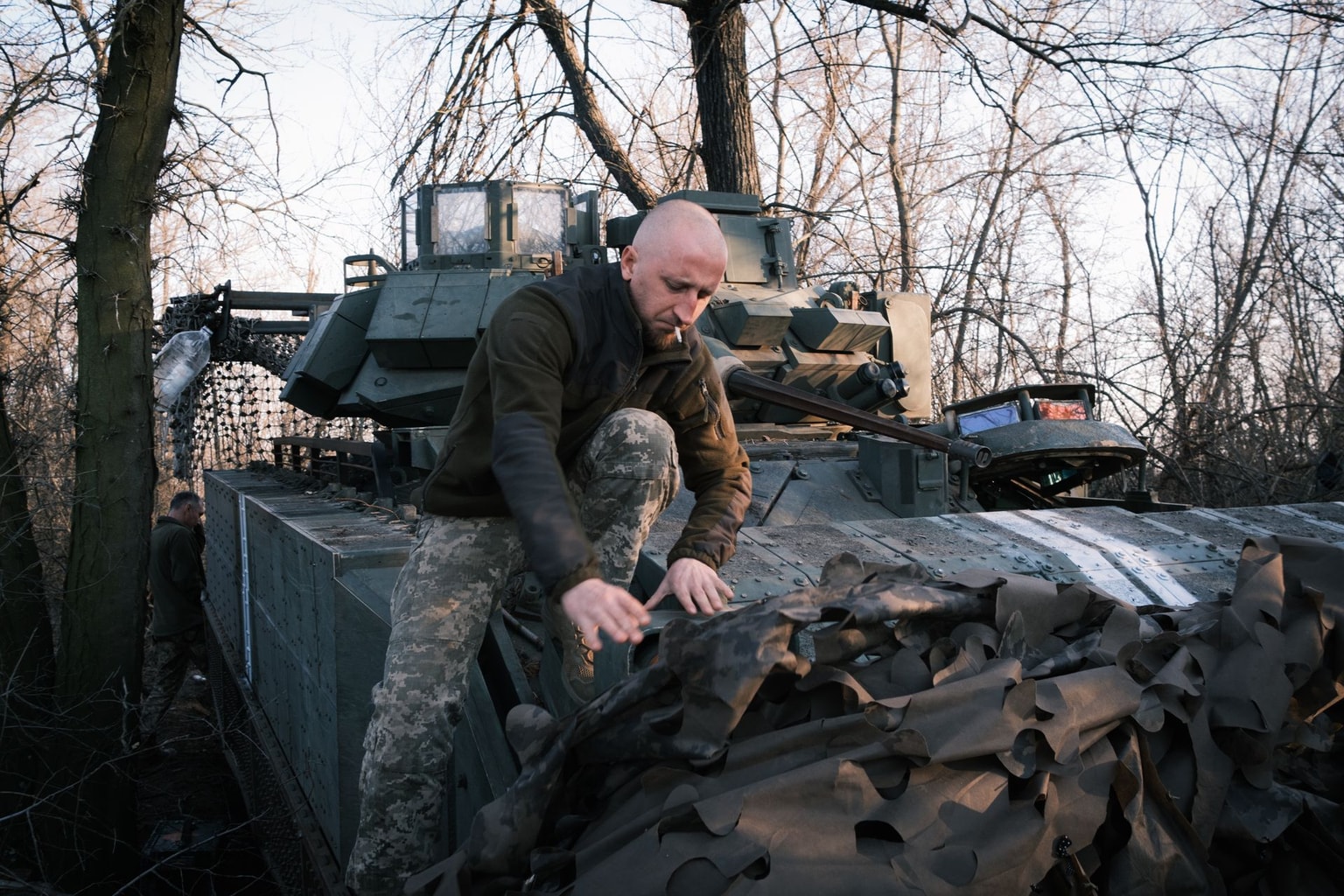
Soldiers of the Shaman battalion train inside an abandoned building at an undisclosed location in Ukraine on April 1, 2023. (Serhii Mykhalchuk / Global Images Ukraine)
 on Google
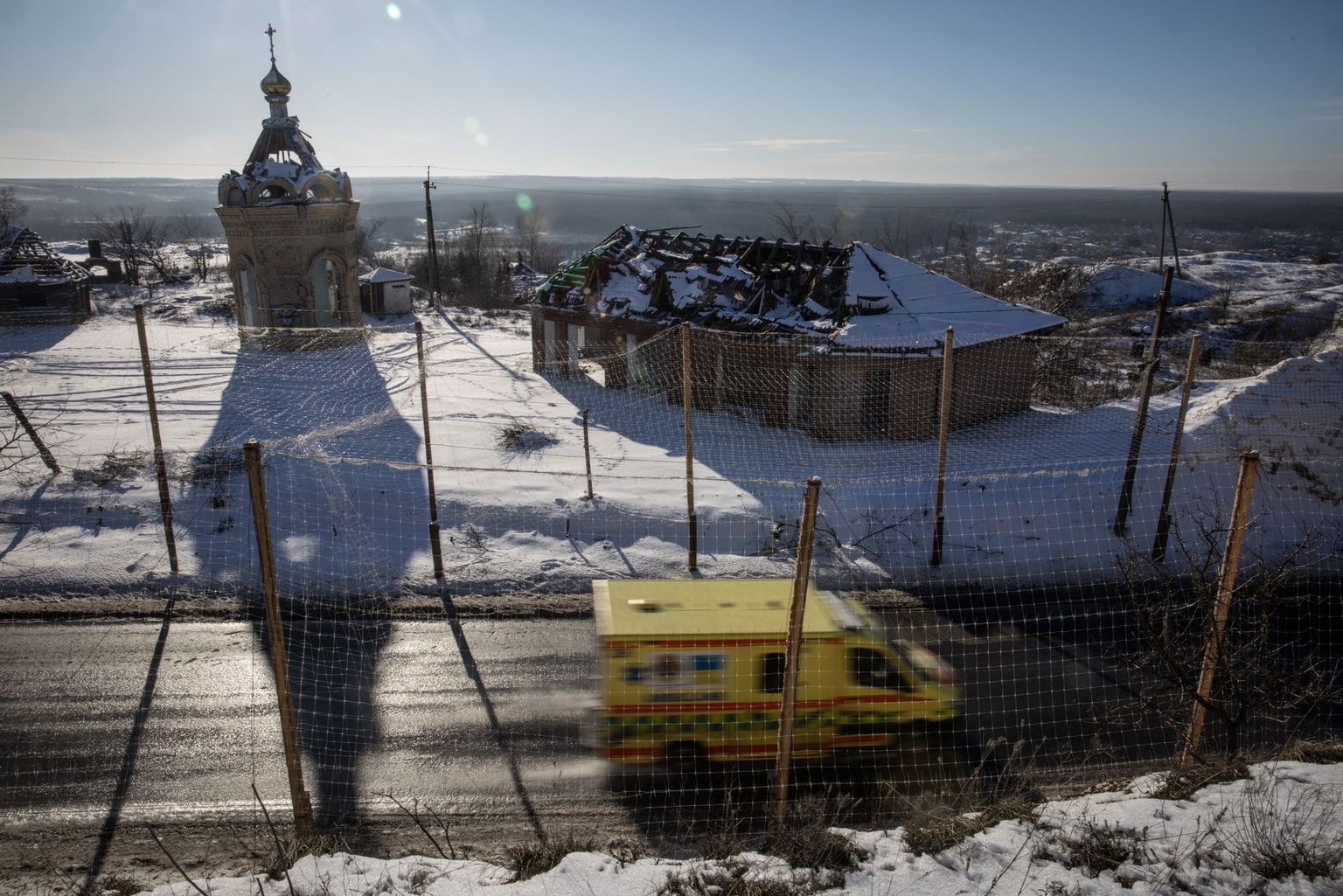
Resistance under Russian-occupation is beyond dangerous — even the smallest sign of supporting Ukraine can result in imprisonment, torture, and even death.
The list of documented war crimes against Ukrainians in Russian-occupied territories is near-endless. Men are forcibly mobilized into Russia's army and forced to face the guns of their fellow countrymen. Sexual violence against women is used by Russian soldiers as a weapon of war. Children are either abducted, or forced into military camps and indoctrinated to fight against Ukraine in the future.
And yet Ukrainians in Russian-occupied territories continue to choose to risk everything in the name of defiance. And one of the options open to them is to join a resistance movement run by Ukraine's Special Operations Forces (SOF).
In an interview with the Kyiv Independent, a commander of SOF's resistance movement shared insights into how it operates under Russian occupation.
This interview has been edited for length and clarity. The identity of the commander has not been disclosed for security reasons.
The Kyiv Independent: What exactly is the SOF resistance movement and when and why did it appear?
Commander: In general, the resistance in Ukraine appeared a long time ago, ever since Ukrainians have started to fight for their independence, especially against Russia. The SOF resistance movement appeared in Ukraine in 2016, when the SOF was created.
Its purpose was to involve as much of the civilian population as possible in the fight against Russia, and especially that part of the population that, for different reasons, remains in the occupied territories.
Essentially, our goal is the same as that for all the other Armed Forces of Ukraine and of the Ukrainian people as a whole — to drive out the Russian army and their occupational authorities from our territories, thereby restoring our territorial integrity and defending our sovereignty.
The Kyiv Independent: What are the main methods and forms of resistance you use?
Commander: We essentially use classic methods both violent and non-violent. We train civilians to use small arms and special improvised explosive devices, which they use to destroy the enemy in the territories occupied by Russia.
We also widely use non-violent forms to influence Russia's military, to intimidate them in various ways and disrupt their efforts. And also to encourage our citizens who remain under occupation to fight the enemy or to intimidate those who collaborate with the Russians.

The Kyiv Independent: How do you train people who are under occupation?
Commander: Some of the people we involve were trained even before the full-scale invasion of Ukraine and they just remained in the occupied territories. Now they use the skills and abilities they acquired before the invasion to carry out our tasks.
We also trained people back when there was still an opportunity for people to move across the front line.
The Kyiv Independent: You say that anyone can join your movement, even teachers — how can they specifically help?
Commander: First of all, not just anyone can join us. We don't work with minors, we don't work with people who are ill. And if we understand that a person, based on their interviews, has a certain motivation, certain capabilities...
But a particular feature of our resistance movement is that every person, regardless of profession, can be involved in the resistance movement. And in one way or another, they can contribute to carrying out tasks or carry them out directly.
"Many people also join out of revenge, because their innocent relatives were killed. Their property has been destroyed by tanks and shells, with no justification."
For example, that same teacher, by carrying out lessons at school with children, can provide proper upbringing — give the right messages to young people who, in the future, will live there and understand that they need to wait out the time while the occupation lasts. And not succumb to manipulation by the Russians.
We also try to protect people in every way possible because there are actually fewer and fewer of them left there.
The Kyiv Independent: What is the main motivation of people who join the resistance movement?
Commander: Primarily, people's motivation is rejection of Russians on our territories.
Every conscious person understands what they came here for and sees what they are doing. Those who are older or middle-aged understand and know from history what the presence of the Soviet Union on our territory meant. And of course, no one wants the Soviet Union 2.0.
Let alone young people who are used to living freely, making free decisions about how to live, where to live, without instructions from the Kremlin. Of course, they do not want this and they understand that freedom must be defended.
Many people also join out of revenge, because their relatives were killed, or their property has been destroyed by tanks and shells, with no justification.

The Kyiv Independent: Can you tell us the main reasons why people decide to stay living under occupation?
Commander: Mostly these are people who are tied to certain material resources. People who had businesses there, people who had land, people who had real estate. Many have elderly parents and they didn't leave in time, and now it is difficult to leave.
Some thought it would end quickly, but it did not end quickly. And now, even if someone wanted to leave, there are no resources to do so, for example, with all their property. Or they have nowhere to go. These are the main reasons why people stay.
"We are patient."
There are also cases when people stay in order to be part of the resistance movement in the occupied territories. They secretly evacuate their families to Ukrainian-controlled territory over time or even to the territory of the Russian Federation, while they themselves stay and continue to carry out tasks.
The Kyiv Independent: Do Russians also join your movement?
Commander: Many Russians contact us through our channels. They also already have motivation. We see that now it is mostly hatred toward (Russian President Vladimir) Putin, his regime, and how people perceive their future and understand that they do not see it in the Russian Federation.
They understand that Russia is becoming isolated, that they are being shut in, and people understand that if this is not stopped, they will simply end up like North Korea someday. Just with a larger territory.
We mainly cooperate with those Russians who, in one way or another, ended up in our occupied territories, and with those Russians who want to organize their own resistance movement — we provide consultations on how to do it properly.
But it must be their own expression against their authorities. We have enough work of our own.
The Kyiv Independent: Have Europeans or militaries from other countries contacted you to exchange experience, or get assistance?
Commander: Yes, this is now a separate area of our work. We have partners not only from the West, but also from the East, who want to apply our experience in their own countries. So that in the future they can take it into account when some large country with large resources attacks a country with smaller resources.
In fact, the resistance movement is the asymmetric toolkit for the weaker to fight against the stronger. There are historical cases we remember, like how the Soviet invasion of Afghanistan ended.
Reasonable countries understand this. They come here and we share that experience. Especially with the countries around Russia. You don’t have to be a great strategist, like Brzezinski or Kissinger, to understand what is happening and who will be next.

Therefore, we see activity from Lithuania, Estonia, and Finland. That is, those countries that are already facing Russia’s hybrid attacks.
Since these are small countries, they rely both on symmetric response from NATO as a whole and also on asymmetric response from civilians who will, in one way or another, remain in occupied territories. We understand that if there is an invasion and there is no resistance, then we have given up, and no one will support a country that gives up on itself.
The Kyiv Independent: Will your resistance continue in case Russia will maintain the control of the occupied territories as a result of the peace negotiations?
Commander: In any scenario, we will fight until our territories are liberated. Whether this is with support or without support from our partners, whether they recognize these territories as Russia’s or not. That does not depend on them.
It depends solely on us, Ukrainians, who remain here in Ukrainian-controlled territory and those citizens who remain in the occupied territories.
Alongside our organized resistance movement, we often see examples of self-organized resistance — when citizens themselves obtain weapons and resist in one way or another without contacting SOF or intelligence services.
The Kyiv Independent: What is the current situation under occupation?
Commander: Many cities under occupation are already empty. The Russians simply burned everything living and non-living there. They turn cities into concrete wastelands.
So it becomes harder to carry out tasks because there are simply fewer people. But we are patient. The number of tasks decreases as more time must be devoted to the preparatory stage.
But we deliberately continue this work, and we approach selection more carefully, so as not to waste our efforts. But our work continues, and it will continue as long as there are people there.
The Kyiv Independent: If you had the opportunity to personally speak with Vladimir Putin, what would you tell him?
Commander: I'd tell him to leave us alone.
Watch the full video on the Kyiv Independent Youtube channel.