How can foreign defense manufacturers benefit from Ukraine’s Defense City regime?
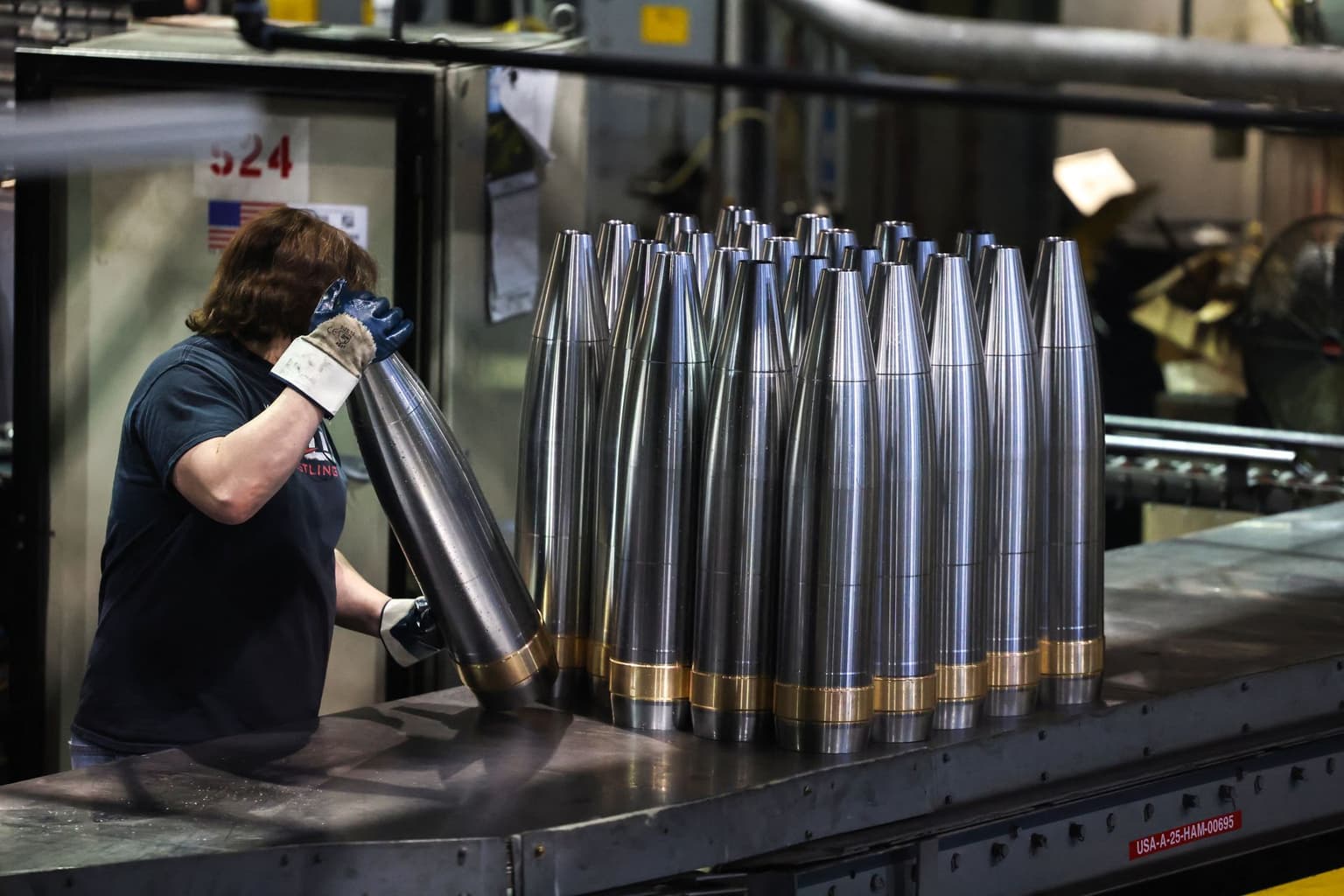
An employee handles 155 mm artillery shells after the manufacturing process at the Scranton Army Ammunition Plant in Scranton, Pennsylvania, United States, on April 16, 2024. (Charly Triballeau / AFP via Getty Images)
 on Google
Vladyslav Bandrovsky
Senior associate at Sayenko Kharenko law firm
This January, Ukraine's long-awaited Defense City regime has finally come into operation.
The first company to obtain resident status was SkyFall, a manufacturer of drones and Shahed interceptors.
This special program, similar to the IT-focused Diia City, is designed to entice defense companies with a package of tax breaks and regulatory relief.
It has already started drawing attention from major international arms manufacturers, especially as Ukraine has become a testing ground for advanced defense technology during the war.
The idea of a decade-long tax break and streamlined export rules is enticing. However, the reality is that for a foreign defense producer, obtaining Defense City status will not be quick or automatic — it demands significant commitment and planning. The good news is that with a long-term strategy, it is realistically achievable in time.
So, what exactly does Defense City offer? In broad strokes, resident companies get a special status and up to ten years of generous incentives. This includes an exemption from corporate profit tax (provided the profits are reinvested locally), as well as zero property, land, and environmental taxes. Defense City firms will face simpler customs procedures, lighter export controls, and even enjoy distinct currency regulations to ease operations.
The government also promises state support if facilities need to relocate to safer regions. For security, information about these companies, their assets, and intellectual property will be hidden from public registers during the war and for a year afterward. Yet unlocking those perks requires becoming deeply invested in Ukraine.
A realistic timeline for foreign manufacturers
For most foreign defense manufacturers, Defense City is not an entry-stage incentive but a short-term to mid-term goal.
The law makes it clear that a company cannot simply come to Ukraine and sign up on day one. Instead, Defense City is a status earned over time.
A realistic timeline for a large foreign firm might look like this: spend year 2026 establishing a Ukrainian subsidiary, localizing production, and building a track record of sales; then, from 2027 onward, potentially reap Defense City benefits if all criteria are met by the end of 2026.

In practical terms, a newly formed Ukrainian entity would likely need at least a full calendar year of substantial defense-related revenue before it can apply.
Many Western defense companies are already partway along this path — they maintain representative offices, joint ventures, or local partnerships in Ukraine. For example, U.K.'s BAE Systems established a Ukrainian subsidiary in 2023 and signed agreements to localize artillery works. For such players, the challenge is not market entry, but scaling an existing presence to meet Defense City thresholds rather than starting from scratch.
The main path: Localize and qualify
The primary route to Defense City status is straightforward in concept: greenfield localization.
That means establishing a legal entity under Ukrainian law — foreign-incorporated companies are not eligible — and localizing production or service delivery in Ukraine. The company then needs to generate defense-related revenue within Ukraine.
The most important benchmark is the qualified income threshold: at least 75% of the company's total income must come from the sale of its own defense products or services (this drops to 50% for certain aircraft manufacturers).
Defense City seeks to remove at least one layer of this bureaucracy.
This route clearly favors large manufacturers with the capital, scale, and patience to commit to Ukraine. Such companies can afford to invest in local facilities and wait out the qualification period.
For a smaller defense tech startup or a company merely testing the market, the bar might be too high. Defense City is essentially rewarding firms willing to become, in a real sense, a Ukrainian defense producer, not just a foreign exporter with a postbox in Kyiv. Even when a company qualifies, the tax break has conditions: all exempt profits must be reinvested in Ukraine's defense sector.
Buying in: The brownfield shortcut
Potentially, there is an alternative route to Defense City, which is acquiring an existing Ukrainian defense business that already meets (or is close to meeting) the eligibility criteria.
This brownfield acquisition approach could, in theory, fast-track a foreign manufacturer's access to the market. By buying a local company that has, say, 2026 financials with 75% defense income, a foreign investor might hope to inherit Defense City status or at least qualify much sooner than a greenfield project would.
There are clear pros to this strategy. First, an acquisition offers an immediate operational base: an existing factory, workforce, and contracts. From a timing perspective, this could shave off years compared to building a new business from scratch. In addition, the local company's relationships with the Defense Ministry and other industry players are valuable intangible assets that a newcomer would otherwise have to cultivate over time.

That said, the cons and risks of the brownfield route are significant. Ukraine’s defense enterprises can come with heavy baggage. Due diligence will be crucial: there may be hidden debts, compliance issues, or even latent legal liabilities (for example, related to past contracts or export control violations).
Valuing a defense company in a wartime economy is also challenging. How do you price future earnings when the country is at war and rules are evolving?
Moreover, an acquisition might need government approvals, and sensitive assets might be subject to restrictions. This route will most likely appeal to sophisticated investors or industry giants comfortable with M&A in complex environments.
Exports and other perks: Easier, not easy
A major selling point of Defense City is the promise of smoother export operations.
Under Ukraine's standard rules, exporting locally produced weapons can involve a mountain of paperwork and multiple levels of approval, including a special authorization from the Cabinet of Ministers for each shipment.
Defense City seeks to remove at least one layer of this bureaucracy. In fact, the new law allows Defense City residents to export military goods without needing that individual Cabinet green light.
That said, "easier" does not mean "easy."
Even with Defense City status, companies must still comply with Ukraine's overarching export control regime and international obligations. Export licenses from the State Service for Export Control will still be required for actual shipments, and all the standard checks on end-users and product classifications remain in force.
In practice, a large manufacturer with robust compliance systems should find it much less frustrating to ship from Ukraine under Defense City, as long as they play by the rules.
Over time, if Ukrainian authorities deliver on promises, we can expect a special coordination mechanism to ensure Defense City firms' export requests are handled efficiently.
Editor’s note: The opinions expressed in the op-ed section are those of the authors and do not purport to reflect the views of the Kyiv Independent.