Consolidation and capital: The new era of Ukrainian defense tech
Consolidation and capital: The new era of Ukrainian defense tech
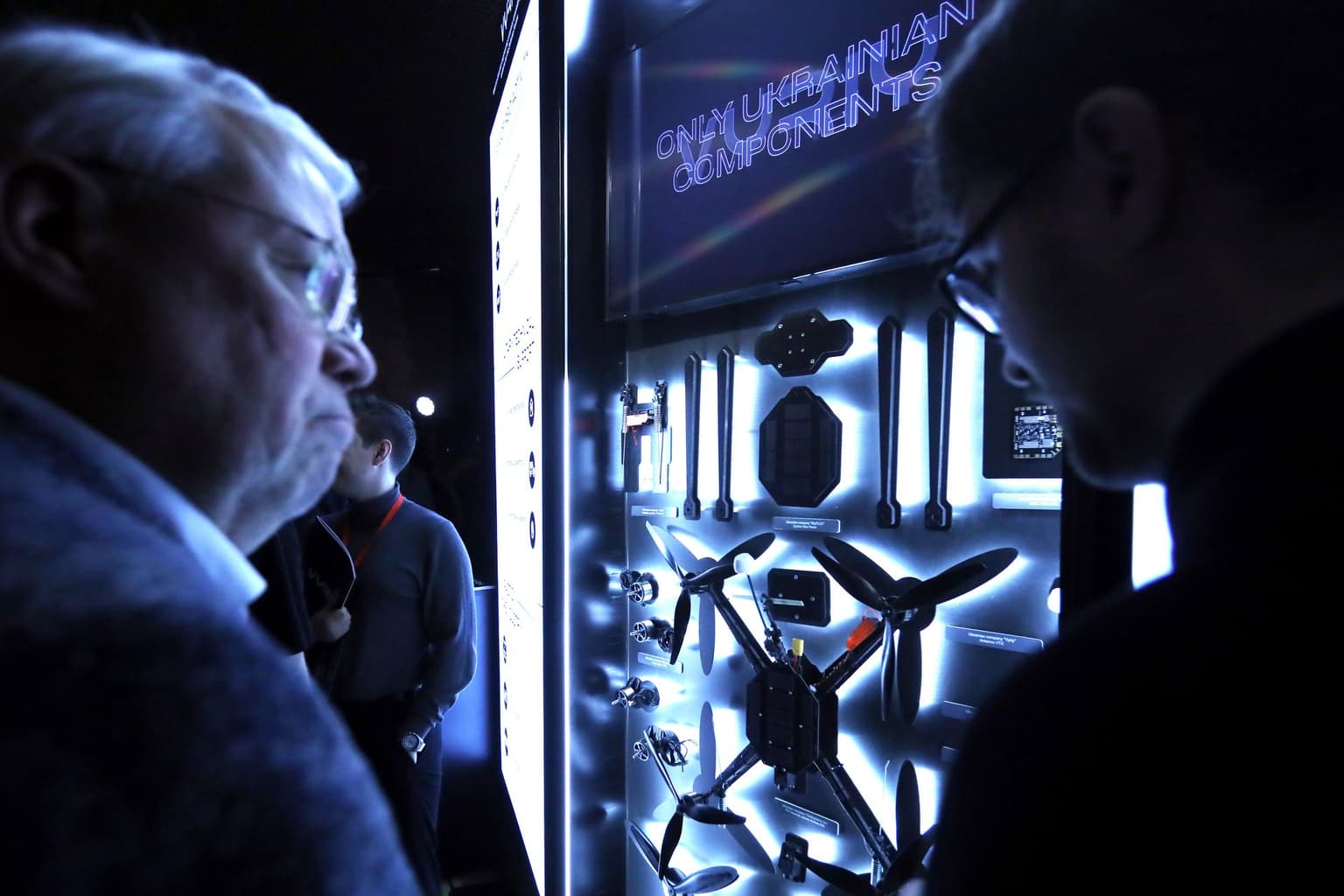
People look at drone parts displayed at the exhibition of Ukrainian components for defense technologies during the Brave1 Components event in Kyiv, Ukraine, on Dec. 3, 2025. (Oleksandr Klymenko/Ukrinform/NurPhoto/Getty Images)
 on Google
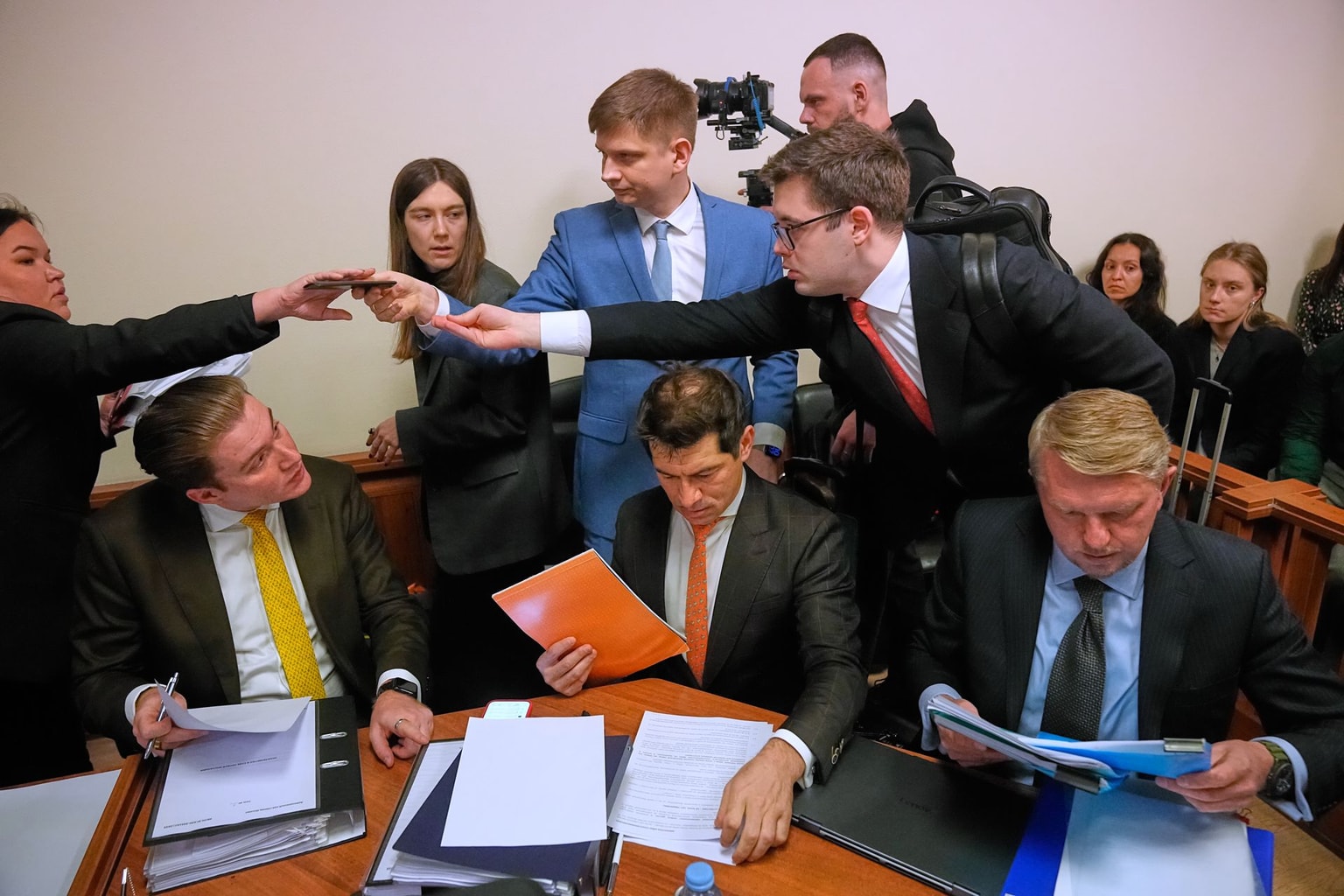
A party at a swanky downtown Kyiv restaurant feels a world away from the front lines of Russia's war against Ukraine. Yet its guests — defense analysts, consultants, and arms producers — are nonetheless shaping how the war is fought.
The event's host was Skadi Law, a new firm focusing exclusively on Ukraine's fast-growing defense tech sector. Its arrival is not an isolated story, but part of a broader trend: an expanding network of venture capital funds, accelerators, consultancies, and media companies springing up around the industry.
"The size of the pie is increasing, and there's work for everyone — the Ukrainian defense ecosystem has so much to offer," Damien Magrou, managing partner and co-founder of Skadi Law, told the Kyiv Independent in an interview after the event.
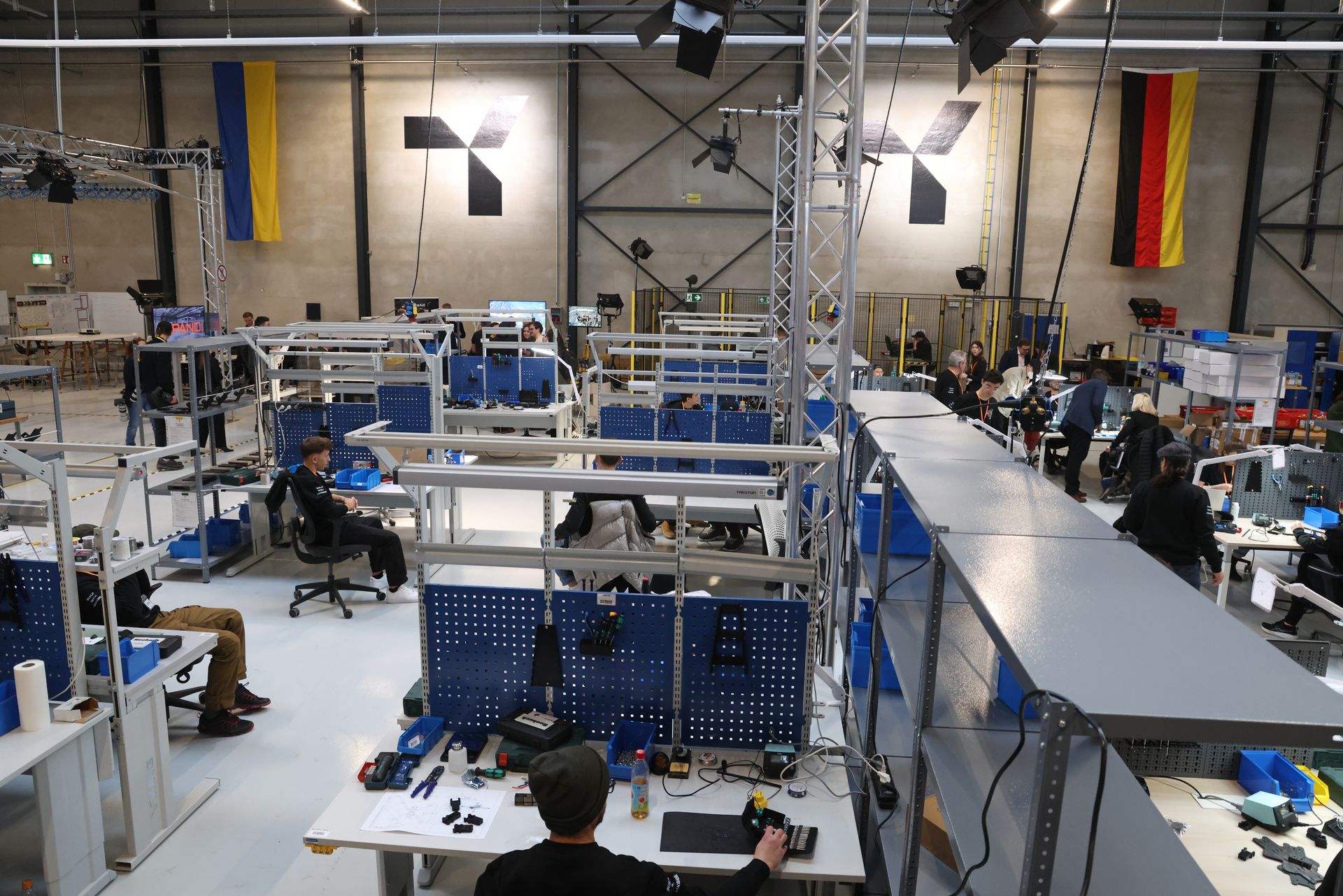
Once a patchwork of IT engineers building crude drones at home, the sector's rapid evolution points to a new phase — one defined by consolidation, as larger and more professional companies emerge, attract investment, and scale production.
"What I can see is a market maturing — everything points in that direction," Magrou said.
With four years of full-scale war giving the industry time to mature, and a new war in Iran adding further momentum, the growth could lay the foundation for the sector to become a pillar of Ukraine's post-war economy.
A recent wave of deals highlights how rapidly the transformation is unfolding.
In March alone, drone AI startup Swarmer became the first Ukrainian defense tech firm to list on NASDAQ, Interceptor drone producer General Cherry signed deals for production sites in the U.S., and President Volodymyr Zelensky signed 10-year defense deals with three Gulf countries amid the war in the Middle East.
The same month, dual-use company Sine Engineering was selected as the first project for the U.S.-Ukraine Reconstruction Investment Fund, the result of last year’s 'minerals deal,' signaling Washington's growing view of Ukraine's defense tech sector as strategic.
Despite this growth, significant questions remain around export and profit margin restrictions in Ukraine, as well as government interference, all of which could hamper future development.
"I will do everything in order not to move abroad. If you asked me one or two years ago, I would say no, but now I'm thinking about it," one defense firm, who agreed to speak on condition of anonymity to discuss matters freely, told the Kyiv Independent.
"I want to develop, but we have these limitations in terms of margins, R&D investments, and foreign investments. It’s much easier to attract investments in the U.K. than in Ukraine."
From makeshift to mass production
Ukraine’s defense tech market, archaic and underfunded before 2022, was valued at $6.8 billion this year by the Kyiv School of Economics (KSE) — around six times larger than in 2021.
Some estimates put the current number of private defense companies as high as 1,200 — more than double 2023 figures — with the capacity to produce $50 billion worth of weapons.
Ukraine produced around 4.5 million drones last year — up from 300,000 in 2023 — with most being small first-person view (FPV) drones. Meanwhile, the U.S., the richest army in the world, plans to produce only 300,000 small drones over two years.
Accelerators and incubators have been central to that growth, like the government-backed Brave1 platform, Alexander Ulanovych, a partner at headhunting firm Amrop Ukraine, told the Kyiv Independent. It has helped firms like drone giant TAF Industries scale production to over 80,000 drones a month.

Once heavily dependent on its foreign partners for weapons, Ukrainian companies made up 82% of suppliers to the army last year — a massive jump from 46% in 2024 — providing over half of the army’s weapons. And that’s without any Ukrainian primes — the industry term for major defense companies like Raytheon.
"We have a lot of opportunities right now. All you need is a good idea and a team that is eager to develop something useful," Andriy Bandrovskyy, co-founder and CEO of RendRock Ukraine, a miltech firm producing drone ammunition, told the Kyiv Independent.
In practice, only a few dozen are actually market-ready, said Jan-Erik Saarinen, co-founder and CEO of Double-Tap Investments, a defense tech investment firm founded in 2024. Just a handful of firms make up 80% of total drone production, he added.

That concentration has set the stage for consolidation, with bigger companies acquiring smaller ones and firms merging — a process long expected. And while that means some players disappear from the market, the result is larger, more valuable companies able to absorb heavier investments over $20 million, something that wasn't possible two years ago, said Saarinen.
A more consolidated market is also in line with the Defense Ministry's efforts to narrow down what it called the "drone zoo" last month and eliminate inefficient companies. Some of them continue to waste resources on outdated products that the army doesn't need, Bandrovskyy said.
It also brings Ukraine closer in line with many European countries, which typically have a few prominent arms manufacturers.

Too few options
But many in the sector are not happy with the narrow group of companies coming out on top. Some in the industry complain that the big state contracts only go to a select few with government ties, leaving scraps for the rest.
"The issue is that large parts of the industry are now basically a patronage network. State orders do not go to the companies with the best product or best value for money, but to select companies that are friends with those in government that often sell suboptimal or overpriced gear," an industry insider told the Kyiv Independent on condition of anonymity to discuss sensitive matters.
The sector risks becoming an oligarchic swamp — where expanding personal influence matters more than good business, they said.
Meanwhile, companies are caught in a capital drought, stuck selling to the Ukrainian military at a maximum 25% profit margin, with Kyiv showing little appetite for loosening export controls that would ease sales abroad.
"We cannot grow or invest in R&D, and this is made worse by export limitations. If we were allowed to sell abroad and overcome this margin limit, it could be very beneficial," a defense tech firm, speaking under the condition of anonymity, told the Kyiv Independent.
Foreign interest
Despite export and profit restrictions, investment skyrocketed from $28.7 million in 2024 to $129 million last year, supercharged by foreign capital, according to KSE. The actual amount is likely far higher, but deals are often undisclosed for security reasons.
Investors are mostly backing trends in Ukraine’s software, said Saarinen. AI and unmanned technology that allows pilots to control multiple vehicles are "super hot right now," he said.
The big primes could soon start buying up "innovative and agile" Ukrainian startups that have realtime battlefield experience amid warfare’s constantly evolving landscape, he added.
The standout breakthrough has been Swarmer, the first Ukrainian miltech company to go public after listing on NASDAQ in March. Its shares have climbed over 48% since debuting last month, underscoring investor appetite for Ukrainian defense tech.
Last week, Tokyo-headquartered drone company Terra Drone became the first Japanese firm to invest and partner with a Ukrainian defense tech producer — Amazing Drones. The Japanese company wants to scale Ukrainian interceptor drones, as tensions between Tokyo and Beijing simmer.
Several deals with U.S. firms were also negotiated last month during Brave1’s America tour. Alongside 17 top companies including General Cherry, Sine Engineering, and TAF Industries, Ukraine exhibited interceptor technology, electronic warfare, and swarm technology.

The details won’t be announced until September, Brave1 said.
Big names are entering the sector too. Netflix co-founder Reed Hastings joined UA1, a joint U.S.-Ukraine venture capital fund backing Ukraine’s weapons innovation. It aims to secure $50 million in its first round.
Investors are also keeping in mind how this technology can be used in a civilian setting, said Saarinen. There’s a lot of trust in Ukrainian engineers that post-war, they will be able to pivot from saving lives on the frontline to solving civilian problems, he added.
But in order for the defense tech industry to thrive post-war, Ukraine needs to retain its skilled workforce, said Nataliia Mykolska, executive director of Diia.City United, a government-backed tech business association.
That means creating incentives to convince foreign investors to keep teams in Ukraine, she said. Programs like Diia.City are already offering special tax incentives and instruments for foreign investors, which have proven successful in retaining Ukrainian talent, she added.
"Businesses are worried about human outflow. It's human-intensive and you need highly qualified people. Even if you have an AI doing a lot of simple tasks," she said.
Author's note:
Hi, it’s Dominic, thank you for reading this story. Ukraine's defense tech sector is entering an exciting new phase and there's going to be a lot of developments over the coming months. To stay on top of the news, please consider joining our community for as little as a cup of coffee a month.