Francis Fukuyama: What to expect in 2026
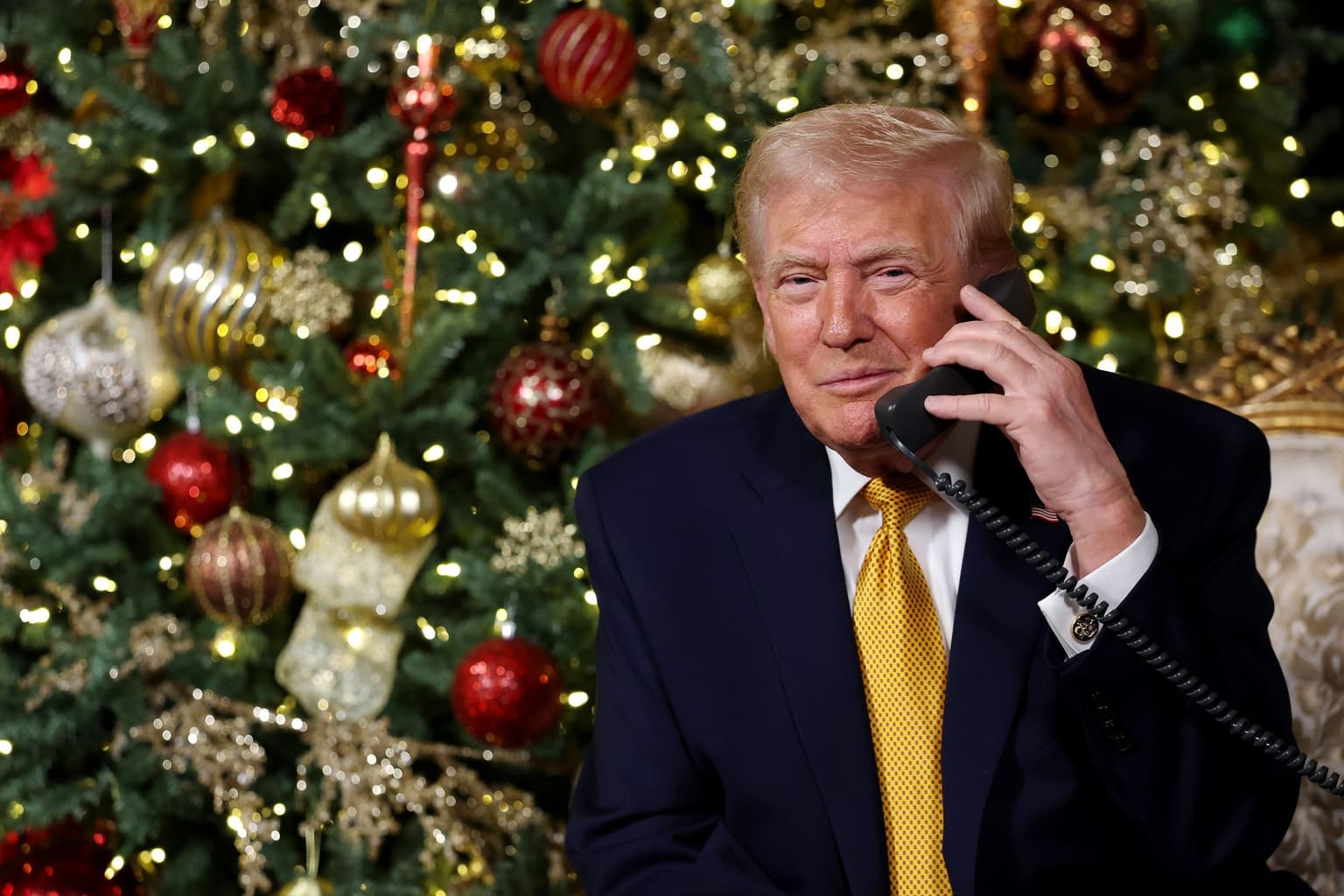
U.S. President Donald Trump calls children as he participates in tracking Santa Claus' movements with the North American Aerospace Defense Command (NORAD) Santa Tracker on Christmas Eve at the Mar-a-Lago resort on Dec. 24, 2025, in Palm Beach, Florida. (Tasos Katopodis/Getty Images)
 on Google
Francis Fukuyama
American political scientist, scholar, and book author
The single most important development that will unfold during 2026 are the U.S. midterm elections that will take place in November.
The world has seen a dramatic regression of liberal democracies worldwide over the past decade. Two large authoritarian powers, Russia and China, have tightened repression at home and projected their influence around the world.
But critically, their rise has been abetted by the growth of populist nationalist parties in many developed democracies. The most important of these is the United States itself, which over the prior 70 years had created and led a global liberal order.
The election of Donald Trump, first in 2016 and then a second time in 2024, has reoriented that global order in dramatic ways.
Trump’s America has in effect switched sides in the global struggle for democracy, making deals with authoritarian leaders and disdaining democratically elected counterparts in Europe and Asia. This dramatic shift has affected Ukraine first and foremost, with the US ending direct military support and promoting Russian war aims as it seeks a deal with Moscow over the heads of both Ukraine and the Europeans.
At home, Trump is behaving like an autocrat himself, disdaining legality and ruling through executive orders.
During the Biden administration, I and many other supporters of Ukraine lobbied the White House to be more forthcoming in both the level of aid, and the types of weapons being provided to Kyiv. That period ended decisively when Trump returned to the White House in January 2025. The disastrous meeting in the White House between Trump and President Volodymyr Zelensky in February signaled the new orientation the administration would take, and the U.S. president has not really deviated from his pro-Russian posture since then.
This has completely changed the agenda for Ukraine's friends in the U.S. It is no longer useful or possible to lobby for stronger American support when the administration is now siding with the enemy. Donald Trump is not driven by policy arguments or ideology, but rather by personal self-interest, often in the form of direct payoffs to himself and his family.
Ask the Swiss, who got themselves a lower tariff rate by giving Trump an expensive gold bar. Trump's primary interest in the current negotiation with Russia seems to be the prospect of exploiting Ukraine's resources and reintegrating Russia into the global economic order so that Americans could start profiting from investments there again.
The only way that an American can support Ukraine or democracy worldwide is to get Trump out of power. The American system of checks and balances has so far failed to constrain Trump, but it is premature to give up on it. In my view, Trump's influence peaked in the first half of 2025, and there are now clear signs that he is weakening.
The most important check remains elections, and there is strong evidence that the Democrats will retake the House of Representatives next November.
As a result of Trump’s mismanagement of the economy, many voters have soured on him. The off-year election held in November showed Democrats winning by substantial margins across the board. Already more than two dozen Republican members of the House have announced that they will not be running for re-election, primarily because they don't want to be in the minority after the midterms.

The scandal surrounding Jeffrey Epstein has damaged Trump among his core supporters. His tariff policy has been making life more expensive for ordinary Americans, even as he tries to assert that prices are actually going down. Trump will seek to distract people's attention by ramping up pressure on Venezuela and using military power around the world, but that is not why his core supporters voted for him.
If the Democrats retake the House of Representatives, they will hold hearings, subpoena Cabinet members, and investigate the monumental corruption being fostered by the current administration. They may even launch an unprecedented third impeachment process.
Since the economy is not likely to get better in the coming year, Trump's popularity, already in the 30s, will continue to fall. Trump himself is showing signs of mental deterioration as he posts maniacally on social media.
Unfortunately, a weakened Trump will remain in power for another three years.
Ukraine's situation vis-a-vis Russia is dire today, and it will be up to the Europeans to sustain it over the coming months. In the face of a truly horrible president, it is important to recognize that Americans by significant majorities continue to favor Ukraine over Russia, and are willing to resume support for it. As Republicans begin to lose their fear of Trump, it is not inconceivable that a pro-Ukraine majority could emerge in Congress.
As has been true throughout the Russian aggression, what happens to Ukraine is important not just to the citizens of that country but to liberal democracies everywhere.
The countries of Europe are coming under direct threat from Moscow, and there is slow recognition in many parts of the continent that their self-interest is directly engaged.
But global democracy will not survive if its once-leading proponent has itself become an authoritarian power. So what happens in American domestic politics has reverberations around the world.
Editor’s note: The opinions expressed in the op-ed section are those of the authors and do not purport to reflect the views of the Kyiv Independent.