Fact-check: Russia's 'most successful disinformation campaign' targets free speech in Europe
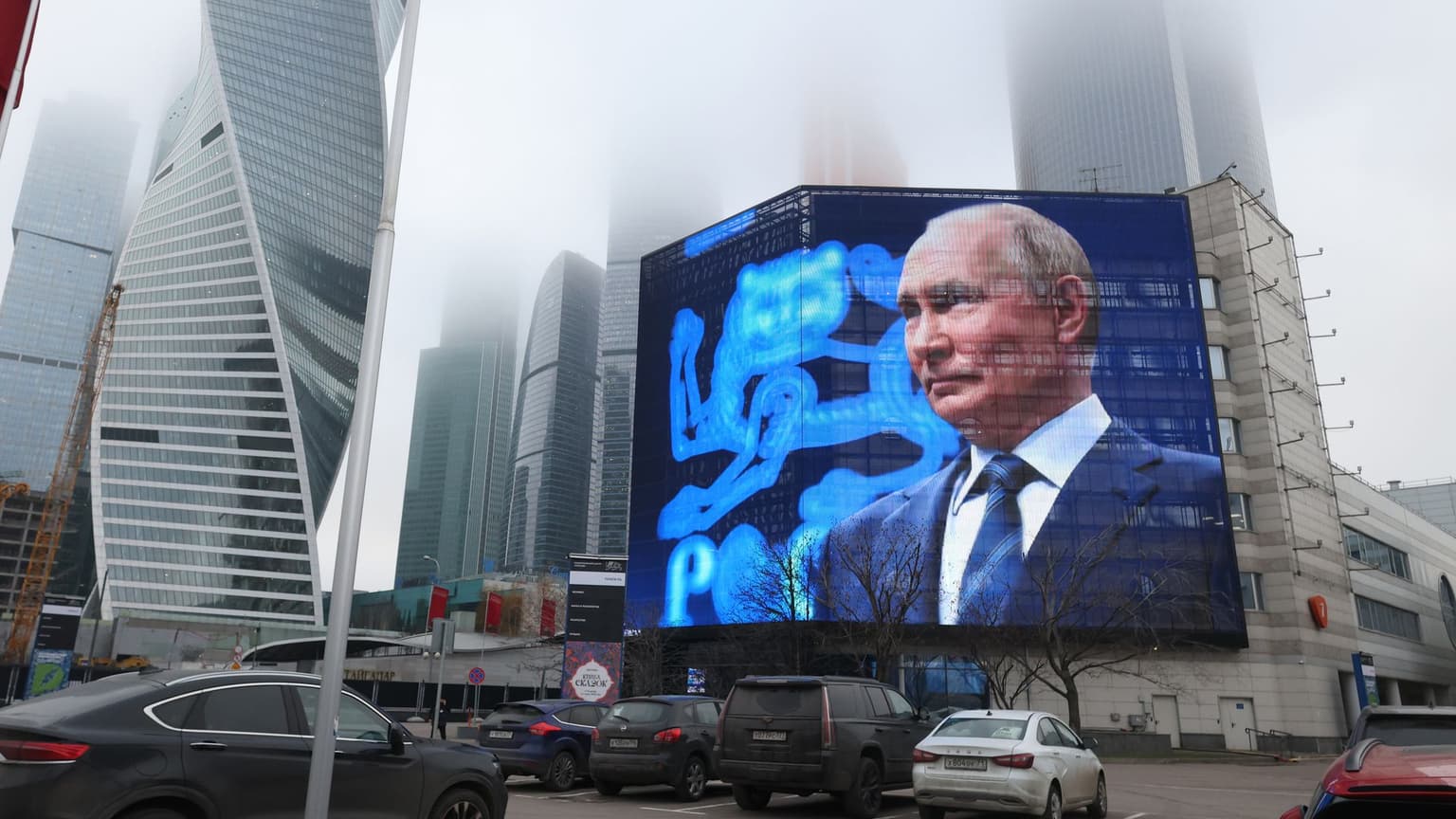
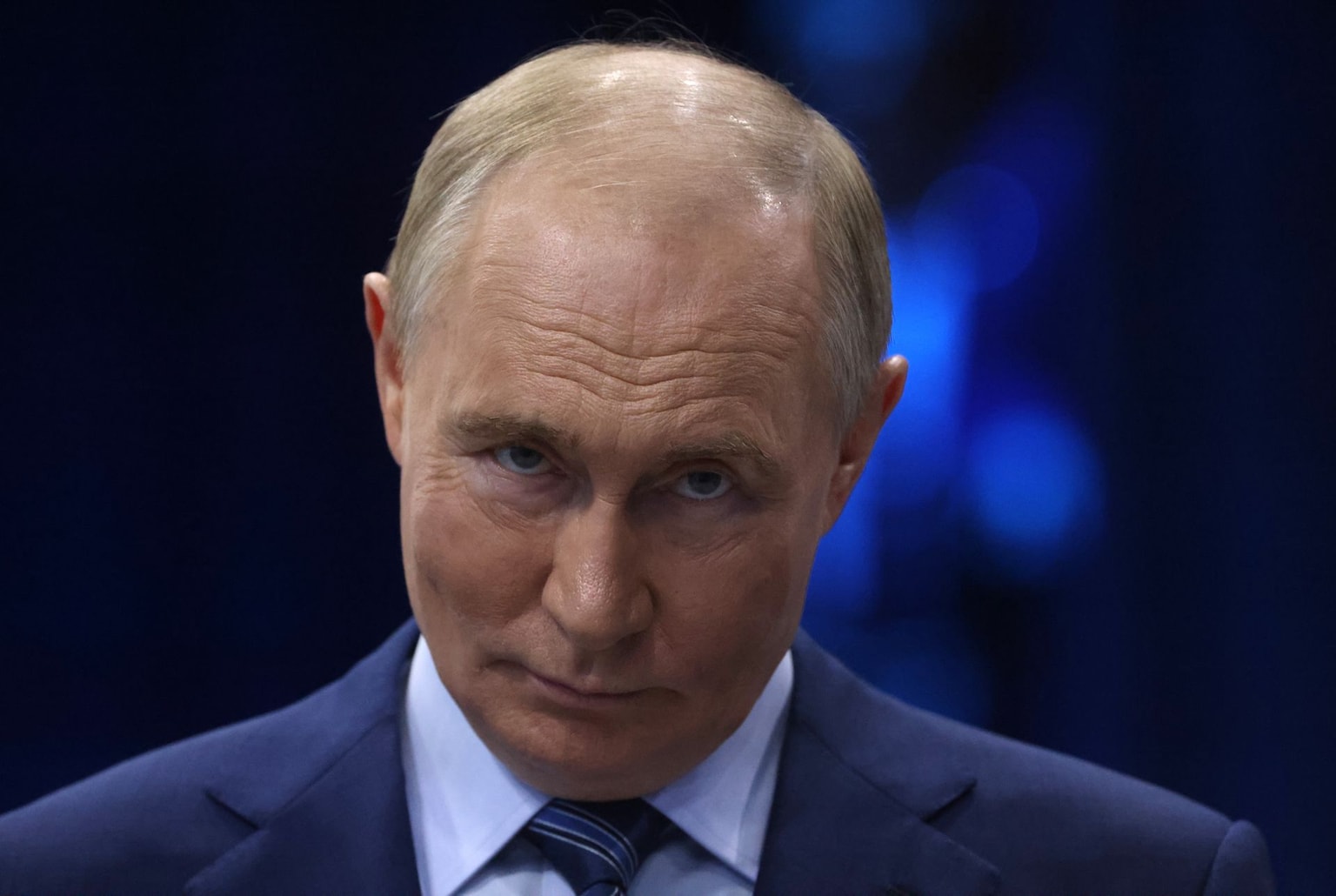
Russian President Vladimir Putin appears on a screen mounted on an office building against the backdrop of Moscow City skyscrapers in Moscow, Russia, on Dec. 1, 2025. (Contributor / Getty Images)
 on Google
Moscow's propaganda machine has been hard at work depicting Europe as a "digital gulag," hellbent on suppressing free speech online.
The latest campaign has targeted efforts by the U.K. and the EU to regulate X (formerly Twitter), even as the platform remains blocked in Russia, alongside Facebook, Instagram, and others.
Russian propagandists appear to be drawing on the ire of U.S. leaders and their ally, X's owner Elon Musk, who attack European legislation as "censorship."
Experts who spoke to the Kyiv Independent dismiss claims that the regulations are designed to stifle free speech.
The EU and the national governments, they say, seek to create frameworks for tackling harmful content — from sexual abuse to disinformation — all in cooperation with platform providers.
"Russian propaganda portrays any effort to combat disinformation as a threat to freedom of speech", says Jakub Kalensky, an expert on disinformation at the European Center of Excellence for Countering Hybrid Threats.
Any efforts on Europe's part cannot be "compared to the informational violence that the Kremlin commits daily against its own population and against the population in occupied (Ukrainian) territories," he adds.
British probe of X
Kirill Dmitriev, Moscow's unofficial economic envoy to the U.S., has accused U.K. Prime Minister Keir Starmer of attempting to block Musk's platform, calling the British leader a "censor."
In reality, the U.K.'s regulator Ofcom launched a probe into X over concerns that an increasing number of sexually explicit images produced by Grok AI, including images of children, may violate British legislation.
In the event of a violation, X would be required to take steps to comply with British law or face a fine. Only "in the most serious cases of ongoing non-compliance" can the regulator ask a court to block access to the site or order advertisers to withdraw their services, Ofcom said.
On Jan. 14, Starmer announced that X agreed to comply with British legislation.
Dmitriev's rhetoric appeared to target conservative U.S. audiences, decrying the U.K.'s "deep state" and describing Starmer as an "anti-Trump" and "woke" politician akin to Kamala Harris, Donald Trump's unsuccessful 2024 election opponent.

The disinformation monitoring team at LetsData, a data analytics company that tracks online influence operations and disinformation, said that "malign actors" on Russian-language Telegram channels and on X have leaned heavily into the narrative, amplifying Musk's denouncements of the U.K. as a "fascist" country and a "prison land."
According to LetsData, disseminators of the narrative — also active in various European countries – accuse the U.K. and the EU of censorship by silencing critics — specifically, pro-Russian voices.
Free speech in Europe
Russian propaganda has been using a similar playbook in the EU: accusing the bloc of censorship over any efforts to regulate social media, particularly X.
Dmitriev not only accused Brussels of conspiring with London to "ban" X. He and Russian propaganda outlets rushed to Musk's defense when X was hit with a 120 million euro ($140 million) fine over transparency violations.
"For Russia, this is quite possibly the most successful disinformation campaign of the past more than 10 years."
Citing its Digital Services Act (DSA), the EU imposed a penalty on the platform for the "deceptive use" of blue checkmarks for "verified users" and the lack of transparency in its ad repository, among other issues.
The fine was met with outrage by the Trump administration, which even sanctioned former Commissioner Thierry Breton as the "mastermind" of the DSA over what it called "censorship."
Musk responded to the fine by calling for a dissolution of the Union — a claim quickly endorsed by RT, which denounced the EU as a "bureaucratic monster" seeking to "impose its will on social media companies."

Kalensky calls it a "major success for Russia" that its narrative is being echoed by Western politicians and decision-makers, namely the U.S. administration.
The campaign also intimidates "those policy- and decision-makers who should be responsible for protecting against disinformation," who fear being attacked over "free speech violations."
"For Russia, this is quite possibly the most successful disinformation campaign of the past more than 10 years," Kalensky told the Kyiv Independent.
EU legislation explained
The EU's DSA, a set of regulations introduced in 2022 to address content moderation and ensure platform transparency, has been targeted by Russian propaganda and Moscow-linked figures before.
Pavel Durov, the Dubai-residing founder of Telegram, a popular app suspected of links to Russian intelligence, said the EU is becoming "digital gulag," where leaders silence opposition "through censorship (DSA) and mass surveillance (Chat Control)."

Wolfgang Schulz, Director of the Leibniz Institute for Media Research at Hans-Bredow-Institut in Hamburg, says that while there is legitimate criticism of the DSA, "portraying it as a 'censorship machine' is based either on a fundamental misunderstanding — or on deliberate propaganda."
"The DSA does not itself define what counts as illegal content" — that is decided by national governments, the media law expert told the Kyiv Independent.
"What the DSA does require is that platforms put effective complaint and notice mechanisms in place to handle reports of unlawful content," ensure compliance with transparency obligations, and "assess the systemic risks stemming from their services."
The so-called Chat Control (Child Sexual Abuse Regulation, or CSAR) is a separate and hotly debated piece of EU legislation on detecting child sexual abuse material by surveilling digital platforms.
The proposal, which has not yet been adopted, has faced criticism within the EU, and its most controversial aspects regarding the monitoring of messaging apps were dropped last year.
Russia - free speech crusader abroad, censor at home
In stark contrast to its accusations against Europe, Russia maintains tight control over the information space within its own borders, weeding out what it brands "illegal content" and "fakes" about the war in Ukraine.
The crackdown on free speech has been accelerating since the start of the invasion, with independent media largely driven out and labeled as "extremist" and "foreign agents."
Reporters Without Borders' 2025 freedom of speech index ranks Russia 171st out of 180 assessed countries, a decline from its 162nd place the previous year.
Twitter, Facebook, and Instagram have been blocked since 2022, with Meta — the parent of Facebook and Instagram — being labeled an "extremist" organization. Russia-based users have to turn to VPN services to access these platforms.
Paradoxically, while Dmitriev derides the U.K. for allegedly attempting to ban X, his profile information suggests he is posting using a French VPN.

Roskomnadzor, Russia's federal censor, confirmed in February 2025 that it sees no reason to lift its restrictions on X, despite some arguments from Putinist ideologue Alexander Dugin and others that the platform has undergone "changes" under its new ownership.
Russian authorities continue to tighten the screws over the remaining digital media platforms. YouTube has been throttled since 2024, calls via Meta's WhatsApp and via Telegram are restricted, and a full ban on WhatsApp is on the table.
Instead, Moscow is promoting platforms that it maintains tight control over, such as VKontakte or the video platform Rutube.
"As a result, Russia cannot be seen as a 'protector' of free speech; therefore, any claims about freedom of speech from them should be viewed with skepticism," says Roman Osadchuk, Director of Threat Intelligence at LetsData.
Editor's note: This article was published as part of the Fighting Against Conspiracy and Trolls (FACT) project, an independent, non-partisan hub launched in mid-2025 under the umbrella of the EU Digital Media Observatory (EDMO). Click here to follow the latest stories from our hub on disinformation.
Note from the author:
Hi, this is Martin Fornusek. I hope you enjoyed this article. At the Kyiv Independent, our team strives to bring you insights into Russian disinformation, propaganda, and its ongoing aggression in Ukraine.
This work is only possible thanks to the support of readers like you. If you value independent journalism, please consider joining the Kyiv Independent's community.