Exclusive: American, European microchips found in Russia's latest missile-like drone
Most of the Western components found in the new Russian drone, Geran-5, were made by American companies. The Kyiv Independent reveals who supplies such components to Russia.
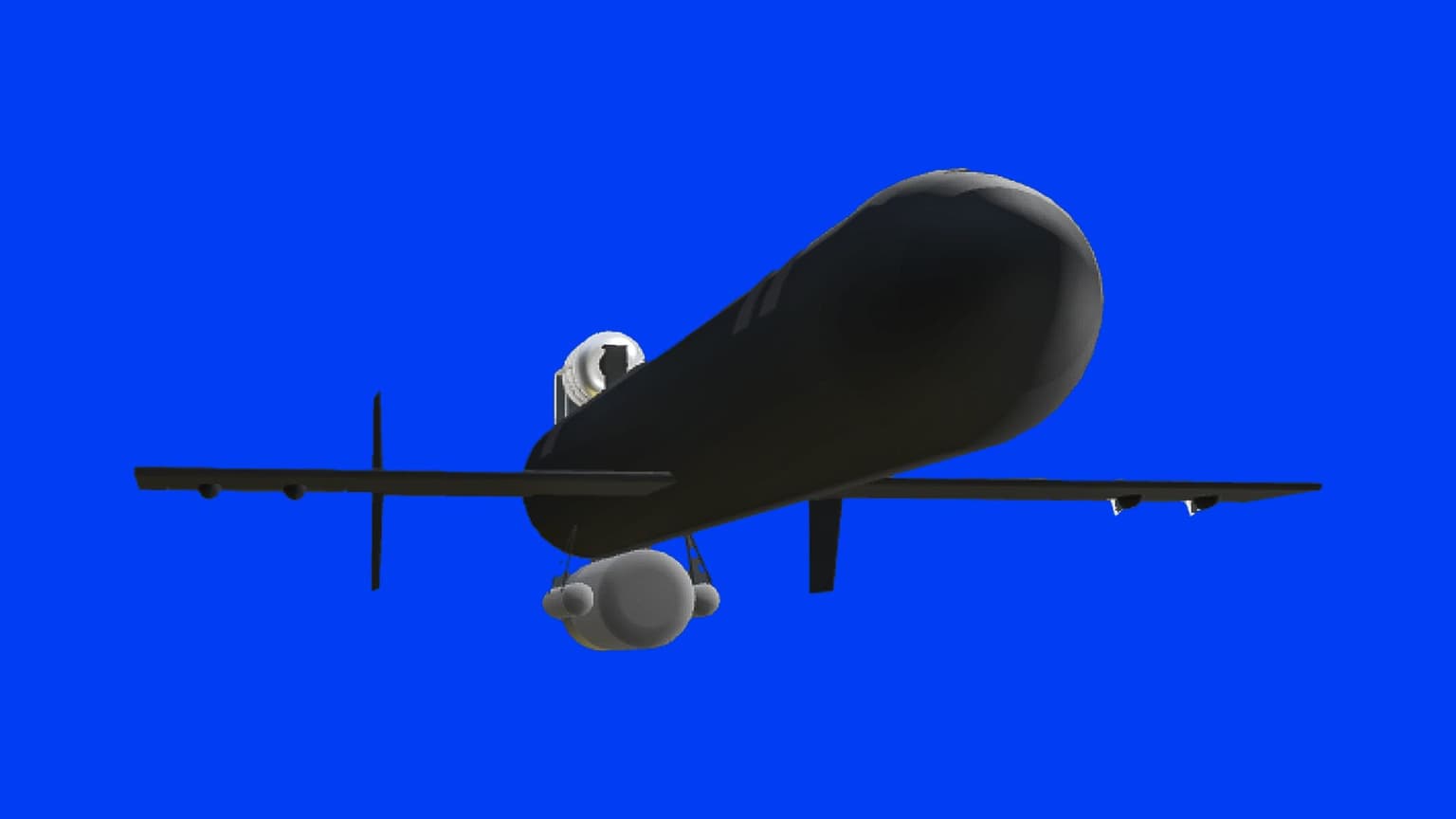
A 3D model of a Geran-5, a long-range Russian drone, that was shot down by Ukrainian forces in the first days of 2026. (Ukraine's military intelligence / Collage by The Kyiv Independent)
 on Google
On one of the first days of 2026, the Ukrainian military downed a Russian drone of a new type. It was identified as Geran-5, a fast and long-range drone.
It shares the name with the Russian copies of Iranian Shaheds — Geran-1, Geran-2, Geran-3, and Geran-4 — and is made by the same Russian manufacturer and with similar components.
But the new drone is quite different from the earlier Geran ones.
The Geran-5 drone resembles a winged missile, unlike Russian Shahed-type drones — triangular and delta-winged. According to Ukrainian military intelligence, HUR, Geran-5 is a replica of another Iranian-designed drone, Karrar.
One of the key functional differences of the latest Geran is speed. The new drone can fly at 500-600 km per hour — approximately three times faster than Geran-2, Russia’s most-used drone that flies at 180 km per hour. Their high speed makes the new drones difficult to intercept.
Ukrainian forces have so far shot down two Gerans-5, one in Kyiv Oblast and the other near the city of Dnipro, a Ukrainian government source told the Kyiv Independent. Both were shot down in January.
One of the drones was severely damaged, but the second was in a condition that allowed for the identification of some of its components.
Ukrainian military intelligence published the list of components it had identified. Just like with Russian earlier copies of Iranian drones, the new drone's electronics contain microchips produced with Western technology, not just Chinese.
The new Russian drone uses a bunch of American and at least one German microchip.
The Kyiv Independent combed through microchip shipments, revealing that American and European microchips continued to enter Russia in large quantities — mainly from China.
The discovery highlights the endemic, deadly pattern where despite the West's opposition to the Russian war, Western-made technology continues to power Russian war machine
Without these Western components, Russia would not have been able to manufacture the volume of weapons it needed to push Ukraine into the ongoing energy crisis, leaving millions of homes without heat and electricity during the freezing winter.
What was found in the new missile-like drone
Ukrainian intelligence has established that the new drone features a Chinese-made Telefly turbojet engine and a satellite navigation system receiver.
The receiver contains microchips branded with the names of three American companies: Texas Instruments, CTS Corporation, and Monolithic Power Systems.
Additionally, a microchip bearing the logo of the German company Infineon Technologies was identified in another part of the drone.
The largest number of Western microchips found — six units — come from the U.S. company Texas Instruments. The Russian arms industry has long relied upon its chips.

The U.S. and European chip manufacturers have exited the Russian market following the Kremlin's full-scale invasion of Ukraine, now considering product supply to Moscow as illicit. Yet, their components still end up in Russian weapons.


Although manufacturing dates have been established for only two of the microchips found in the new Russian drone, they show that the chips don’t come from pre-war stockpiles.
Both are clock oscillators by the American-based CTS Corporation. One was produced in September 2025, and the second in February 2024.
The new drone is just one example of how Russia continues to utilize Western electronic components in its weaponry. The Shahed-type Russian Geran drones, which Russia produced at a rate of nearly 3,000 units per month last year, incorporate numerous microchips from companies like Texas Instruments, CTS Corporation, Monolithic Power Systems, Infineon Technologies, and a handful of other Western brands.
Almost every night, hundreds of these drones target Ukrainian cities. Last year, Russia grew the volume of its drones and managed to overwhelm Ukrainian defenses. It led to power outages and eventually, to the current energy crisis. It wouldn’t have been possible without Western microchips powering them.

Now, the new drone’s components prove that robust pathways for Western microchips to enter Russia remain in place.
"According to rough estimates for 2025, Russia received 2.2 million imported electronic components, including Western ones," Vladyslav Vlasiuk, Ukrainian president's commissioner for sanctions policy, told the Kyiv Independent.
"That's a lot," he added. "The volume of Shaheds (Gerans), along with other drones and missiles produced by Russia, is directly linked to the electronic components they obtain from abroad."
How Western components end up in Russia
Ukrainians are no longer surprised to discover Chinese-branded components in Russian drones, considering the Russian-Chinese political alliance.
But American and European parts are not meant to be there. Numerous sanctions and export controls by the U.S. and EU are aimed at preventing such components from entering Russia.
So how do chips from Western manufacturers end up in the country effectively at war with the West?
Customs records reviewed by the Kyiv Independent indicate that Western chips are shipped to Russia by a vast network of electronic component traders, primarily registered in China and Hong Kong. A smaller portion of them are based in countries like the UAE or Kyrgyzstan.
Based on the shipment descriptions, these traders buy chips manufactured with Western technology not only in China but also in Malaysia, Taiwan, Japan, and the Philippines.
One of such traders is Niokr-Trade, a Moscow-based company. Niokr-Trade has acquired microchips branded by Texas Instruments and several other Western producers through the Chinese electronics distributor Shenzhen Nuopuxun Electronic Technology Co.
Additionally, they source products from Hong Kong-registered microchip suppliers such as Abingo Distributors and Wtron Electronics Technology (H.K) Co.
So it’s no surprise that Niokr-Trade is openly advertising an "unlimited assortment of imported electronic components" to Russian customers on its website.
Another entry on the Niokr-Trade website vaguely describes the source of its imported assortment: "We work with the Asian region." They do, indeed.

Numerous Russian companies, similar to Niokr-Trade, buy Western microchips from Chinese trading firms, import them, and sell them to a range of Russian buyers, including civilian producers and arms manufacturers.
The collaboration between Russian trading companies and suppliers in the "Asian region" explains why the Russian defense industry has been largely unaffected by the sanctions seeking to end the flow of Western technology to Russia. It merely faced some price increases.
The Kyiv Independent reported on it in the earlier investigation: "We tried to buy American chips as a Russian defense manufacturer — and it worked."
Some Russian arms manufacturers or producers of arms-intended electronic devices directly import Western components from Chinese firms, bypassing Russian traders.
Earlier, the Kyiv Independent reported on how Russian drone producer Zala Aero Group, which manufactures Lancet strike drones and Zala Aero reconnaissance drones widely used by Russia in the war against Ukraine, had established imports of Western microchips.
Another example is the Russian company Telecom and Microelectronic Industries, known as TMI, that needs microchips for its electronics. According to Russian customs data, TMI has purchased electronic components for years through the Hong Kong-registered Lett Tronic Group and the Turkish company Asay Ic Ve Dis Ticaret.
The Kyiv Independent has discovered that one of TMI's customers is the Russian arms manufacturer Kronshtadt, which produces Orion, a reconnaissance and strike drone. It is capable of carrying the S8000 Banderol winged missile, also manufactured by Kronshtadt.
Russia is utilizing these developments on the battlefield in Ukraine.

What chip manufacturers and the Ukrainian government say
The Kyiv Independent sent inquiries to all four manufacturers whose electronic components were found in the Geran-5 drone.
Germany-based Infineon Technologies replied that the company "takes this situation very seriously."
"We have taken extensive measures at our disposal to ensure compliance with sanctions, aiming to not only comply with the letter but also with the spirit of the sanctions. This includes cooperation with authorities," said a company's spokesperson in a written response.
Infineon Technologies liquidated its entity in Russia in 2022 and stopped all shipments to Russia "regardless of the legal possibility to continue certain transactions."
Previously, the company told the Kyiv Independent that it proved difficult to control sales throughout the entire lifetime of a product.
U.S. companies Texas Instruments, CTS Corporation, and Monolithic Power Systems didn't respond to our questions about Geran-5 findings by the publication time.
In February 2025, when the Kyiv Independent approached Texas Instruments regarding the use of their microchips in Russian weapons for the first time, the company said it strongly opposed it, as well as the illicit diversion of its products to Russia.
"TI stopped selling products into Russia and Belarus in February 2022. Any shipments of TI chips into Russia are illicit and unauthorized," stated the company's Corporate Media Relations Team.
They also emphasized that the manufacturer requires its customers and distributors to do the same and that it investigates evidence indicating diversion.
Vlasiuk, the Ukrainian president's sanctions commissioner, believes that around 30% of Western-branded chips used in Russian weapons could be either counterfeit or illegally overmanufactured in Asian factories owned by American and European producers. The remaining 70% are original products manufactured at Western companies' factories, mainly in Asia.
In his opinion, manufacturers could cooperate more with the Ukrainian government to conduct internal investigations and identify those elements in long resale chains through which chips are being smuggled into Russia.
Note from the author:
Hey! This is Alisa, the author of this story. Thank you for reading.
On this cold day in a world full of oddities and injustice, you can do something to make a difference — support our investigative work by becoming a member of the Kyiv Independent.
Our work is funded by our readers.