Europe's dilemma: Supporting Trump's Ukraine peace plan while hoping he walks away
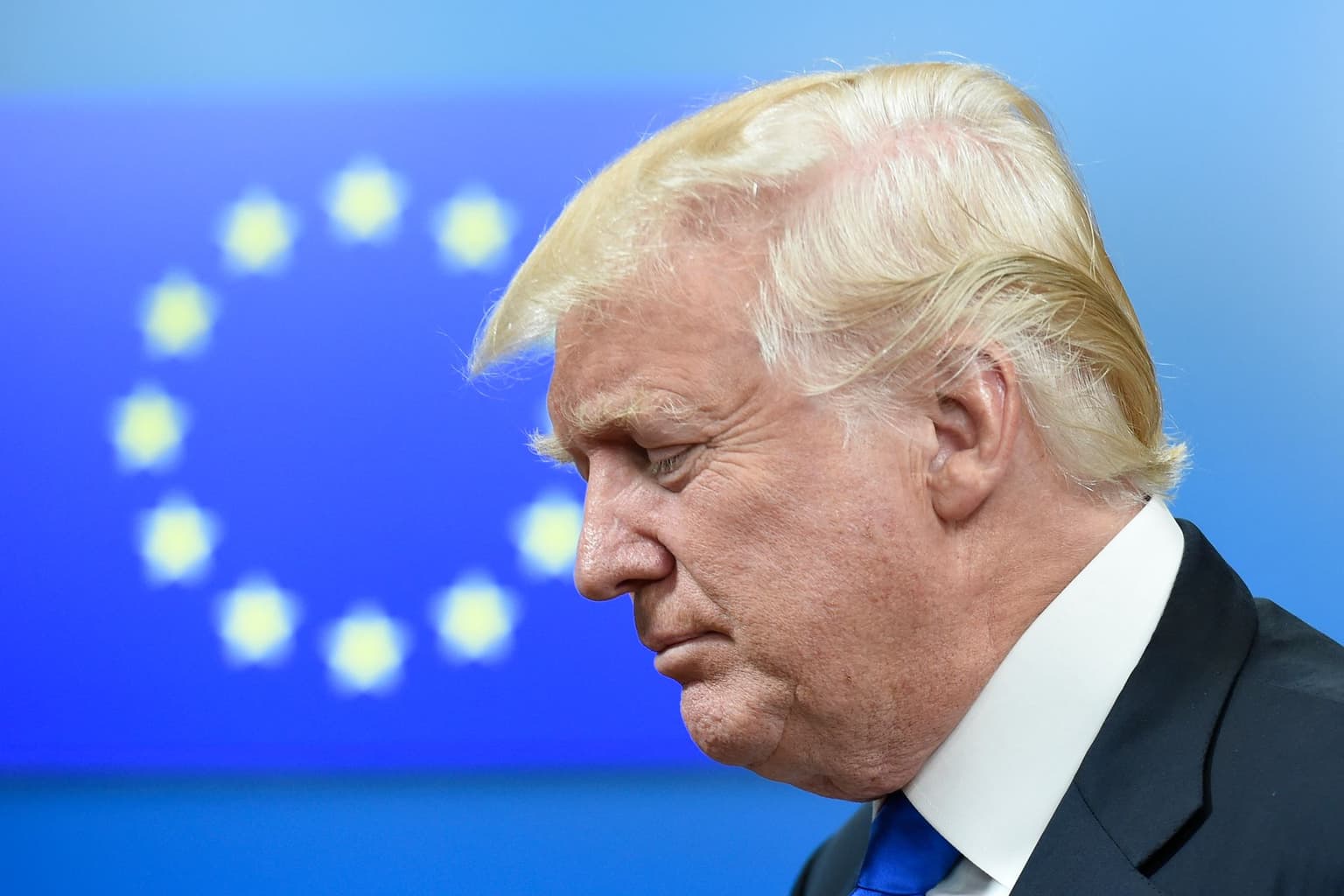
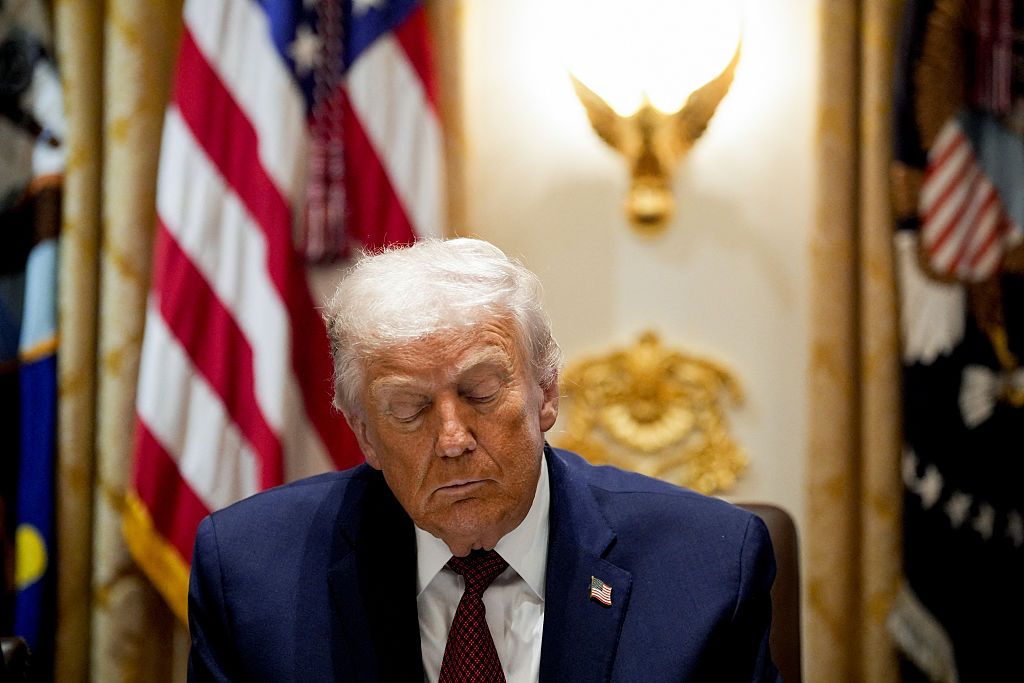
US President Donald Trump in Brussels, on May 25, 2017. (Thierry Charlier/AFP via Getty Images)
U.S. policy choices are forcing Europe into a strategic moment it long tried to avoid.
As Washington sidelines allies, rewrites its National Security Strategy, and negotiates peace proposals for Ukraine, the foundations of the continent's security are shaking.
For many in European capitals, the realization is sinking in: Europe may soon need to protect itself in ways it has never had to since World War II.
Experts say the understanding is already there. What's missing is unity — and time.
"The European governments can no longer deny the imperative to advance strategic autonomy," Pavel Baev, research professor at PRIO, said. "The autonomy is not a fact, but a process, which is already in motion, so the when question is not quite on target."
How US is reshaping European security — and unsettling its allies
The release of the new U.S. National Security Strategy was a cold shower for European governments.
The document questions NATO's key principles, challenges core ideas behind the EU, and signals that Washington is turning inward, focusing more on the Western Hemisphere.
Even as Russia continues its full-scale war, the strategy avoids direct criticism of the Kremlin — a silence Moscow immediately welcomed.

This shift unfolded alongside something even more alarming: Washington's renewed push to negotiate a peace plan for Ukraine without including Europe at the table.
In the first drafts of the plan, Europe was expected to sign a non-aggression agreement with Russia — even though Europeans are not participants in the war.
The proposal would also require the Kremlin to pledge not to attack Ukraine or any European state, codifying that commitment in Russian law.
But Russian President Vladimir Putin has changed Russia's legal framework repeatedly to serve political goals, including altering and nullifying presidential term limits.
European officials quickly questioned how any such promise could be trusted.
Despite their concerns, European leaders watched the U.S. move ahead with negotiations centered on a U.S.-Russian framework that demands sweeping concessions from Kyiv — and leaves Europe on the sidelines of decisions that will shape its security for decades.

Europe sees the danger — but remains divided on the solution
Across the continent, governments increasingly acknowledge that Washington's shift is structural, not temporary. The understanding is widespread, experts note.
Judy Dempsey, a nonresident senior fellow at Carnegie Europe, said EU states "do" recognize the need for strategic autonomy, but differ sharply on how to achieve it.
She argued that Europe must finally accept that the postwar transatlantic order is fading and that the U.S. will not remain Europe's permanent security guarantor.
She warned that Putin will continue trying to fracture the alliance, calling this strategy "the big, big issue."
Baev said the publication of the 2025 U.S. strategy — "without any fanfare" — confirmed that change.
But he said many European capitals want "special arrangements" with Washington, including U.S.-reliant governments like Poland and the Baltic states.

Sebastien Maillard, special advisor at the Institut Jacques Delors, said momentum for autonomy is growing.
"(French President Emmanuel) Macron's been advocating for it ever since the Sorbonne speech of 2017," he said. "Denmark is now fully pushing for it. Germany too. For the Baltic states, it's perhaps more difficult to admit it is necessary."
Europe sees the storm coming — but struggles to decide how to brace for it.
Why Europe can't achieve autonomy overnight
Even as urgency grows, Europe faces structural constraints that make strategic autonomy difficult.
Maillard pointed to long military supply chains, weapons systems built with non-European components, and dependence on U.S. intelligence and air defense systems — all vital for Ukraine's defense.
That leaves European governments trying to keep Washington engaged while quietly preparing for a future where the U.S. may pull back.
He argued that any credible path forward will require "a coalition of the most willing," anchored by France, Germany, and the U.K.
Only such a group, he said, can move quickly enough to shape Europe's next security chapter.

Dempsey agreed that Europe lacks a shared threat perception, even after Russia's aggression.
This failure, she said, remains the EU's biggest obstacle.
A smaller coalition — potentially led by Europe's two nuclear powers, France and the U.K., with Germany playing a major role — may be necessary. She said this group should stay open to the Nordics, the Baltics, and any other states ready to commit.
The questions this coalition must face are ones Europe has avoided for decades — including whether it needs its own nuclear security umbrella.
Dempsey said governments must also be honest with their publics.
On one side stands Russia's aggression. On the other, a United States moving away from Europe — a shift she warned is intensified by U.S. President Donald Trump's desire to weaken the continent.
"Europe should discard fear, embrace ambition, and embark on securing the continent," she added.
The Ukraine peace plan that worries Europe
Europe's unease indeed deepened when the U.S. moved ahead with a peace plan for Ukraine that could reshape the continent's security landscape for years — without consulting European capitals.
Dempsey warned the bloc to reject any Russia-Europe security framework supported by Trump. She said European leaders cannot simply wait for the war in Ukraine to end.
"Europe can no longer wait to see what further pro-Russian steps Trump will make."
President Volodymyr Zelensky said on Dec. 9 that Ukraine and its European partners completed revisions to the U.S. proposal.
That came after talks with British Prime Minister Keir Starmer and European leaders on Dec. 8, followed by meetings with NATO Secretary General Mark Rutte and EU officials.
The plan carries enormous stakes for Europe. It offers major concessions to Russia — even though Moscow remains the principal threat to European security.
But a senior European diplomatic source told the Kyiv Independent that the continent still lacks its own coherent vision for peace.
Instead, Europe hopes the U.S. will slow its rush toward a deal while continuing intelligence sharing with Ukraine and maintaining the Prioritized Ukraine Requirements List (PURL) — a mechanism through which NATO states purchase U.S. weapons for Ukraine.
Europe knows the peace deal will define its security future — but has not yet defined its own terms.
What European capitals say publicly
To understand how governments are navigating this moment, the Kyiv Independent spoke with two EU affairs ministers.
Danish EU Affairs Minister Marie Bjerre emphasized that the U.S. remains "a very important ally for Europe," saying history shows both sides are stronger when they "stand together, fight together."
She said she hopes transatlantic collaboration remains strong but was "very surprised" by Washington's recent criticism of the EU and European democracy, which she said does not reflect reality on the ground.
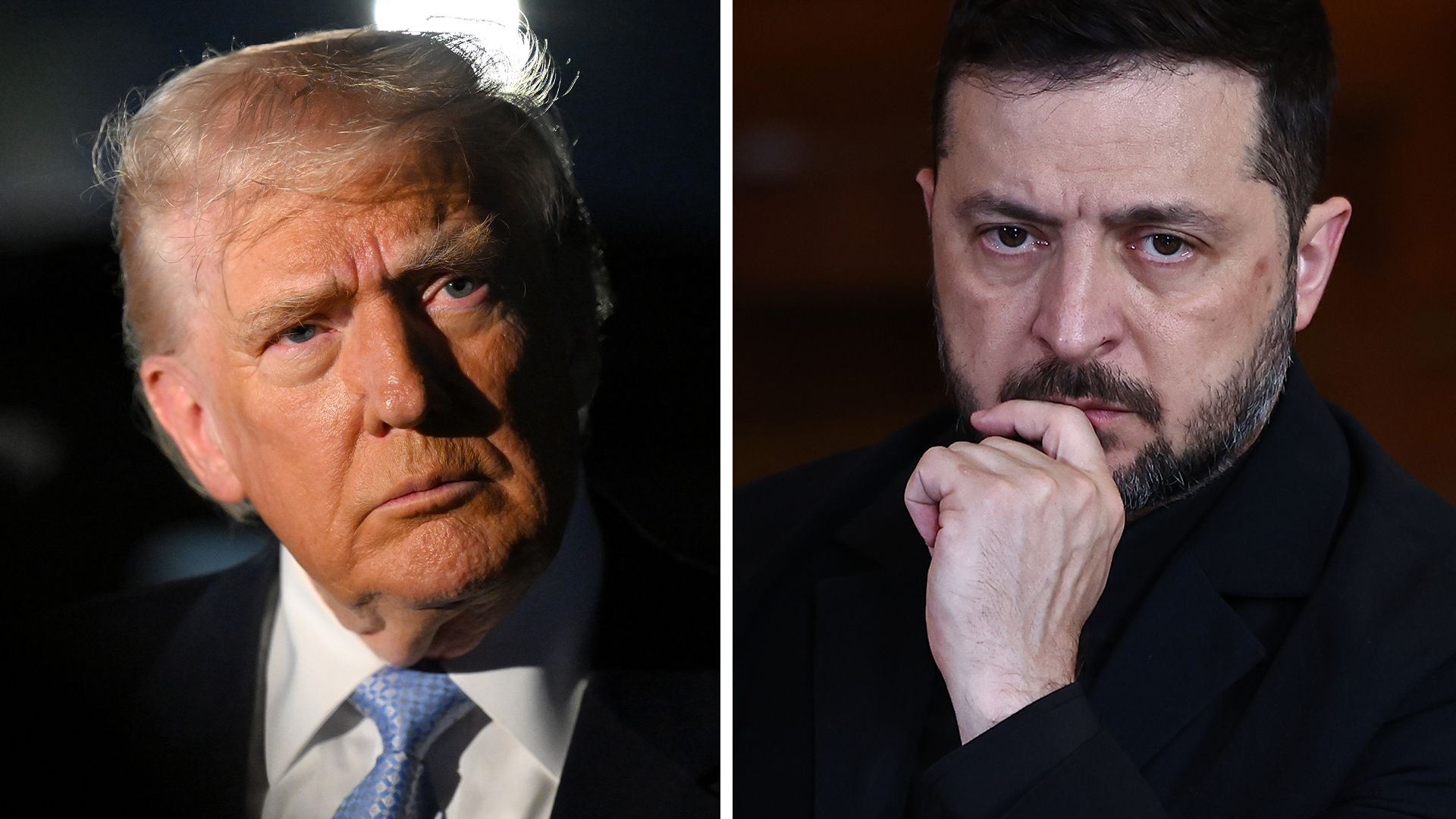
Her comments came after Trump mocked European leaders as "weak" people who "don't know what to do" — remarks that drew enthusiastic praise from Russian officials.
Swedish EU Affairs Minister Jessica Rosencrantz said the U.S. criticism is nothing new, noting that Washington has long argued Europe should carry more responsibility for its defense.
"There are points being made from the American side that Europe should do more on European security… and in that aspect I agree," she said.
Despite tensions, she stressed the importance of unity.
"It's very important for Europe and the U.S. to continue to be allies," she said, citing shared commitments to democracy and the rule of law.
She added that both sides share "a joint interest in making sure that Putin does not win this war," arguing that a Russian victory would undermine the global rules-based order.
Behind closed doors, however, European leaders have told Zelensky that the U.S. can't be trusted. According to a senior European diplomat, they know that Europe would need to move alone.
Hi, this is Tim. The author of this article. Thank you for taking the time to read it.
At the Kyiv Independent, we speak to top experts to bring you accurate, in-depth reporting. We don't have a wealthy owner or political backing. We rely on readers like you to support our work.
If you found this article interesting, consider joining our community today.