Coming of age during war, where mistakes can cost a life
"Do you understand that Russians have no mercy?"
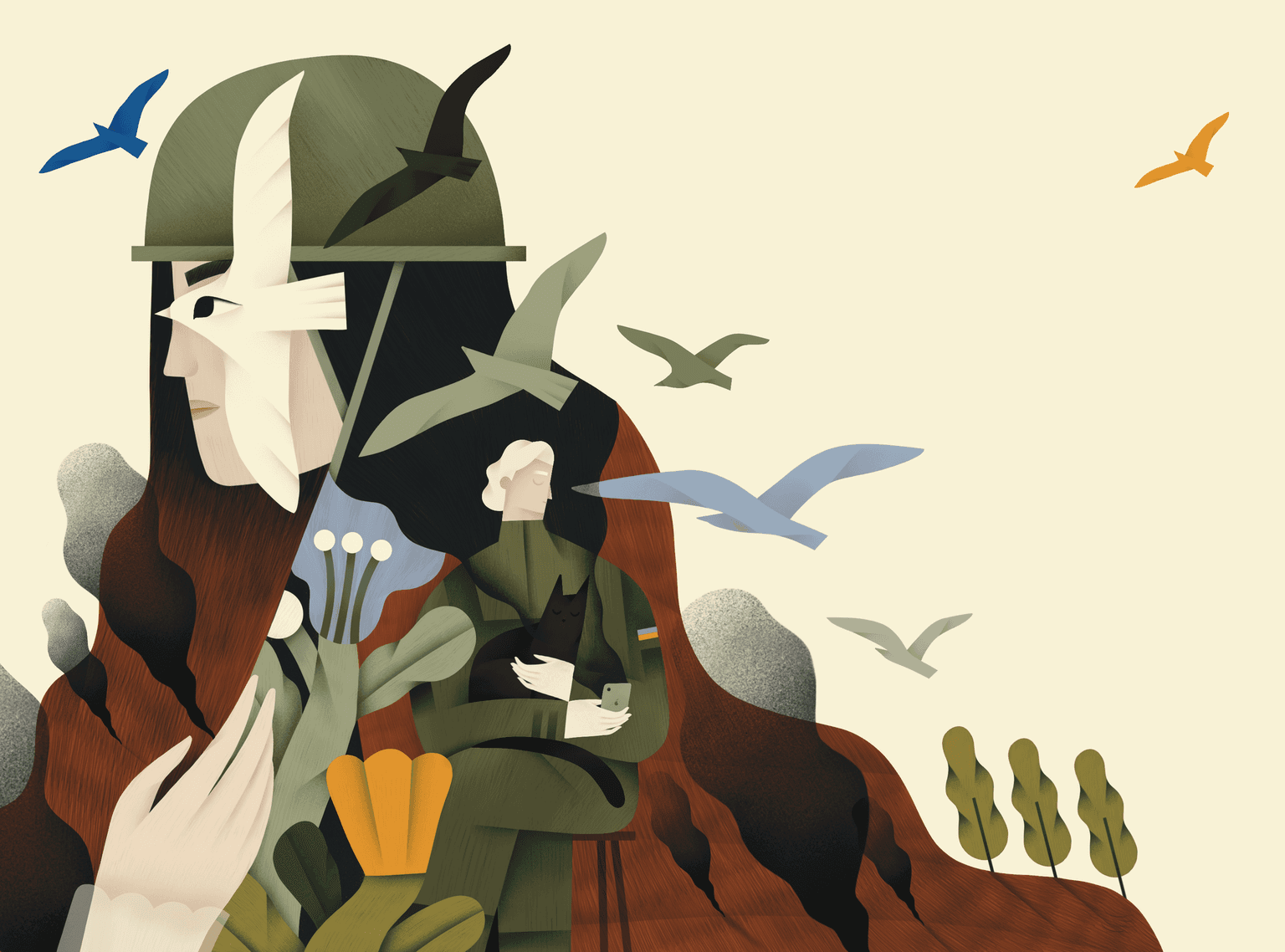
Russia’s war has forced young Ukrainians to grow up too fast, confronting loss, danger, and responsibility instead of a carefree youth. (Albina Kolesnichenko / The Kyiv Independent)
 on Google
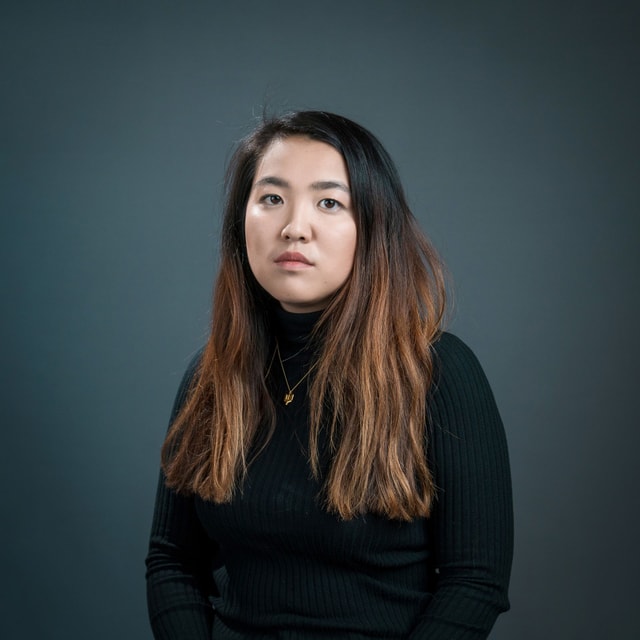
Asami Terajima
Editor's note: This essay was originally published in the Kyiv Independent's first-ever print edition, titled "The Power Within," in July 2025. You can order a copy in our e-store.
Soldiers featured in this story are identified by first names only due to security reasons.
In the fall of 2023, I remember sitting in a circle with Ukrainian soldiers whom I had come to call friends. It was getting chilly outside, but the leftover coals from the barbecue and the constant laughter kept us warm.
We were celebrating the birthday of the youngest guy in the unit. Vladyslav, small-framed and blonde with curious blue eyes, was turning 20. He sat in an armchair on the porch of the 93rd Mechanized Brigade’s cottage-turned-military base in the eastern war-battered Donbas.
Surrounded by his brothers-in-arms who teased him that he was now "a big boy," Vladyslav, or Vlad as we called him, looked content. But the smile on Vlad’s face faded quickly when he accidentally mentioned using his phone at a position. Big mistake.
"Do you understand that Russians have no mercy?" Oleksandr, 51, a major and the unit’s commander, said in a reprimanding tone.
"You are a target, and they are not going to allow mistakes," Oleksandr told Vlad, scolding him for not realizing how easily Russian troops can locate Ukrainian soldiers through cell signals.
The rest of the evening was largely spent lecturing Vlad. With a black cat on his knee, Vlad looked down as though he was about to tear up.
In most places around the world, young people like Vlad make mistakes, never imagining they could cost them their lives. Our early 20s are considered a blissful time to embrace carelessness, navigate steep learning curves, and explore life without worrying about consequences.

But in Ukraine, where Russia’s full-scale war has raged for over three years, those coming of age often don’t have such a luxury. Innocent youth feels distant, and death is ever more present. For me, a now 25-year-old journalist living in Ukraine covering and witnessing the brutality of war firsthand and losing friends, the notion of a carefree youth feels far away.
I was a 21-year-old university student, barely into my journalism career, when Russia launched its full-scale invasion of Ukraine in February 2022. I was scared, and I didn’t know what to do.
Despite having little knowledge about war reporting, something told me that I had to cover Russia’s invasion. It felt important to send out breaking news in English to the Western world when so much was happening at once. For the first week of the invasion, I wrote quick news items from a thick-walled hallway of a colleague’s apartment, understanding for the first time how comforting the company of people can be when everything is so uncertain.
I didn’t even see myself as a full-fledged journalist before the invasion, but there was an energy driving me to keep covering the developments as quickly as possible. I could feel the reporter in me starting to reveal itself.
Eventually, I realized that I had to be closer to the war to understand what was happening on the ground. I remember being nervous about how I would react to the sound of shelling — something I feared in childhood when watching war movies — wondering if I would be able to keep it together without panicking. Surprisingly, I was very calm, as if I had heard it all my life.
With each trip, I got closer to the front line. With time, it became more difficult to work freely and quickly due to multiple new restrictions, which meant that I had to become more organized and plan trips thoroughly.
Truth be told, my planning was very poor in my first few trips to the Donbas in 2023. Not knowing how to access the front line, I went to a gas station in one of the front-line towns in Donetsk Oblast to ask around for an embed.
I was rejected over and over again. It was when I was about to return to the hotel after buying loads of chips that an older soldier agreed to take me in for a few days. That turned into a week, and I ended up writing my first article about soldiers and how they felt at that stage of the war.
I honestly struggled with asking questions at first. I hardly knew any military terminology, even in English, which I grew up speaking, but the conversations were in Russian and Ukrainian – my third and fourth languages. I also had no idea how wars and different weapon systems work. Fortunately, the Ukrainian soldiers from the 24th Mechanized Brigade, then defending the city of Toretsk, were very kind and patient with me as I interviewed them at their bases not too far from the front line.
I was learning how to navigate through the war zone as I filed story after story from the Donbas. Obviously, it was still very dangerous, as a simple mistake can easily cost a life, like staying at a hotel. Russia has often targeted hotels in the front-line region, even the ones where soldiers don’t reside. One hotel in Pokrovsk, where I spent a lot of time on reporting trips, was struck by a Russian missile in August 2023 while I was on my way back to Kyiv. War has no mercy, and it’s sometimes scary how much depends on luck.
One of the things I struggled with the most was realizing that soldiers often only have a very limited view of the battlefield. They will feed you with horrifying testimonies, but it is often difficult to verify them. It’s normal in any war for soldiers to raise issues about their units or their sector of the front line, but they don’t always represent the general situation. This is difficult to keep in mind when the soldiers are telling you all kinds of stories in the most emotional way, occasionally with tears and hysteria.
Another thing I tried to learn was to accept that you can’t tell the stories of every soldier. Your job is to pick the strongest quotes and testimonies from a few particular soldiers and not get into the story of everyone you interviewed. The goal is to make the reports as concise and compelling as possible. As my editor once said, "You are doing the guys a favor by condensing your report and being picky with the quotes."
The war has woken up the youth in Ukraine to the reality of the world too early.
The most difficult part about the weeks-long trips to Donbas was the days after returning home to Kyiv. You go from soldiers, usually aged over 45, aghast at the horrifying losses that their unit suffered over a ridiculously short period of time, to seeing a bustling life carrying on in the capital, packed with young people. It can be extremely uncomfortable — and even alienating — to see new cafes and bars opening their doors and trendy venues being packed even on weekdays. I often complained about it passionately to friends, leaving them worried that I had become too emotionally invested.
It was in the summer of 2024, a year and a half after I started traveling to the front line, that I realized the importance of having a life outside of war reporting. I took a pause from going to the war-torn east, to which I had grown too attached, and tried having a new life in Kyiv.
It wasn’t easy. Although I grew up in Kyiv, after my trips to the east, I felt uncomfortable in the city. But going kayaking, climbing hills, and going out on the weekend helped. I began to enjoy making plans with friends. It was something I never really had the chance to do when I was going to Donbas every month. It made me understand that if I want to continue reporting on the war, I must prioritize taking care of myself. For that, I need to build a barrier between myself and the soldiers I interview — and not let myself get psychologically too close to the front. It is a difficult job because you constantly hear the most horrific stories of war from your soldier sources, but you must not let it get to you personally.
But then came the news of young Vlad’s death. He was killed with two other guys at a position near Bakhmut after a direct Russian strike. His comrades told me that only parts of his body were retrieved for DNA testing to confirm the death. I felt extremely guilty for being in Kyiv and attending a music festival that day. I hated how unfair this was.
It is all very scary, especially when I realize that neither Vlad nor the guys who scolded him that day back in 2023 are alive.

The boy will forever remain 20. I will never receive any more Instagram posts with fun facts about Japan (where I am originally from) from Vlad, who was always fascinated by everything and had a passion for cooking.
Sometimes, you feel nothing but helplessness. The war has woken up the youth in Ukraine to the reality of the world too early. But I also think this will make this young generation prepared for the turbulence ahead. A new generation that is aware of the fragility of peace and the price of democracy.
A generation that is eager to cherish every moment, for there is no time to waste.