Battlefield analysis: What Ukraine’s recent front-line gains really mean
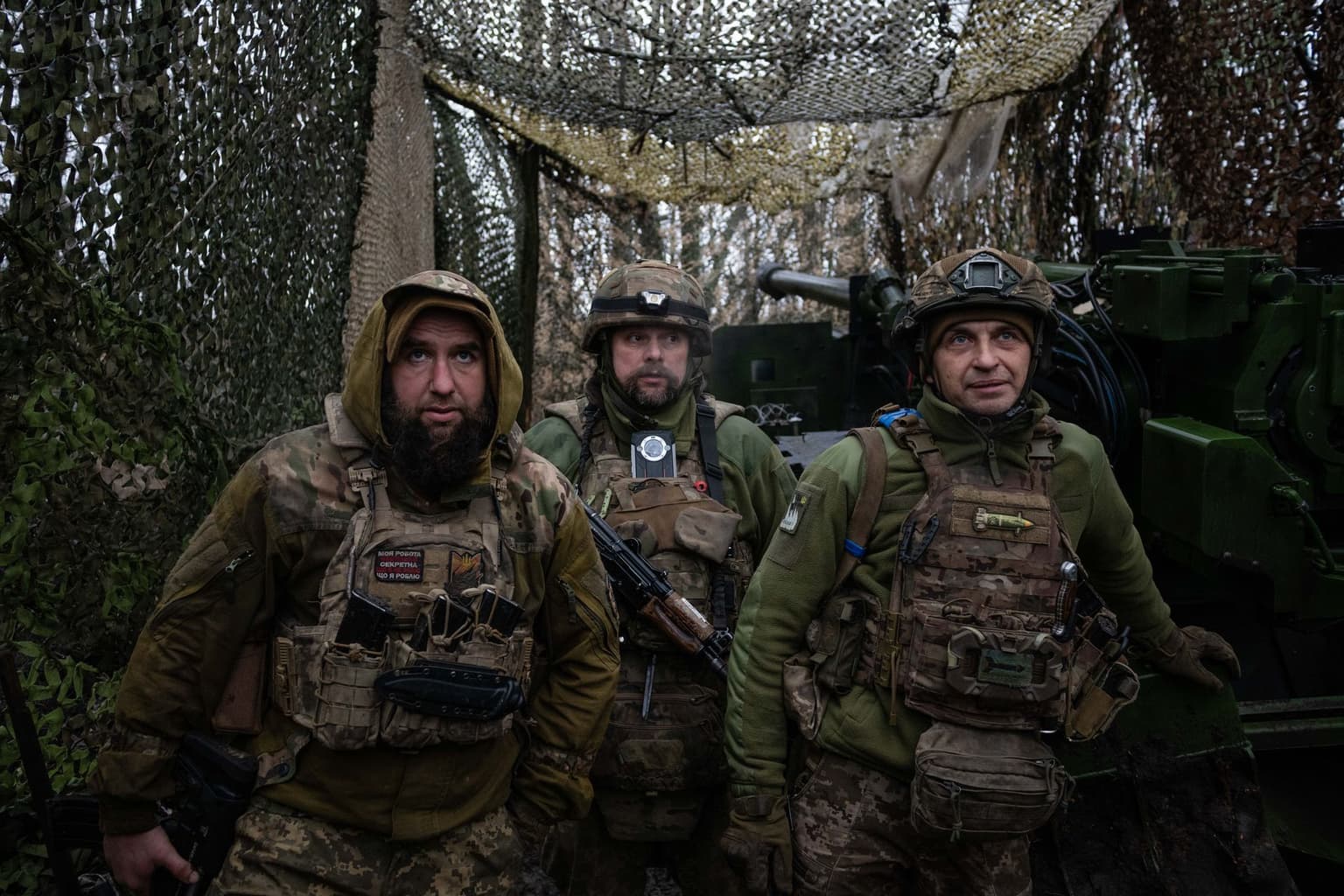
The 148th Artillery Brigade near Pokrovsk, Donetsk Oblast, Ukraine, on Jan. 11, 2026. (Maciek Musialek / Anadolu / Getty Images)
 on Google
Ukraine has survived its toughest winter yet during the full-scale war, but now it must face the spring.
Across the front line, as the weather warms, the ground hardens, and spring foliage returns to the tree lines and forests of Ukraine's east, conditions for mounting assault operations improve in turn.
In the spring campaign of 2026 — the fifth of the full-scale war — there are no more illusions, not in Ukraine nor in the international arena, that U.S.-mediated "peace negotiations" with Russia are a real pathway towards stopping the fighting.
More than ever, it is clear that how this war will end will be decided on the battlefield.
Unlike this time last year or the year before, Ukraine is heading into spring with what seems like very good news.
For the first time in years, according to Kyiv, Ukraine had liberated more territory than it lost to Russian occupation in February thanks to a series of counterattacking operations on the southern front line.
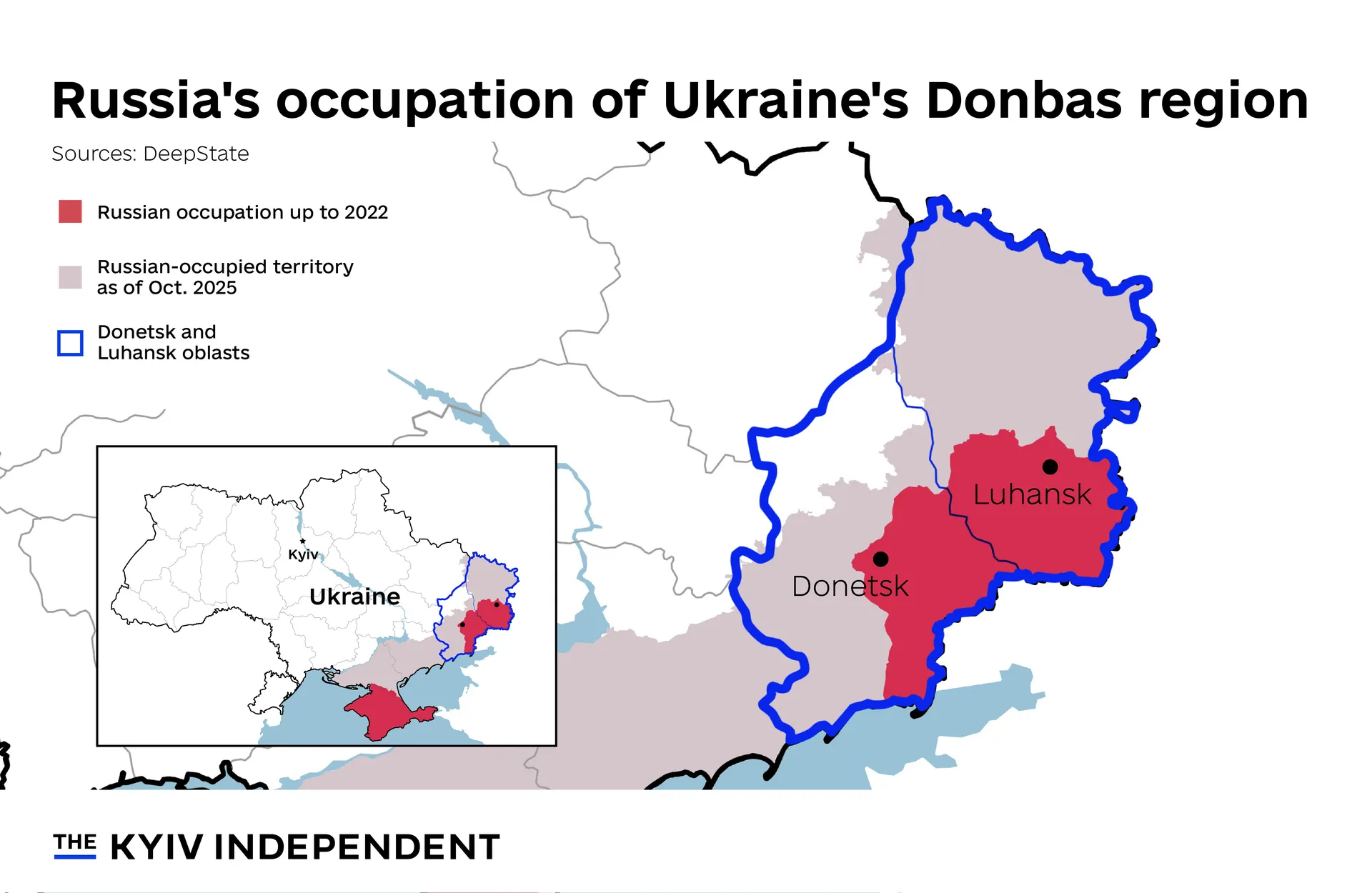
Not only that, but in doing so, President Volodymyr Zelensky said on March 16th, Ukrainian forces disrupted and foiled Russia's plans for an offensive operation over March.
Meanwhile though, Russian forces are advancing themselves, including in some critical parts of the front line.
For its part Moscow, buoyed by the oil money windfall from the war in Iran, hasn't made any statements or moves that suggest anything other than optimism, anything other than belief that this year's fighting will bring them closer to the capitulation of independent Ukraine.
So where does the reality lie?
Over February, Ukrainian forces did indeed lead counterattacking operations across a broad sector of the southern front line, specifically where the eastern edge of Zaporizhzhia Oblast meets neighboring Dnipropetrovsk Oblast, which Russian forces first entered in late summer.
This area — dominated by vast tracts of wide-open steppe, crisscrossed by small rivers, but with no major settlements — saw swift Russian advances over last autumn and winter as Moscow pushed a part of the Ukrainian lines defended in large part by much weaker territorial defense brigades.
In response, to stem the bleeding of territory, Kyiv sent in units of its Assault Forces: large units specialized in offensive operations that are under the direct command of Ukraine's Commander-in-Chief, Oleksandr Syrskyi, and who receive a disproportionately large portion of Ukraine's inflow of mobilized men.
For the most part, these assault regiments succeeded in stabilizing Ukrainian lines, but in some areas, such as the village of Ternuvate in Zaporizhzhia Oblast, Russian forces still managed to infiltrate behind Ukrainian lines, dig in, and in doing so, extend the already wide contested gray zone.
Last month, supported by separate drone units and jumping on the opportunity presented by the cutting off of Starlink for Russian forces, the assault regiments went on the attack in an effort not only to clear the furthest enemy advances, but also to push back the gray zone and properly stabilize the front line.

Joining them from the north were brigades of the Air Assault forces, including the elite 95th Air Assault Brigade, which had last been seen fighting in the border areas between Sumy Oblast and Russia's Kursk region.
In this part especially, Ukrainian forces maintained strict operational security protocols, and the advances were made without the traditional videos of flags raised in liberated settlements or proud proclamations of the latest village retaken.
Still, despite Zelensky's and Syrsky's announcements of broad operational success, this wasn't a counteroffensive in the traditional sense, where the aim is to break through enemy lines and decisively capture large amounts of territory.
Instead, as commanders fighting in the south told me personally, the goal was more subtle, to push Russian forces back by identifying and clearing areas of infiltration and troop concentration, and in doing so, allowing the Ukrainian defense to better consolidate ahead of spring.


Tellingly, although traditional logic might have said that Ukraine held the initiative, Russian assault groups continued to move forward, usually in groups of one, two, or three, as attempts to conduct daily infiltrations through Ukrainian lines were not put on pause.
As two different commanders both told me, with such a porous front line, the Russian assaulting infantry fight like water, trickling through any gap that they can find.
At this point, it's important to put the talk of counteroffensive success, liberated territories, and failed Russian operations in context.
Context, both of an ongoing war of narratives alongside the kinetic war, as well as an increasingly blurred, overlapping front line where independently establishing territorial control isn't only often impossible, but a pointless exercise in itself.
On the narrative front, the Ukrainian leadership does feel an acute need to project success on the battlefield, to project an image of success on the battlefield, both for the home front and for those across the ocean, particularly in Washington, that believe that Kyiv is on a losing trajectory, that time is only going to play in Russia's favor, and that Ukraine should make major concessions now to avoid an even worse deal later on.
For both sides in the war, putting the most positive spin possible on front-line events — as has been done in wars for centuries — is now in some ways made easier than ever thanks to the blurred ambiguity of the front line and the difficulty of objectively mapping it.
The logic is deceivingly obvious: one very easy way to claim hundreds of square kilometers liberated is to assume the maximum amount of territory lost to the enemy in the first place.
Whereas in reality, these areas were not firmly under control of either side before or after, instead lying firmly in the gray zone with overlapping positions on the ground and drones, both friendly and enemy, dominating the skies.
I wrote a deep dive a few months ago about the problems of mapping the war in current conditions, a challenge that has become more relevant than ever now.


In just one example of the growing margin of error, while some organizations like Finnish open-source intelligence collective Black Bird Group did indeed calculate that Ukraine retook more territory than it lost over February, the figures of highly trusted local mapping and analytical project DeepState show Kyiv still in the red.
So what of Russia's spring offensive campaign?
On a strategic level, we can be sure beyond reasonable doubt that Russia's plans for spring and summer are pretty similar to those of last year and the year before.
Moscow will aim to exert intense pressure on the overstretched Ukrainian defense across the front line, looking for weak points, attriting Ukrainian combat power with the use of drones, and in doing so, taking territory.
As was the case previously, and especially given the region's political significance, the bulk of the attacks are likely to focus again on Donetsk Oblast, where Russian forces have brought Ukraine's fortress belt of cities into the range of first-person view (FPV) drones, but where actually taking territory on the ground could prove to be more costly than ever.
Meanwhile, though, to create strategic dilemmas for Ukraine, we can also expect pushes elsewhere, including, as recent border skirmishes have shown, along the northern border in Sumy Oblast.
But although the heaviest fighting might still come in Donbas, the fate of the southern front line, especially in Zaporizhzhia Oblast, could be even more critical for the state of the war over this year.

Here — another region that Russia now claims as its own after illegal sham referendums in 2022 — if Moscow can find battlefield success and repeat the pace of advance that they enjoyed over late 2025, the city of Zaporizhzhia itself, an industrial and logistical stronghold of 700,000 people, could come under threat.
This could dramatically alter the political dynamic of the war, and with it, Russia's minimum demands at any peace negotiations.
Ukraine's task is, of course, to stop that timeline from even coming close to becoming reality.
First and foremost, this must be achieved by a well-organized, well-resourced defensive structure, backed by strong fortifications, ample drone support, and coordinated by a capable command at corps and brigade level.
But in the meantime, for all of that to happen, Ukraine first needed to create stability, something that is difficult to achieve with holes and infiltrations all over the front line and with the initiative squarely on the side of the aggressor.
With that in mind, even if assessments of vast new liberated territories and the wave of positive emotions that they bring might not be quite accurate, Ukraine's attacks over February and March have played an important role in shaping the battlefield.
The rest, a spring and summer campaign guaranteed to be ferocious, remains ahead of us.