Historian Serhii Plokhy on Russian imperialism, de-colonization, and why Putin is so obsessed with Ukraine
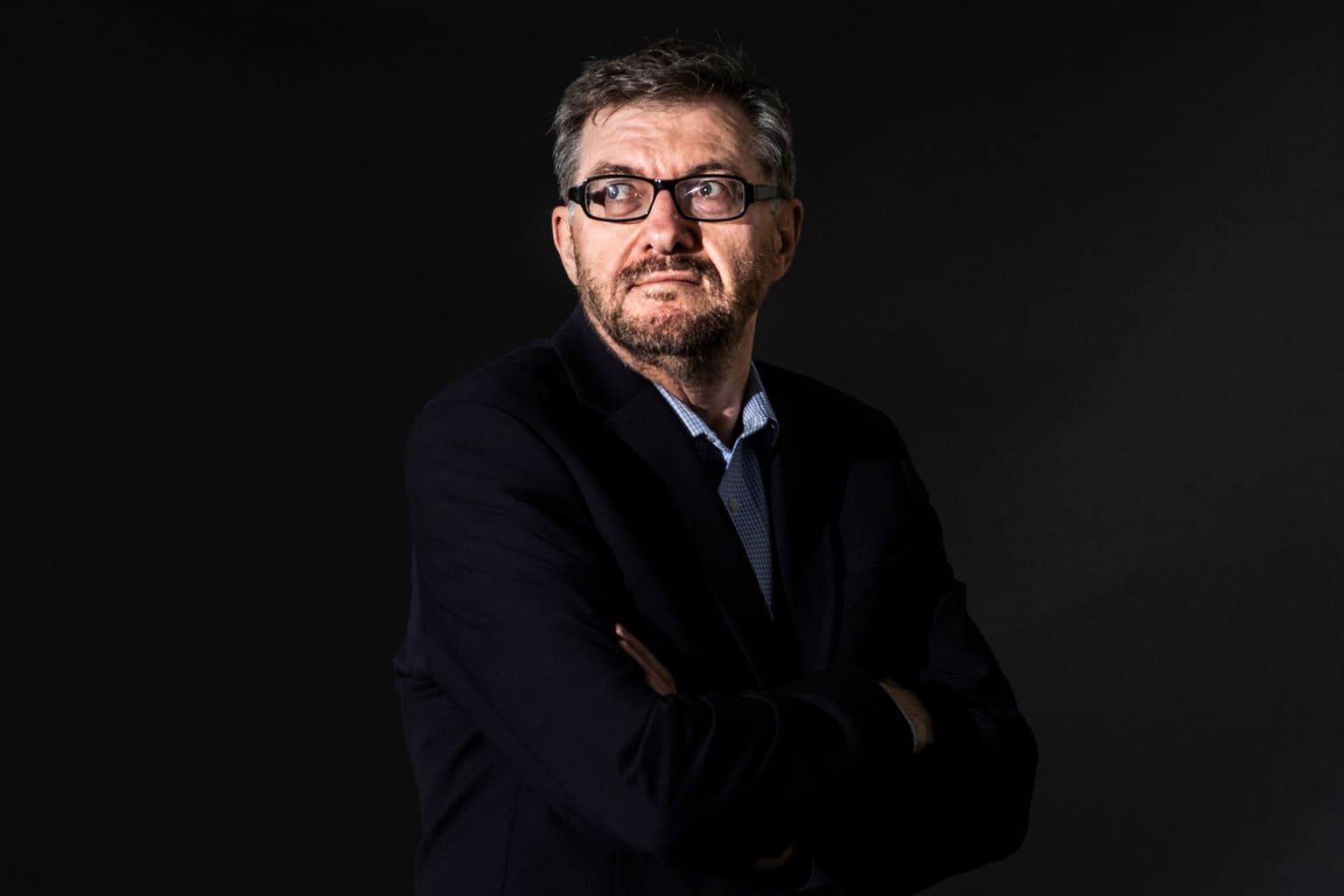
Ukrainian-American historian and author Serhii Plokhy during the Edinburgh International Book Festival 2019 in Edinburgh, Scotland, on Aug. 14, 2019. (Simone Padovani/Awakening/Getty Images)
 on Google
Even before Russia launched its full-scale war in 2022, it set the groundwork by establishing distorted narratives about its “rightful” claim to Ukraine.
Misunderstandings about empire, identity, and the legacies of both the Russian Empire and the Soviet Union still shape Western views of Russia — and Ukraine — today. While these narratives aren’t as instantly lethal as Russian drones and missiles, they’re designed to serve the same purpose — hurting Ukraine, often in ways that reach far beyond its borders.
In this interview with the Kyiv Independent, renowned Ukrainian historian Serhii Plokhy discusses why there’s no question that Russia has always been an empire, how the movement for an independent Ukrainian state in the early 20th century began as a leftist project, why Russia is more fixated on destroying Ukraine than any other country, and more.
This interview has been edited for length and clarity.
The Kyiv Independent: Russia is unfortunately quite good at weaponizing its history, especially the history of the Soviet Union. We see that a lot of people in the West still conceive of it as this kind of righteous project when it was actually an imperialist project. Why do you think it's still so hard for many people to understand that Russia historically has always been an empire?
Serhii Plokhy: Russia often escapes accountability for its imperial history, its territorial expansion, and the crimes committed during its imperial era, and there are several reasons for this. One reason is that Russia is — and historically has been — a land-based empire, while our perspective is shaped largely by a Western imagination (of empire, which also includes naval dominance).
Even the anti-imperial revolt in what's known today as the Global South is very much shaped through the prism of Western vocabulary and Western geographic imagination. So an empire can be only Western in that context. The very idea of anti-imperialism has to be de-Westernized, and that is partially what is happening during this war.
It’s enough to look at a world map today and see that Russia is the largest country in the world by territory. That’s no accident — you don’t end up with that much land as a nation-state. You only acquire territory on that scale by being an empire.
Russia has a way of turning global anti-Western sentiment into a tool for its own agenda. Even with its past and ongoing imperialist policies, Russia often presents itself as the champion of the Global South, the so-called ‘Third World,’ supposedly fighting against imperialism — which, in practice, means opposing the West. This framing is a major issue when it comes to global perception.
You see this narrative not just in countries with their own imperial histories, but even in the West, where, during the Cold War, the Soviet Union was often simply referred to as ‘Russia.’ When people talked about the Soviet Union as Russia, they tended to imagine it as a mono-ethnic state, or at least as a typical nation-state, rather than recognizing its true diversity or imperial structure.
When the Soviet Union collapsed and 15 separate republics appeared, many people were genuinely surprised to learn that Russia was just one of them. For those who grew up during the Cold War or earlier, this was a hard reality to grasp — and that confusion still lingers today.
The Kyiv Independent: The ongoing full-scale war is not the first time Ukraine has fought against Russia for its independence. I was wondering if you could briefly talk about the Ukrainian War of Independence 1917-1921, the most interesting leading figures on Ukraine's side during this period, and what their competing visions were for Ukraine.
Serhii Plokhy: Ukraine, like several other countries in the region, gained its independence not from just one empire, but from several. Take Poland in the 19th century, for example — their independence was carved out from the Russian Empire, Austria-Hungary, and Prussia, all at once. In Ukraine’s case, things were a bit more straightforward.
By the end of World War I, Ukraine was split between two empires: Russia and Austria-Hungary. So, in reality, Ukraine experienced two separate independence movements. The first major declaration came in early 1918, with independence proclaimed from the Russian Empire.
In late 1918, Ukraine declared its independence again, this time following the collapse of Austria-Hungary. At that moment, a variety of ideologies came together to form — or at least to declare — the Ukrainian independent state. It’s important to note that the modern Ukrainian nation-state project (in the early 20th century) was, from the very beginning, largely a leftist movement.
Most of the parties that emerged in the early 20th century and strongly supported the Ukrainian cause — whether it was for greater autonomy or full independence — were left-leaning. For example, in the Austrian-controlled part of Ukraine, one of the key (cultural) figures was (author) Ivan Franko, who was associated with the Narodovtsi, or People’s Party, which was quite leftist. Other major Ukrainian cultural figures, like (writers) Mykhailo Kotsiubynskyi and Lesia Ukrainka, were also involved in social democratic circles.

You can see this leftist influence in the ideology of the first Ukrainian government to declare independence in early 1918. It was led by Mykhailo Hrushevsky, who, while not officially a party member, was closely aligned with the Socialist Revolutionaries. The head of government, Volodymyr Vynnychenko, was a committed social democrat.
So, from the start, Ukraine’s independence movement was a mix of leftist and liberal forces. That dynamic shifted when, under German occupation, a new state was declared under Hetman Pavlo Skoropadsky, bringing much more conservative, landowning elements into power. Later, (military leader) Symon Petliura continued the left-leaning tendencies of Hrushevsky and the Central Rada, while Vynnychenko, true to his social democratic roots, even attempted to align with the Bolsheviks for a time.
On the Austro-Hungarian side, independence efforts tended to be led by a blend of conservative and liberal elements. So, if you look at the spectrum of early Ukrainian politics, you’ll find everything from social democrats and socialist revolutionaries, all the way to conservatives and so-called federalists.

But no matter who was in charge, the push for Ukrainian independence faced resistance from forces determined to maintain imperial or new national dominance. In the west, Ukraine was eventually defeated by the newly reestablished Polish state, which itself had strong imperial ambitions. Poland saw Ukrainian lands as rightfully theirs, and some of those territories did in fact become part of Poland during the interwar years.
On the Russian side, there were two main groups vying for control. One group tried to rebuild the Russian empire more or less along the old lines, just without the Tsar — this included people like (military leader) Anton Denikin, who is now considered something of a hero by (Russian President) Vladimir Putin. The other group was the Bolsheviks, whose ‘innovation’ was trying to reconstruct the empire but with concessions to different nationalities.
Ultimately, it was the Bolsheviks who came out on top. As I mentioned earlier, they even managed to win over some of the more left-leaning factions within the Ukrainian independence movement — like Volodymyr Vynnychenko’s supporters — which helped secure their victory.
Interestingly, resistance to the Bolsheviks in Ukraine often wasn’t about opposition to their social agenda or revolutionary ideals. Instead, it was rooted in their opposition to Ukrainian independence. That’s why Ukraine declared its independence just as the Bolshevik army was advancing toward Kyiv in January 1918.
This is actually pretty ironic, considering today’s Russian propaganda, and especially Putin, who claims that Ukraine was supposedly created by (Vladimir) Lenin. The truth is, the only way you could say Lenin ‘created’ Ukraine is if you mean that his attack on Ukraine actually triggered the declaration of Ukrainian independence. But that’s a pretty creative interpretation of the word ‘creation.’
The Kyiv Independent: Despite Vynnychenko’s desire to form some kind of alliance with the Bolsheviks, he also famously said Russian democracy ends where Ukraine begins. I'm just wondering, why do you think historically Ukrainian sovereignty has bothered Russia so much, more so than, I think, the sovereignty of any of its neighbors?
Serhii Plokhy: The main reason Ukraine’s situation is so complicated is that, unlike with Poland, Finland, or even Georgia, Russia has historically seen Ukrainians not just as another subject people within an empire, but as part of its own nation. For countries like Poland or Finland, breaking away from the Russian state in 1917 was mainly a challenge to Russian imperial power. Ukraine certainly shares that ‘imperial anxiety,’ but there’s another, deeper layer.
According to the 19th-century Russian imperial worldview, the Russian nation was made up of so-called ‘three tribes’: Great Russians (Russians), Little Russians (Ukrainians), and White Russians (Belarusians). Ukrainians weren’t just seen by Russians as subjects — they were viewed as a branch of the same nation.
Ironically, a lot of this narrative was actually shaped with help from certain intellectuals who came from Kyiv, especially from the Kyiv-Mohyla Academy and the city’s monasteries. These thinkers played a leading role not just in forming ideas about states, but also in defining nations. In fact, the very first printed history textbook for Russians in the 18th and 19th centuries, called ‘Synopsis,’ was produced in Kyiv.
That textbook placed Kyiv not just at the heart of Ukrainian history, but at the center of Russian history as well. Ukrainian intellectuals played a big role not only in the Westernization of Russia, but also in shaping some of the core Russian historical narratives. Those narratives are still with us today, and they continue to shape how history is understood in both countries.
Now, it’s really time for Russians to develop their own narratives and historical myths, ones that don’t depend so heavily on ideas and stories that originally came out of 17th-century Kyiv.
The Kyiv Independent: We know that Putin really loves to go on and on about history and perceived historical grievances committed against Russia, but I think it's safe to say he'd probably fail one of your history classes, yes? His understanding of history is questionable.
Serhii Plokhy: What Vladimir Putin is doing today isn’t just personal — it’s actually representative of a whole group within the former Soviet elite. These are people, many of them ex-KGB officers, who were still relatively young when the Soviet Union collapsed. Back then, they decided that Communism was a failed experiment for Russia, and they started searching for new narratives and ideologies to justify their policies, both at home and abroad.
They found their inspiration in (the anti-Soviet dissident and writer) Alexander Solzhenitsyn, whose vision was all about reviving imperial Russia. He argued that Soviet Communism was never really Russian — it was something foreign, imposed on the Russian people, who suffered under it more than anyone else. In his view, Russia’s path forward meant returning to the ideals of the Russian Empire, including the idea of a single "three-part" Russian nation made up of Russians, Ukrainians, and Belarusians.

In 1990, Solzhenitsyn published an essay in Komsomolskaya Pravda outlining how he thought Russia should be restructured, and it ran in a print run of millions. This essay had a huge influence on the Russian elite at the time. He argued not only against Communism, but also against maintaining control over the Caucasus or Central Asia. Instead, he envisioned a ‘new Russia’ made up of Russia, Ukraine, Belarus, and those parts of northern Kazakhstan populated by Eastern Slavs.
Throughout the 1990s, Solzhenitsyn continued to refine this vision. In many ways, he served as a bridge between old Russian imperial ideology and what we now see in Putin and those around him: an attempt to revive 19th-century ideas in the 21st century. It’s no surprise, then, that this effort has met with so much resistance. In fact, it’s partly from these ideas that the largest war of the 21st century has emerged.
The Kyiv Independent: For many years, Western academic programs in Slavic studies approached Ukraine primarily through a Russian lens. Have you noticed positive changes in this area, or is there still a long way to go?
Serhii Plokhy: Not long after the Soviet Union collapsed and Ukraine became independent, Professor Mark von Hagen, who taught Soviet history at Columbia University, discovered Ukraine for himself and went on to produce several important works on Ukrainian history. In 1995, he published an article in Slavic Review, the leading journal in the field, titled ‘Does Ukraine Have a History?’ The editors then invited several scholars to respond to his piece, sparking an important academic discussion.
I was actually one of the people who responded to that article. Mark von Hagen’s main point was that Ukraine certainly has a history that is recognized by Ukrainians themselves, but outside of Ukraine — especially in American and Western historiography — it wasn’t really known or accepted. So, back in 1995, the largest journal in Slavic studies was asking, ‘Does Ukraine Have a History?’ What followed was a broader effort to answer that question — not just by saying yes or no, but by building a narrative that could be embraced not only by Ukrainians, but by the wider world as well.
Fast forward to today, and you can see how much things have changed, especially after the start of the Russo-Ukrainian War. The Association for Slavic, East European, and Eurasian Studies (which also publishes Slavic Review) even made ‘decolonization’ the central theme of one of its annual conventions.


That shift happened partly because of the war, but also because Ukrainian history and Ukrainian studies have started to reshape the entire field in a major way. Now, instead of asking whether Ukraine has a history, the field is turning the question around and asking Russian studies: Does Russian history — or the narratives it’s built on — have a place outside of imperial or post-imperial frameworks? Is it time for Russian studies to undergo the same kind of transformation that French and British studies did after the wave of de-colonization in the 1960s and 1970s?
The nature of the discussion has changed significantly, and in a very positive direction. The field as a whole has responded to Mark von Hagen’s 1995 question by not only recognizing Ukrainian studies as legitimate, but by putting them at the very center of academic conversations. I was part of this transformation from the very beginning, and I’ve witnessed firsthand how much the field has evolved between 1995 and 2023–2024. Today, if you attend the Association for Slavic, East European, and Eurasian Studies, you’ll find that panels on Ukrainian studies and Ukrainian history are now absolutely central.
The Kyiv Independent: What period of Ukrainian history do you find foreigners are most interested in learning about? And is there another era you hope future scholars will focus on to help the West understand Ukraine better?
Serhii Plokhy: Until recently, the period of Ukrainian history that was studied most intensively was World War II. That’s largely because Ukraine played such a central and crucial role in what happened in Eastern Europe during the war. Major topics like German occupation policies, the Holocaust, resistance, and collaboration were all key themes — not just within Ukrainian or East Slavic studies, but across the broader field. In fact, Ukraine was often seen as a ‘laboratory’ for this kind of research, a term Mark von Hagen once used.
But what changed now is that, beyond just history, there’s a huge surge of interest in Ukraine from fields like anthropology and political science, especially when it comes to the period after 1991. People are really trying to understand what happened in 2022 — namely, why so many in the West assumed Ukraine would collapse quickly, and why that didn’t happen. The focus now is on understanding Ukrainian society, identity, and the factors that shaped its resilience.
At the same time, topics related to Ukraine’s various revolutions remain a major focus for historians.
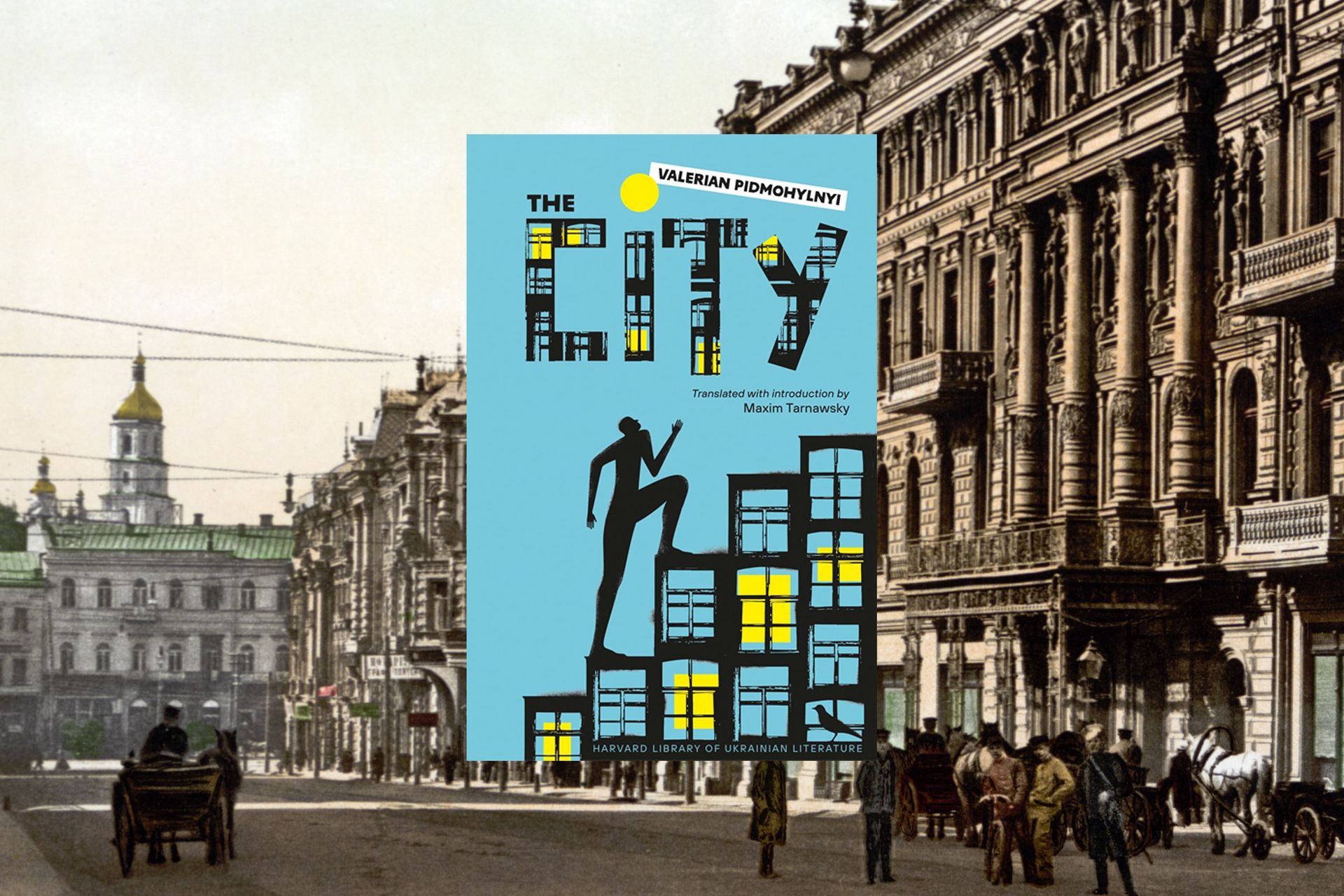
In the world of literature and literary studies, there’s been a real rediscovery of the classics — especially those from before 1917 — but there’s also a huge amount of attention being given to contemporary Ukrainian writers and their work. The Harvard Ukrainian Research Institute, particularly through its publication program led by Oleh Kutsyuba, has played a major role in this, translating more and more contemporary Ukrainian works into English.
Having these works available in translation — whether it’s literature, history, or art — is absolutely essential for any culture or country to be truly known, recognized, and appreciated internationally. That’s exactly what this translation program is aiming to accomplish.